The Chaoshan procession calendar
The days are set by the lunar calendar and chosen village by village, so the main run is the first month into the second. Two sessions in the third month and one in the fifth have sources of their own and are listed at the end of the table. Twenty-three processions across Chaozhou, Shantou and Jieyang can be traced to a source, and each has a page of its own. The Gregorian column is converted for the year you pick; where no announcement for that year exists, the entry is marked as standing on past practice, because a conversion settles the calendar and nothing more.
Which photographs each session still needs, and where to look for them, is on the list of images wanted and their licensing.
For village dates beyond these twenty-three, see the ying lao ye timetable: four village tables for Chaozhou, Shantou, Jieyang and Puning, 645 entries in all, town by town down to the village, with the 2026 Gregorian dates.
The seventh-month round is counted separately and is not in this table. See feeding the dead in Chaoshan: each village picks its own day and neighbours stagger theirs, fifty places in all — fourteen in Shantou, seven in Puning, four in Jieyang, three in Chaozhou, plus seven temples and charity halls and fifteen in Haifeng and Lufeng. Hudong in Lufeng runs eighteen villages from the tenth of the seventh month to the twenty-ninth, the densest stretch anywhere; the page carries the 2026 Gregorian dates and the sequence of opening the prison, Zhongyuan and closing it.
1. What is covered, and how a date is marked
Scope first. There are three rounds of noise in a Chaoshan year and this page handles a section of each: the processions of the first month, taken up here; the seventh-month feeding; and the year-end thanks to the gods. The last two have tables of their own elsewhere on the site, and this page only gives the reading. April, June and August to October have nothing in them and are marked as still being added — a blank means no source was found, not that nothing is held there.
The first round is twenty-three sessions: twenty in the first month, two in the third, one in the fifth. Only sessions with a traceable source are listed, and the list was brought up to this point in November 2026. So the sections together are not the whole year either.
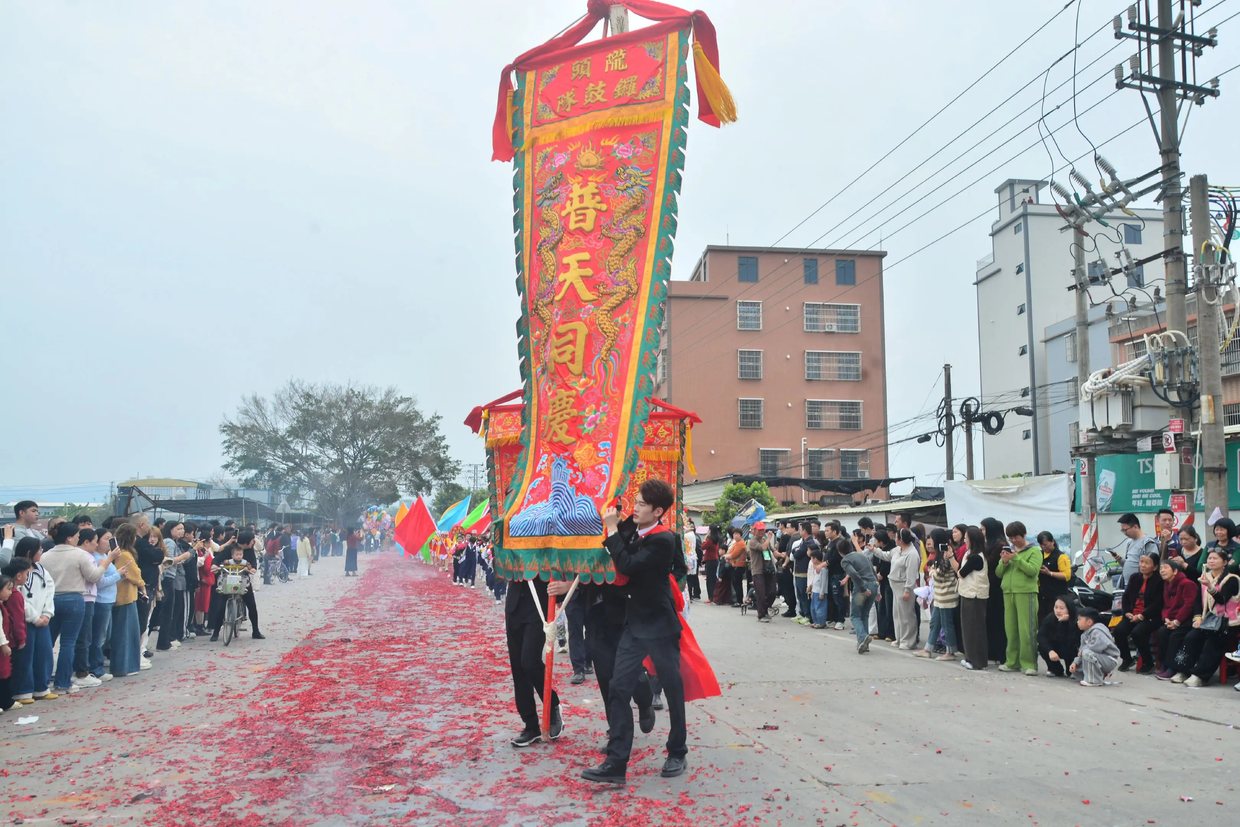
Two phrases that get confused. No list entry found means no matching entry in the intangible heritage lists turned up; no public material found means no original document that can be opened turned up. Both can be true at once, and neither means the event does not exist — the page writes down only the layer that was found. For the hierarchy of the lists, follow the heritage list page; for the shape of a procession in general, see ying lao ye.
On dates, two things are kept apart: when the event has been held in past years, which is a question of documents, and whether the date for the target year has been fixed, which is a question of announcements — and nothing beyond 2027 has been announced. Mixed together, last year’s date slides into next year’s diary without anyone noticing. Sorted by whether you can book on it, there are four states:
| State | What it means, and whether you can book on it |
|---|---|
| Confirmed for the year | An announcement from the organisers or a government notice for the target year is in hand. Book travel and rooms. At present: none. |
| Listed on past practice | The same lunar day or the same window in past years, with neither the calendar nor the village custom changing. Plan on it, but it is provisional: check with the village or the locality again a week before travelling. |
| Awaiting a chosen day | The month is fixed and the day is not; the committee or the temple chooses it by divining blocks or by consulting the almanac and then announces it. Hold the month, book when the day comes out. |
| Held by cycle | Leap years or a ten-year rotation, so not every year. Establish whether it is held this year before discussing the day. |
Nothing for 2027 and after has been announced, so of the twenty-three not one can be marked confirmed for the year: twenty-one stand on past practice, two are held by cycle, and there is at present no entry awaiting a chosen day. That is not modesty, it is the difference that matters in use: the Gregorian column is a calculation saying that on past practice this is very likely the day, not that something is certainly being held. When an announcement appears, the entry is marked confirmed and the source attached. From here on the next year’s announcements are checked around the eleventh lunar month each year: what is found is marked and sourced, and what is not found is noted here too.
Why there is no single table for the whole prefecture: the days are set by each village community and passed down, and no outsider can move them; some fix the month and not the day; and the lunar and Gregorian calendars drift apart, so the same twenty-fourth of the first month fell on 21 February in 2025 and 12 March in 2026.
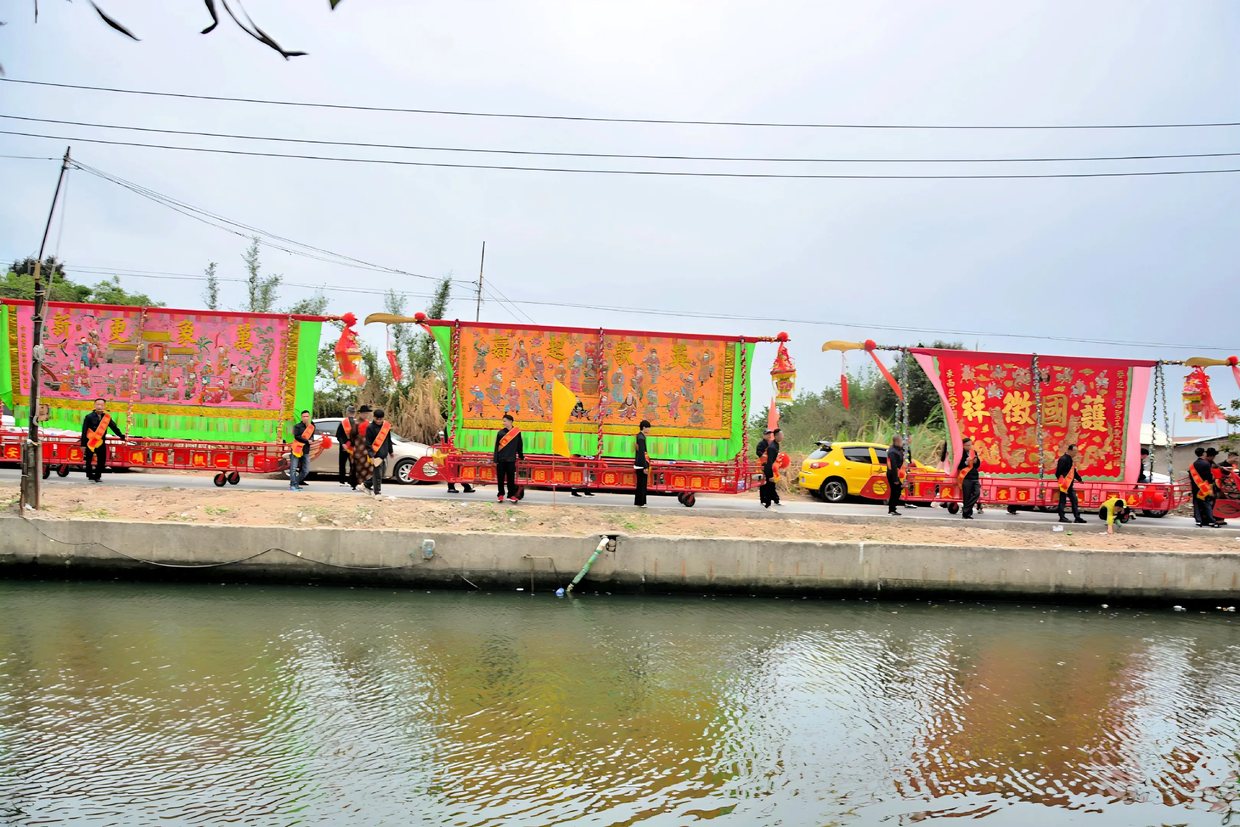
Every date here is given in the lunar calendar first. To find where the first day of the first month falls in a given year, whether there is a leap month, and the moment a solar term begins, use the astronomical calendar; the conversions on this page come from the same source.
2. How a lunar day lands on the Gregorian
Processions, the feeding of the dead and the year-end thanks are all fixed by the lunar calendar, so the Gregorian date changes every year. A lunar month follows the moon, thirty days in a long month and twenty-nine in a short one; twelve of them come to about 354 days, eleven fewer than a Gregorian year. The same lunar day therefore falls about eleven days earlier in the Gregorian the following year. Every two or three years a leap month is inserted, and that year the date moves back by about nineteen days instead.
The fifteenth of the seventh month, the main day of the feeding, shows it most clearly: 27 August in 2026, forward to 16 August in 2027, then back to 3 September in 2028, a year with a leap fifth month. The twenty-fourth of the twelfth month, which closes the year-end thanks, travels the same way, except that it lands in January of the following Gregorian year — a lunar year straddles two Gregorian years, and this is where bookings most often go wrong.
| Lunar year | 15th of the 7th month (feeding) | 24th of the 12th month (thanks) | Leap month that year |
|---|---|---|---|
| 2026 | 27 August, Thursday | 31 January 2027, Sunday | none |
| 2027 | 16 August, Monday | 20 January 2028, Thursday | none |
| 2028 | 3 September, Sunday | 7 February 2029, Wednesday | fifth month |
| 2029 | 24 August, Friday | 27 January 2030, Sunday | none |
| 2030 | 13 August, Tuesday | 17 January 2031, Friday | none |
| 2031 | 1 September, Monday | 5 February 2032, Thursday | third month |
Three kinds of date have to be kept apart. Fixed by the moon: the first day of the first month is always the new moon, the fifteenth of the first and of the seventh fall around the full moon, so the lantern festival, the opening of the prison, Zhongyuan and the closing of the prison all follow the moon and jump in the Gregorian every year. Fixed by the solar term: Qingming falls around 4 April and the winter solstice on 21 or 22 December, the day the sun reaches that point, so the Gregorian barely moves — the year-end thanks begin around the solstice and that stretch can be planned a year ahead. Fixed by the village: ying lao ye and the year-end thanks are given days chosen locally, falling only somewhere within a stretch of the lunar calendar, and not even uniform in lunar terms; they have to be asked about in the year itself.
The rule of use is one sentence: book the solar-term ones first, and wait for the year’s own calendar for the lunar ones. The year selector on this page switches the Gregorian column; where the first month falls in each year is in the comparison table under sources.
3. Sorted by lunar day, where they pile up
A village’s lunar day is settled and stays the same; what changes is the Gregorian date it lands on. So a trip is planned by the lunar day first and the year’s Gregorian second — pick the holiday first and then look for what is on, and you will mostly come back empty. Flatten the four village tables of the ying lao ye timetable — Chaozhou, Shantou, Jieyang, Puning — by lunar day, and the dense places are plain.
| First month, lunar day | Places on the books |
|---|---|
| 1st | 15 |
| 2nd | 14 |
| 3rd | 11 |
| 4th | 22 |
| 5th | 35 |
| 6th | 47 |
| 7th | 33 |
| 8th | 28 |
| 9th | 26 |
| 10th | 35 |
| 11th | 36 |
| 12th | 28 |
| 13th | 28 |
| 14th | 22 |
| 15th | 50 |
| 16th | 49 |
| 17th | 27 |
| 18th | 13 |
| 19th | 14 |
| 20th | 12 |
| 21st | 7 |
| 22nd | 7 |
| 23rd | 5 |
| 24th | 7 |
| 25th | 6 |
| 26th | 5 |
| 27th | 1 |
| 28th | 3 |
| 29th | 3 |
| 30th | 1 |
Counting rule: the four tables run town by town down to the village, 645 places in all, of which 639 state a lunar day and 590 fall in the first month. The remaining 49 are scattered from the second month to the eleventh, and 6 sources say of themselves that the day is not fixed. One entry to a row; a row naming several villages still counts as one place; a span written out, such as “fifth to sixth of the first month”, is counted on the day it begins.
The first month is not one peak but two. The four days from the fifth to the eighth hold 143 places, a quarter of the month; the fifteenth and sixteenth hold 99 between them, packed tighter still. The single busiest day is the fifteenth with 50, more than the first, second and third days together (40), and the sixteenth follows with 49.
The sixth, with 47, is the top of the first stretch. The tenth to the twelfth form another small stretch, 99 places over three days, exactly matching the fifteenth and sixteenth. After the twentieth it thins out: the twenty-third is down to 5 places, the twenty-seventh to 1, the quietest day of the month.
Two rules of use. To see two places in a day, choose from the fifth to the eighth, or the fifteenth and sixteenth, where there is most to choose from, and then order them by town. To watch one village from the gods leaving the temple to the palanquin’s return, pick a single-village day after the twentieth, where there are fewer people and you can stand closer. A dense day is not automatically a good one: a big village may hold a single day while another holds five, and on the table either counts as one place.
4. First month to fifth: the twenty-three sessions traced so far
Twenty in the first month, two in the third, one in the fifth. April is still being added to, like the other months, which does not mean nothing is held there. The three most recently added stand at the end of the table, on the third day of the third month, the twenty-third of the third month and the first of the fifth.
Ordered by lunar day. The Gregorian column is for 2027; the two entries that cannot be converted are held by cycle and the cell says why rather than leaving a dash. Every event name goes to its own page. To check a date, work out first which kind of date you are checking — the method is in how to read a procession.
| Lunar date | Event | Where | Listed as | Status | Gregorian, 2027 |
|---|---|---|---|---|---|
| First month, 6th | Yangmei torch festival | Jieyang, Jiedong, Pandong, Yangmei | Municipal 2009 | On past practice | 11 February, Thursday |
| From the 6th | Longdu lantern procession | Shantou, Chenghai, Longdu, all villages | On past practice | 11 February, Thursday | |
| First month, 8th | Yuepu pig contest | Shantou, Jinping, Yuepu | On past practice | 13 February, Saturday | |
| Night of the 10th | Qiaolin firework dragon | Jieyang, Rongcheng, Pandong, Qiaonan, Qiaoxi, Qiaodong | National III-4 | On past practice | 15 February, Monday |
| 14th and 15th | Dachanglong lantern greeting | Jieyang, Puning, Junbu, Dachanglong | Municipal 2020 | On past practice | 19 and 20 February |
| First month, 15th | The three mountain kings go out | Shantou, Chaoyang, Jinpu, Meihua | Provincial 2007 | On past practice | 20 February, Saturday |
| Night of the 15th, afternoon of the 16th | Xidong leaping the fire pits | Jieyang, Puning, Zhanlong, Xidong | On past practice | 20 and 21 February | |
| 16th and 17th | Hepu ying lao ye | Shantou, Haojiang, Hepu | On past practice | 21 and 22 February | |
| First month, 16th | Xikou, through the sugarcane lanes | Chaozhou, Xiangqiao, Linxi, Xikou | Municipal 2026 | On past practice | 21 February, Saturday |
| Night of the 16th to the 17th | Fenggang temple fair of the Pearl Goddess | Shantou, Haojiang, Majiao, Fenggang | Municipal | On past practice | 21 and 22 February |
| 17th and 18th | Guanshan pig contest | Shantou, Chenghai, Chenghua, Guanshan | Municipal, fifth batch | On past practice | 22 and 23 February |
| Night of the 19th | Nansha lantern procession | Shantou, Chenghai, Xinan, Nansha | On past practice | 24 February, Wednesday | |
| 21st and 22nd | Yanzao, dragging the god | Shantou, Chenghai, Yanhong, Yanzao, four quarters | Provincial | On past practice | 26 and 27 February |
| Afternoon of the 23rd | Jieyang City God temple fair | Jieyang, Rongcheng | Municipal 2007 | On past practice | 28 February, Sunday |
| First month, 24th | Azure Dragon temple fair | Chaozhou, Xiangqiao, setting out from the Qinglong old temple | Provincial 2012 | On past practice | 1 March, Monday |
| First month, 26th | Shangrao, swinging | Chaozhou, Raoping, Shangrao | On past practice | 3 March, Wednesday | |
| Second month, 10th | Chaoyang Shuangzhong cultural festival | Shantou, Chaoyang, central district | On past practice | 17 March, Wednesday | |
| Second month, 14th | Zhanglin, the fire god goes out | Shantou, Chenghai, Dongli, Zhanglin | Municipal | On past practice | 21 March, Sunday |
| Leap year, second month, 16th | Ximen centipede dance, community day | Shantou, Chenghai, Chenghua, Ximen | National | Held by cycle | By cycle, leap-year community day |
| Second month, 2nd to 8th, day chosen | Outing, the lantern head | Shantou, Longhu, Outing | Held by cycle | By cycle, ten towers in rotation | |
| Third month, 3rd | Guandai, the birthday of the Dark Heaven god | Shantou, Longhu, Guandai, four villages of Guanyi township | On past practice | 9 April, Friday | |
| Third month, 23rd | Ying Mazu | Coastal villages of Chaoshan; the palanquin goes round Mazu island | On past practice | 29 April, Thursday | |
| Fifth month, 1st to 6th | Dacheng suo, the dry dragon | Chaozhou, Raoping, Huanggang, Dacheng suo | Provincial, extended list X-15 | On past practice | 5 to 10 June, six days |
A blank in the list column means no published list entry was found, not that the event is lesser than one that has it. Three entries were added in November 2026 — Guandai, ying Mazu, Dacheng suo — all after the third month. The Guandai entry rests on an account of the temple’s history, which is a transcription and not a government notice; the Mazu entry on gazetteer and local accounts, since every coastal village holds it and there is no single organiser; the Dacheng suo entry can cite the Ming Dongli zhi and was listed in 2015 as a provincial item on the extended list (X-15). None of the three has announced its day for the current year. Batch and number of the two national items: dragon dance (Qiaolin firework dragon), number 107, III-4, second batch, 2008; folk belief and custom (Chaoyang Shuangzhong cultural festival), number 992, X-85, fourth batch, 2014. One entry outside the table: the burning dragon of Puzhai in Fengshun, Meizhou, around the fifteenth of the first month — Fengshun was in the same prefecture in the Qing and is not in the three cities now, so it is listed for comparison within the old prefecture and not counted in the sequence.
5. Twelve worth building a trip around
Twelve are picked and put in lunar order, not in order of fame. The other eleven are only in the index, and have pages of their own as well. Each card gives the date and its Gregorian equivalent for the chosen year, the place, the list level, one line on what to look at, a word about standing there, the date status, and the source. What is filtered out is hidden, not deleted. Any half-sentence marked as an editorial note is this publication’s opinion, not a rule of the organisers.
01 Yangmei torch festival municipal, 2009
Night of the sixth of the first month · Jieyang, Jiedong, Pandong, Yangmei · 11 February 2027, Thursday · on past practice
The whole village goes out in file with torches, from an old reverence for Jie Zitui; after the walk there is Chaozhou opera and shadow puppetry, sung until the small hours.
On the ground. There are ying lao ye teams in the daytime too, and the torches belong to the night. Yangmei is a jade-carving village, so the day can be spent looking at the jade quarter and the evening kept for the torches.
Source: local reporting and accounts of custom. Basis: past coverage plus an editorial suggestion for the day. Full entry ›
02 Qiaolin firework dragon national, III-4, 2008
Night of the tenth of the first month · Jieyang, Rongcheng, Pandong (Qiaonan, Qiaoxi, Qiaodong) · 15 February 2027, Monday · on past practice
The body is framed in split bamboo and pasted with cotton-fibre paper, over thirty metres long, nine sections lit at once; the bearers are bare-chested, in shorts and bamboo hats.
On the ground. Sparks scatter widely; spectators stay on the outer ring and off the line the dragon walks. The distance and the cordon are set by the organisers each year, so last year’s practice is not a hard line.
Source: China intangible cultural heritage network, project page. Basis: past coverage plus the project page. Full entry ›
03 Dachanglong lantern greeting municipal, 2020, sixth batch
Nights of the fourteenth and fifteenth of the first month · Jieyang, Puning, Junbu, Dachanglong · 19 and 20 February 2027 · on past practice
Everyone carries a T-shaped frame with a lantern hanging at each end, the lanterns lettered with the surname Chen, with “a thousand sons, ten thousand grandsons”, with “five generations under one roof”, and walks a circle round the gods’ ground.
On the ground. The fifteenth night is the fullest and the circling takes a long time to disperse; the lanes are narrow, so park outside the village and walk in.
Source: local reporting and accounts of custom. Basis: past coverage. Full entry ›
04 The three mountain kings go out provincial, 2007
Fifteenth of the first month · Shantou, Chaoyang, Jinpu, Meihua · 20 February 2027, Saturday · on past practice
Strong men carry the images through narrow lanes with banners, great gongs and drums and yingge clearing the way, the procession stretching out for several kilometres.
On the ground. The narrow lanes are the most crowded stretch of the whole route and there is no backing out once inside; to photograph the formation, stand at the mouth of the lane, not in the middle of it.
Source: Shantou Media Group, 2025 Spring Festival custom tour guide. Basis: the same guide. Full entry ›
05 Xidong, leaping the fire pits no list entry found
Night of the fifteenth, afternoon of the sixteenth of the first month · Jieyang, Puning, Zhanlong, Xidong · 20 and 21 February 2027 · on past practice
The gods are invited out of the temple on the eleventh; on the fifteenth night fires are lit by quarter, and before the return to the temple on the sixteenth afternoon the leaping is done once more, ten pits in a circle beginning at the north of the village.
On the ground. Daytime leaping is rare and the sixteenth afternoon is the better one to photograph. The order is banners, lanterns and drums, palanquin, then villagers; stand behind and to the side of a pit, not in front of the run.
Source: Puning party and community service platform, Xidong village entry. Basis: past coverage plus an editorial suggestion on photographing. Full entry ›
06 Hepu ying lao ye no list entry found
Sixteenth and seventeenth of the first month · Shantou, Haojiang, Hepu · 21 and 22 February 2027 · on past practice
The night session is put on by local young men themselves, LED strings over their bodies, a DJ’s music going round the village; the daytime session has painted-face skits.
On the ground. The two could hardly be more different, and seeing one gives the wrong idea of the other. The night is loud; with children, stay on the outer ring.
Source: Nanfang Plus, 1 March 2024, report on Chaoshan new-year custom. Basis: that report. Full entry ›
07 Xikou, through the sugarcane lanes municipal, 2026, tenth batch
Sixteenth of the first month · Chaozhou, Xiangqiao, Linxi, Xikou · 21 February 2027, Sunday · on past practice
Seven villages each send a team, lanterns tied to sugarcane stalks to welcome the gods, for the sense of sweetness joint by joint; the procession is in the morning, the cane lanterns at night.
On the ground. Morning and night are two different events, so do not leave after one. The lanes are narrow and once the lanterns are lit it is hard to get in or out.
Source: local reporting and accounts of custom. Basis: past coverage. Full entry ›
08 Fenggang temple fair of the Pearl Goddess municipal
Night of the sixteenth to the seventeenth of the first month · Shantou, Haojiang, Majiao, Fenggang · 21 and 22 February 2027 · on past practice
A steel-framed shed goes up before the temple with a table a hundred square metres in size and more than two hundred offerings, and two pairs of live chickens and ducks set on the table that neither startle nor fly.
On the ground. The seventeenth is the fullest; arriving on the sixteenth night catches the shed going up and the offerings being laid. The temple is on the north slope of a hill and parking is scarce, so arrive half an hour early.
Source: Shantou Haojiang district government, feature on the Fenggang fair. Basis: that feature. Full entry ›
09 Guanshan pig contest municipal, fifth batch
Seventeenth and eighteenth of the first month · Shantou, Chenghai, Chenghua, Guanshan · 22 and 23 February 2027 · on past practice
Of more than thirty surnames two take the duty each year; the pigs wear red flowers and hold great mandarins in their mouths, mounted on red-lacquered frames over a metre high.
On the ground. The frames come out on the morning of the seventeenth and the pigs are taken down at noon on the eighteenth, after which only empty frames remain. There is a procession and contest that afternoon, so do not hurry away.
Source: Nanfang Daily, 7 March 2024, report on Chenghai custom. Basis: that report. Full entry ›
10 Yanzao, dragging the god provincial
Twenty-first and twenty-second of the first month · Shantou, Chenghai, Yanhong, Yanzao (Shangshe, Zhongshe, Gangtou, Shangcuo) · 26 and 27 February 2027 · on past practice
The guards are bare-chested and smeared with bean oil; the draggers pull together to bring the image down off the palanquin. The local saying is that the Yanzao god owes a dragging, and that it is only auspicious once pulled over.
On the ground. This is a martial ying; watch from the outer ring only, do not join in or lend a hand. Lines are agreed and stewards keep them, and crossing one ends your part in it.
Source: Nanfang Plus, report on Yanzao dragging as provincial heritage. Basis: past coverage plus an editorial suggestion on watching. Full entry ›
11 Jieyang City God temple fair municipal, 2007
Afternoon of the twenty-third of the first month · Jieyang, Rongcheng · 28 February 2027, Sunday · on past practice
The image sets out at one in the afternoon from the City God temple, past the arcaded street, the Jieyang academy and the Jinxian gate tower, out to the villages on the edge of town and back; the procession is close to eight hundred people.
On the ground. Touching the lion and the lanterns is how people here ask for luck, so put a hand out but do not pull at the banners; offering tables are set along the route and should not be stood in front of.
Source: Guangdong provincial government portal, published 12 March 2026, reporting the fair of 11 March. Basis: that report. Full entry ›
12 Qinglong temple fair provincial, 2012
Twenty-fourth of the first month · Chaozhou, Xiangqiao, setting out from the Qinglong old temple · 1 March 2027, Monday · on past practice
The route goes by the memorial arch street, the Zhenhai tower and Kaiyuan road; in 2026 it ran about six and a half kilometres with more than forty formations and over two thousand people.
On the ground. It sets out at eight in the morning and is back around two. The middle of the arch street and the front of the Zhenhai tower are the tightest; to photograph the whole line, go to the Kaiyuan road junction. The day before, the route is swept and prepared, and from the thirteenth to the fifteenth the lanterns are raised — both quieter than the main day.
Source: China Workers’ Network, 24 February 2025, report on the Qinglong fair. Basis: that report. Full entry ›
6. Getting there: match the city to the station first
Six stations can be landed at in this area and they divide the work: Chaoshan station sits between Chaozhou and Shantou and can reach the centre of either, with the most trains; Chaoyang station is off to the south of Shantou, close to the Chaoyang and Haojiang sessions; Jieyang station is at Xichang in Jiedong, about ten kilometres from both the old city of Rongcheng and Yangmei; Puning station is in Puning, close to the Puning and Huilai side; Shantou station is in the city and serves Chenghai and Longhu; Raoping station serves the north of Raoping. The airport is Jieyang Chaoshan international, and from it there is still a stretch of road to any of the three cities. For trains and connections see getting there and where to stay; this section is only about choosing a station.
Three things differ in the first month. The last trains run earlier than usual, and a night session often ends after nine in the evening, so a weekday timetable will mislead. Village roads go one way or are closed at short notice, and a navigation estimate is driving time only, without parking or the walk in. Several sessions on the same day sit in different townships, so do not count on two in a day. For a night session, stay the night rather than gamble on the way back.
What follows is a principle for choosing a station and leaving a margin, not this year’s timetable. Check the year’s own trains before setting out, and check the traffic notices of the organisers or the authorities.
| Station | Sessions it serves |
|---|---|
| Chaoshan | Xikou through the sugarcane lanes, Azure Dragon temple fair; the Jieyang side can be reached too but is another thirty kilometres, see below |
| Jieyang | Yangmei torch festival, Qiaolin firework dragon, Jieyang City God temple fair |
| Puning | Dachanglong lantern greeting, Xidong fire pits |
| Chaoyang | The three mountain kings, Chaoyang Shuangzhong festival, Hepu ying lao ye, Fenggang fair |
| Shantou | Guanshan pig contest, Yanzao dragging, Longdu lanterns, Nansha lanterns, Zhanglin fire god, Ximen centipede dance, Yuepu pig contest, Outing lantern head |
| Raoping | Shangrao swinging |
The table is ordered by proximity to the ground and settles only where to land first, not which train. Distances and driving times are ordinary navigation routes off-peak and are orders of magnitude only, without parking or the walk in; they were not checked station by station, so look again at a map before setting out. The three sessions added from the third and fifth months are not yet placed: Guandai is in Longhu, Shantou, Dacheng suo in Huanggang, Raoping, and ying Mazu is scattered along the coast with no single station.
The Jieyang side can be reached from two stations: Jieyang station is about ten kilometres from Yangmei, some twenty minutes by car, and ten to thirteen kilometres from the old city of Rongcheng, twenty-five to thirty minutes; Chaoshan station is at Chao’an in Chaozhou, twenty-nine to thirty-one kilometres from Rongcheng, fifty to fifty-five minutes by car, but has the most trains, and when the times do not suit you can change inside the station to a train for Jieyang station and be there in a quarter of an hour.
7. Three city lines
The three cities are not equally dense and are not planned the same way. Each gets seven items: how many days to stay, which quarter to sleep in and for how many nights, the latest to arrive, moving between and getting back, how to get about, the hardest join, and what to do if you miss it. The days are lunar; for the Gregorian, see the year selected above.
The driving times and the “latest arrival” below are estimates, worked back from ordinary speeds and from the setting-out and dispersing times in past coverage, without parking, the walk into a village or a sudden road closure. The real times are the year’s announcements and the traffic as it is.
Chaozhou one session on the sixteenth, one on the twenty-fourth
Nearest stations: Chaoshan (for Shangrao, Raoping station). Chaozhou routes
| Stay | Two full days at either end; add a night to see the temple front dressed on the twenty-third and the lanterns raised |
| Where to sleep | Inside the old city, round the memorial arch street and Taiping road, two nights or more, so nothing has to be moved on the twenty-fourth |
| Arrive by | Half past seven on the morning of the twenty-fourth, mid-way along the arch street (it has set out at eight in past years); the morning of the sixteenth at Xikou in Linxi for the procession |
| Moving and returning | The old city to Xikou is about twenty minutes by car, without the walk in or finding a space; after a night session the buses have mostly stopped, so book a car or drive |
| Getting about | The old city is walkable and does not need a car; leave the car at the lodging and do not drive into the arch street |
| Hardest join | After Xikou’s cane lanterns on the sixteenth it is already night when you get back to town, and the twenty-third and twenty-fourth need a place held in the old city; sleeping in Shantou in between costs two hours of coming and going |
| If missed | If the sixteenth is rained off and rescheduled, go to the dressing of the temple front and the lanterns on the twenty-third; if the setting-out on the twenty-fourth is missed, wait at the Kaiyuan road junction for the return |
Shantou Yanzao on the twenty-first and twenty-second carries the most weight
Nearest stations: Shantou (Chaoyang and Haojiang sessions from Chaoyang station). Shantou routes
| Stay | Five days: the sixteenth and seventeenth in Haojiang, the nineteenth, twenty-first and twenty-second in Chenghai |
| Where to sleep | Two nights in the city, Jinping or Longhu; after the night of the nineteenth move to Chenghai town for two more |
| Arrive by | The evening of the sixteenth at Fenggang (the temple is on the north slope and spaces are few); the morning of the twenty-first at Yanhong, which has started in the morning in past years, subject to the announcement |
| Moving and returning | The city over Queshi bridge to Haojiang is about forty minutes, without the queue on the bridge; the three Chenghai places lie north along one road ten minutes apart, parking outside each village and the walk on top of that; buses have largely stopped when a night session ends |
| Getting about | The three Chenghai places are on one road going north and a car is more flexible on some village roads, though festival closures and parking can cancel that advantage; without a car, sleep in Chenghai town and take cars in and out |
| Hardest join | Getting back to the city after Fenggang on the sixteenth night means crossing the bridge; between Nansha on the nineteenth and Yanzao on the twenty-first there is a day in between, which is exactly when to move lodgings to Chenghai |
| If missed | If Yanzao is closed off at short notice because the crowd is beyond control, go to Guanshan on the seventeenth and eighteenth; the two Haojiang sessions sit next to each other, so missing one still leaves the other |
Jieyang the burning dragon on the tenth carries the most weight
Nearest stations: Jieyang (Pandong on the tenth, Rongcheng); the Puning sessions from Puning station. Chaoshan station has more trains and can stand in, but is about thirty kilometres from Rongcheng. Jieyang routes
| Stay | Four days: Pandong on the tenth, Puning on the fourteenth, fifteenth and sixteenth |
| Where to sleep | Two nights round the Jinxian gate in Rongcheng, one in Puning town |
| Arrive by | Before six in the evening of the tenth at Pandong (the dragon burns at night and the crowd leaves after ten); into Dachanglong on the afternoon of the fourteenth, the lanes being narrow |
| Moving and returning | Rongcheng to Pandong is about twenty minutes by car, without finding a space; the roads between the two eastern Puning towns are narrow and clogged in festival time, so allow an hour |
| Getting about | The two Pandong villages are close together, by car or by hired car either way; the Puning stretch is better driven in daylight, since passing another car at night is hard |
| Hardest join | The burning dragon is over after ten and you go back to sleep in Rongcheng; Dachanglong and Xidong in Puning follow one another with only a night between |
| If missed | The burning dragon is put off if it rains, as the village notifies; of the two Puning sessions, if only one can be made, take the daytime fire leaping at Xidong, which photographs better |
Do not take “twenty minutes by car” as grounds for seeing two things. In festival time village roads run one way and parking is several hundred metres out, so the walk in often takes longer than the drive. Trains connect the three cities at Chaoshan, Chaoyang and Puning stations; the last trains in the first month are early, so a night session means a bed or a car.
“Arrive by” is not a closing time for entry. It is worked back from past setting-out times and excludes parking and the walk in; the area open this year, the cordons and the closures are as announced, and people are turned away every year.
Four things to check before setting out, none optional. One, this year’s announcement: the organisers’ or the authorities’ notice, for the open area, the hours of control and whether booking is needed. Two, the way back: a night session usually ends after nine, the first-month last trains are earlier than usual and the times change every year, so check the year’s timetable rather than reasoning from past experience. Three, the weather: whether rain or a typhoon postpones it is a matter of what the village and the temple say, not the forecast. Four, lodging: prices and crowds rise together in festival time, and a bed within walking distance saves more trouble than one in the city centre.
8. Where to stand: three kinds of information, kept apart
What is said about being on the ground comes in three layers of different origin and reliability, and mixing them is where trouble starts. From strongest to weakest: what the authorities require, what past years did, what this publication suggests.
Required by the authorities, published that year, checked before going
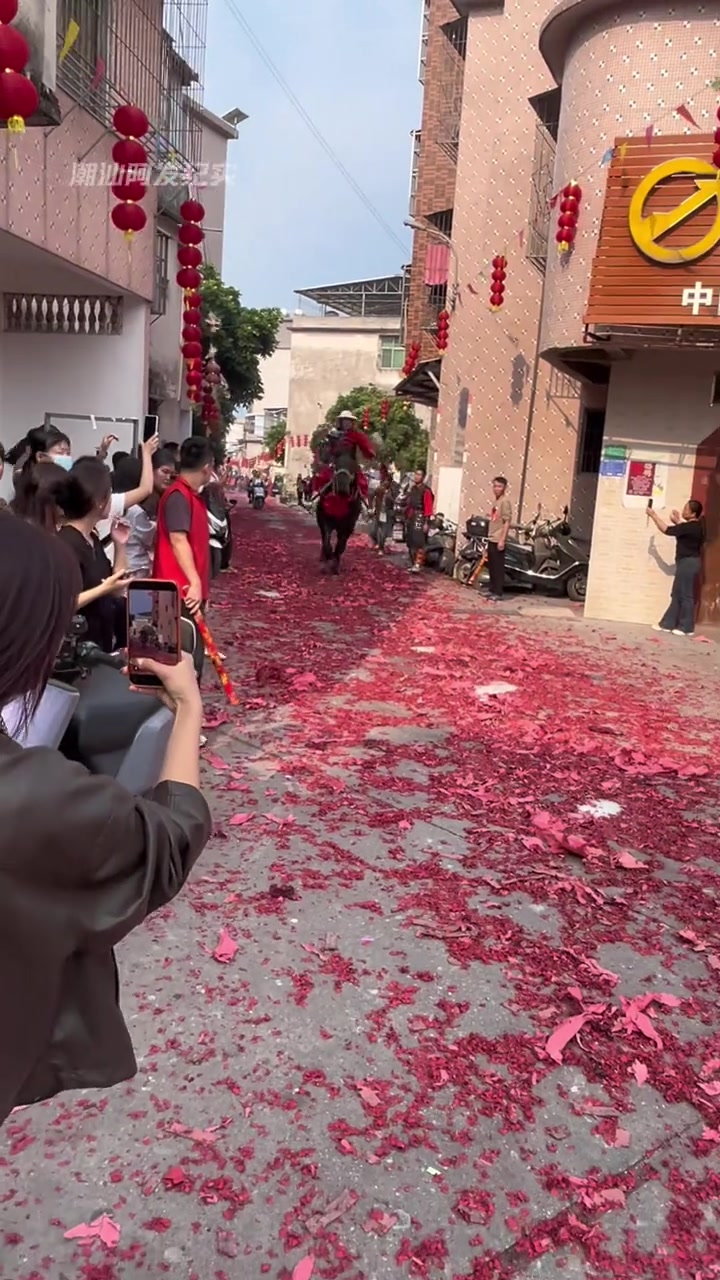
The viewing areas, barriers, traffic control and prohibited items laid down for the year by the organisers and the authorities. At present: none — nothing for 2027 and after has been published. Past years’ “fifteen metres” and “outer ring” are not official requirements. As notices are found they will be added here one by one, with the issuing body and the date of issue.
What past years did, as reported, and not a rule for this year
Qiaolin burning dragon: spectators stay off the line the dragon walks; the reports give no uniform distance. Yanzao dragging: a martial ying, with lines agreed inside the ground and stewards keeping them; crossing one ends it. Xidong fire pits: the order is banners, lanterns and drums, palanquin, villagers, and no one stands in front of the run. Hepu by night: loud, with scattered light, and the tightest press is beside the speakers and the generator boxes. Qinglong fair: over six kilometres in all, tightest in the middle of the arch street and before the Zhenhai tower; where the flow is divided, follow the stewards and do not push back through the line. All of this is what past years did; the lines and open areas are redrawn every year.
Suggested here, from the ground, the fire and the crowd
Four general ones: do not walk in the line of the procession and do not cross barriers or police tape; keep away from bottlenecks — the mouth of a street, the head of a bridge, the entrance to a lane — and stand further off instead; follow the stewards and the police, and stop when told to stop; hold a child’s hand, so that the crowd does not separate you.
Three for fire: wear long sleeves and trousers in cotton, not synthetics or down, which melt and stick when an ember lands; the smoke is heavy, so wear a mask; stand upwind, where you can see which way the sparks are going. These three are this site’s advice based on standing there, not the guidance of a fire or emergency management department; where such guidance exists, it governs. The “fifteen metres” at Qiaolin is the same kind of thing: an estimate made here from the size of the square, not a rule of the organisers or the police, and not transferable to another session.
Three things not done here
No judgment on the belief itself, no explaining to villagers whether it works, and no taking one village’s practice as the rule for all of Chaoshan. Beyond the three cities there are many village days that have never been put online; they are not collected here.
9. The seventh month: the longest round of the year
The first month is watched in daylight, the seventh at dusk. The feeding is not carrying gods out on tour but setting food out: an orphan platform goes up at the mouth of the village or before the temple, Ksitigarbha is enthroned on it and the king of the orphaned stands in front — blue-faced, fanged, framed in bamboo and pasted with paper, two or three zhang tall; monks or priests mount the platform to chant and hold the flame-mouth rite, and at the end the cakes and parcels of rice on the platform are thrown down for the “orphan catchers” held up below. What is caught is taken home, which is called eating the luck.
The days are looser than a procession’s. Most villages keep the old practice, but some choose a day, postpone, or stop holding it: Nanyang in Guiyu has its day set by the Nine Heavens Mysterious Girl through the writing brush, Baode old hall in Heping divines before the Dafeng altar, and the “vowed offering” at Daping market in Puning is three days picked by the committee from the first of the seventh month to the thirtieth. Asking the village committee before travelling beats working a day out from a table. In Jieyang some places hold the ancestors and the feeding separately: the fifteenth for the ancestors only, the feeding on a day of its own — the eighteenth, twenty-third or thirtieth.
The fifteenth of the seventh month is the most crowded: villages are holding it, temples are holding the Yulan offering, and in Chaozhou city it is the Qinglong old temple on Nanchun road. That day is the monks’ own retreat day, one in the year, and temples do not choose it. To watch in more comfort: Jinsha in Shantou on the twenty-sixth, Huaidong and Huaize in Chenghai on the twenty-fifth, Huali in Chaoyang on the twenty-third.
The fifty places in detail, which are old practice and which have stopped, are on feeding the dead in Chaoshan; the Haifeng and Lufeng round is arranged there too.
10. The year-end thanks: from the eleventh month to the gods’ going up
The first and second months are ying: the god is carried out of the temple and taken through streets and lanes. The year’s end is xie: the gods of every temple in the district are invited to one place, offerings are laid out and opera is performed. The first has a line and a route, and the tables above are about it; the second has no route, but if you come to Chaoshan in the eleventh or twelfth month it is the liveliest thing in the village. On Douyin some call it the Chaoshan thanksgiving.
When: densest around the winter solstice, closing on the twenty-fourth of the twelfth month
The custom entry of the Shantou Chaonan district government says: the contest, commonly called thanking the gods or worshipping the gods, was in the old custom mostly held around the “winter festival”, the winter solstice, and called the year-end thanks — though some places hold it in autumn. In popular account the villages take it up from the eleventh month, densest around the solstice. On the twenty-fourth of the twelfth month the gods go up to report, and the thanks stop there; on the fourth of the first month they come down again and the new year’s ying lao ye begins. So to give thanks, it has to be before the twenty-fourth.
The day: there is no single one
Most villages keep the same day year after year, which can be projected from the lunar calendar; a few have the committee read the day and post it on a red notice, and the day shifts from year to year. Of some hundred and sixty places collected in Chaoyang and Chaonan, only one, Tongboyu, states that it reads its own day; but whole stretches move together — in Xiashan several villages the tables two years apart differ by anything from two days to half a month. The China place-name network records Dachanglong township in Chaoyang on the seventh and eighth of the twelfth month, every year. Miancheng in Chaoyang and around it are different again: each household picks its own day to worship the heavenly god, and it is not held collectively.
The thanks are more scattered than the processions. The year-end timetable lists 162 entries spread over 55 lunar days: 79 in the tenth month, 69 in the eleventh, 10 in the twelfth, running from the first of the tenth to the twenty-third of the twelfth. The busiest single day is the eighteenth of the tenth with 16; the thirtieth of the tenth has 10, and the twenty-fourth of the tenth and the tenth of the eleventh have 9 each. In ying lao ye the eight days from the fourth to the eleventh take more than half the first month; the thanks have no such day, and the largest takes a tenth.
Watch the thirtieth of the tenth: in a year when the tenth month has twenty-nine days there is no thirtieth, and how each village handles that has to be asked locally — ask before booking on it.
The village-level days are in a table of their own, the year-end thanks in Chaoshan, by city, district and town, with the Gregorian conversion for the 2026 round. That table copies its sources and marks what is unchecked; check again at the red notice at the village mouth before using it.
What to look at
A god shed goes up on open ground, the incense burners of every temple in the district are gathered into it, and a row of eight-immortal tables serves as the offering table. Besides the five kinds of meat, cakes and risen cakes, there are birds, beasts and rare flowers moulded in glutinous rice flour and set off with paper-cuts, called dish material — something seen only at the year-end thanks. Facing the shed a stage is built for a Chaozhou opera troupe, with a day and a night performance, and sometimes puppet shows or a film. The larger places run three days: the eve, the main day and a third night. In Haifeng and Lufeng this is called doing opera to thank the gods, and three stages are still in use in Jiazi town.
How to find this year’s day
Read the red notice at the mouth of the village and the committee’s announcement, which carry the day chosen and how many nights of opera. Asking a local troupe works too, since the troupes are booked for exactly those days. Lists of “year-end thanks by village in such-and-such a town” are put together on Douyin and WeChat every year; they are usable as a lead, but the red notice at the village still governs.
This section is the general case. For which village on which day, see the year-end thanks; that table too only reaches as far as what has been heard in recent years, and should be checked against the red notice or the committee’s announcement before setting out.
Sources
Levels and numbers in the heritage lists were checked against the project pages of the China intangible cultural heritage network: dragon dance (Qiaolin firework dragon), number 107, code III-4, second batch, 2008, nominated by Jieyang city, Guangdong.
Dates and figures for each session correspond as follows. The four kinds of fact need different evidence: that an event exists, and its history, from the heritage lists and local gazetteers; its dates in past years, from reporting of those years; its date in the target year, from an announcement, of which there is none yet; the traffic control and viewing arrangements of the year, from the organisers and the authorities. A feature on the history of an event cannot at the same time prove next year’s date and this year’s rules.
| Event | Source | What it establishes |
|---|---|---|
| Yangmei torch festival | Local reporting and accounts of custom (no public link found) | Dates in past years |
| Longdu lantern procession | Local reporting and accounts of custom (no public link found) | Dates in past years |
| Yuepu pig contest | Local reporting and accounts of custom (no public link found) | Dates in past years |
| Qiaolin firework dragon | China intangible cultural heritage network, project page | Existence, level and number; dates from local reporting |
| Dachanglong lantern greeting | Local reporting and accounts of custom (no public link found) | Dates in past years; municipal sixth batch |
| The three mountain kings go out | Shantou Media Group, 2025 Spring Festival custom tour guide (no public link found) | Dates in past years |
| Xidong fire pits | Puning party and community service platform, Xidong village entry | Existence, dates in past years |
| Hepu ying lao ye | Nanfang Plus, 1 March 2024, Chaoshan new-year custom report | Existence, scale |
| Xikou sugarcane lanes | Local reporting and accounts of custom (no public link found) | Dates in past years; municipal tenth batch |
| Fenggang temple fair | Shantou Haojiang district government, feature on the Fenggang fair | Existence, scale |
| Guanshan pig contest | Nanfang Daily, 7 March 2024, Chenghai custom report | Existence, the times of setting out and taking down |
| Nansha lantern procession | Local reporting and accounts of custom (no public link found) | Dates in past years |
| Yanzao dragging the god | Nanfang Plus, report on Yanzao as provincial heritage | Provincial listing, dates |
| Jieyang City God temple fair | Guangdong provincial government portal, 11 March 2026; Jieyang Daily, 8 April 2025 | Existence, scale, setting-out time |
| Azure Dragon temple fair | China Workers’ Network, 24 February 2025; Nanfang Plus, “Heritage Guangdong: the Qinglong fair at Chaozhou” | Existence, scale, setting-out and return times |
| Shangrao swinging | Local reporting and accounts of custom (no public link found) | Dates in past years |
| Chaoyang Shuangzhong festival | China intangible cultural heritage network, project page; Nanfang Plus (from Shantou Daily), 4 April 2024 | Existence, level and number, how the day is chosen |
| Zhanglin fire god | Local reporting and accounts of custom (no public link found) | Dates in past years |
| Ximen centipede dance | Lists and local reporting (no public link found) | Level; the community day falls in leap years |
| Outing lantern head | Sogou Baike, entry on the Outing lantern-head festival | Rotation by tower; accounts of the choosing window differ |
| Guandai, birthday of the Dark Heaven god | Guandai, Sogou Baike entry | Temple history and heritage status; the tour of thirty-six villages on the sixth of the ninth month, return on the ninth, the move to the third of the third month, a twelve-year cycle shared by thirty villages |
| Ying Mazu | Mazu’s birthday (Hualong Chaoshan net) / The Mazu tour (Chaoshan custom net) | The order of the twenty-third of the third month; that every coastal village holds it; Raoping’s “standing tea” |
| Dacheng suo dry dragon | Dragons on the water (Yangcheng Evening News, citing the Ming Dongli zhi) | The wording that at Dacheng suo dragon boats are made in colour, or pasted in coloured paper, each acting out a story; the dry-dragon form is noted separately on the page |
| The year-end thanks | Chaonan district government, “Sacrificial custom” | “Held around the winter solstice, called the year-end thanks”; the god shed, dish material and opera; named alongside the new-year ying |
| Two ways of fixing the day | China place-name network, “The Chaoshan year-end thanks” (from the Shantou gazetteer network) | Dachanglong on the seventh and eighth of the twelfth month; households in Miancheng worshipping the heavenly god; thanks opera and tip-toe opera |
| Opera to thank the gods, stages at Jiazi | Lufeng CPPCC, “How we spend the new year” | “Finishing the year’s gods” and the public thanks; the plays performed; three stages at Jiazi |
| Villages in the eleventh and twelfth months, days differing | Douyin village posts (unchecked) | Searched November 2026, personal posts; support only for villages differing, not a basis for dates |
| Fifty places in the seventh month | Feeding the dead in Chaoshan (dedicated page, sourced place by place) | Village days, temple services, which are old practice and which have stopped |
| Chaozhou city on the fifteenth, the Qinglong feeding | Qinglong old temple WeChat account, “Yisi Zhongyuan: the feeding at the Qinglong old temple, Chaozhou” | Date, order of service, five-colour hanging money and triangular paper flags, the tablet for soldiers who died in the war of resistance, peace rice and oil |
| “From the first day each village holds the Yulan assembly” | Guangxu Haiyang xianzhi; Qianlong sixth year Puning xianzhi; Rao Zongyi, Chaozhou zhi (1956) | That each village sets its own day, in the gazetteers’ own wording rather than this site’s interpretation |
| Jieyang holding ancestors and feeding separately | Hualong Chaoshan net, “Zhongyuan and the Yulan assembly” | The feeding on a day of its own, the eighteenth, twenty-third or thirtieth of the seventh month |
“No public link found” means only a second-hand paraphrase was found, with no original that can be opened. Dates for those entries are entered from local reporting and are less reliable than linked ones; check before changing anything.
On the data: the twenty-three sessions and their twenty-three pages are generated from one record, in which the number, name, lunar day, date status, place, list, character and source each occupy a field, and the index table, the cards and the entry pages are updated in the same batch. The machine-readable layer is on the fact sheet and in the dataset; the latter still counts 179 pages and needs recomputing. There is also a page on how to read a procession, with the three ways of checking a date and three claims not repeated here. The addresses of the twenty-three entry pages are all of the form /god-parade/<slug>/ and are only ever added to.
Three dates are written differently by different sources: for Yanzao the 2025 Shantou Media Group guide gives the twentieth and twenty-first of the first month, while Nanfang Plus and the Shantou government publish the twenty-first and twenty-second, which is followed here; Guanshan is given as the seventeenth and eighteenth, frames out on the seventeenth and pigs taken down on the eighteenth; for the Chaoyang Shuangzhong festival there is an online claim of the eighth of the second month, with no official source.
On the conversion: the new years and the days of the first and second months for 2027 to 2031 were computed with the new moon as the start of the month, in Beijing time (120° east). It was checked on 21 October 2026 on two levels: 75 comparison values against a standard conversion table covering 1900 to 2099, all identical; and independently, by Meeus’ lunar-phase algorithm, the new-moon times of the ten month-starts across five years, all agreeing with the table — the month-starts being fixed, every other date follows by addition. Four known points were used as a further check: the new year of 2025 on 29 January, the twenty-fourth of the first month of 2025 on 21 February, the new year of 2026 on 17 February, and the twenty-fourth of the first month of 2026 on 12 March.
| Year | New year, first day of the first month | First day of the second month |
|---|---|---|
| 2027 | 6 February (new moon 23:56) | 8 March (17:29) |
| 2028 | 26 January (23:12) | 25 February (18:37) |
| 2029 | 13 February (18:31) | 15 March (12:19) |
| 2030 | 3 February (00:07) | 4 March (14:34) |
| 2031 | 23 January (12:30) | 21 February (23:48) |
The new-moon times in the table are this site’s own recomputation, in Beijing time, and are used only for checking, not for fixing a day. Four of the ten month-starts fall within an hour of midnight: the new year of 2027 at 23:56, of 2028 at 23:12, of 2030 at 00:07, and the first of the second month of 2031 at 23:48 — the closest by four minutes, where a difference of a quarter of an hour would move the day. If an official calendar table is published for those four, follow it. The conversion settles the calendar only; it cannot stand in for the village’s announcement for the year.
The conversion and the page’s own checks are done by this site on one set of working papers. For the general form of ying lao ye, see ying lao ye.
Home › Customs › The ritual year › The procession calendar
Last revised: 4 November 2026