Yangmei torch festival
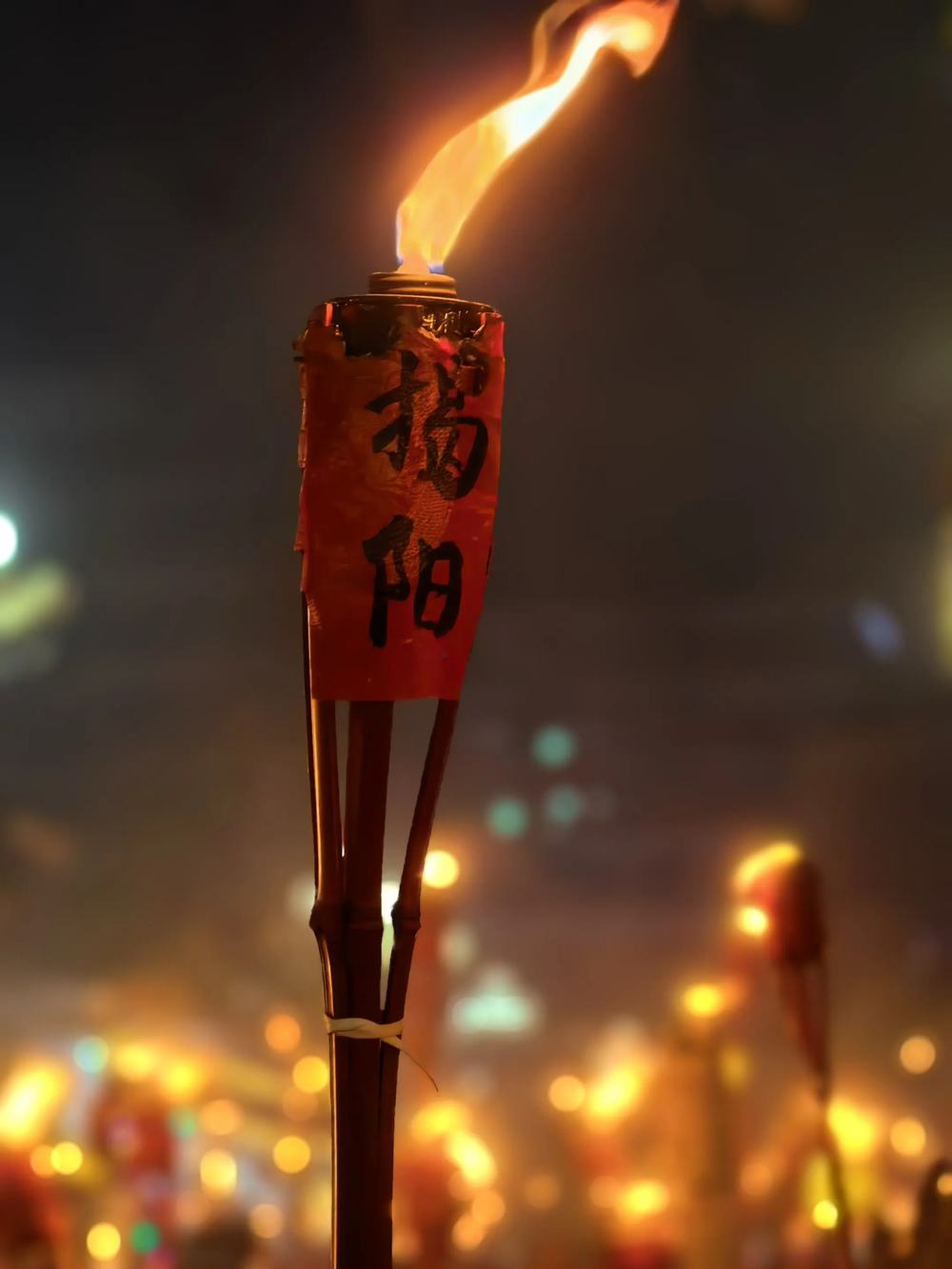
Half past seven on the sixth night of the first month, at Yangmei village in Pandong, Jiedong: the fire is lit before the Jie Gong temple and passed from household to household; the file sets out from the Jinshi di, walks one circuit of the ring road of the village and comes back to the Jinshi di, finishing at the old Jie Gong temple. Every year ten thousand to tens of thousands walk with torches, the torches joining into one dragon of fire, fireworks opening overhead. Municipal heritage item, 2009; locally it is said to be three hundred years old.
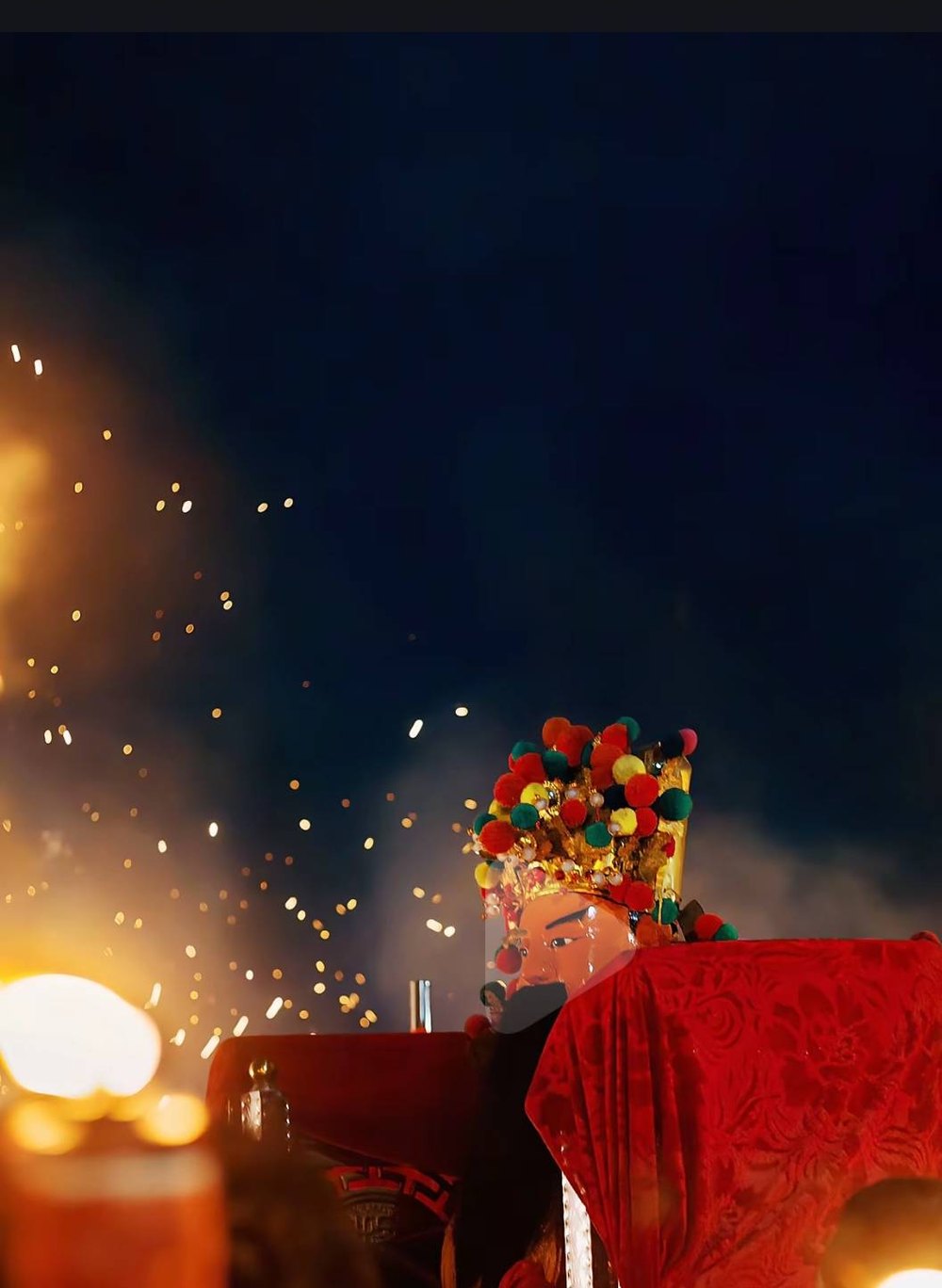
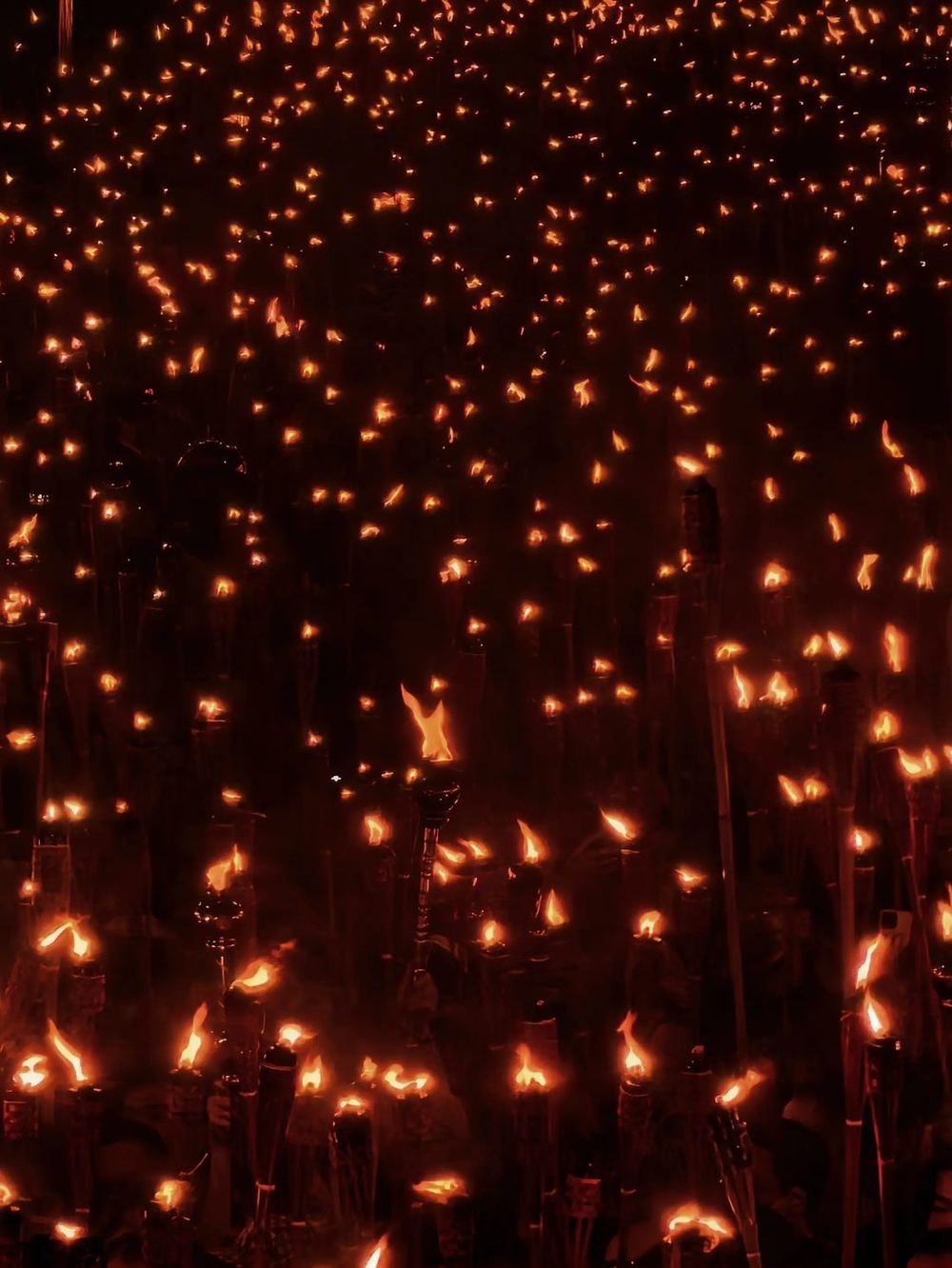
On rights. The first photograph is used with the author’s permission, credited to Cai Zijing; the other nine are of the session that year, from posts by Douyin users on the night itself, not yet authorised, used only to introduce this session and withdrawn if the author asks.
1. The date and the hour
The main procession is on the night of the sixth of the first month. The reporting of both 2025 and 2026 records that it begins at half past seven in the evening; the file takes an hour or two to walk the ring road, and no exact time of dispersal was found.
There is also an account of two days, the fifth and the sixth. In 2024 Nanfang Plus reported that the place held cultural processions on two days running, and in 2025 the same outlet wrote that it is held every year on the fifth and sixth of the first month. The county-level reporting of both years mentions only the procession on the sixth night. Both accounts stand, and the record here is: the sixth night is the main body; whether anything happens on the fifth depends on that year’s arrangement.
| Year | Lunar date | Gregorian |
|---|---|---|
| 2027 | 6th of the 1st month | 11 February 2027, Thursday |
| 2028 | 6th of the 1st month | 31 January 2028, Monday |
| 2029 | 6th of the 1st month | 18 February 2029, Sunday |
| 2030 | 6th of the 1st month | 8 February 2030, Friday |
| 2031 | 6th of the 1st month | 28 January 2031, Tuesday |
The Gregorian column is converted with the new moon as the start of the month and in Beijing time; it settles the calendar only and does not mean it will be held that way. Of the five years, none has an announcement confirming it, so all stand on past practice.
2. The place and the route
Where: Yangmei village, Pandong subdistrict, Jiedong, Jieyang. The village works jade, and the name “China’s jade capital” attaches to this stretch of country; the jade street can be seen by day and the torches waited for at night.
The route is a ring, not a straight line: out from the Jinshi di, along the ring road of the village, back to the Jinshi di, and finishing at the old Jie Gong temple. The reporting of 2024, 2025 and 2026 agrees on this; which lanes are entered and which left in between is not mapped in the reports.
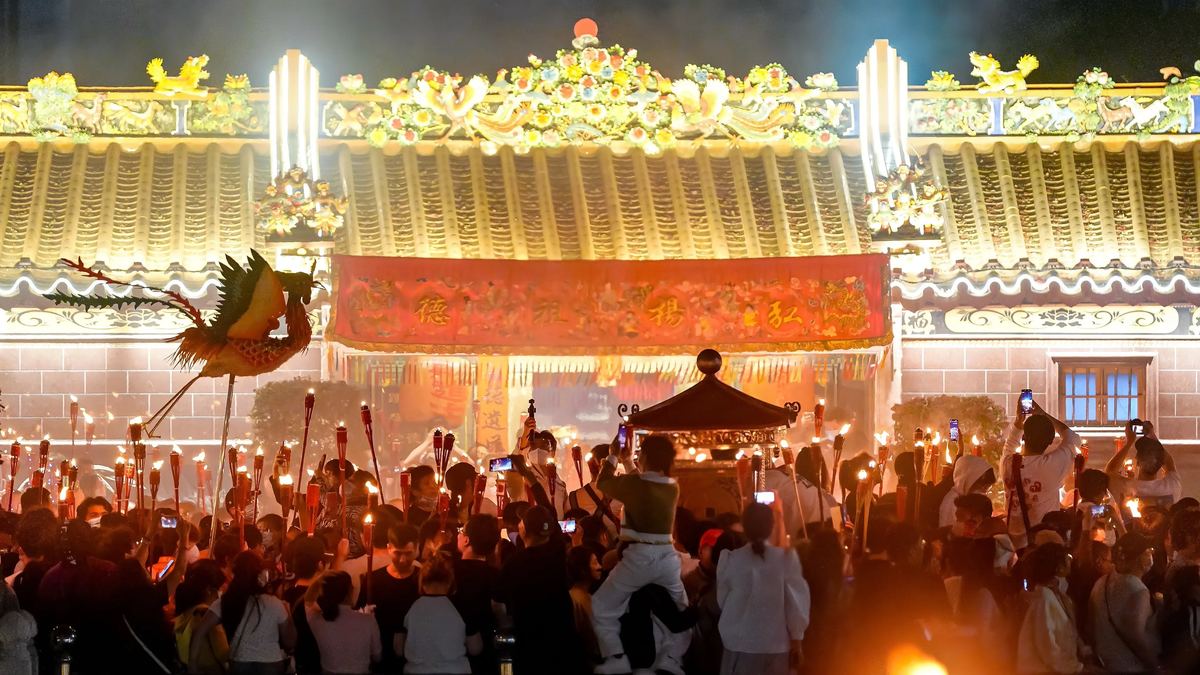
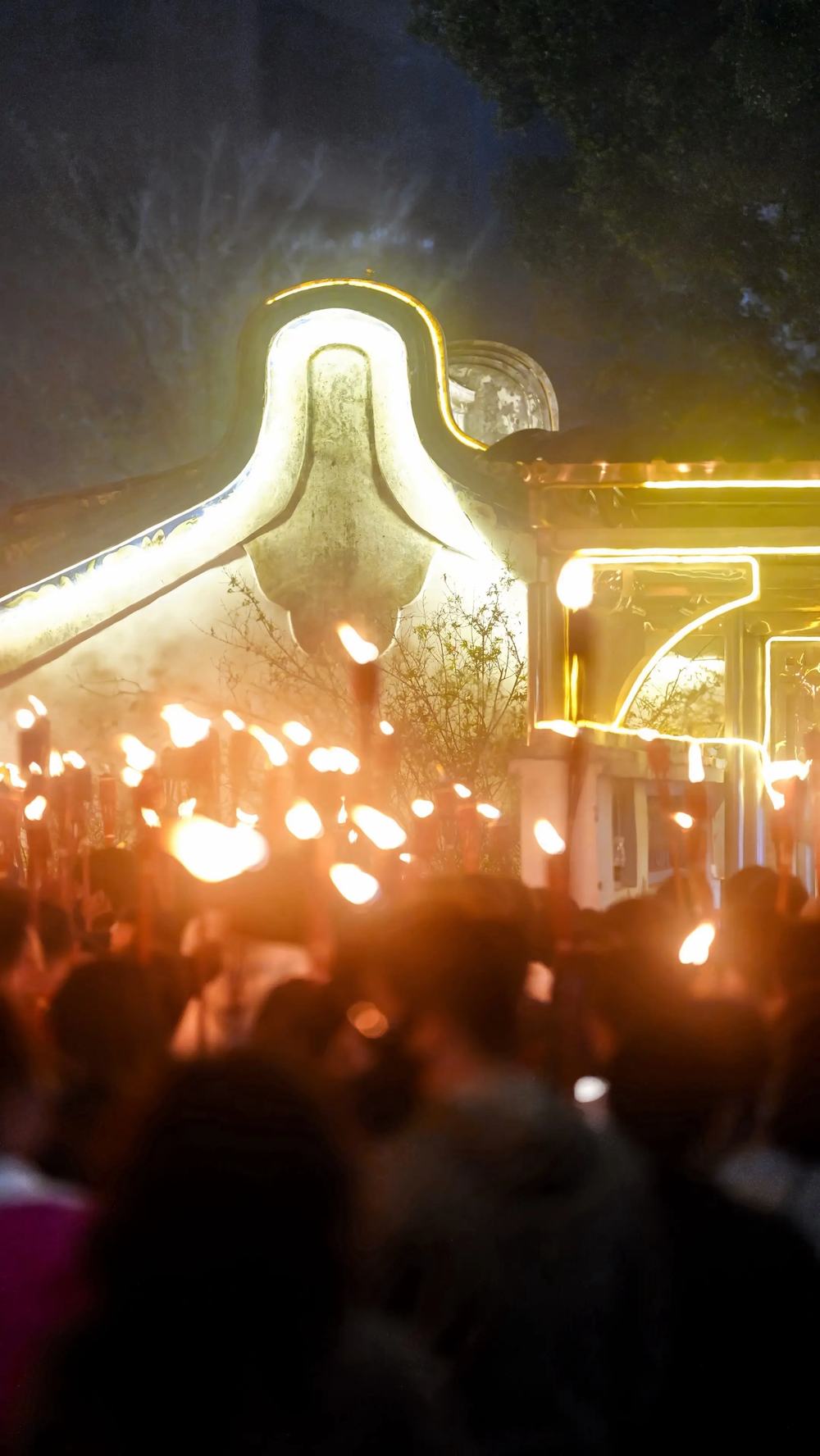
The lists: municipal, announced in 2009, nominated by Jiedong district; for the hierarchy, follow the heritage lists.
3. The scene: one file of fire, one stage of opera
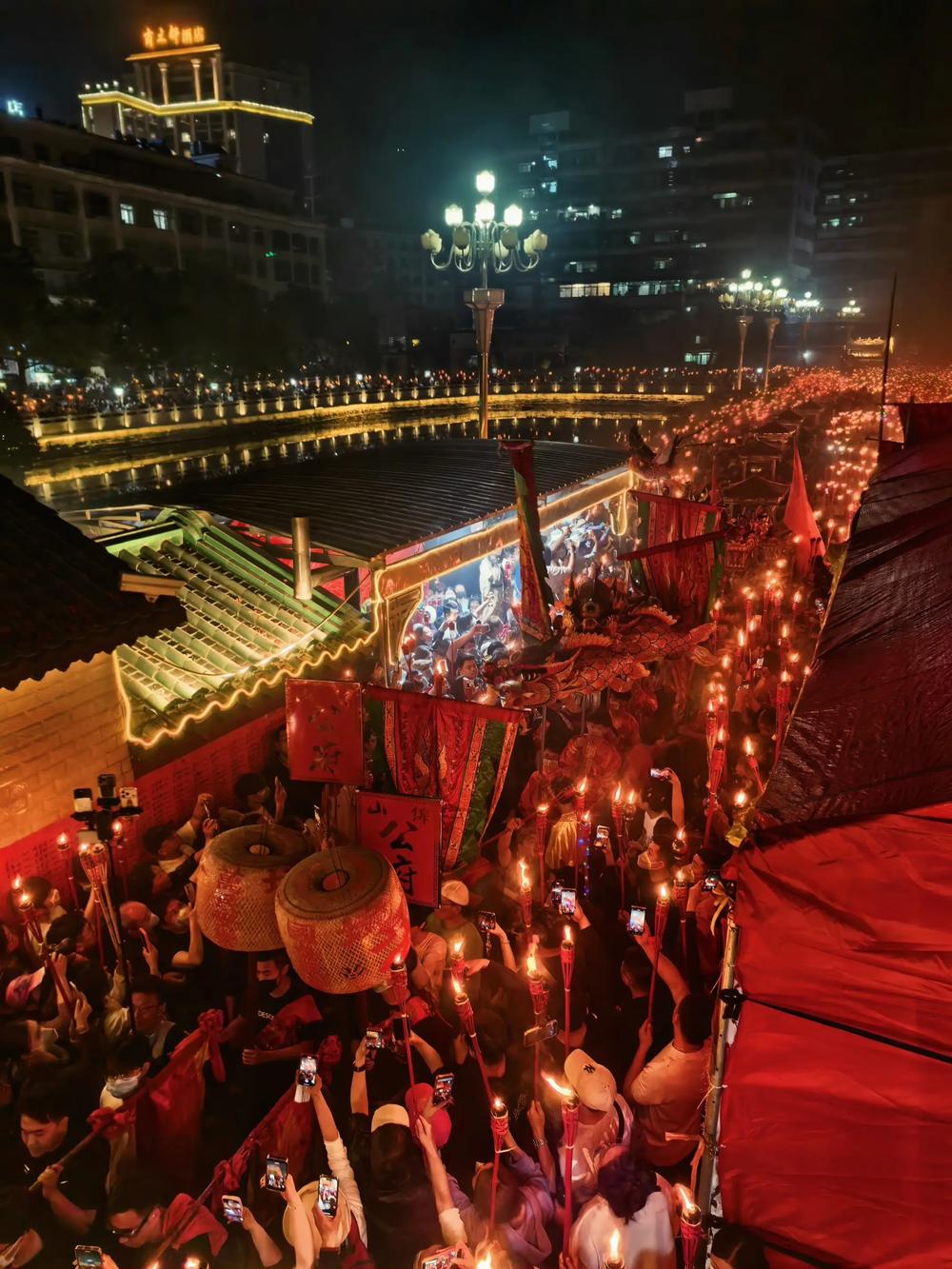
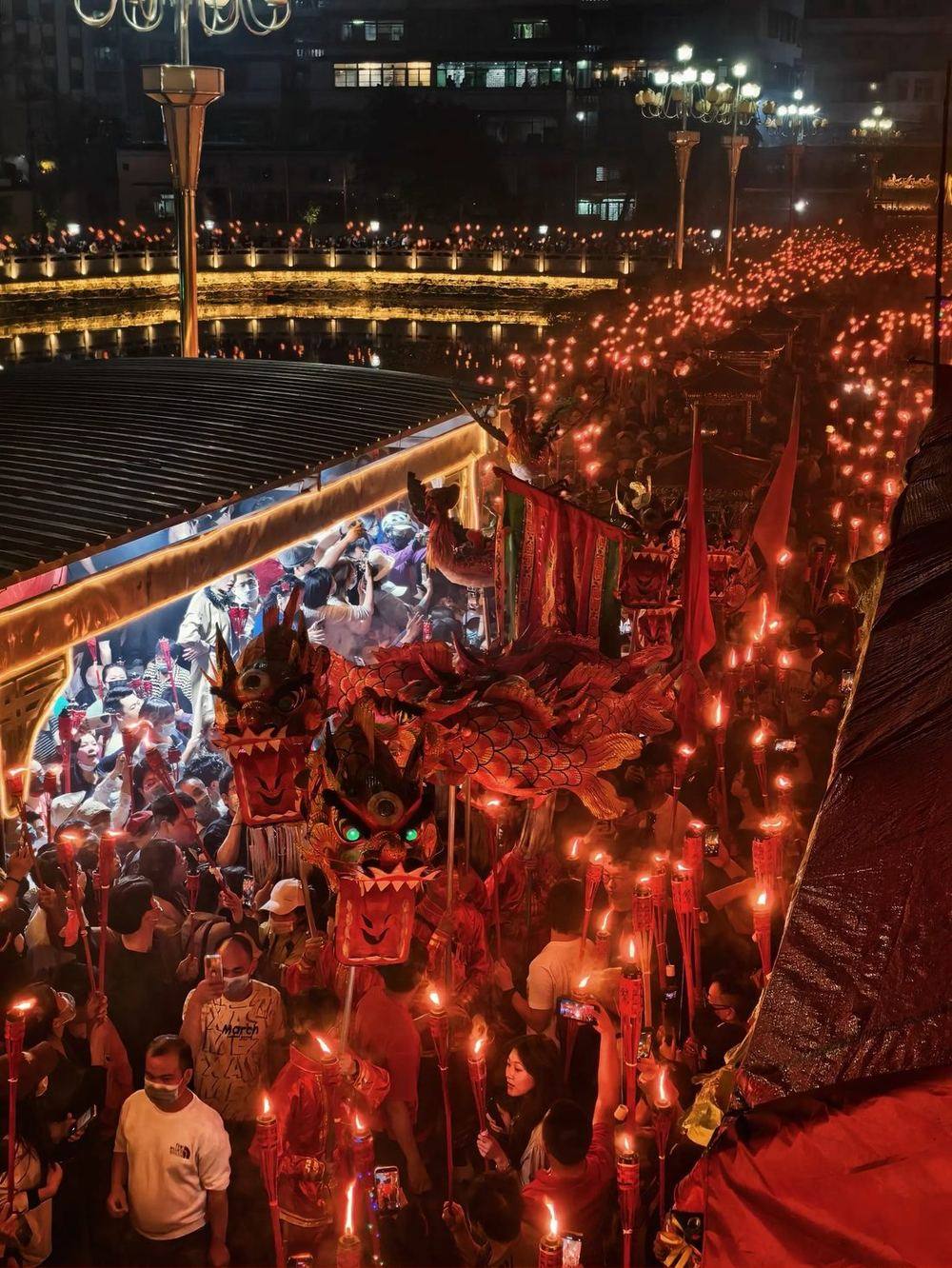
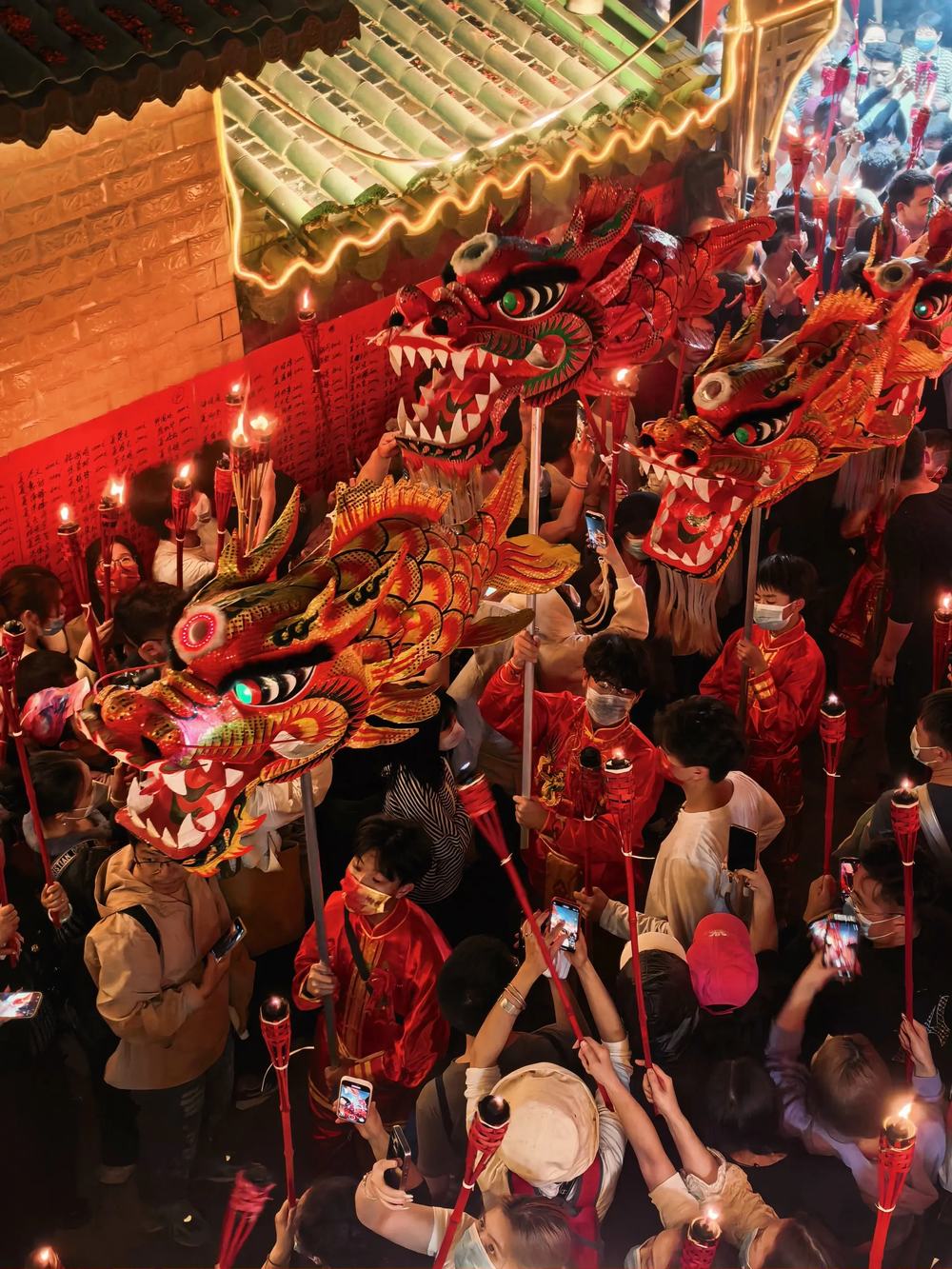
The fire is not a few bonfires but one torch to a person. It is lit that evening before the Jie Gong temple: villagers set a straw stack burning to take the seed of fire, and then it is passed on household to household; once the file moves, the whole village road is joined into a line of fire, which the reports call the fire dragon.
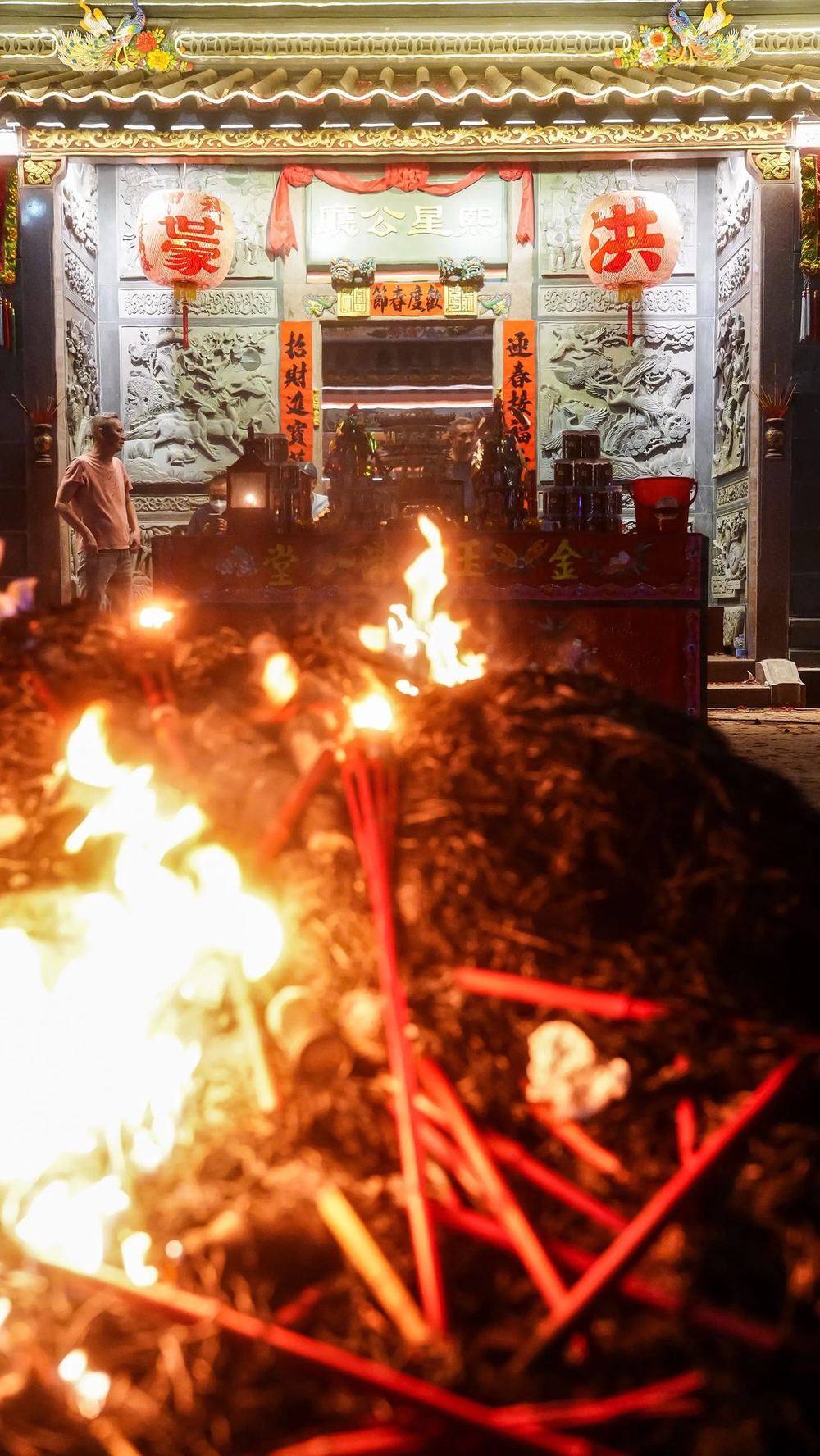
With the fire comes sound: gongs and drums, firecrackers, fireworks. Jieyang Daily wrote in 2026 of the long line of torches winding and flowing, matching the bright fireworks; Nanfang Plus wrote in 2024 of fireworks opening one after another and firecrackers roaring in volleys. This is not a quiet procession but a night heavy with gunpowder.
After the circuit there is opera. In past accounts Chaozhou opera and shadow puppetry follow the torches, sung until the small hours; the reporting of the last two years has not mentioned it again.
Day and night are two different sessions: by day there are ying lao ye files, and the torches belong to the night. See only one and the festival looks like half of itself.
4. Why torches: Jie Zitui
Both locally and in the press, the origin is given as the reverence of the early inhabitants for Jie Zitui of the Eastern Zhou, with the festival said to be three hundred years old. That layer is a local account: the prefectural gazetteer has no record of Yangmei torches, no early text can be matched to the Jie Zitui story, and the three hundred years is oral tradition rather than a documented date.
What is worth looking at is still how it is done now — how the fire is passed, how the route turns, who is in the file. On those there is reporting from the last three years to check against.
Getting there: the nearest station is Chaoshan, for Pandong in Jiedong, about twenty minutes by car from the station; the village streets are narrow and in festival time the car stays outside and you walk in. Village roads often run one way or are closed at short notice, and a navigation estimate excludes parking and the walk in; a night session often ends after nine, and the way back should be checked against the year’s timetable rather than reasoned from past experience.
5. Where to stand
Two layers: how past reporting describes it, and where this site suggests standing — not merged into one rule. The lines and controls for the year are set that year by the organisers and the authorities.
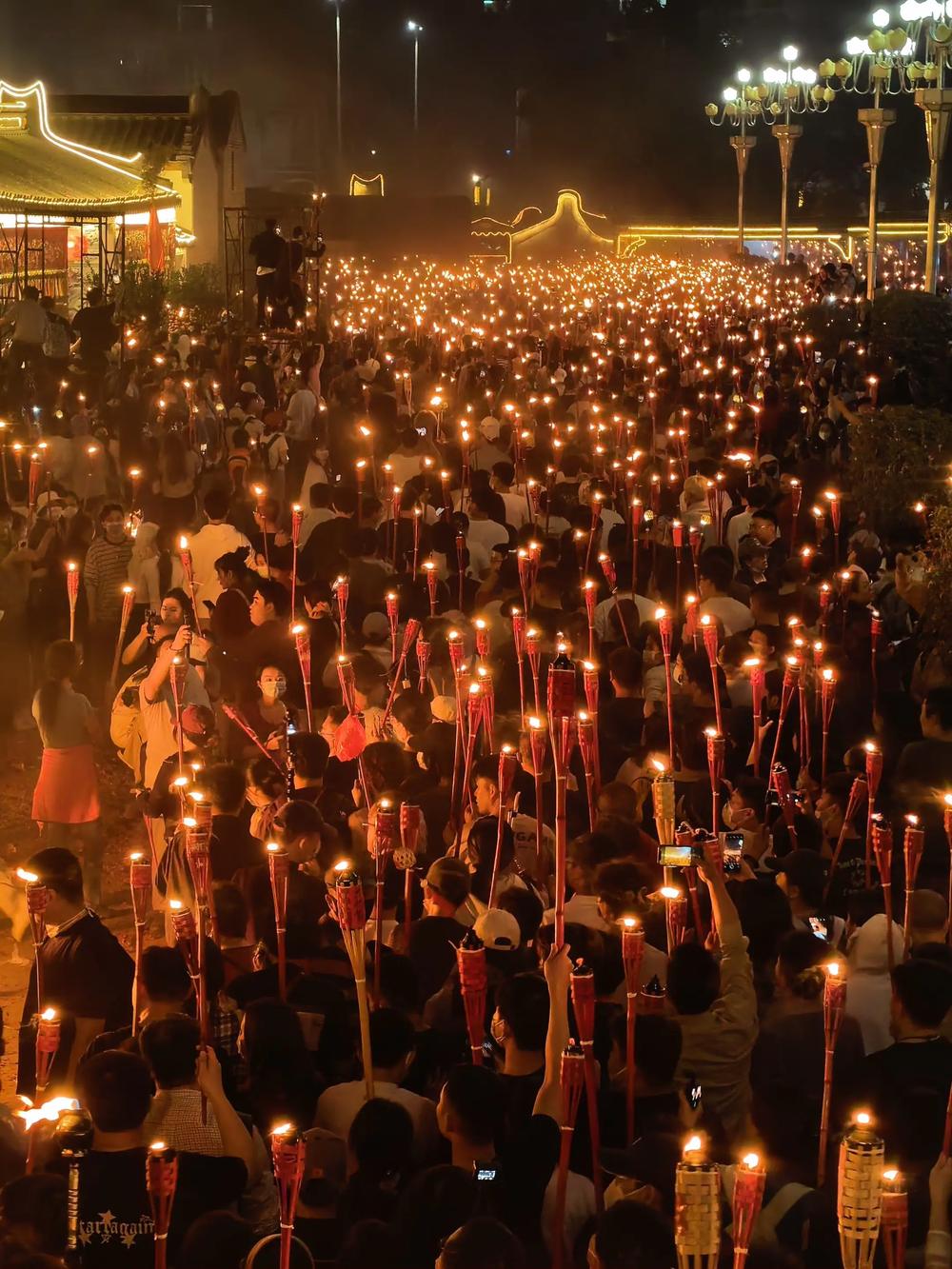
As past reporting describes it. The file walks the ring road and people stand at the roadside to watch; the reports give no fixed viewing area and mention no barriers. In 2026 visitors from outside joined the file carrying torches, which says the threshold is low, but that is how it was that year and is not a permission for this one.
An editorial note. Stand upwind and not at a turning; wear long sleeves and trousers in cotton, not synthetics or down; people and vehicles mix on the village roads that night, so park outside and walk in. These are suggestions made here from standing at such sessions, not the guidance of a fire or emergency management department.
6. Sources
| Source | Body | Date | What it establishes |
|---|---|---|---|
| “Yangmei village: ten thousand torches brighten the new year” | Jieyang Daily (Jieyang news network) | 23 February 2026 | held on the sixth of the first month in 2026; ten thousand villagers and visitors; start and finish at the Jinshi di and the Jie Gong temple; the municipal listing; three hundred years; “China’s jade capital” |
| “Jiedong: the torch festival held in Yangmei village, Pandong” | Nanfang Plus | 5 February 2025 | a start at half past seven; over ten thousand; the account that it is held on the fifth and sixth each year |
| “Firelight flashing, gongs and drums shaking the sky” | Yangcheng Evening News, Yangcheng pai (reprinted by Tencent News) | 4 February 2025 | out from the Jinshi di round the ring road to the Jie Gong temple; the straw stack and the taking of fire; tens of thousands; the Jie Zitui account |
| “Streams of fire, firecrackers shaking the sky: the Yangmei torch festival is hard core” | Nanfang Plus | 16 February 2024 | two days of cultural activity; the ring route; the passing on of the fire; the municipal listing |
All four can be opened. Where “three hundred years” and “Jie Zitui” appear, they are local accounts repeated by the reports, recorded as such.
7. What comes next
In lunar order: after it, Yuepu, the coming of age and the pig contest on the eighth. Also in Jieyang are Qiaolin, the firework dragon on the tenth, Dachanglong, the lantern greeting on the fourteenth and fifteenth, Xidong, leaping the fire pits on the fifteenth and sixteenth, and the Jieyang City God temple fair on the twenty-third.
Elsewhere on the site: ying lao ye: its form and the village days, Jieyang routes, the ritual year.
Back to the Chaoshan procession calendar for all twenty-three sessions.
Home › Customs › The procession calendar › Yangmei torch festival
Last revised: 4 November 2026