Reading a procession: the discussion is all about why it is popular, nobody says which day, which village
Four things have to be settled first: which day, whether it is held this year at all, where to stand, and whose word to trust. Taken separately, each with a way of checking and a test, they are enough to build an itinerary on.
1. The gap between the two questions
A search on Zhihu on 21 October 2026: under the question “why has the youshen custom, dormant for twenty years, suddenly caught fire in Chaoshan these past two years”, the top answer had over two thousand upvotes and more than three hundred comments. On the same platform, the answers to “what should an outsider do to go and see a Chaoshan yinglaoye” are scattered: one gives dates, one says find a local to take you, one says do not treat a village event as a performance. Not one is systematic.
The interest and the need do not line up. People will discuss why it is popular; few set out which day, which village. That second half is what this section fills in.
2. The line in the top answers worth keeping: not a revival, the camera changed
Several of the top answers say the same thing: Chaoshan processions are not a custom that lay dormant for twenty years and then came back. One writes that the village held it every year for as long as he can remember, there was simply no short video then; one that every village had its annual procession and fair a dozen years ago, it just did not travel; one asks, bluntly, “dormant for twenty years?”.
That reading matches the material in hand. Of the twenty-three sessions, seventeen are held every year on past form, two run by cycle (a leap-year community day, one turn in ten years), one waits for the committee to pick a day. Held every year, and not necessarily on the same day, have always coexisted.
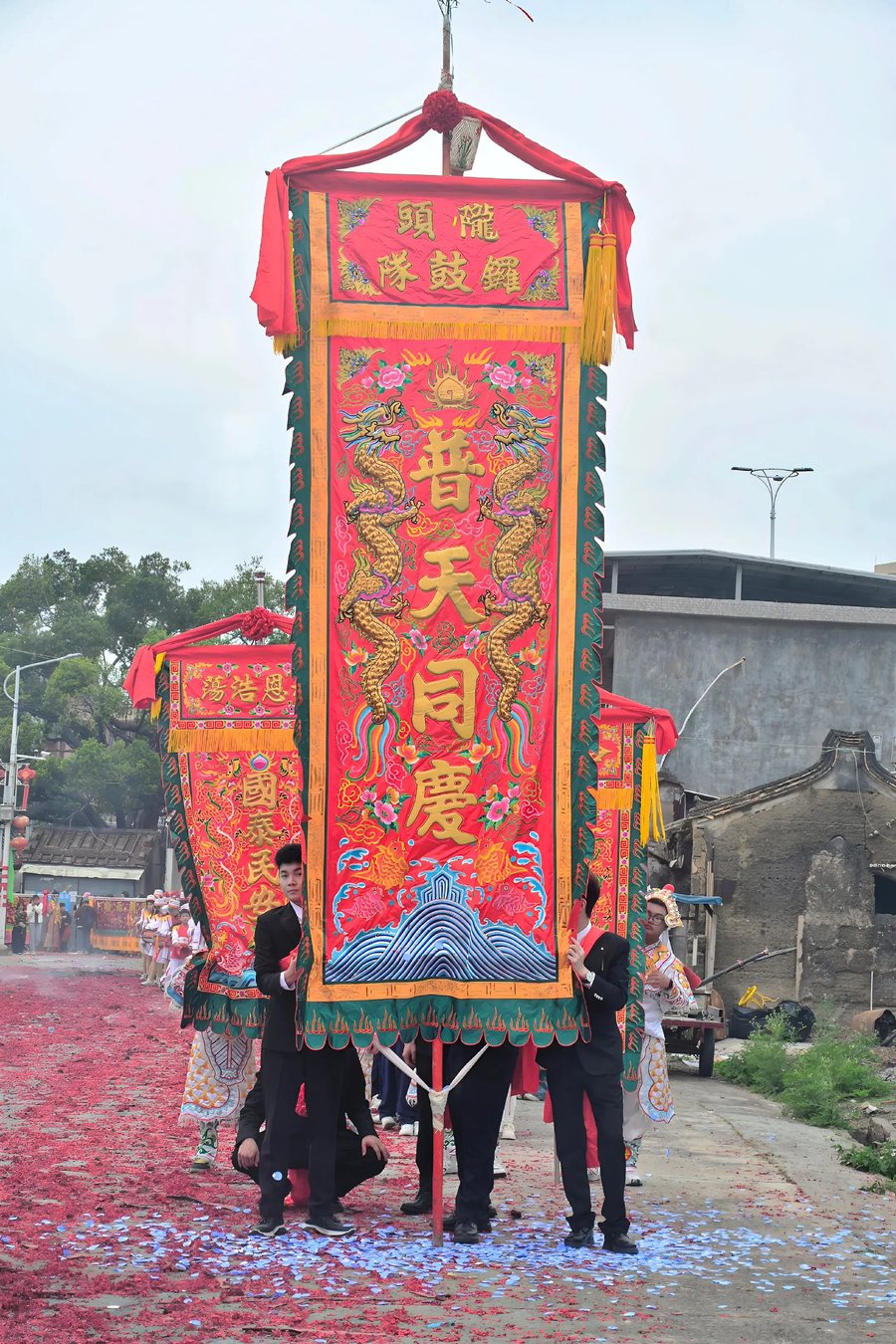
The “suddenly popular” half has evidence too. Over the 2026 Spring Festival Chaozhou received 5.368 million visitors from outside the city (Chaozhou Daily, 25 February 2026); Shantou received about 7.1555 million, with tourism revenue of about 7.156 billion yuan (Ministry of Culture and Tourism site, reposted 5 March 2026); the old city of Jieyang received 2.3797 million, up 86.85 per cent year on year (Nanfang Plus, 28 February 2026). That the crowds are real is true; that the days were already there is also true. The two do not conflict.
3. Three ways to pin down the day
In order of reliability, not of convenience.
One, the notice from the village or the temple. The Shuangzhong custom at Guiyu fixes its date only after the notice goes up on the sixteenth of the first month. This is the hardest evidence there is: until the notice is out, no “it was the eighth in past years” can be used for this year. In the date column it is marked “to be set”, and left blank.
Two, past pattern plus calendar conversion. The lunar day stays fixed, the Gregorian date moves year by year. The sixth of the first month falls on 11 February in 2027 and on 31 January in 2028 — eleven days apart on the Gregorian calendar. All twenty-three sessions carry a five-year comparison, and the conversion and the way it was checked are set out in section 2 of the calendar.
Three, ring up and ask. On Zhihu someone suggests telephoning the subdistrict office near where you are staying to ask the dates of the villages and which of them is the largest; a local answerer warns that plenty of villages have gone over to once in three years, and that some no longer walk the lanterns on the Lantern Festival night. From both we take the method, not the particular years — the turn-taking roster is a question for the people of that year.
In one line: conversion settles the calendar, only the notice settles whether it is held.
4. Three widely repeated claims not copied here
“The yinglaoye rite comes from the Book of Songs.” A widely copied retelling says so, and gives neither the poem nor a commentary. This site goes only as far as the prefectural gazetteer: the Qianlong Chaozhou fuzhi, in its section on custom, records “welcoming the victims with exorcism, which is called averting calamity”, which is functionally akin to today’s progress through the territory to drive off evil; whether the two are the earlier and later state of one thing the gazetteer does not say. For the form itself see yinglaoye.
“Chaoshan yinglaoye is on the provincial heritage list.” The provincial list is item by item; there is no blanket entry called “Chaoshan yinglaoye”. What can be found are specific items: Yanzao, dragging the god (provincial), the Sanshan kings’ tour (provincial, 2007), the Azure Dragon temple fair (provincial, 2012), the Shuangzhong custom at Guiyu and the Qiaolin firework dragon (both national). For the level, go by the heritage list page.
“It lay dormant for twenty years.” See section 2. It sits badly at least with the village days handed down generation to generation, and with the memory of local people in the top answers.
5. On site: three layers of information, not to be mixed
What the authorities require is the open area, the barriers and the traffic control laid down that year by the organisers and the departments in charge; historical experience is the way past coverage describes the organisation — at Yanzao, for instance, there are agreed lines inside the ground, and at Xidong the front of the fire-jumping run is kept clear; the editorial note is this site’s advice from the lie of the land and the fire, such as wearing long cotton sleeves and trousers at a fire. Three layers, strong to weak: where the earlier one exists, the later one does not count. How the three are written, and on what basis, is in section 8 of the calendar.
One further warning, from a local answerer, which we agree with: this is the village’s own affair, not a show put on for outsiders. So this site does not judge the belief itself, does not explain on the villagers’ behalf whether a god answers, and does not turn one village’s practice into a rule for all of Chaoshan.
6. What is covered
Only the twenty-three sessions in Chaozhou, Shantou and Jieyang, from the first month to the second; after the third month the record is left blank. Dates carry four states, and for 2027 and later not one is yet marked “confirmed for that year”. Each of the twenty-three has its own entry page, reached from the Chaoshan procession calendar.
Search and sources
Zhihu (searched 21 October 2026; only titles and summaries taken, no text reposted):
- Why has the youshen custom, dormant for twenty years, suddenly caught fire in Chaoshan these past two years: top answer about 2,000 upvotes and 306 comments; several answers question the premise of a twenty-year dormancy.
- What should an outsider do to go and see a Chaoshan yinglaoye: answers scattered, including “ring the subdistrict office for the dates”, “find someone living there to take you”, “the event belongs to the village”; only the method is taken here.
- What is the Yanzao dragging of the god about: dates given as the twenty-first and twenty-second of the first month, consistent with the table above.
- The Chaoshan pantheon (article, about 316 upvotes): the categories of the pantheon are clear; its particular judgments are not adopted.
Official and media figures:
- Chaozhou Daily, 25 February 2026: 5.368 million visitors from outside the city over the Spring Festival holiday, tourism spending up 33.2 per cent year on year.
- Ministry of Culture and Tourism, 5 March 2026: Shantou received about 7.1555 million visitors, tourism revenue about 7.156 billion yuan.
- Nanfang Plus, 28 February 2026: the old city of Jieyang received 2.3797 million over the Spring Festival, up 86.85 per cent year on year.
Video: search results show a Bilibili user recording, over five days, the sugarcane-lane walk at Xikou in Chaozhou and the procession at Nigou in Puning (BV1JUQZB4EgS); only the search summary was taken, the play count and date of posting were not verified on the site, so it is not used as a source of fact, only noted as footage worth looking at.
Editorial note: no text is reposted or adapted; what is taken from each item is its subject, its checkable figures and its usable method, and the facts are then returned to sources already cited on this site. Where a claim’s original document was not found, its provenance is noted and it is not written up as settled.
Home › Customs › The procession calendar › Reading a procession
Last revised: 4 November 2026