The Azure Dragon temple fair at Chaozhou: history, route and how to watch
The Azure Dragon temple fair is a traditional custom of Chaozhou, entered in Guangdong’s fourth batch of provincial intangible heritage in February 2012 — folk custom, temple fair, code X-3, nominated by Xiangqiao district, Chaozhou. In recent years the heritage procession has usually been held around the twenty-fourth of the first month; each year’s setting-out time, route and traffic control are as announced that year. The 2026 event was held on 12 March: according to Chaozhou Daily, the file that year was 2,680 people, 2.6 kilometres long, on a route of about 6.9 kilometres, with eighteen heritage teams and twenty-eight items in the procession.
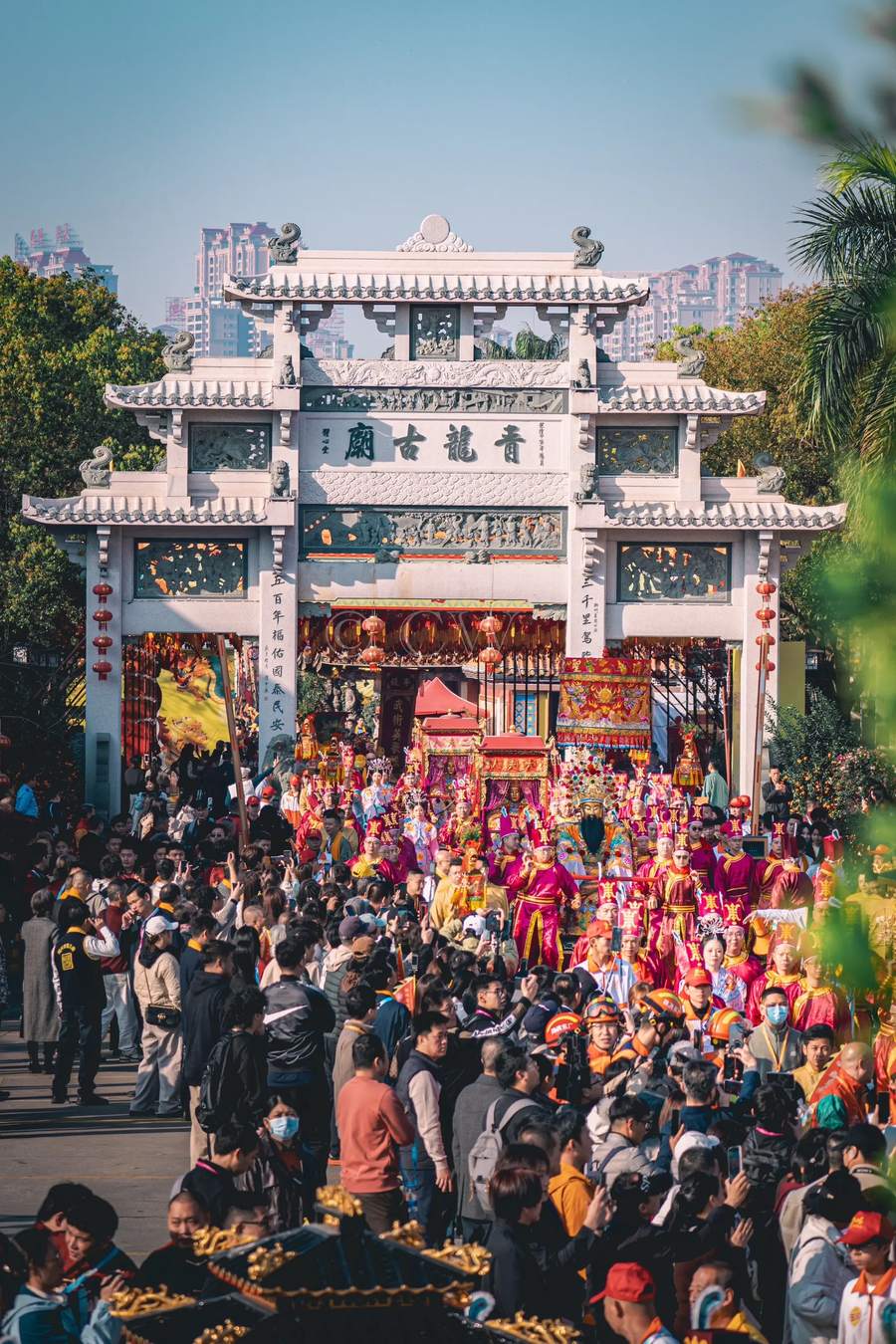
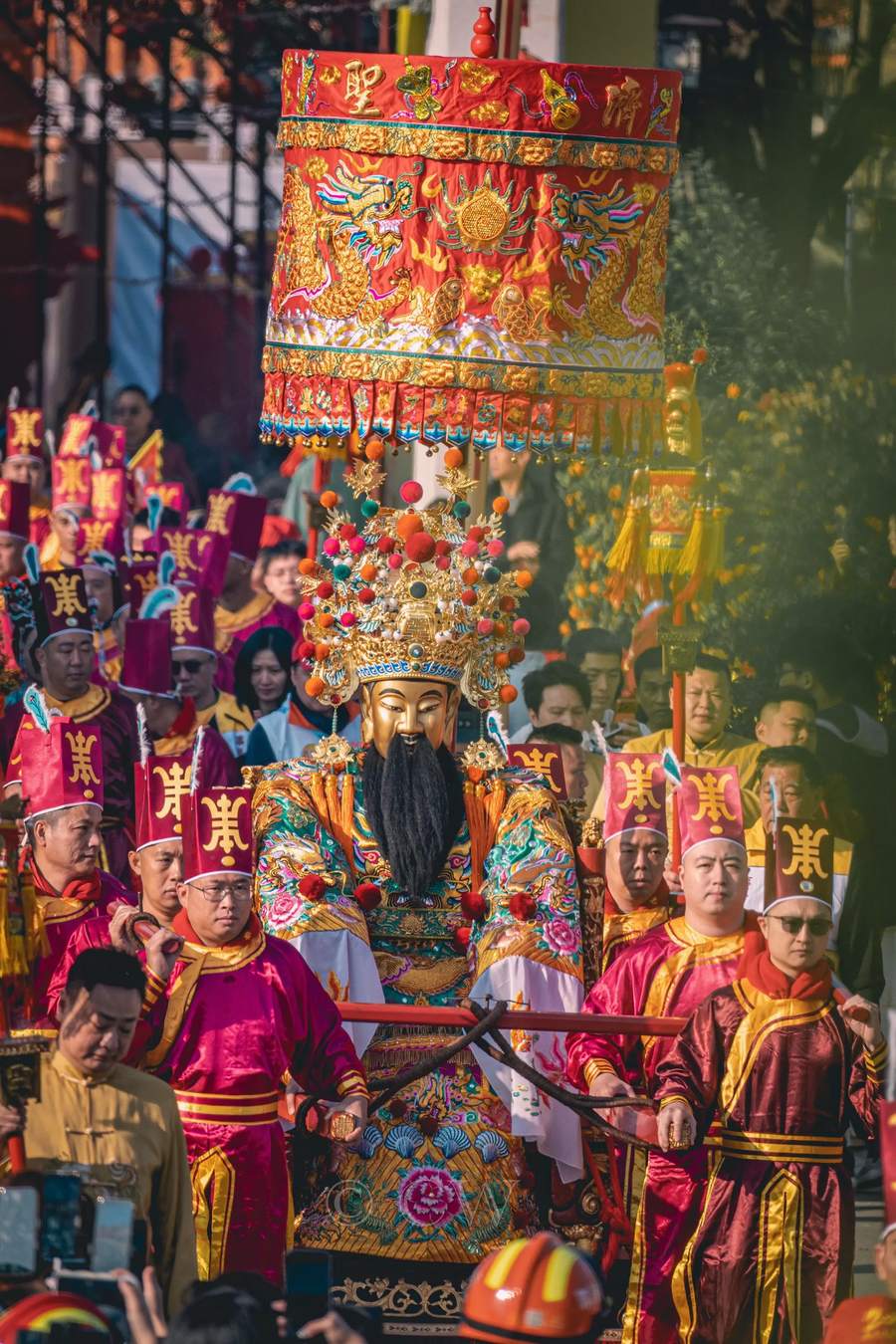
Four photographs of the 2026 fair on the twenty-fourth of the first month, from posts by the Douyin user @C w刺猬; used with the author’s permission, and withdrawn if the author should ask.
1. The date and the time
In recent years the heritage procession has been held around the twenty-fourth of the first month; the 2026 edition fell on 12 March, a Thursday. Each year’s arrangement, setting-out time, route and traffic control are as announced that year; the calendar conversion in the table and the pattern of past years are not confirmation for the current one.
| Year | Lunar date | Gregorian |
|---|---|---|
| 2027 | 24th of the 1st month | 1 March 2027, Monday |
| 2028 | 24th of the 1st month | 18 February 2028, Friday |
| 2029 | 24th of the 1st month | 8 March 2029, Thursday |
| 2030 | 24th of the 1st month | 26 February 2030, Tuesday |
| 2031 | 24th of the 1st month | 15 February 2031, Saturday |
The table is a calendar conversion, putting the twenty-fourth of the first month on the Gregorian calendar; it is not confirmation of a future edition and does not mean it will necessarily be held on that day. No announcement for 2027 or later has been seen.
2. A line round the old city
The image sets out from the Qinglong old temple, goes by the memorial arch street, the Zhenhai tower, Kaiyuan road and the West Ring City Road, and returns to the temple. The official reporting gives a total of 6.9 kilometres (Chaozhou Daily), with two other figures in circulation: over six kilometres (China Report) and 6.3 kilometres (an on-site guide).
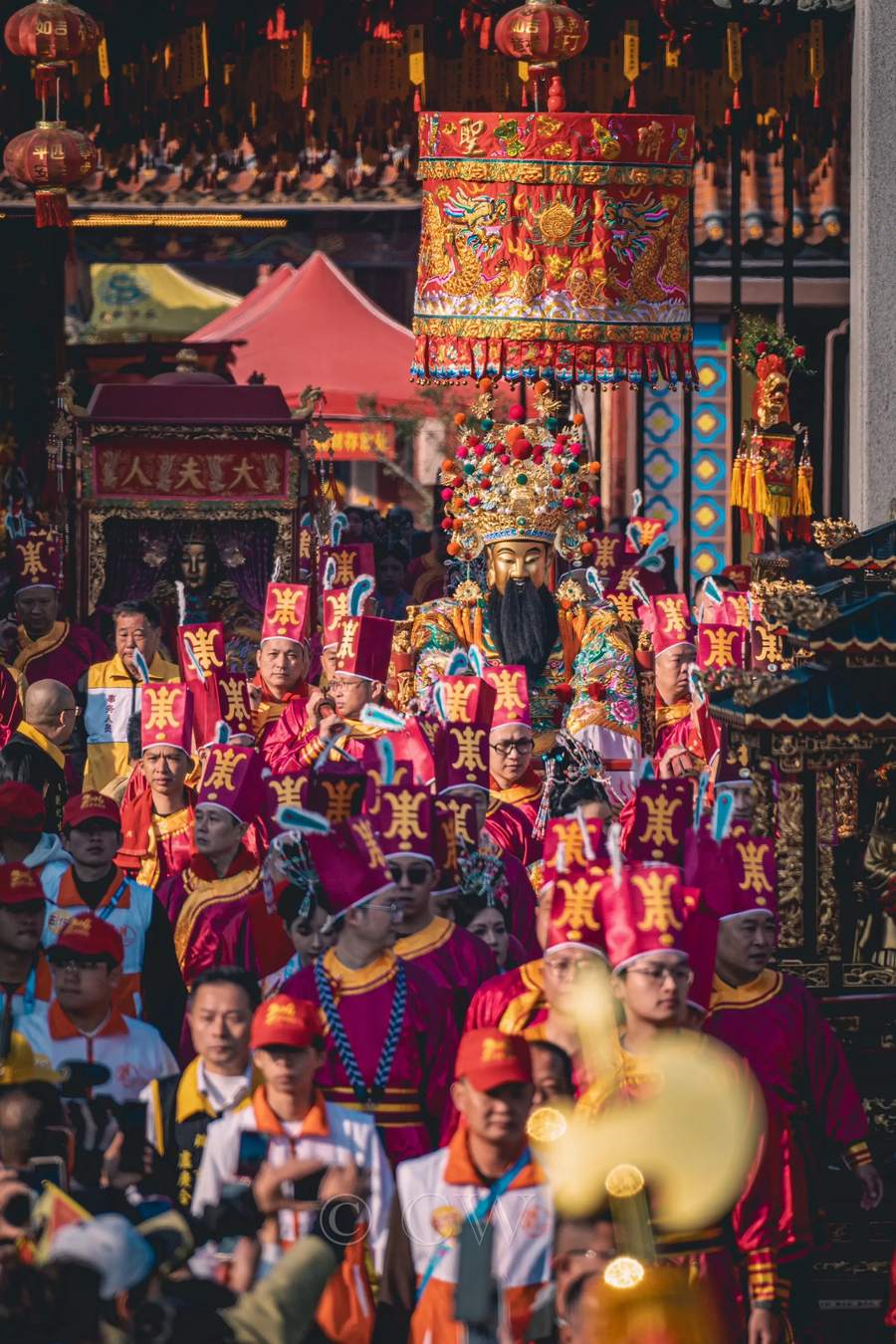
The 2026 size differs between accounts as well: Chaozhou Daily records 2,680 people and a file 2.6 kilometres long; China Report writes over two kilometres; an on-site guide gives about two thousand people and more than forty formations. The party paper’s figures are used as the base and the others are given alongside.
3. What to watch in the file
At the head are the Chaozhou great gongs and drums. In 2026 a local orchestra of 150 shared the ground with a gong-and-drum team from Kuching in Sarawak, Malaysia, playing an original piece for the year of the horse, “Shengping gongyue ying junma” — a foreign team playing Chaozhou gongs, the most particular thing about that year.
After them comes yingge. The Nanshan troupe has appeared on CCTV’s spring festival gala; there are also a youth troupe and the Raoping martial-arts troupe, each with its own way of dancing. The Nanshan and Raoping martial troupes are in the yingge team list; the stick patterns and the make-up are in that section.
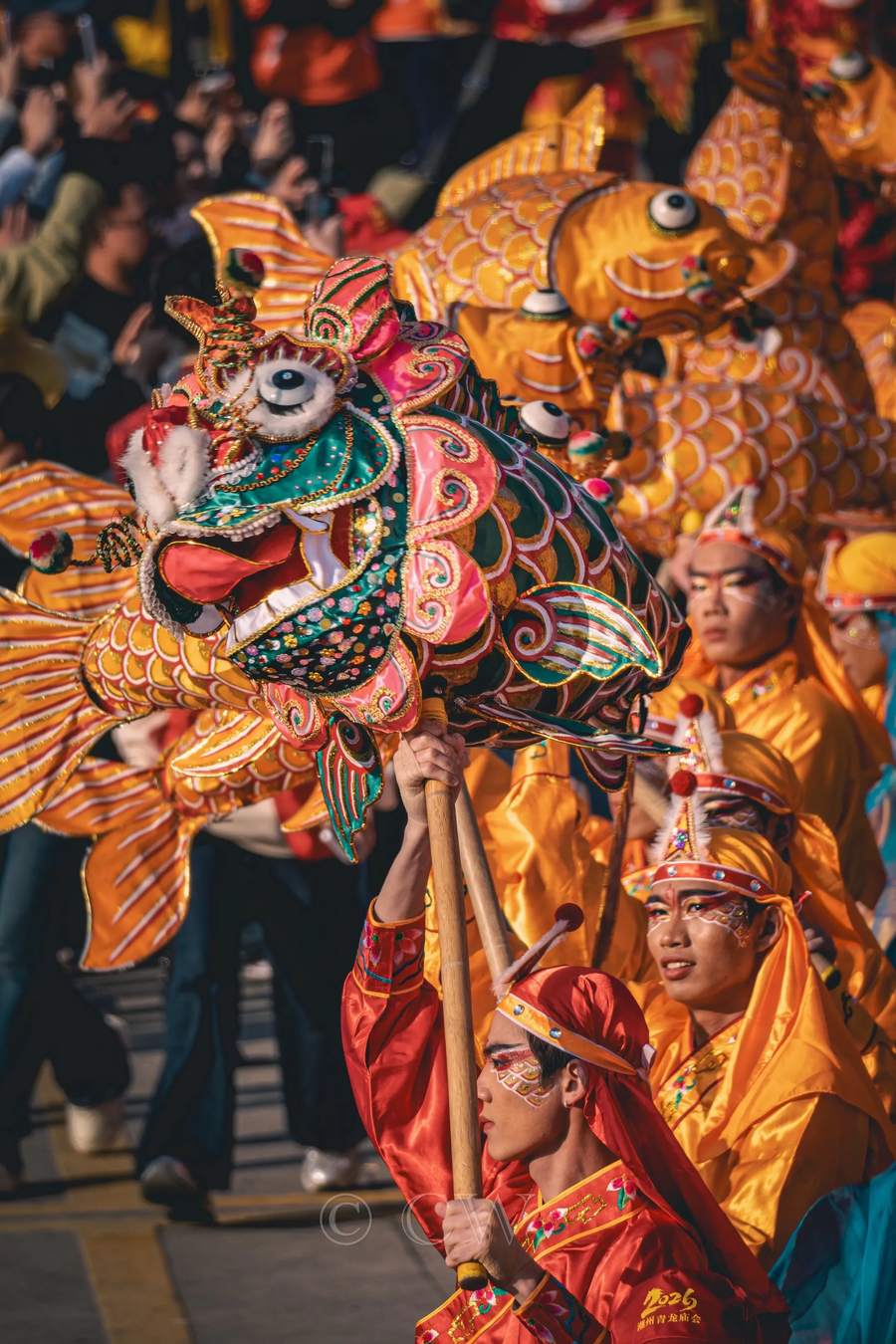
Further back come the cloth-horse dance, with over seventy people and twenty-four cloth horses, the carp dance with nine painted carp, the waiting-lady lantern team, a hanfu formation and the banner squad. The hundred-metre dragon and seven-colour phoenix from Jieyang, the Huang Feihong lion from Foshan and the Rongcheng qilin dance from Jieyang are in this file too.
The Zhenhai tower is a fixed performance point, where the file assembles and shows itself. To see every team, hold that one point.
4. The god and the temple
The temple. The Qinglong old temple stands on the south embankment at the western end of the Han River bridge in Chaozhou, its gate facing east, and was formerly called the temple of the Anji holy king. In the “historical origin” section of the temple’s own website, kept by the Chaozhou Wang Kang traditional culture research association, two accounts stand side by side: one, citing Shen Cunzhong of the Song in Pengli xiaolong, says the temple was built in the Northern Song; the same section also says it was founded in the Ming, and records that it took the name Qinglong because green snakes were often seen about the temple. Two records of the same temple, quoted as they are found.
The fair. An article in the overseas edition of People’s Daily on 4 April 2014 says the fair began in the Qianlong reign and, after more than a hundred years, ceased for reasons of the time. When the fair took shape and when the temple was founded are two different matters, and the latter cannot stand in for the former. The same article records that the Wang Kang research association was set up in 2011, that the fair was entered in February 2012 in Guangdong’s provincial list as an extended item, that planning began at the end of 2013 and that it was revived at the Spring Festival of 2014.
The modern procession. What was interrupted was the fair itself, not the worship. In 1994 Chaoshan people abroad raised the money to rebuild the Qinglong old temple, which took two years to complete (Huang Chaoming, vice-president and secretary-general of the association, via the Chaozhou civilisation network); at the Spring Festival of 2014 the cultural street parade was revived on the principle of government guidance, folk performance and public participation (the Chaozhou city government portal). The overseas edition of People’s Daily called that revival “after sixty-four years”, a figure reckoned from the last fair; the article does not give the year of that last fair.
The Anji holy king. The temple and local materials identify the Anji holy king enshrined at the Qinglong old temple as Wang Kang, administrator of Yongchang under Shu Han; there is another account that a Chaoshan man of the Xie family brought him from Yunnan in the late Ming or early Qing and worshipped him on the south embankment (Xie Songqing, president of the association, interviewed on the Chaozhou civilisation network). These two layers belong to devotional tradition and the temple’s own record, and are not the same as the documented official posts of the histories; they are written separately here.
The blessing shouted on the ground. A 2026 report reprinted by the Guangdong federation of returned overseas Chinese writes it as “xing a shun a”; other material writes “xing xing shun shun”. Both spellings stand, and within quotation marks the wording follows its own source.
Burning incense along the route and touching the palanquin are practices seen among some believers. The specific rites and ways of taking part are as the temple’s materials and the record of the day have them; they are not generalised into a rule for the whole city.
5. Where to stand
Two layers: how past reporting describes it, and where this site suggests standing.
As past reporting describes it. Traffic is controlled on the core streets of the old city, and walking or public transport is advised; the middle of the memorial arch street and the ground before the Zhenhai tower are the tightest; the file sets out at eight and finishes around one (a social-media timetable, not an official announcement).
An editorial note. To see the whole file, hold the Zhenhai tower; for street scenes, hold the entrance to the arch street; do not stand under an arch looking up to photograph, since the crowd will carry you off; do not drive into the old city that day. These are suggestions made here from standing at such sessions, not the rules of the organisers or the police.
Getting there: the nearest station is Chaoshan, and the arch street and the Zhenhai tower in the old city of Xiangqiao are within walking distance; the core streets are controlled on the day, so park on the edge and walk in, and a navigation estimate excludes parking and the walk. This is a daytime procession, which set out at eight in the morning in 2026; the reports give no time of dispersal, so arrange the way back around the actual time and the year’s trains, not on the experience of a night session.
6. Sources
| Source | Body | Date | What it establishes |
|---|---|---|---|
| “Chaozhou rhyme through the streets, streaming light over the old city: the 2026 Chaozhou Azure Dragon heritage procession” | Chaozhou Daily | 13 March 2026 | the morning of 12 March; 2,680 people; a file of 2.6 kilometres; a route of 6.9 kilometres; eighteen teams; twenty-eight items; the 150-strong orchestra sharing with the Kuching team |
| “A heritage procession praying for peace: the 2026 Chaozhou Azure Dragon heritage procession” | China Report | March 2026 | setting out at eight on three guns; a route of over six kilometres; a file of over two kilometres; the cloth-horse dance with seventy-odd people and twenty-four horses; nine carp; Nanshan yingge; the Kuching team |
| Notice of the Guangdong provincial government approving and publishing the fourth batch of the provincial intangible heritage list (PDF) | Guangdong provincial government | 27 February 2012 | level, batch and code: folk custom 31, X-3 temple fairs (Potou Luohou Wang temple fair, Chaozhou Azure Dragon temple fair, Hegu jiao), nomination including Xiangqiao district, Chaozhou |
| “The Azure Dragon temple fair: a Chaoshan cultural carnival” | People’s Daily, overseas edition | 4 April 2014 | the fair beginning in the Qianlong reign and ceasing after a hundred years and more; the association in 2011; the provincial listing in 2012; the revival in 2014; “after sixty-four years” |
| “Showing the distinct charm of Chaozhou culture” | Chaozhou city government portal | 2014 | the 2014 route from the temple by the arch street, Xihe road, Xinqiao road, the people’s square and Fengchun road back to the start; five formations and twenty-eight items; the February 2012 extended listing |
| “Long awaited: this event is held on 21 February” | Chaozhou civilisation network | 18 February 2025 | the 2025 edition beginning at eight on the morning of the twenty-fourth; interviews with the president and the secretary-general: worship from the Ming, the 1994 rebuilding, the provincial fourth batch in 2012 |
| “Historical origin” | Chaozhou Wang Kang traditional culture research association (Qinglong old temple) | undated | the temple’s own two accounts of its founding (the Northern Song, citing Pengli xiaolong; and “founded in the Ming”); the origin of the name; the old name of the temple |
The two sets of figures for the size do not agree, and both are given; the social-media timetable of eight to one is for reference only and is not treated as an official time.
7. What comes next
In lunar order: before it, the Jieyang City God temple fair on the twenty-third; after it, Shangrao, swinging on the twenty-sixth. Also in Chaozhou is Xikou, through the sugarcane lanes on the sixteenth.
Elsewhere on the site: the memorial arch street, ying lao ye: its form and the village days, Chaozhou routes.
Back to the Chaoshan procession calendar for all twenty-three sessions.
Home › Customs › The procession calendar › The Azure Dragon temple fair at Chaozhou
Last revised: 4 November 2026