The old city of Jieyang: Jinxian Gate, the Confucian temple and West Horse Road
The old city is not a walled-off scenic zone. It is a quarter of Zhongshan sub-district in Rongcheng where people still live. The wall came down long ago and one gate tower is left; the frame that remains is the Confucian temple, the City God temple, and one arcade street after another. Two or three hours to walk it, a whole day if you slow down.
1 Which part is the old city
Geographically, the streets round Zhongshan sub-district in Rongcheng, held between the north and south channels of the Rong river, with Huancheng Road as the boundary on the east. That ring is what older people mean by being in town. Eight street names are enough to hold: Zhongshan Road, West Horse Road, Datong Street, Yuanding Road, Shaoxing Road, Hanci Road, Chenghuang Road, Guanyinzai Street.
How dense is it? Within Zhongshan sub-district alone there are two national protected sites (the Confucian temple, the City God temple), six provincial ones (the Jinxian Gate tower, the Guo Zhiqi mansion, Jinma Yutang, the Guo family shrine, the ‘forbidden city’ wall of the old county office, the Bailan Mountain house), thirteen city-level and eighteen district-level. For a county town in Guangdong, that is unusual.
Of the four national sites in the whole city, two are named above; the other two, the Gurong Guandi temple and the Ding Guanglu shrine, are also in Rongcheng and walkable. Strung together they make a day.
The streets themselves have no ticket and can be walked at any hour. The Confucian temple and the City God temple keep hours; see section eight.
One addition on the south side: Chaoqiaofang, fourteen halls built by overseas Chaoshan associations, each designed and put up by the association of one host country, opened in its first stage on 28 October 2026 — on the way if you are coming in from the arcade streets.
2 One line through it
Pressed to its shortest, the route is a single line from east to west, a little over two kilometres, with no climbing:
Jinxian Gate → the Confucian temple → the City God temple → Zhongshan Road → Datong Street → West Horse Road.
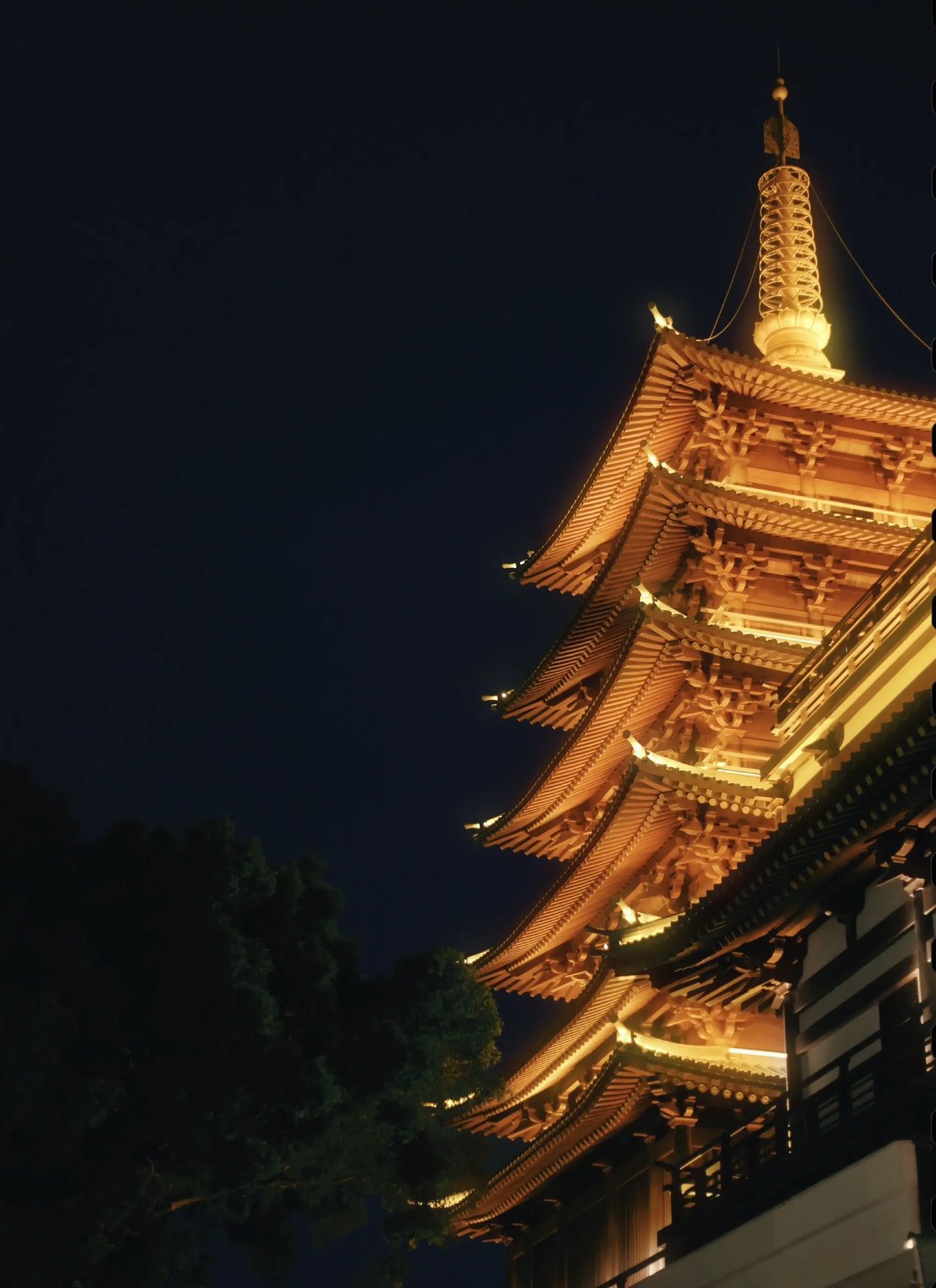
Jinxian Gate is the start and the only gate tower still standing. Re-cut in 1621, the first year of Tianqi, by the magistrate Zeng Yingrui ‘to rouse the arts and dispel ill fortune’; the gate leads towards the Confucian temple and the name means bringing in the worthy. It stands 16.77 metres to the top, a brick and stone base with an arched passage below and a three-storey timber tower above, gate, tower and pavilion run together as one building — a form not often seen in China. Local people call it the Red Pavilion.
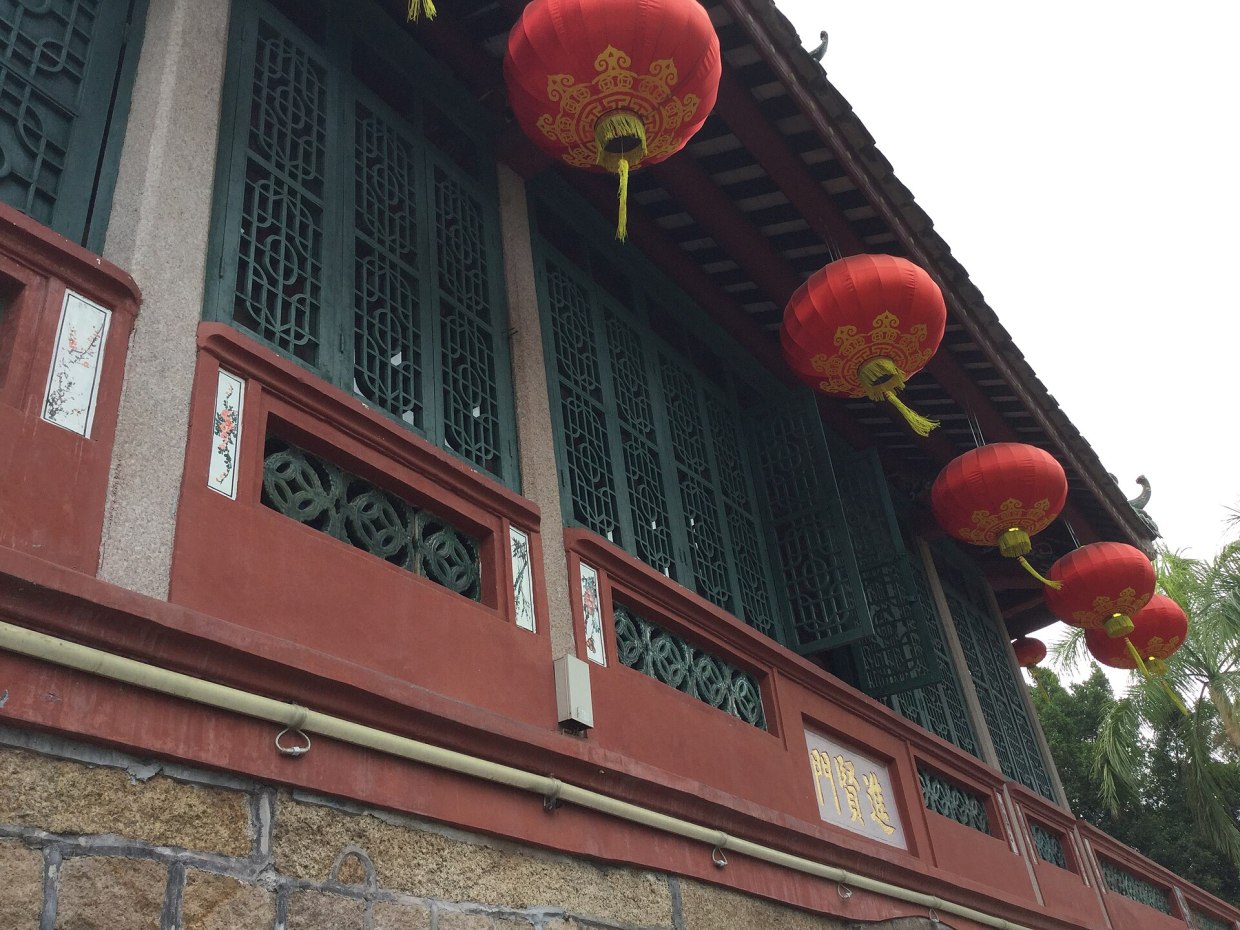
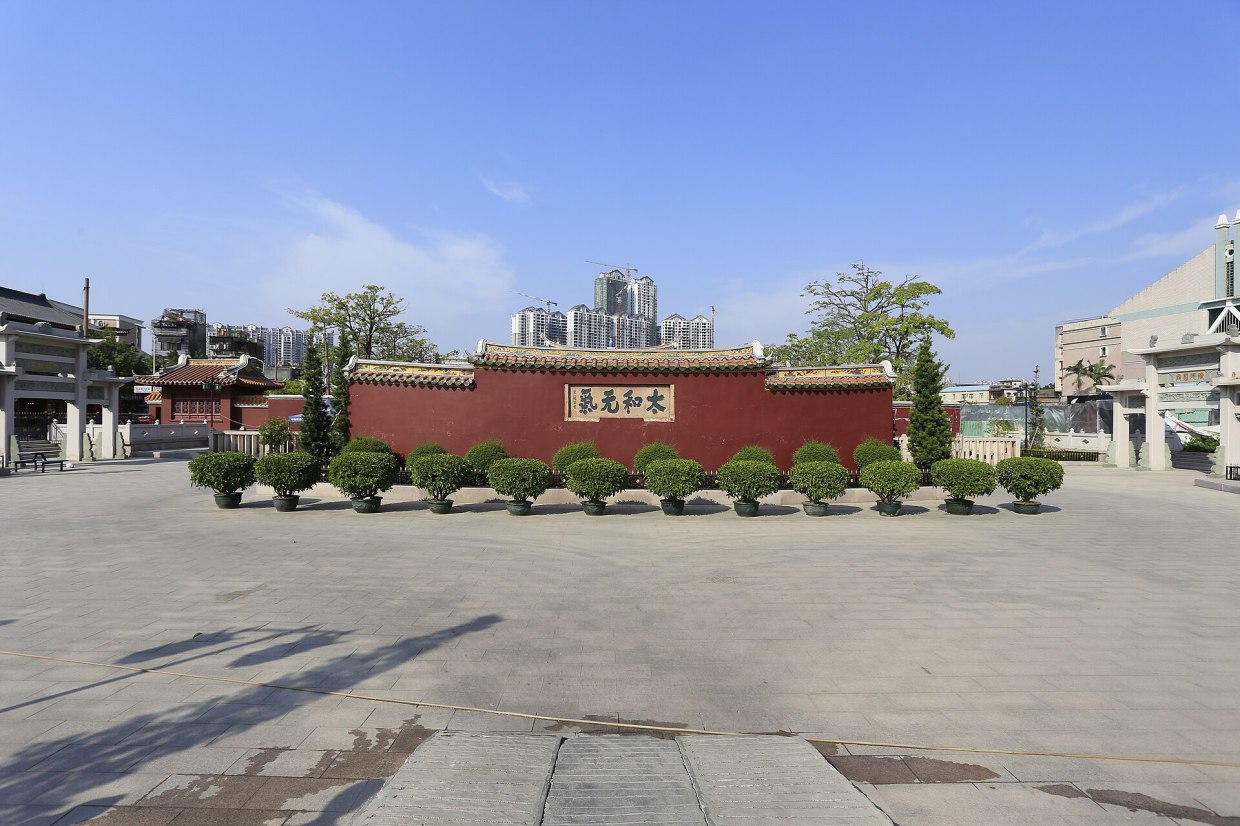
Through the gate, walk towards the temple. It stands east of the Hanci Road junction, founded in 1140 and listed in 2013 in the seventh batch of national sites. What is worth the visit is not one hall but the sequence: Lingxing gate, half-moon pool, Dacheng gate, Dacheng hall, each court raised above the last, rank written in the height of the platform.
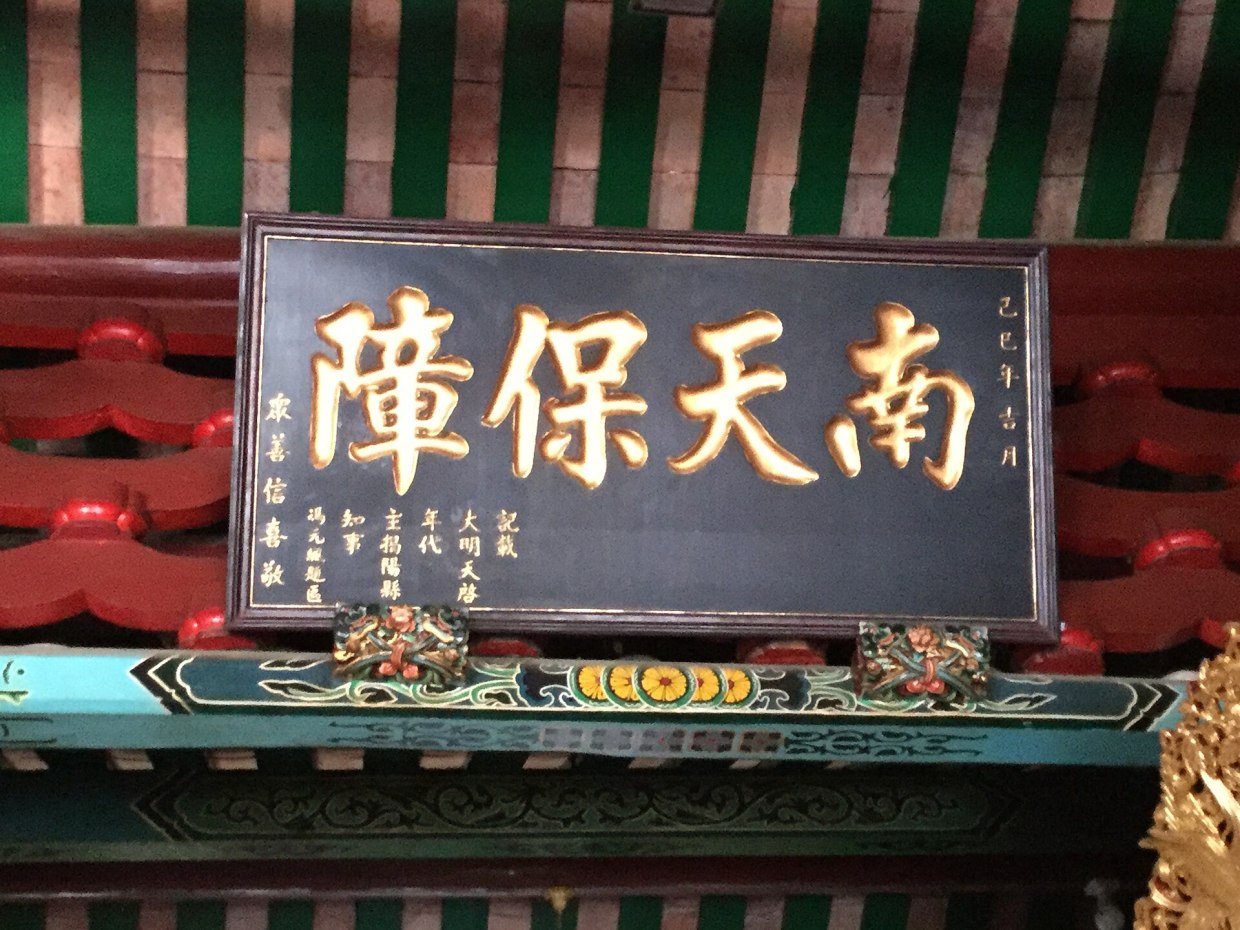
Out of the temple to the City God temple, a few steps. It stands on the north side of Chenghuang Road, founded in 1369, listed in 2019 in the eighth batch — the only City God temple in Guangdong on the national list. The front is plain and everything is inside: look up in the worship pavilion and the density of gilt woodcarving on the beams stops you.
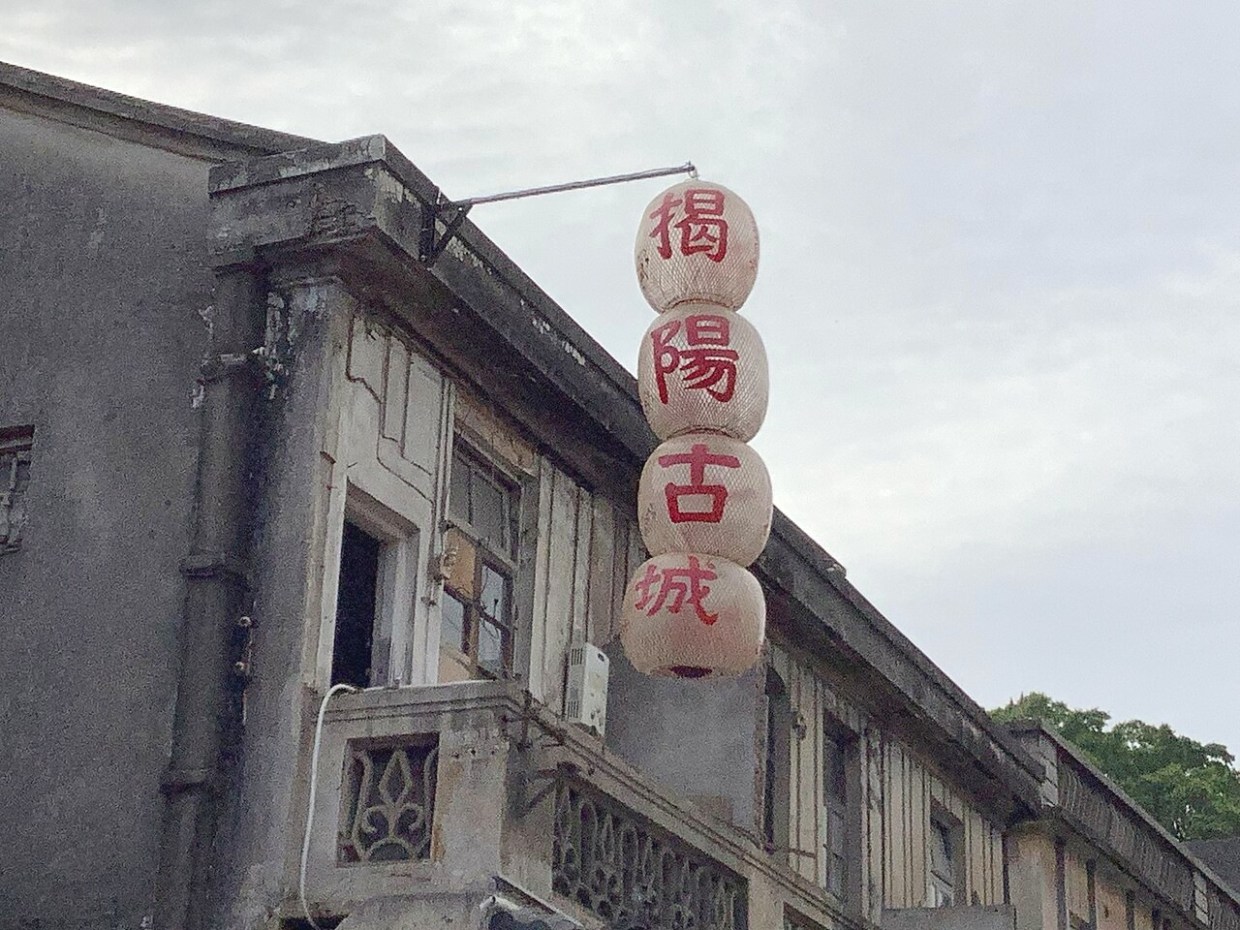
West again is Zhongshan Road, then Datong Street, then West Horse Road. This stretch has no numbered sights; it is just walking the streets. Under the arcades are clock repairers, tailors, kueh sellers and barbers; in the afternoon old men play cards in the shade.
3 Four national sites, four different things to look at
All four are the same grade, and none of them is looked at in the same way.
| Place | Grade | What to look at | Time |
|---|---|---|---|
| The Confucian temple | National, 7th batch | The sequence and the platforms: Lingxing gate, pool, Dacheng gate, Dacheng hall, each court higher; look up in the hall for the brackets and the porcelain inlay | 1.5–2 hours |
| The City God temple | National, 8th batch | The carving: worship pavilion beams, shrines, doors and windows all covered in gilt woodcarving, opera scenes to flowers and birds; read stone against wood | 1 hour |
| The Gurong Guandi temple | National, 7th batch | Coffered ceiling and stage: a stage in front of the temple is a rare arrangement, the front hall beams packed with figures, twin dragons in porcelain on the ridge | 45 minutes |
| The Ding Guanglu shrine | National, 8th batch | The plan: sacrifice, living, study and schooling in one group of courtyards, called ‘a hundred birds facing the phoenix’; space divided by function | 1 hour |
The area of the Confucian temple is given differently in different sources: the page here uses just over 5,500 square metres, and another account has about 20,000.
4 The arcade streets
Zhongshan Road is the showpiece of the restoration. 660 metres long, 310 buildings designed one by one, on a survey by Sun Yat-sen University’s historical and human geography unit, with the Tsinghua-affiliated team Huaqing Andi doing the work; shop signs and column ornament were restored against old photographs. In May 2026 local reporting kept coming back to this street — it is indeed the first stretch of the old city to change.
West Horse Road is older and livelier. The quarter went up in the 1920s and 1930s, running east from Yuanding Road and Datong Street and west to Huancheng West Road; the protected core is the first row of buildings along the street, some well-preserved courtyard houses, and the old residence of Ding Richang. Shop names from every period are still on the facades.
Three things to look at in an arcade. The walkway: the upper floor carried out on columns, making a passage that keeps off sun and rain. The facade: shop name, gable, parapet, no two alike. The upper windows and ironwork: timber, cement, glazed tile, the date in the detail.
4b West Horse Road: three layers in one street
West Horse Road deserves its own section because three layers lie on the one street, where elsewhere you would have to go to three places.
The first layer is the building. The quarter went up in the 1920s and 1930s, east from Yuanding Road and Datong Street, west to Huancheng West Road. The protected core is not only the first row along the street but some intact courtyard houses and the old residence of Ding Richang. Shop names from different periods lie one over another on the facades, out of step with each other, and that is the evidence it has not been tidied into a new street.
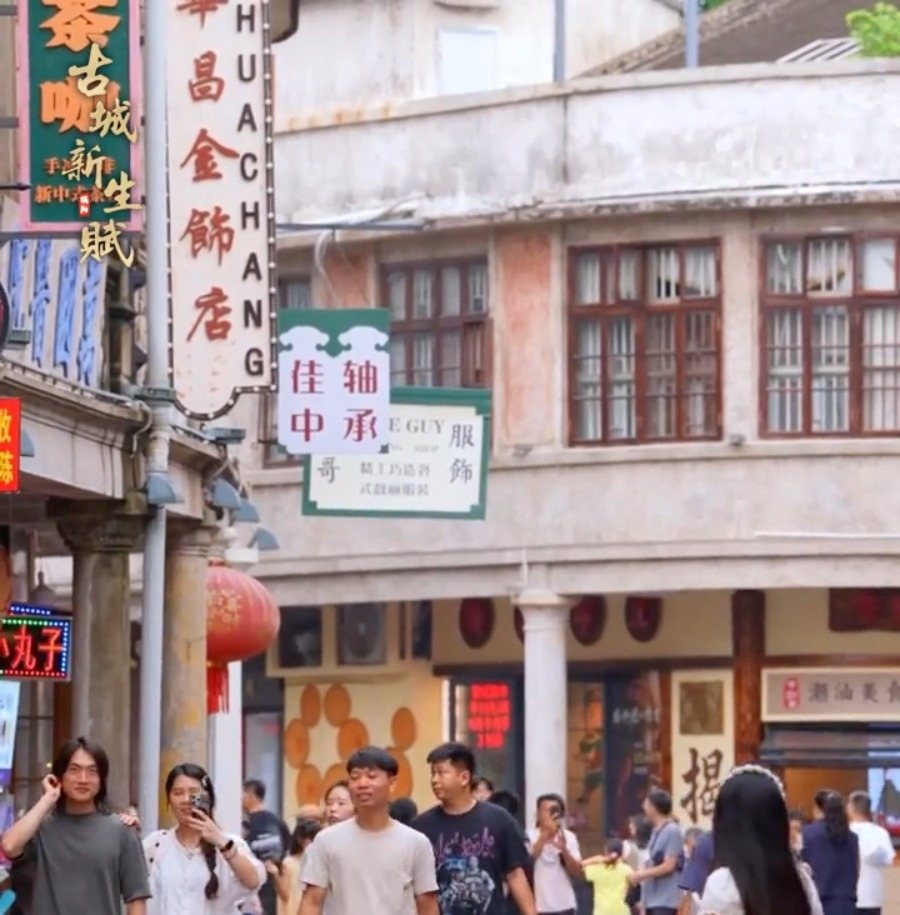
The second layer is the people who live there. This is not a set. Washing hangs in the upper windows; someone is repairing a watch or cutting cloth under the arcade. Walk on the outer side and do not stop in someone’s doorway to photograph.
The third layer is the location. In the 2026 film Letters to Grandma, the ‘Siam inn’, ‘Chinatown’ and the scenes of Musheng in prison were shot on this street. West Horse Road later rebuilt the film’s Siam Street set, with rickshaws and postmen’s bicycles standing in the road. The film’s visitors land here too: over the 2026 Spring Festival the old city received 2.38 million visits, up 87 per cent on the year before.
Of the three layers, the first two are local and the third came from outside. Keep them apart and you will not mistake a street people live on for a theme park.
5 What to eat
Nothing in the old city is smart; it is all everyday. A bowl of kueh juice: rice batter steamed into sheets, cut into strips, dressed with braised gravy, with braised egg, dried tofu and pig’s intestine. Oyster omelette, sweet-potato starch with fresh oysters, fried in lard until the edges catch. Pingpong kueh, glutinous rice skin round a filling, named for the noise it makes in the pan. Sugar-scallion pancakes, a thin pancake rolled round sugar scallion and sesame. Braised goose, sliced, with plain rice porridge. For something more deliberate, beef hotpot in the evening, and the older places in town want an early start.
You do not have to look for gongfu tea. Sit down in a shop and someone will probably brew you a round. For the detail of kueh and of Chaoshan cooking, see food and kueh.
6 Half a day, a day, two days
| When | How | Suits |
|---|---|---|
| Half a day | Jinxian Gate → temple → City God temple → Zhongshan Road → West Horse Road, two kilometres, slowly | Passing through, a work trip, arriving in the evening |
| A day | The four national sites in the morning, kueh juice on Datong Street at noon; West Horse Road and the Bailan Mountain house (the district museum) in the afternoon; Huangqi Mountain or Jieyang Tower towards dusk | Coming here for its own sake |
| Two days | As above on day one; south on day two to De’anli and the Nanyan temple in Puning, or west to Mianhu and the Sanshan Kings temple in Jiexi | With older family, photography, house-building |
Getting there. Chaoshan International Airport is at Denggang in Rongcheng, about 20 km from the city centre according to the airport; Chaoshan station is at Shaxi in Chao’an, 25 to 30 km out, sources differing, so take the numbers as approximate; from Shantou city about 40 km, an hour across. Stay near Jinxian Gate and the Confucian temple; the two-kilometre line is all inside walking distance.
One caution: the good of the old city is not in ticking off points but in stopping. Ten minutes sitting in the temple yard is worth more than the next sight.
7 At night
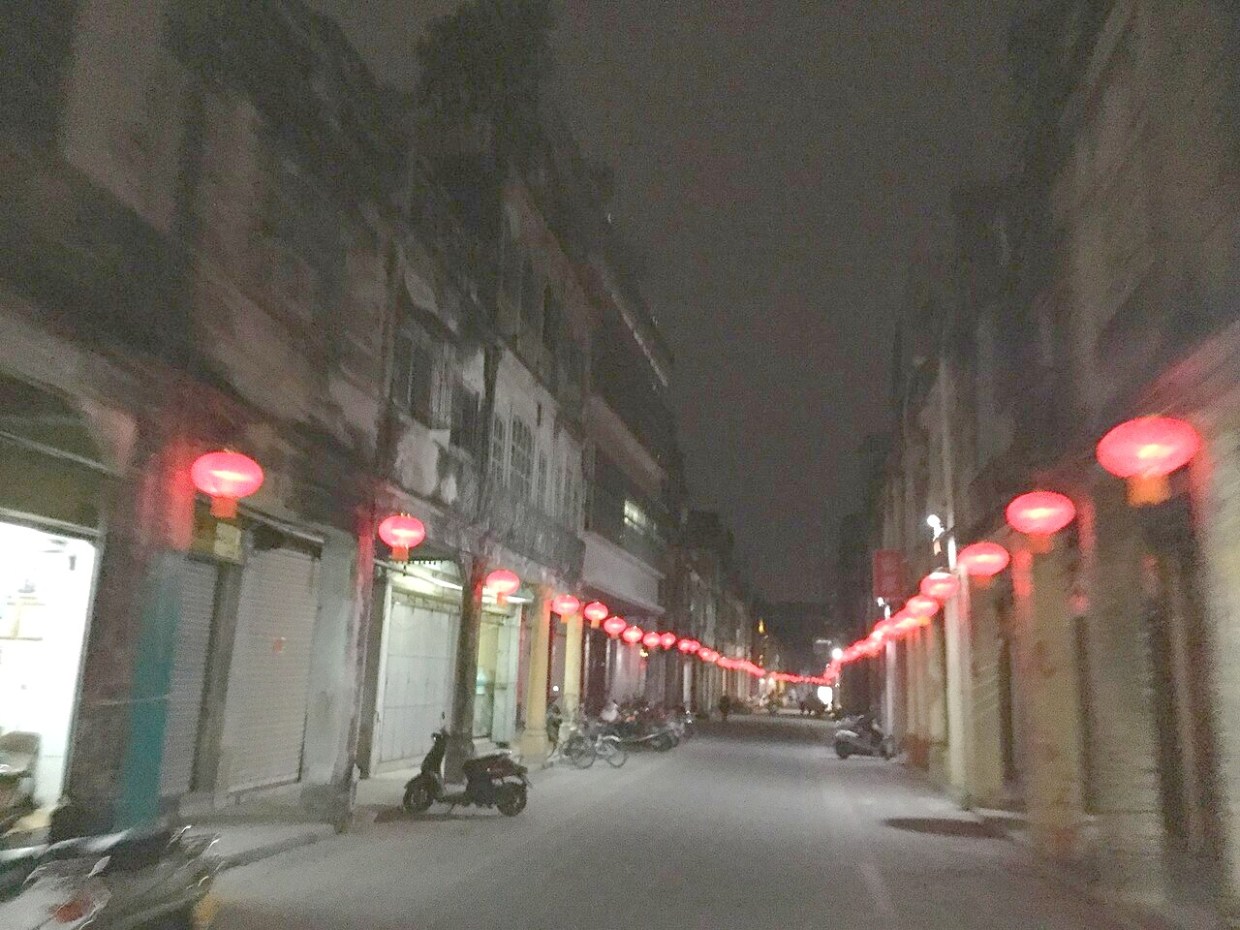
Jinxian Gate is better lit than by day; stand on the far side of the street or the octagonal roof will not come out. Zhongshan Road hangs red lanterns at night, the arcades go dark, most shops shut, and it is quiet to walk. Late stalls run along Huancheng Road and round the markets, still there after ten.
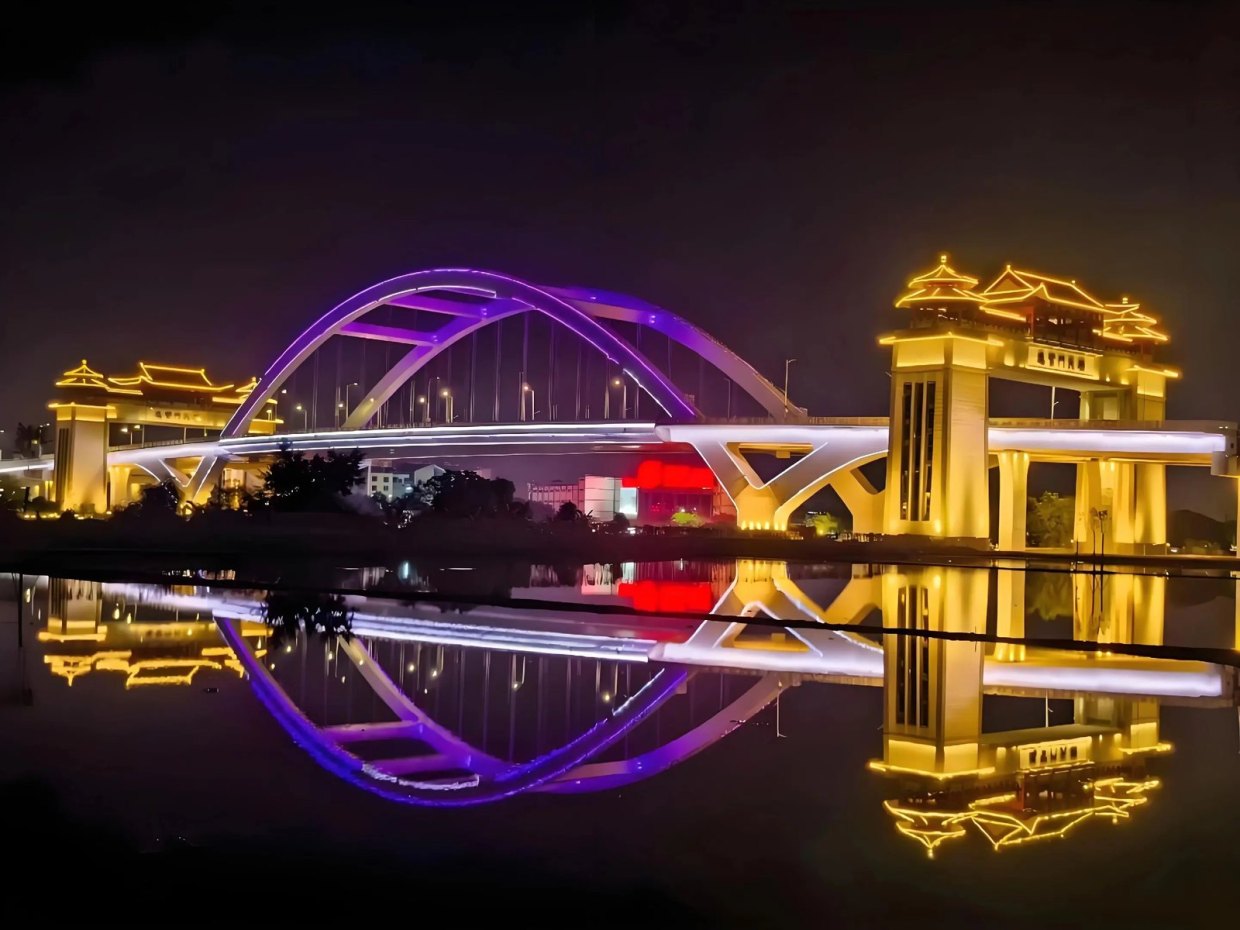
South out of the city to the Rong river is another place again. The Jinxian Gate bridge opened early in 2023, from Binjiang Road in Jiedong in the north to Linjiang South Road in Rongcheng in the south; the bridgeheads are built after the gate tower, four octagonal pavilions, the main arch in steel. After dark the lights are all on, the arch lit violet and the bridgeheads warm yellow, and when the water is still bridge and reflection close into a circle; at dusk, with the river still blue, it is good too. For the whole view go to the far bank; to feel the wind, walk a stretch of the bridge. There is a night market along Binjiang Road, busy when it is warm.
8 Where people come unstuck
- The temple closes at midday. Open 9:00 to 11:30 and 14:30 to 17:30. Two hours shut in the middle; do not arrive at twelve.
- The City God temple is busy on the first and the fifteenth. Open 7:00 to 17:30, extended to 22:00 on the first and fifteenth of the lunar month. The temple fair is at the end of the first lunar month, when the whole street is packed.
- People live here. West Horse Road and Datong Street are residential. Ask before photographing anyone, and an open door is not an invitation.
- Parking is hard. The streets are narrow and you cannot stop under the arcades. Leave the car outside Huancheng Road and walk in.
- Stone paving is slippery in rain, and there are many steps in the temple yard; slower still after rain.
- Opening hours change. They are adjusted for holidays; check once before you go.
9 Related entries
The places index, administrative history, houses and settlements, belief and legend, Chaozhou woodcarving, food, kueh.
For what else in Jieyang is worth a trip of its own, see the Jieyang itinerary. The film scenes on West Horse Road are written up on the Letters to Grandma page.
Three of the places here have pages of their own: Jinxian Gate, the Confucian temple, the City God temple. Those three, with Zhongshan Road and West Horse Road, are the two kilometres of section six.
Where it falls in a route: the one-day, three-day, four-day and five-day routes all put this city in; half a day covers only the triangle, see section six.
Sources and notes來源與說明
- Street boundaries and the count of monuments: Jieyang News, ‘A thousand years on: the monuments of the old city’ — two national, six provincial, thirteen city and eighteen district sites in Zhongshan sub-district.
- The restoration and the Zhongshan Road figures: China Economic Net, 29 May 2026, on the film and the old city — 660 metres, 310 buildings, the Tsinghua team Huaqing Andi, the Sun Yat-sen University survey, and the old-city protection regulation.
- The West Horse Road quarter: Guangdong provincial transport department, 21 May 2026, reprinting the Jieyang release — built in the 1920s and 1930s, the protected core including the Ding Richang residence.
- Dates and batches of the four national sites: the pages here, sources on each.
- Opening hours: Nanfang Plus, 29 January 2025. Times are adjusted from year to year; the notice on site rules.
- Visitor numbers: Jieyang city government, on the 2026 Spring Festival — 2.38 million visits, up 87 per cent.
- Food: the Jieyang itinerary and food.
- Photographs: from Wikimedia Commons except where the caption says otherwise; photographer and licence are in each caption.
Home › Travel › The old city of Jieyang: Jinxian Gate, the Confucian temple and West Horse Road
Last revised: 5 November 2026
 粤公网安备44522102000407号