Chaoshan kueh
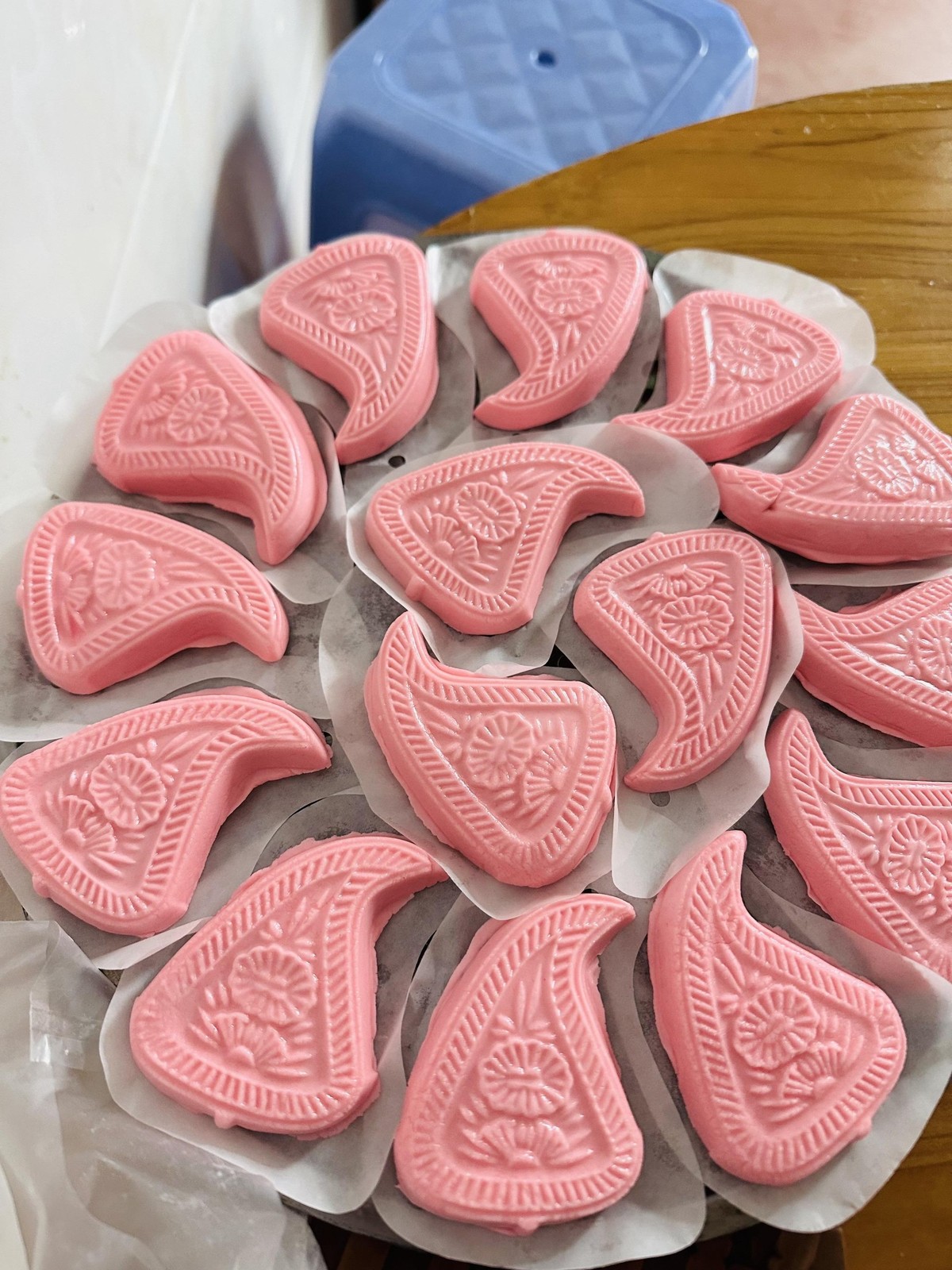
Kueh is made from rice. The rice is ground to a slurry, kneaded into a dough, wrapped around a filling, pressed into a mould and steamed. Red peach kueh carries a longevity character on its face; rat-shell kueh is black; “rice-free kueh” has no rice in it at all.
1. What it is
Kueh is food made by forming a skin from rice flour or sweet-potato flour, wrapping a filling and steaming it. In Chaoshan it serves three ways at once: offering, festival food and everyday snack. The craft is listed in the fifth provincial list of Guangdong: the item’s full published name is “Chaoshan pastry craft (Chaoshan lau-peng craft, Chaoshan kueh craft)”, item Ⅷ-70, applicant region Jinping District, Shantou, under the Guangdong Provincial People’s Government notice Yuefu [2013] No. 118, published 22 November 2013.
Kueh divides along two axes: the skin (rice flour, glutinous rice flour, sweet-potato flour, the juice of the rat-shell herb) and the use (offering, festival, hospitality, everyday). The same name can mean different things in different counties, and in Chaoshan this is particularly pronounced.
2. A few common kinds
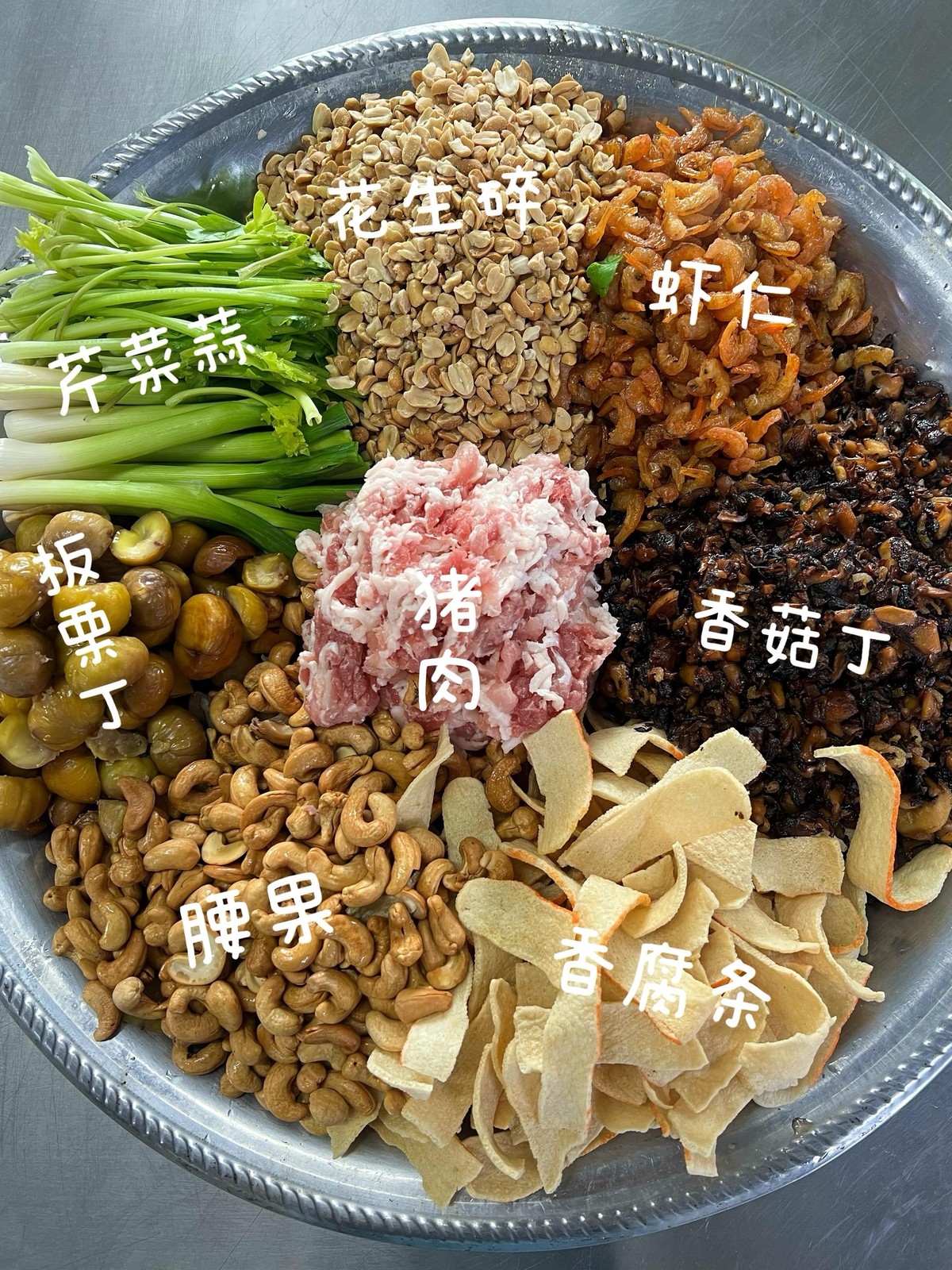
- Red peach kueh: rice-flour skin coloured red, pressed in a peach-shaped mould, filled usually with glutinous rice, shiitake, dried shrimp and peanuts. Used for offerings and celebrations; the commonest of the lot.
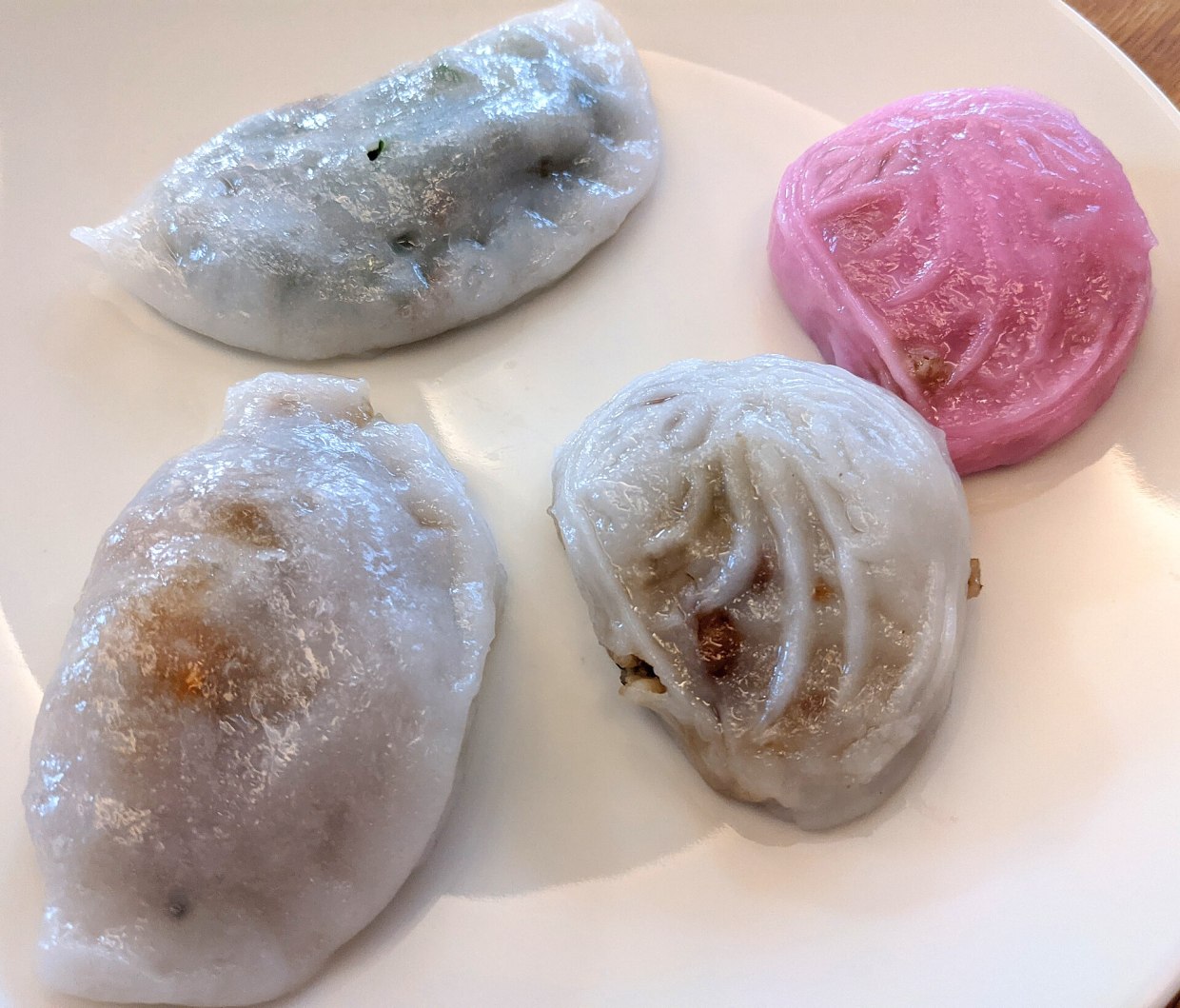
- Rice-free kueh: sweet-potato flour for the skin, no rice, hence the name. Filled mostly with chives, steamed and then pan-fried.
- Rat-shell kueh: the rat-shell herb, which comes up around Qingming, is pounded and its juice worked into the skin, giving a dark green that reads almost black; the filling is usually sweet. Strictly seasonal — out of season it cannot be made.
- Leavened kueh: rice slurry left to ferment, then steamed; the top splits open of itself, and the better the split, the better the omen.
- Sweet kueh: glutinous rice slurry with sugar, steamed for a long time and keeping well. In the old days it went abroad with the men who left.
3. Which kueh for which season
The prefectural gazetteer records “horn millet set out” for the Dragon Boat festival and “rice rounds” for the winter solstice — zongzi and tangyuan, both rice foods for their season. Red peach kueh and rat-shell kueh, common as they are today, are not in the gazetteer; when they became custom needs another source.
By present practice: sweet kueh and leavened kueh at the New Year, rat-shell kueh at Qingming, zongzi at the Dragon Boat, red peach kueh at the seventh-month rites and at the year’s end, winter-solstice balls at the solstice. Counties vary; the set below is the common one.
4. Kueh and offering
In Chaoshan, kueh is an offering first. Whether for the deities, for the ancestors, for a funeral or for a birthday, the offering table carries kueh, and the number and kinds follow rules. After the rite it is shared out and eaten, which is called “eating peace”. This layer matters more than taste: kueh is there to reach the gods, and only then to feed people.
Details in pictures
Note on sources
Item number, applicant region and the full item name come from the fifth provincial list published with Yuefu [2013] No. 118 (22 November 2013). The point that rice-free kueh is named for the absence of rice comes from a provincial housing department feature on the qiaoxiang; the gazetteer entries for the two festivals are quoted from the Chaozhou section of the Gujin Tushu Jicheng, which cites the prefectural gazetteer.
The photographs come from Douyin @Chaoshan小吃 and @富兴发红桃粿, and from Wikimedia Commons.
Last revised: 4 November 2026