Gongfucha
In Chaoshan, gongfucha is not only a way of drinking tea; it is a procedure for receiving guests and for talking things over. Who pours first, how full each cup is, how the cups are set down — all of it is settled. In 2022 Chaozhou gongfucha was inscribed on the UNESCO list of humanity’s intangible cultural heritage.
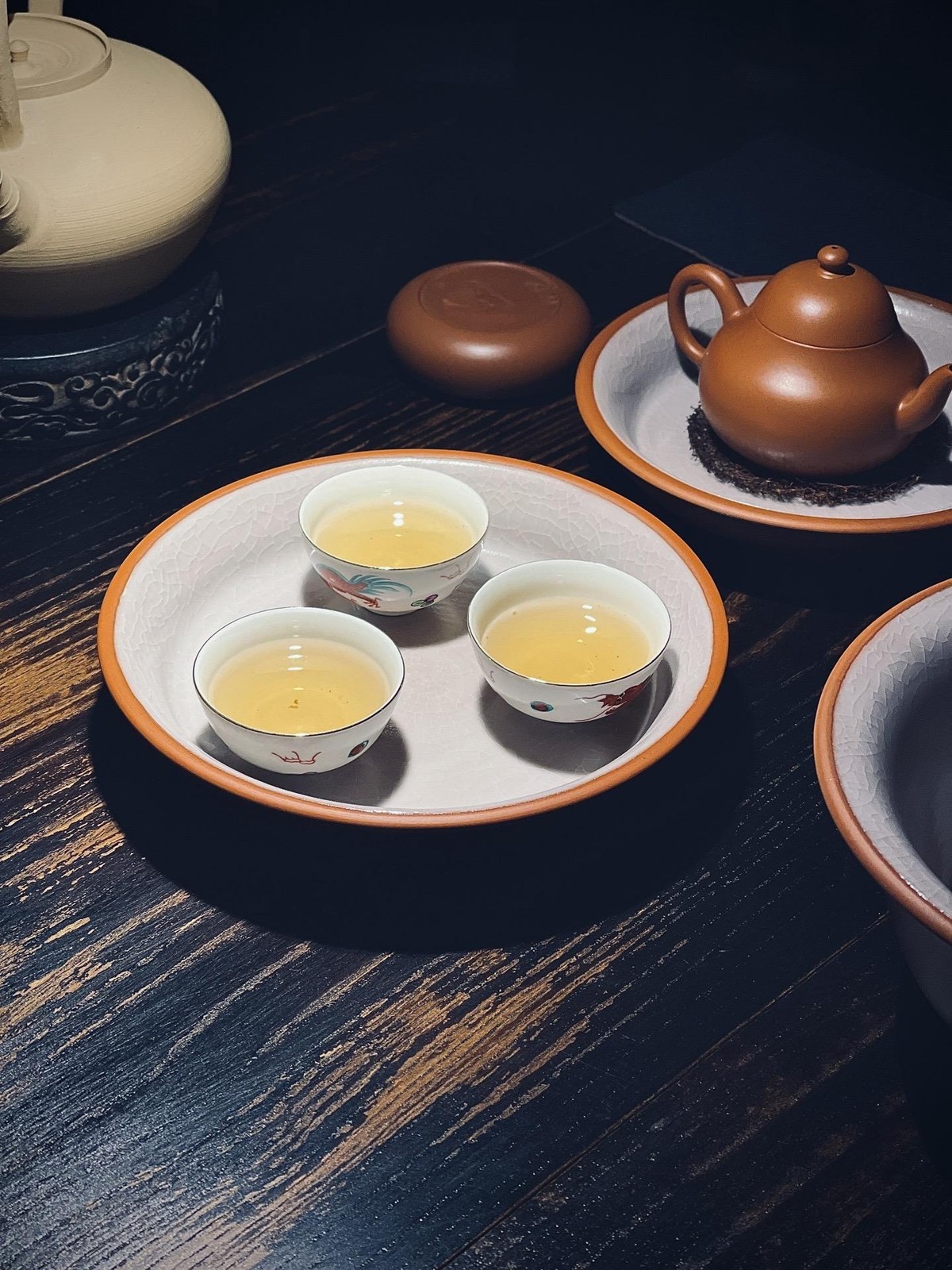
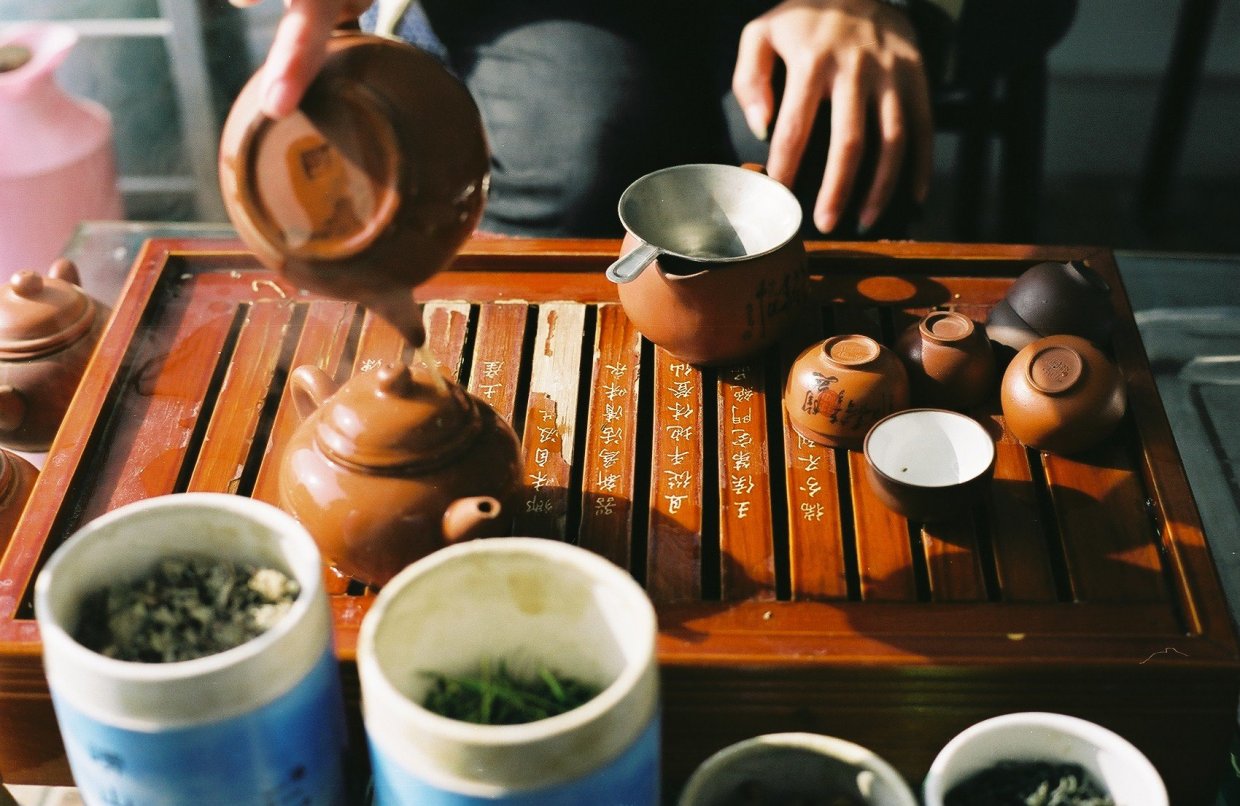
1. What it is
Gongfucha is a technique for brewing tea that is practised across Chaoshan. According to the China intangible cultural heritage site, it begins in the Song, becomes widespread by the middle of the Qing, and travels with emigrants to Southeast Asia. In 2022 “tea craft (Chaozhou gongfucha)” was inscribed on UNESCO’s representative list of the intangible cultural heritage of humanity, with Chaozhou as the applicant region.
The word gongfu here means care and time spent, not a variety of tea, and it has nothing to do with the martial kind. This is often got wrong in print.
2. The procedure
As the published account sets it out, the brewing runs: the vessels set out and named; the tea maker washes hands; the clay stove is lit; water is drawn in the sand-fired kettle; water boiled over olive-stone charcoal; the pot scalded; the cups warmed again; the leaf tipped onto plain paper; the pot filled with oolong; the leaf rinsed with sweet spring water; the kettle lifted and poured from a height; the foam skimmed with the lid; the lid scalded to hold the heat; the cups scalded and turned; the liquor poured low into the cups; Guan Gong patrols the city; Han Xin counts his troops; the guest is invited to taste; the fragrance is smelled first; the tea is sipped gently; the empty cup is smelled three times; the auspicious air comes full circle.
Two of those names are pouring technique. “Guan Gong patrols the city” means going round the cups so that every one gets the same strength. “Han Xin counts his troops” means letting the last drops fall one by one, so that no single cup is favoured. Both names are borrowed from opera and from military history, and both are about the plainest thing there is: an even share.
3. The vessels
The usual set is a small pot (or a lidded bowl), small cups, a sand-fired kettle, a clay stove and olive-stone charcoal. Small vessels make a strong infusion; a strong infusion has to be brewed in rounds, each round a different taste. That is the physical reason gongfucha works the way it does.
4. Why it stands on its own
It is three things at once: a craft, a set of manners, and a social arrangement. The craft is in the brewing, the manners are in how a guest is served, the arrangement is in who sits where and who is served first. In Chaoshan, business is more often discussed at a tea table than across a table of dishes, and the length of one round of tea is the length of the discussion — a thing written sources rarely record, and fieldwork has to supply.
Details in pictures
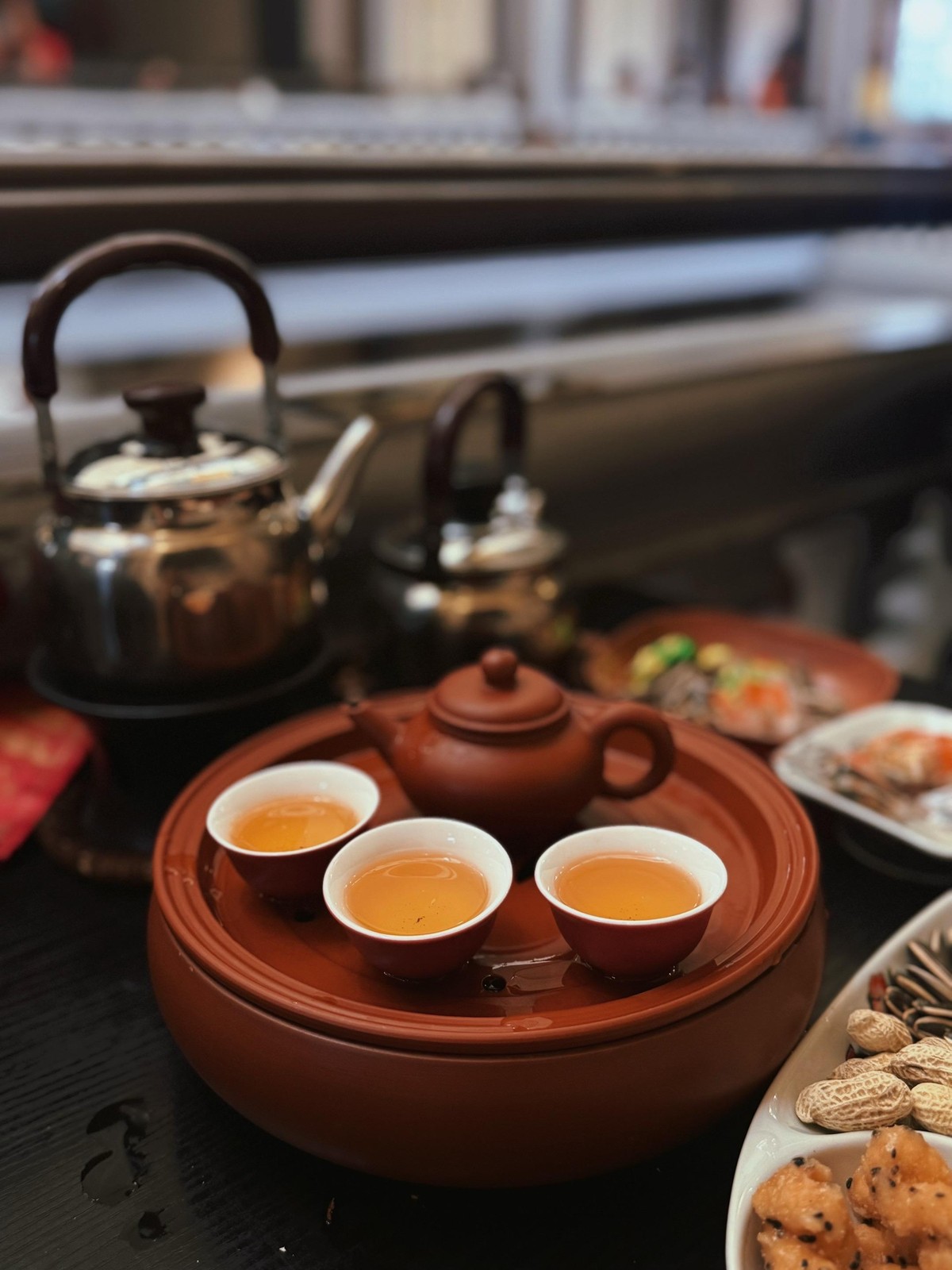
Note on sources
The account of origins, the twenty-one steps and the 2022 inscription come from the China intangible cultural heritage site’s feature on Chaozhou heritage and from the provincial heritage museum’s list entry for Chaozhou gongfucha.
The photographs come from Douyin @心飞扬 and @Sun☀️tingting小太阳, and from Wikimedia Commons.
Last revised: 4 November 2026