Chaoqiao Fang: fourteen halls built by overseas Chaoshan associations
A quarter of overseas-Chinese architecture south of the old city of Jieyang. Fourteen association halls, each designed and built by an overseas Chaoshan association in the manner of the place it settled in — one hall, one country’s look. The first phase opened on 28 October 2026.
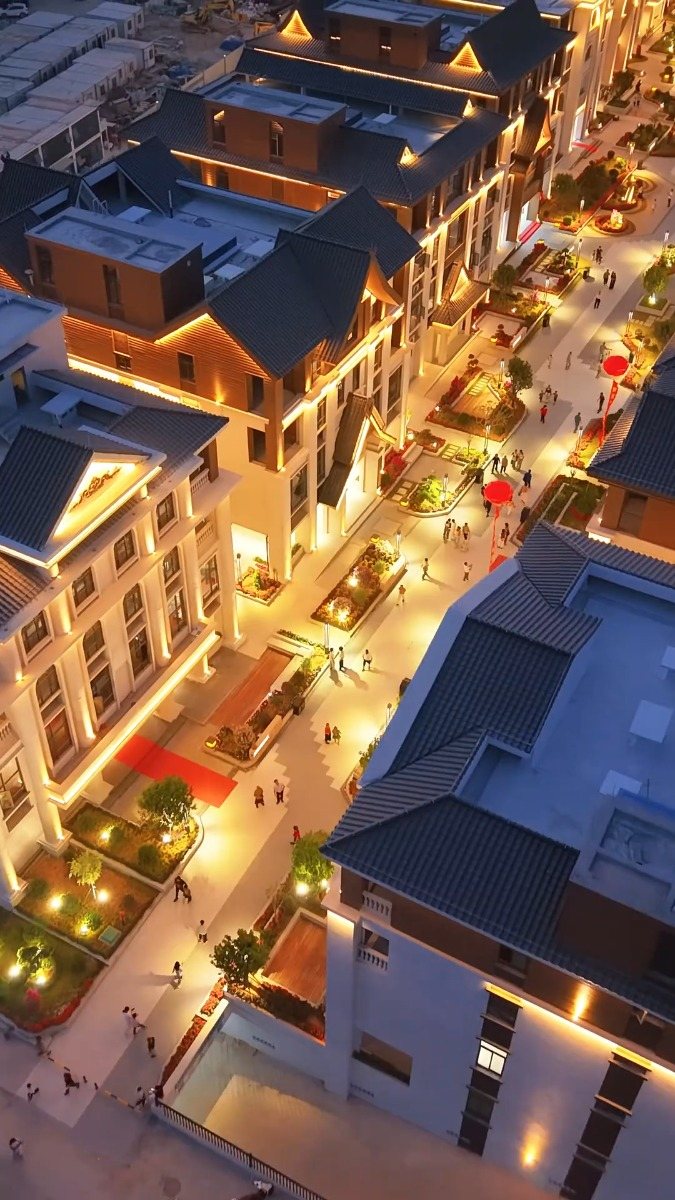
1. A new quarter south of the old city
Chaoqiao Fang stands south of the old city of Jieyang. Its first phase covers 73 mu at a total investment of 636 million yuan, and consists of fourteen association halls and one Chaoqiao Tang, bringing together an exhibition of emigrant history, cultural exchange and tourism. The halls work on the principle of “clear title, own design, own construction, own operation”: each is paid for, designed, built and run by the corresponding Chaoshan association abroad, which is why fourteen halls have fourteen different looks — in the official phrasing, “one hall, one style; one hall, one memory of home”.
The ground beneath this is Jieyang’s emigrant record: 6.1 million people from the city living overseas, another 600,000-odd in Hong Kong, Macao and Taiwan, the lines running through more than forty countries and regions on five continents — what people here sum up as “one Jieyang at home, one abroad”. The Chaoqiao Tang is positioned as the city’s parlour, gathering the remittance letters, the emigrant history and the tastes of home in one place, and filling a gap: Jieyang had no large building devoted to overseas-Chinese culture.
2. One hall, one look
The fourteen halls were built with money from the International Chaoshan Federation and from Chaoshan associations in eleven countries — the United States, Canada, Brazil, Australia, New Zealand, Malaysia, Singapore, Thailand, Cambodia, Laos and the Philippines — together with Hong Kong and Macao. The architecture alone tells you where each one comes from:
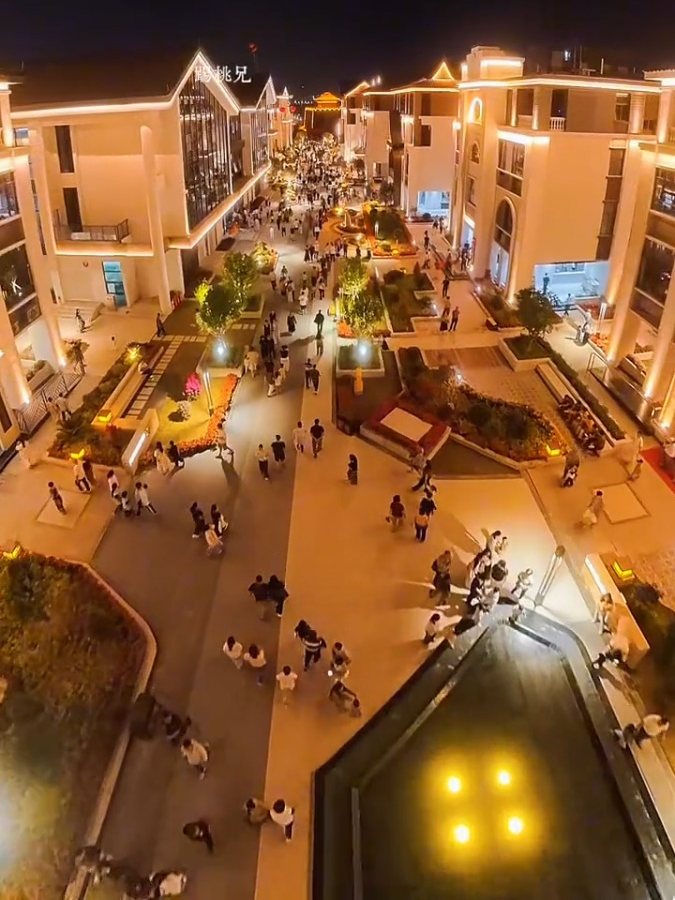
- the Singapore hall reproduces the Nanyang arcade;
- the Thailand hall answers to the Thai five-element gable wall;
- the Hong Kong hall sets a triangular pediment against a fire-shaped gable;
- the International Chaoshan Federation hall takes the form of a Chaoshan four-point-gold courtyard and joins a neoclassical arcade to it.
The Canada hall was built by the Canadian Chaoshan Associations Federation; its president, Wu Haibing, said the hall should be the card Canada’s Chaoshan community prints on the old city.
3. From plan to opening
Planning began in April 2025, with the design and planning done by a team led by He Jingtang, an academician of the Chinese Academy of Engineering. Construction started on 1 December that year, and the quarter was completed and opened in October 2026. Zhang Yikun, executive chairman of the International Chaoshan Federation, calls it “planned this year, started this year, built the year after”. On the day it opened, work began on the phase-two halls.
4. The day it opened
On the morning of 28 October 2026 the old city of Jieyang was loud with gongs and drums; green lions and yingge teams welcomed guests outside Jinxian Gate, and the event “Chaoshan sojourners gather in the old home” was held at Chaoqiao Fang, with more than 550 overseas Chaoshanese from 22 countries and regions back for it. The programme laid on a “five ones” homecoming: painting one wall of ten thousand blessings, 3.88 metres wide and 4.89 metres high, on which overseas community leaders each wrote a single blessing that together make one great blessing; planting one Chaoshan sojourners’ banyan, an eighty-year-old small-leaf fig 12 metres tall with two trunks from one tree; then writing a letter home, keeping a handful of native soil, and joining a Chaoshan sojourners’ cultural carnival.
The same day, plaques went up for the Jieyang overseas economic, trade and cultural service centre and for the “home of overseas compatriots”. At Chaoqiao Fang, more than 400 speciality products from 22 countries and regions were sold alongside “Jieyang fine goods” — the local saying that “Cantonese goods travel the world and the world’s goods travel Guangdong” takes the form here of two rows of stalls under one roof.
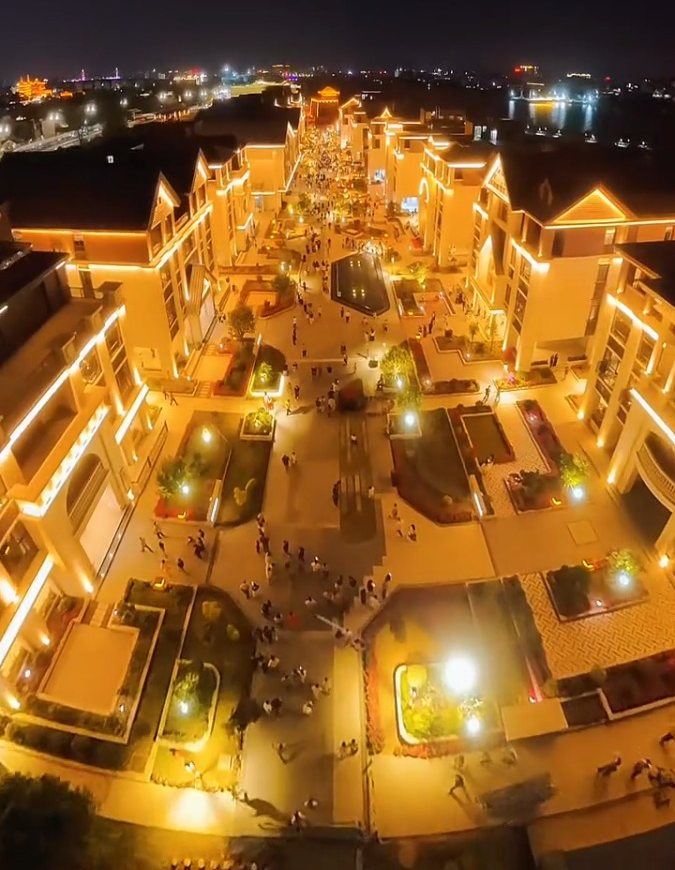
5. How it joins the old city
The old city of Jieyang under its feet has a core area of 1.25 square kilometres, with four nationally protected sites and eleven provincially protected ones scattered through it. In the last two years the old city has been conserved and brought back to use: the cultural axis from Jinxian Gate to the Jieyang Confucian temple has been opened through, the Nanyang arcades of Zhongshan Road and Xima Road repaired as they were, and the water of the Yujiao creek running clear again. The Chaoshan-dialect film A Love Letter to Grandma was shot in the old city, and the arcade street on Xima Road has been revived as “Siam Street” and “Grandma’s canteen”. Over the National Day holiday of 2026 the old city received 1,717,600 visitors, up 149.21 per cent on the year before.
Walking north from Chaoqiao Fang, Jinxian Gate, the Confucian temple, the City God temple and the arcade street string together; for how to arrange the day, see the Jieyang itinerary page. For the remittance letters as a subject of their own, see Qiaopi.
6. The quarter and the hall
Two names not to be confused: Chaoqiao Fang is the whole group of buildings, Chaoqiao Tang one public hall within it — the halls each belong to their own association, the Tang is a city parlour anyone may walk into.
Sources
Construction (the site, 73 mu in the first phase, 636 million yuan, the make-up of fourteen association halls and the Chaoqiao Tang, the principle of “clear title, own design, own construction, own operation”): the press conference held by the Jieyang municipal government for the “Chaoshan sojourners gather in the old home” event (16 October 2026), and China News Service (28 October 2026).
Opening day (more than 550 people from 22 countries and regions, the “five ones”, the dimensions of the blessing wall and the banyan, the plaques unveiled, more than 400 products on sale): China Daily, China Qiaowang and CNR (28–29 October 2026).
The look of each hall and the timeline (He Jingtang’s team, the start of construction on 1 December 2025, the Singapore arcade and the Thai gable wall, the remarks of Zhang Yikun and Wu Haibing): 21st Century Business Herald and Sina Finance (29 October 2026).
Background on the old city (1.25 square kilometres, four national and eleven provincial protected sites, the axis opened through, the visitor figures, 6.1 million overseas): Nanfang Daily and Jieyang Daily (27 October 2026).
All the above pages were consulted on 30 October 2026.
See also: the old city of Jieyang (Jinxian Gate, the Confucian temple and how to walk Xima Road); the Jieyang itinerary (thirteen stops and the seafood); Qiaopi; A Love Letter to Grandma (the locations).
Home › Travel › The old city of Jieyang › Chaoqiao Fang
Text on this site is CC BY-SA 4.0; copyright in images is reserved and commercial use requires a separate licence.
Last revised: 4 November 2026