What to eat in Shantou: a day from morning to night
The good eating in Shantou is not in one famous shop; it is in the five meals a day can hold — planned by five time slots, with no obligation to eat at every one. This page runs by the clock: first which quarter of the city for which dish, then six things worth eating properly, and at the end a list of old shops in no particular order. Chaozhou was named a UNESCO City of Gastronomy in 2023; Shantou has no such title, but the other half of Chaoshan cooking is here — beef hotpot, Dahao fish balls, braised lion-head goose, fish rice, sheng yan, all along this stretch of coast.
1. Three areas first
Eating in the city of Shantou gathers in three patches, each with its own hours; do not take them in the wrong order.
The first is Xiaogongyuan, the old treaty-port quarter. The centre of the arcaded street grid, and the densest part for visitors. On 14 January 2023 the Zhenbang food street opened inside it, with 26 Chaoshan restaurants in the first intake; by the reply the Shantou commerce bureau gave in 2025, takings in the opening month passed five million yuan. Xiaogongyuan was later named a national gathering area for night-time culture and tourism consumption, and it is busier at night than by day.
The second is Longyan South Road, Jinxin Road, the Huaqiao Xincun pedestrian street, and the Longbei–Baihua Road stretch. This is where local people eat day to day: kueh tiao, rice-sheet rolls, braised dishes, sheng yan and late-night porridge all on these few streets, with people about from morning to night. In the holidays these streets are “thronged with visitors from morning to night”, which is the city’s own phrase.
The third is Dahao in Haojiang. Across the inner bay, the home of fish balls and fish rice. The Dahao fishing harbour opens before daylight, and the fish-ball shops cluster along Yanjiang Road. The crossing is not only for the eating; it is for seeing how the things are made.
Two more worth noting: the Zhujiang Road food street and the Shiyihe art village have both been recognised as “Guangdong Cantonese-cuisine food streets (towns)”; by the commerce bureau’s reply, these are the only two in the three cities of eastern Guangdong.
Shantou’s place in one sentence: Chaozhou holds the City of Gastronomy title and Shantou does not; but the finer work of Chaoshan cooking and the wildest street eating are both more concentrated in Shantou. Go to Chaozhou for the old city; come to Shantou to eat for a whole day.
2. Five meals a day
This is not an instruction to eat five times; it is so you know what belongs to each slot and where to have it. Pick three and it works; a good appetite can go to five.
| Time | What to eat | Which quarter | Why this hour |
|---|---|---|---|
| 7–9 in the morning | Kueh tiao soup, rice-sheet rolls, pig’s blood soup | Neighbourhood shops along Longyan South Road and Jinxin Road | Beef balls and fresh meat arrive in the morning and the broth is at its clearest; after ten the good cuts have been picked over by the hotpot shops |
| 11–13 at noon | Braised goose on rice, beef hotpot (off-peak) | The Zhongshan Road stretch; for hotpot keep clear of twelve | Hotpot is quietest from 14:00 to 17:00; at noon you will queue |
| 15–17 in the afternoon | Kueh, sweet soups, liquorice fruit | Guoping Road, Fuping Road, Shengping Road | Most of the old shops are still open in this stretch and shut at five or six |
| 18–20 in the evening | Seafood, claypot congee, beef hotpot | Haojiang, the east coast, the big open-air places in the city | Seafood follows the day’s catch, and the evening market has the fullest range |
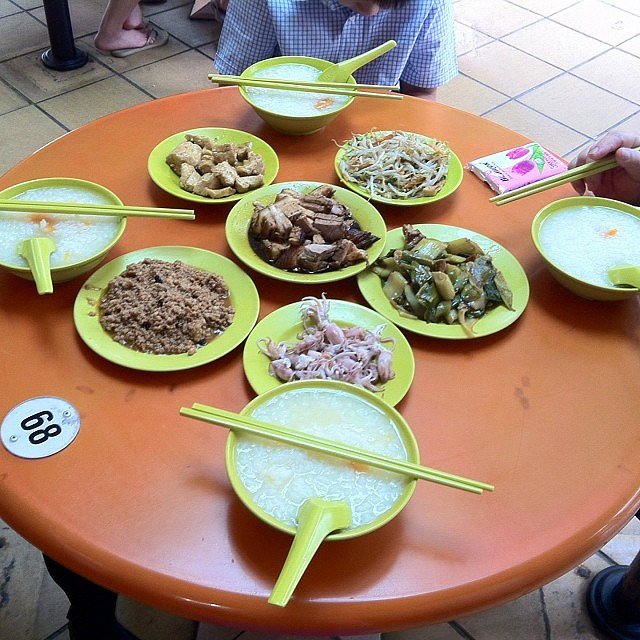
| After 21 at night | Plain porridge with da leng, sheng yan | Longyan South Road and the Zhujiang Road stretch | The da leng stalls only set out after nine; sheng yan with plain porridge is the local way |
One warning: a good share of the old shops serve the daytime only and shut at five or six. If you want that particular thing at night, you have to turn to the late porridge and da leng stalls. Work the time gap into the plan first.
3. Six things, properly
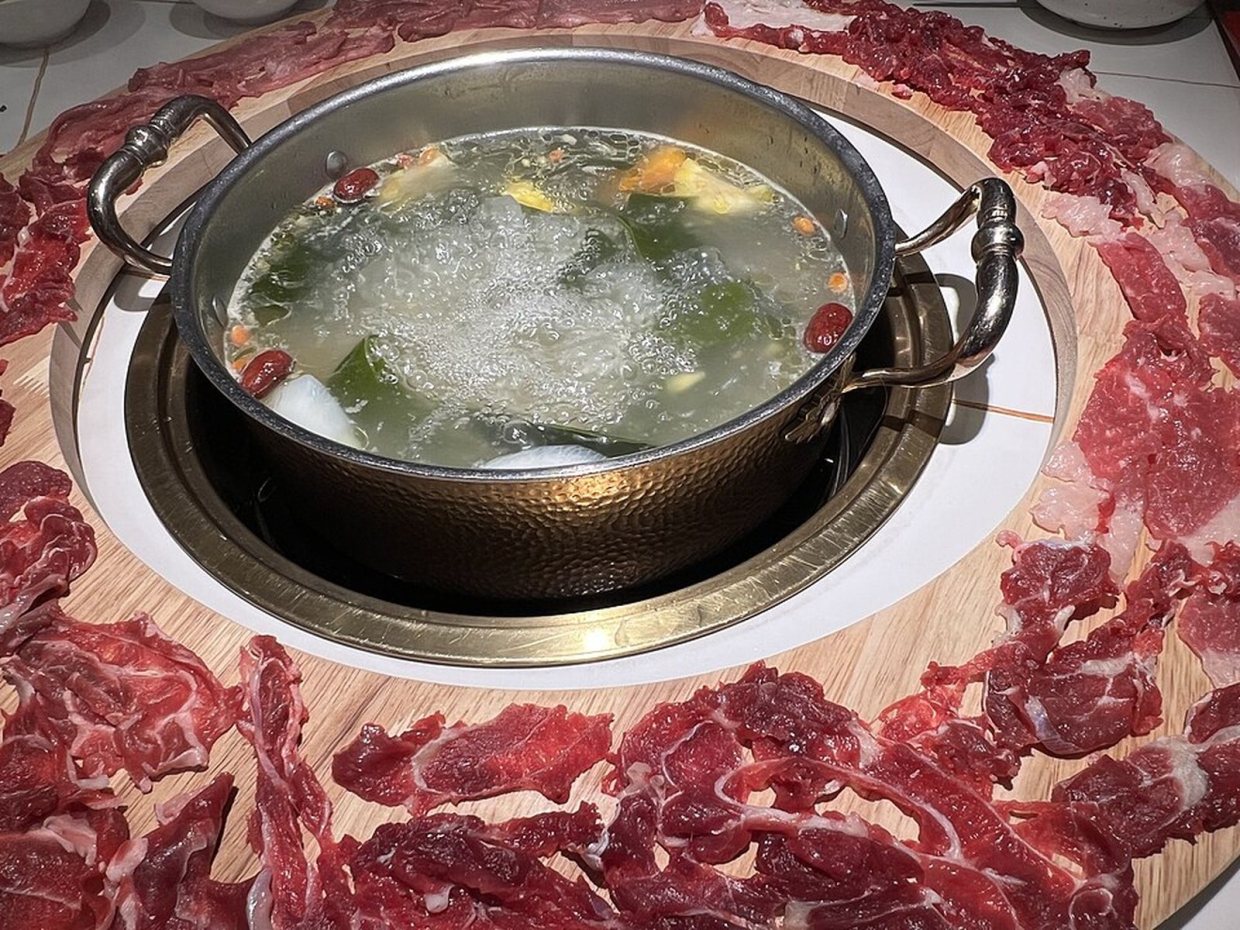
Beef hotpot: a pot of clear water, held up by timing
The broth has three things in it — beef bone, tendon and brisket. Marrow bones are soaked two hours to draw the blood, put into cold water to blanch, skimmed, then brought up hard and turned down to a bare simmer for eight hours or more, with the fat skimmed off all the while, and only then is the broth clear. Before any meat goes in, ladle out a bowl of the liquor, scatter chopped celery or coriander leaf, drink it, and pick up the chopsticks.
What decides the result is freshness. By Nanfang Plus reporting, local shops hold “slaughter to table” inside four hours, and a few chase two; that is what the reporting says some shops do, not an industry standard. The same reporting links it to muscle that has not yet gone into full rigor — that is the report’s account, and it has not been tested separately. The claim that a plate turned upside down will not drop its meat is put about as freshness making the meat tacky rather than starch, and there is no experimental basis for it.
Only about thirty per cent of a beast can come to the table; the rest is divided by cut, each with its own seconds.
| Cut | Where it is | How it eats | How long |
|---|---|---|---|
| Bo ren (snowflake) | The neck; very little of it | Fine marbling, gone the moment it is in the mouth | 4–8 seconds |
| Diao long, diao long ban | The long muscle along the back | Tender with flavour; the ban, with its strip of fat, is silkier | 6–10 seconds |
| Chi ren, chi bing | The shoulder blade | Sinew through the middle, crisp and sweet after | 8–12 seconds |
| San hua zhi, wu hua zhi | Shin from the hind leg, with three or five lines of sinew | Crisp and springy; you can chew the sinew | 8–13 seconds |
| Fei pian | The layered belly | Fat and lean in alternating bands | 6–8 seconds |
| Xiong kou lao | Soft tissue of the fore breast | Looks like fat, cooks to a crisp sheet | 2–3 minutes |
| Nen rou | Hind leg | Least fat, most tender | 6–8 seconds |
Xiong kou lao is the one exception in that table — soft tissue from the fore breast, put in whole and cooked long until it turns to crisp sheets, two to three minutes, nothing like the seconds for a thin slice. Everything else goes in thin. The seconds differ a little between sources; take “lift it the moment the colour turns from red to pink” as the rule. The method is called san diao shui, three lifts, or qi shang ba xia, seven up and eight down: hold the meat in the boiling broth and lift it three times — once to draw off the blood, once to seal the juice, once to bring up the flavour. Go from lean to fat, meat before vegetables, or the fat will cover the broth. The seconds are only a guide: the thickness of the slice, the heat of the broth and how much goes in at once all change the real time, so do not put in too much at a time. It is not a standard for doneness, and it is not a food-safety standard either.
Two schools of dip: sha cha sauce is the mainstream, salty-sweet with the smell of peanut; for the taste of the meat itself, Puning bean paste, salty and savoury, which does not mask it. Chilli sauce stands apart. In 2024 Chaoshan beef hotpot cooking was entered on Shantou’s municipal intangible cultural heritage list.

Dahao fish balls: a ball with a geographical indication
In March 2018 “Dahao fish ball” was approved by the former General Administration of Quality Supervision, Inspection and Quarantine for protection as a national geographical indication product — the first in Haojiang district, and the first processed food from Shantou to carry one. In June of the same year Haojiang’s fish-ball making was entered on the seventh batch of the Guangdong provincial intangible cultural heritage list.
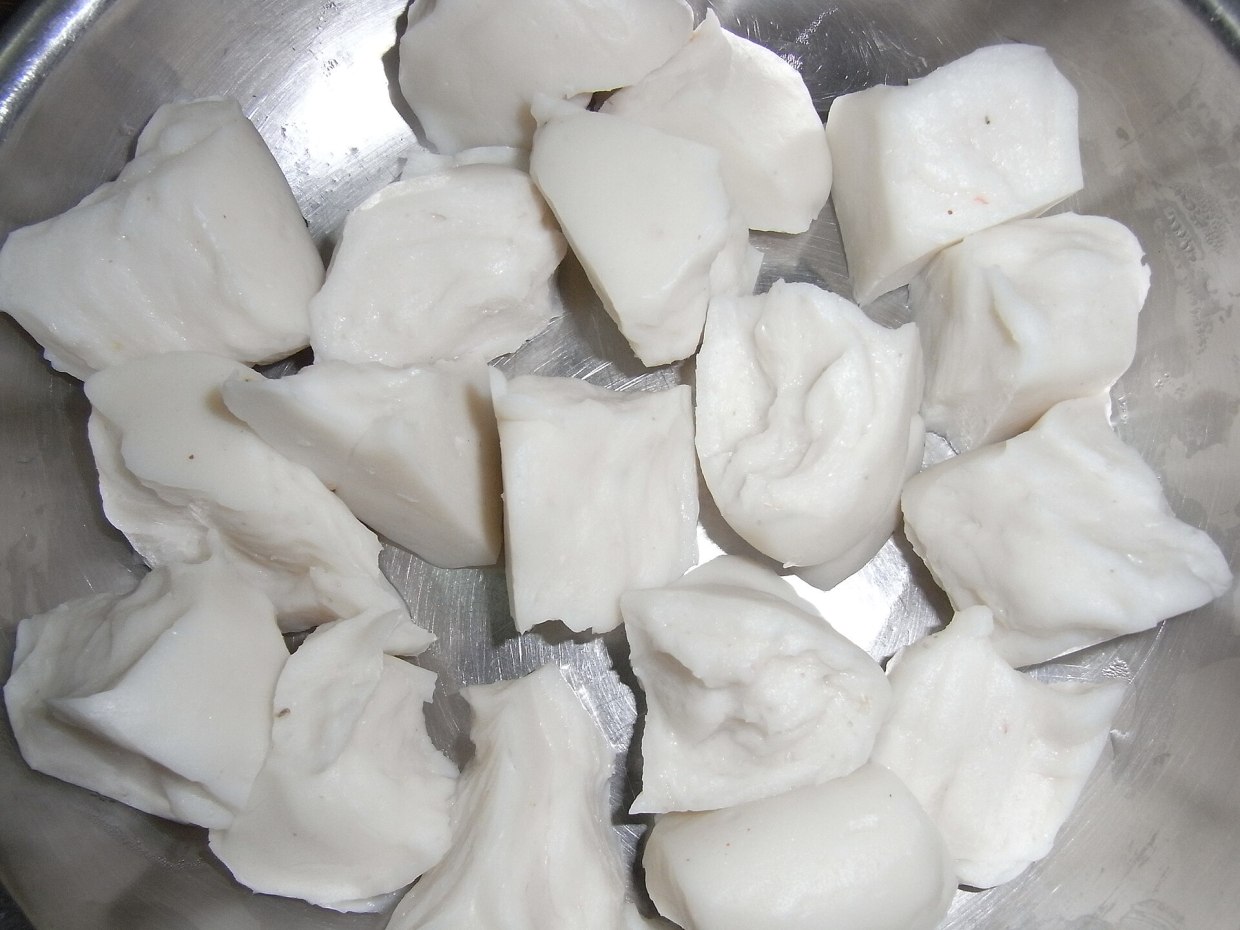
The raw material is fish from local waters: nago, the lizardfish; Spanish mackerel; conger eel. The steps run in order — rinse, head and gut, bone out, scrape the flesh, knead and press it to a paste, then into a wooden tub to be slapped hard with the flat of the hand until it sets, with egg white, salt and water starch added by proportion, worked to a paste, squeezed out of the fist into warm water to hold its shape, then boiled and cooled. The whole craft has so far resisted being fully replaced by machines. That is the traditional sequence as the Haojiang district government describes it, a general account; recipes and proportions differ from shop to shop, and the fish changes with season and catch, so none of it can be used to argue about one particular shop.
To judge them, do not look at how high they bounce; look at how deep the fish tastes, whether there are air holes when you cut one, and whether the broth goes cloudy. The district turns out more than three thousand tonnes a year. For output value, several reports between 2025 and 2026 all give over two hundred million yuan; for standard outlets, one account says more than a hundred, another more than a hundred and twenty.
Braised lion-head goose: one pot of stock decides a shop
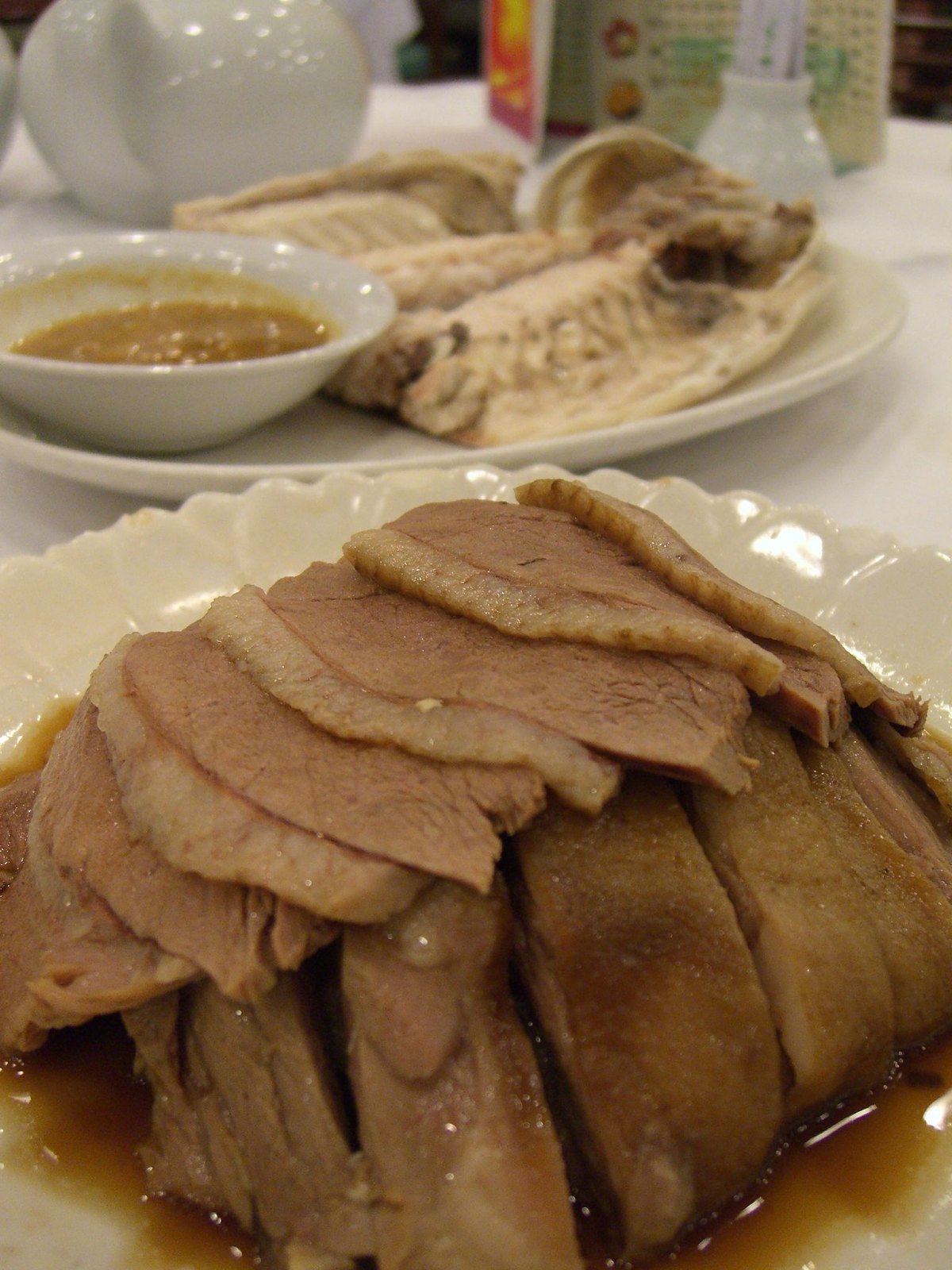
The lion-head goose is one of the large goose breeds of China, big enough that one bird serves a table. The braising stock is each shop’s hidden card, spice and herb proportions differing; cooked low and slow, the meat comes out firm and the liver dense. It is carved by part at the table: meat, liver, feet, wings, dipped in garlic and rice vinegar to cut the richness. A bowl of white rice with the braising liquor poured over it is the most local way to eat it.
There is a knack to ordering: a whole bird or a half only if the table is big; with few people take a mixed plate, or it will not be finished. The head, the neck and the intestines — the “odds and ends” — are what the old hands ask for first.
Fish rice: not rice, but fish
There is not a grain of rice in fish rice. Sea fish are left unscaled and ungutted, salted lightly, then cooked through in strong brine and left to cool. A layer of fish jelly sets between skin and flesh, and gives up its juice slowly as you chew. It is eaten with Puning bean paste, which is the “great flavour arrives at plain” way of doing it. Round scad, hua xian and red fish are the usual kinds. In 2018 Dahao fish rice making was also entered on the seventh batch of the provincial list.
Sheng yan: known locally as “poison”
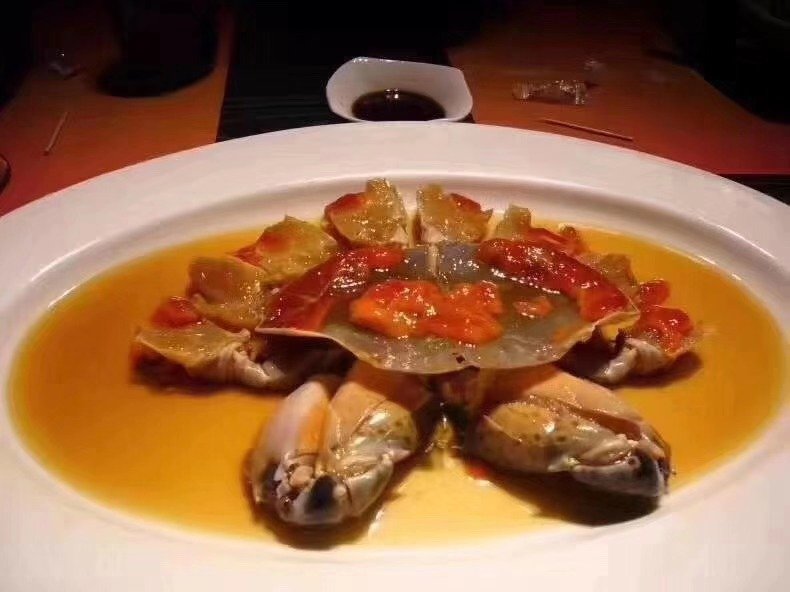
Crab, mantis shrimp, prawns, blood cockles: cut into pieces and cold-steeped in soy sauce, minced garlic, chilli, coriander and fish sauce, and eaten raw. The texture is soft and slippery and the freshness direct — locally it is called “poison”, meaning you cannot stop.
This is raw aquatic food, with the risk of parasites and pathogens; it is not a matter of taste. People with a sensitive gut, pregnant women, children and anyone with low immunity should keep clear of it. A first time: a small amount, with plain porridge, not on an empty stomach. However heavy the shop’s dressing, it does not kill everything.

Kueh: a hundred ways of eating, all out of rice batter
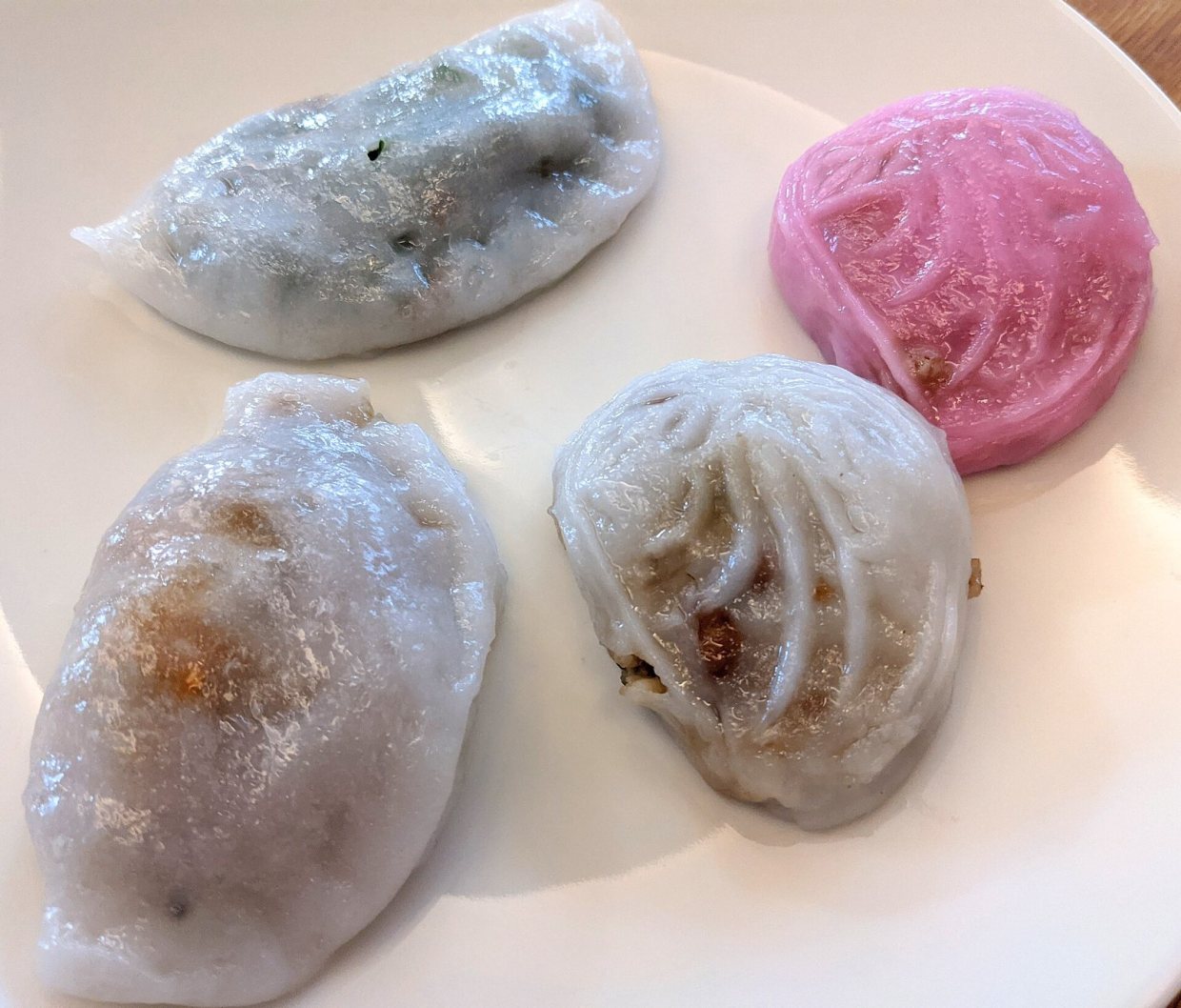
Kueh is made of rice. Hong tao kueh is dyed and shaped into a peach, filled with a savoury rice of shiitake, peanut and dried shrimp; shu ke kueh works the juice of a herb into the skin and pairs it with mung bean paste; hou kueh, wu mi kueh, cai tou kueh, chao gao kueh, fa kueh and tian kueh each have their own method. On the street you also meet pig’s intestine stuffed with glutinous rice, sun kueh, jiu cai kueh and crystal balls. The kueh shops’ craft has its own item on the provincial list: Chaoshan pastry making, which covers both lao bing and kueh, number Ⅷ-70, in the Guangdong provincial government’s notice approving the fifth batch (Yue Fu [2013] No. 118), published 22 November 2013.
One trick when buying: look at what was made today. A skin gone hard, with dry cracks at the edge, is from yesterday; a good kueh is soft with spring in the hand, and the colour of the filling shows through the skin.

4. The snack list
There is only so much room. The table is ordered by what to try first on a first visit; it is not an official ranking and does not stand for everyone’s taste.
| Name | What it is | How to eat it |
|---|---|---|
| O luah | Small oysters in sweet-potato starch batter, fried hard in lard | The edge should be crisp and burnt, the middle soft; dip in fish sauce, scatter coriander and pepper |
| Hou kueh | Kueh of rice batter with starch, filled with pork, prawn and shiitake | Poached in oil or steamed, cut open and dressed with braising liquor and chilli sauce |
| Wu mi kueh | Kueh with no rice in it: the skin is starch, the filling usually chives | Fried until the skin blisters, with sweet chilli sauce |
| Pig’s intestine stuffed with glutinous rice | Large intestine packed with glutinous rice, shiitake and peanut | Sliced and dressed with peanut sauce or a sweet sauce, eaten hot |
| Rice-sheet roll | A thin rice-batter sheet round pork, prawn, egg and bean sprouts | Dressed with a garlicky braising liquor; the local version runs to a thin skin and plenty of sauce, unlike the Cantonese |
| Kueh zhi | Slices of kueh under braising liquor, with braised intestine, meat and dried tofu | Breakfast or lunch; in Shantou it is usually a savoury braise, not the sweet Chaozhou stock |
| Fan sha taro | Taro fried and crusted in sugar | Eat it hot; the sugar shell goes damp once cold |
| Liquorice fruit | Star fruit, guava and mango tossed in liquorice and plum juice | Bought while walking, to cut the richness |
The two regional comparisons in the table, one for rice-sheet rolls and one for kueh zhi, are the common account.

5. How to walk the quarters
Four streets, four ways of walking them. Do not try to do them all in a day; half a day to a patch is what the appetite allows. For each, a starting point you can find on a map, a route, and a suggested time — the times and the order are suggestions, not measurements; the street numbers have not been checked one by one, so navigate by shop name; and check once before setting out whether the shop is open that day and the stall is out.
Zhenbang food street, inside Xiaogongyuan. One street solves the problem of wanting a little of everything: more than twenty shops side by side, beef balls, o luah, da leng, sweets, braised dishes, along with a dozen or more old names and a dozen or more food-related heritage items. For a first time in Shantou this is the easiest place to begin. Go in the early evening, then walk the arcades through to the Sun Yat-sen memorial pavilion in Xiaogongyuan. The street has no clear head or tail; reaching the pavilion counts as finishing, and there is no need to turn back. Allow one to two hours, queueing extra.
Guoping Road–Shengping Road–Fuping Road, the old city. The densest stretch of old shops. Dry noodles, zong qiu, kueh and o luah are all on these roads, and ten minutes’ walk brings you past several. Go in the afternoon, because most of the old shops shut at five or six. The three roads cross one another, so no fixed order is needed; start at Guoping Road and go into whichever is open. Two hours, and you can stop whenever the walking tires you.
Longyan South Road. Where local people eat most densely at night. By day it is ordinary shopfronts; after nine the plain porridge, da leng, sheng yan, braised dishes and claypot congee set out one after another. Go after nine at night. The old streets are narrow and parking is hard to find, so leave the car. The street is not long and either end will do; a sweep takes about an hour, and if you want to sit down, take a car to the door.
Dahao in Haojiang. Across the inner bay, to the fish-ball shops and the fishing harbour. Go in the morning, watch the balls being made, then eat, and take in the Dahao old city on the way. Half a day, and do not fold it into the half you have given the city centre. Cross the inner bay by the Queshi bridge, or by ferry (check the sailings and whether it is running before you go); most fish-ball shops are small workshops, so ask about the making hours before turning up.
6. Old shops
What follows is not a ranking. It lists only old shops that have been reported in public and that make one narrow thing — a short range is what keeps a craft. Addresses and hours change, so confirm before you go; no prices are given, and no shop has paid to be placed.
| Shop | What it makes | Which quarter | When to go |
|---|---|---|---|
| Aixi dry noodles | Dry noodles with braised pork and sesame paste, with a pig offal soup alongside | 1 Guoping Road (the Xiaogongyuan shop) | Early morning to afternoon |
| Laomagong zong qiu | The double-cooked zong qiu, one dumpling half sweet and half savoury | 1–7 Xinguan Street (opposite the Laomagong on Shengping Road) | Daytime |
| Piaoxiang snack shop | Kueh and o luah, boxed to take away | 39 Guoping Road | Daytime |
| Laochaoxing kueh | More than thirty kinds of kueh, shu ke kueh and hong tao kueh at the centre | Minzu Road | Daytime into the evening |
| Fuhecheng beef balls | Beef balls, tendon balls, beef fried with kueh tiao | Fuping Road | Noon into the night |
| Chunmeili braised goose | Braised lion-head goose, with the liver and intestines the point | Zhongshan Road and the Longyan South stretch | Daytime |
| Xitian lane o luah | O luah only, fried to order on a hot plate | Xitian lane, off Shengping Road | Daytime into the night |
| Didixiang Dahao fish balls | Fish balls, cuttlefish balls, prawn balls | Yanjiang Road, Haojiang | Daytime |
What these have in common: they make few things, their fronts are plain, and their hours are short. You do not go to such a shop for the room.
Street numbers were confirmed for only three — Laomagong zong qiu, Aixi dry noodles and Piaoxiang snack shop, sources at the end. The rest are pinned only to a stretch of road, with no number. Branches under the same name exist and shops move, so check the name on the map before setting out.

7. Words for ordering
Understand these few words and the ordering goes right.
- Muê: porridge. Bai muê is plain porridge, no need of anything added; what goes with it is called za xian.
- Da leng: the cold-dish system of the late-night stalls — braised things, fish rice, sheng yan, small dishes — eaten with plain porridge.
- Za xian: the small dishes that go with porridge — xian cai, cai pu, olive vegetable, peanuts, water tofu, ginger olives.
- Kueh tiao and kueh zhi: kueh tiao are flat rice noodles; kueh zhi is slices of kueh under braising liquor. The two are not the same thing.
- Lao: lard. Lao bing and lao jiao both mean pastries that use it.
- San diao shui: the hotpot method of lifting the meat out of the boiling broth three times with the chopsticks.
- Pin pan: a mixed plate. Braised goose and da leng can both be mixed; with few people order the plate, not the whole bird.
8. A few plain words
- Do not plan by the influencer lists. The listed shop has a two-hour queue; the old shop next door seats you in ten minutes, and the food is no worse.
- Take hotpot off-peak. Quietest from 14:00 to 17:00; do not go at the meal hours.
- Sheng yan, within your limits. A small amount the first time, with plain porridge; a weak gut should skip it outright, with no showing off.
- Old shops shut early. Ring ahead, or go in the morning and ask what the hours are.
- Prices move. None are given because a figure written down goes out of date, and no shop publishes a stable one.
- Do not order the table full at once. Portions in Chaoshan are not small; three dishes for two people is about right, so order short and add, and keep a little room for the next stall.
9. Entries to read next
For where the food comes from and how it is made, see Chaoshan cuisine, Snacks and stalls, Za xian, Kueh and Gongfu tea; for the section, Food; for itineraries in the three cities, the Shantou itinerary; for the history of the quarters themselves, Xiaogongyuan and Chen Cihong’s former residence.
To see these streets as they appear on film, see the feature on Letters to Grandma — the Xiannan cinema in the film is at 77 Haiping Road, in Xiaogongyuan.
Sources and notes
- Food quarters and policy: Shantou commerce bureau, reply to proposal No. 20250048 of the fourteenth municipal CPPCC session (Shan Shang Wu Han [2025] No. 18): Zhenbang food street opened 14 January 2023, 26 Chaoshan restaurants, opening-month takings past five million yuan; the Zhujiang Road food street and Shiyihe art village recognised as “Guangdong Cantonese-cuisine food streets (towns)”, the only two in the three cities of eastern Guangdong; Xiaogongyuan named a national gathering area for night-time culture and tourism consumption.
- Scale of Zhenbang street: Yangcheng Evening News, “One of our own: Shantou welcomes you home” (18 November 2024): nearly thirty brands, more than ten old names, more than ten food-related heritage items. A different point in time from the bureau’s “26 in the first intake” of 2025.
- Dahao fish balls: Haojiang district government, “Shantou Haojiang food: Dahao fish balls” (geographical indication approved March 2018, provincial list June 2018, raw material and the six steps); Guangdong agriculture department, “From one dish to one table” (over 3,000 tonnes a year, more than 120 standard outlets); Shenzhen Special Zone Daily, “Shantou holds Dahao fish-ball festival to mark the new year” (2 January 2025) and Shantou Media reporting (more than 100 standard outlets, more than forty fish-ball firms, output over 200 million yuan) — the outlet counts differ, so both are given; output value follows the “over 200 million yuan” of several reports; Xinhua’s Guangdong channel, “A Dahao fish ball that can play table tennis” (28 January 2026, group and local standards).
- Beef hotpot: Nanfang Rural Daily, “Chaoshan beef hotpot, why so fresh and so hot?” (the three broth ingredients, the eight-hour simmer, san diao shui, the seconds by cut); Nanfang Plus, “A pot of clear water boils the world” (municipal heritage listing 2024, four hours to table, only thirty per cent of the beast); People’s Daily app, “Eating hotpot in winter: try this one in Chaoshan, Guangdong” (cuts and timings). The seconds differ slightly between sources, so a range is given here.
- Chaozhou as City of Gastronomy: Xinhua (31 October 2023, UNESCO naming 55 cities to the Creative Cities Network), CNR (1 November 2023, the sixth in China and the second in Guangdong), Chaozhou city government, “Chaozhou joins the Cities of Gastronomy” (more than 500 Chaozhou dishes, more than 300 snacks, nearly 100 dipping sauces and condiments).
- Kinds and ways of eating: The Paper, “Your stomach should make the trip to Shantou”; Xinhua, “This is Shantou!” (fish rice, sheng yan, braised goose, o luah and kueh, how they are made and eaten).
- Old shop addresses: the three numbers for Laomagong zong qiu (1–7 Xinguan Street), Aixi dry noodles (1 Guoping Road, the Xiaogongyuan shop) and Piaoxiang snack shop (39 Guoping Road) follow the Shantou municipal government portal, “May Day: seeking out the old shops of the commercial group” (28 April 2025); the rest are pinned only to stretches of road (Guoping, Shengping, Fuping and Minzu roads in Jinping, Yanjiang Road in Haojiang), with no numbers confirmed. Founding dates are given differently in different accounts; addresses and hours change, so confirm before you go.
- Prices: none are listed and no judgement is made about cheap or dear — that would need a systematic comparison of like shops in the same period. A figure written in would go out of date, so it is left out.
- Images: all from Wikimedia Commons, photographer and licence under each. A photograph of fish rice was not used, having no open licence.
Home › Features › What to eat in Shantou
Text on this site is CC BY-SA 4.0; copyright in images is reserved and commercial use requires a separate licence.
Last revised: 4 November 2026