Wu mi guo, the rice-free kueh
A skin of sweet potato starch with no rice in it, filled, pressed flat and fried until the edges crisp.
Pronunciation wú mǐ guǒ|Food and tea|One entry in the Chaoshan glossary
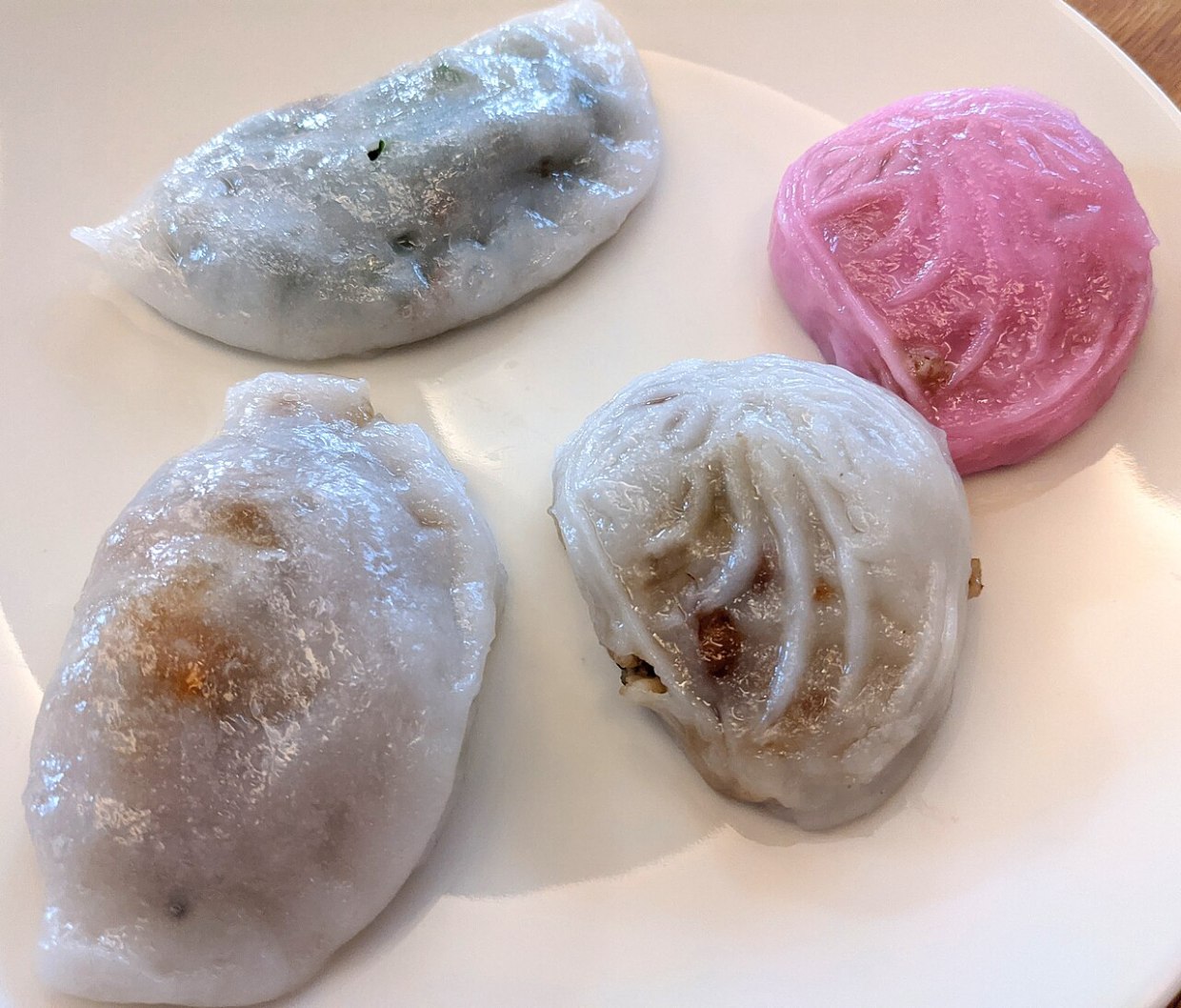
What it means
The skin is sweet potato starch rather than rice, which is where the name comes from. The starch is mixed to a batter, spread thin in the pan, filled, sealed, pressed flat and fried in oil. The skin is thin enough to see through; fried, the edges crisp while the middle stays soft.
The filling is mostly vegetarian — chives, dried radish, peanuts. The “no rice” in the name is about the skin, not a claim that it is not a kueh.
When you eat it
Street stalls carry them all year, most of all from the afternoon into the night. It is a snack and never goes on a banquet table — fried to order, and the skin turns tough once it cools.
Words easily confused
It is a kind of kueh whose skin uses a different material, not the riddle the name suggests. All kueh belong to the rice-food line; this is the one standing exception that does not use rice for its skin.
Read next: Chaoshan kueh: one for each festival, each in its own shape.
Same group: kueh, rice noodle rolls, oyster omelette.
Home › Glossary › Food and tea › The rice-free kueh
Text on this site is CC BY-SA 4.0; copyright in images is reserved and commercial use requires a separate licence.
Last revised: 3 November 2026