Guo, the rice cake
Rice ground to a paste and made into cakes: an offering first and a snack after, with one kind for each of the festivals of the year.
Pronunciation guǒ|Food and tea|One entry in the Chaoshan glossary
What it means
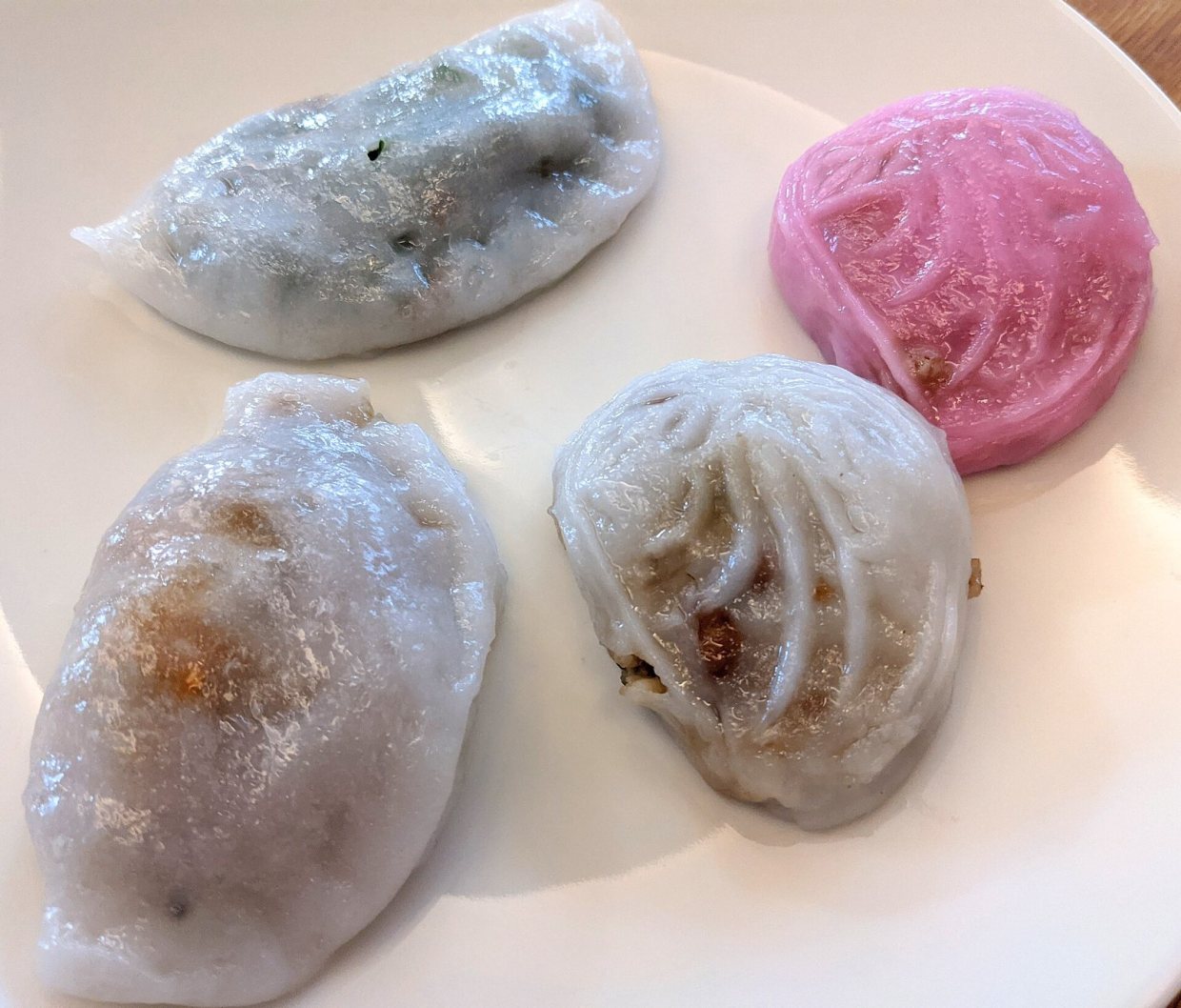
Rice ground to a paste, kneaded into a dough, filled, pressed into a mould and steamed: that is a guo. It holds three posts at once — offering, festival food, everyday snack — and here the first came first.
There are two axes of variation: the skin (rice flour, glutinous rice flour, sweet-potato starch, the juice of the mouse-ear herb) and the use (sacrifice, festival, guests, everyday). The same name may mean different things in different counties, which is especially true here.
When it is eaten
By present practice: sweet cake and leavened cake at the new year, mouse-ear cake at Qingming, leaf-wrapped dumplings at the dragon boat, peach cake at the seventh month and at the year’s end, sweet dumplings at the winter solstice. The correspondences vary a little from county to county.
Words easily confused
Guo is the general word; the peach cake, the mouse-ear cake, the sweet cake, the leavened cake and the skinless cake are all kinds under it. Chaozhou-style pastry making is on the fifth provincial list of intangible heritage, number Ⅷ-70, registered in Jinping district of Shantou and proclaimed on 22 November 2013; the name on the list is Chaozhou-style cake and pastry making, and the rice cakes are one part of it.
Read next: Chaoshan rice cakes: a kind for every festival.
Same group: the peach cake, the mouse-ear cake, the skinless cake.
Home › Glossary › Food and tea › Rice cake
Text on this site is CC BY-SA 4.0; copyright in images is reserved and commercial use requires a separate licence.
Last revised: 3 November 2026