Hao lao, the oyster omelette
Fresh oysters in a sweet-potato batter, fried in lard: crisp at the edge, soft in the middle, eaten with fish sauce.
Pronunciation háo lào|Food and tea|One entry in the Chaoshan glossary
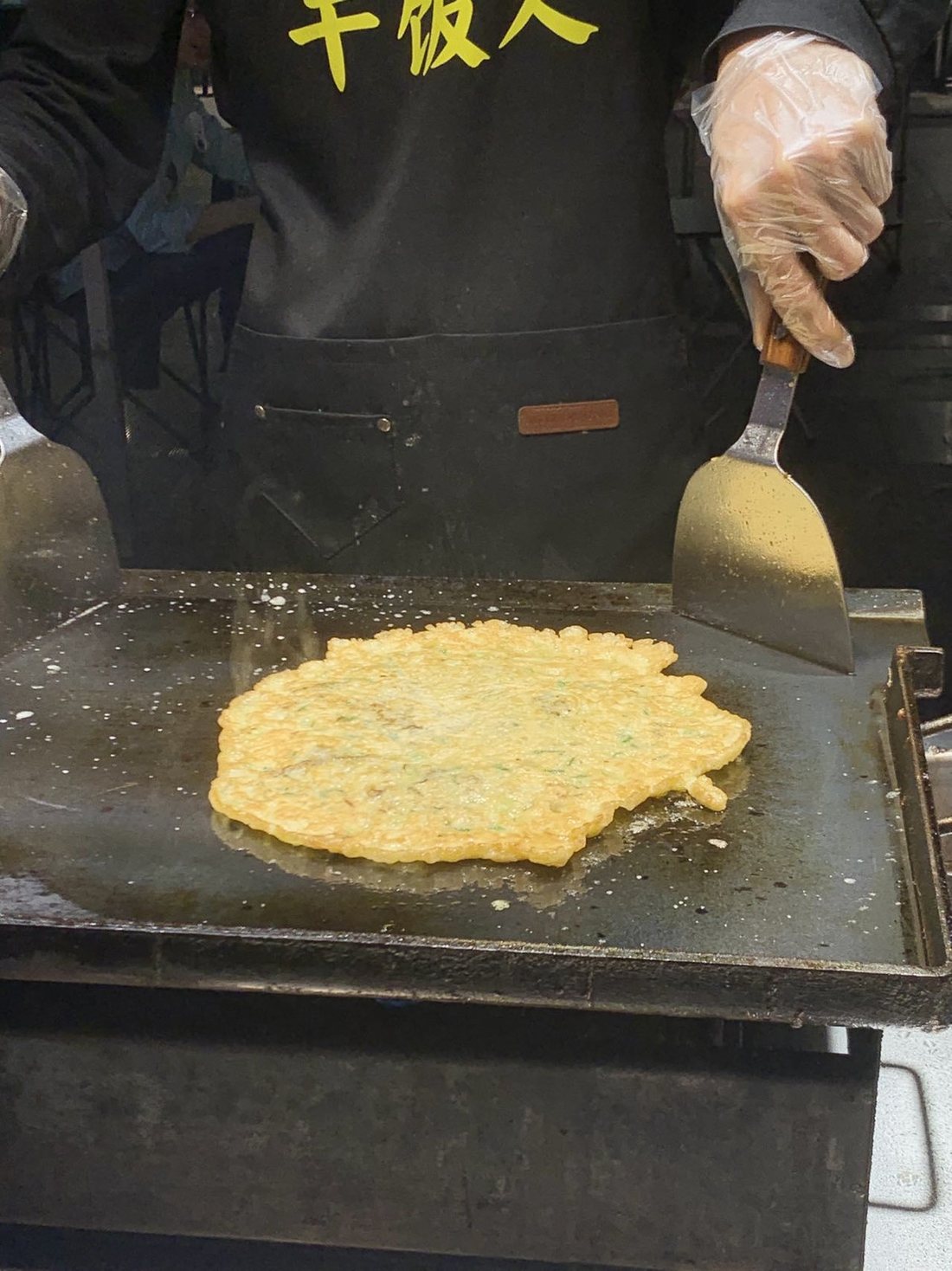
What it means
Oysters are mixed into a sweet-potato batter, spread in lard and fried; beaten egg goes over before it comes out, and it is turned until the edge is crisp. The batter decides it: too much flour and it goes hard, too little and it falls apart.
Eaten with fish sauce or chilli sauce. The same thing at a banquet is a dish and at a street corner is a snack, with method and portion differing. Sweet-potato flour is required — other flours will not hold — and the batter is mixed to a consistency that coats each oyster. The lard has to be generous: with less it sticks, and the crisp edge never forms.
When you eat it
Fried to order at a stall, most often from afternoon into the night. Cold it is no longer crisp, and the few minutes between pan and mouth are the whole of it.
Words easily confused
This is a sweet-potato batter fried, not an egg pancake. The lao in the name is the crust that forms in the pan, not roasting.
Read next: Chaoshan snacks: the bowl in the lane.
Same group: the skinless cake, rice noodles, beef balls.
Home › Glossary › Food and tea › Oyster omelette
Text on this site is CC BY-SA 4.0; copyright in images is reserved and commercial use requires a separate licence.
Last revised: 3 November 2026