Guo tiao, rice noodles
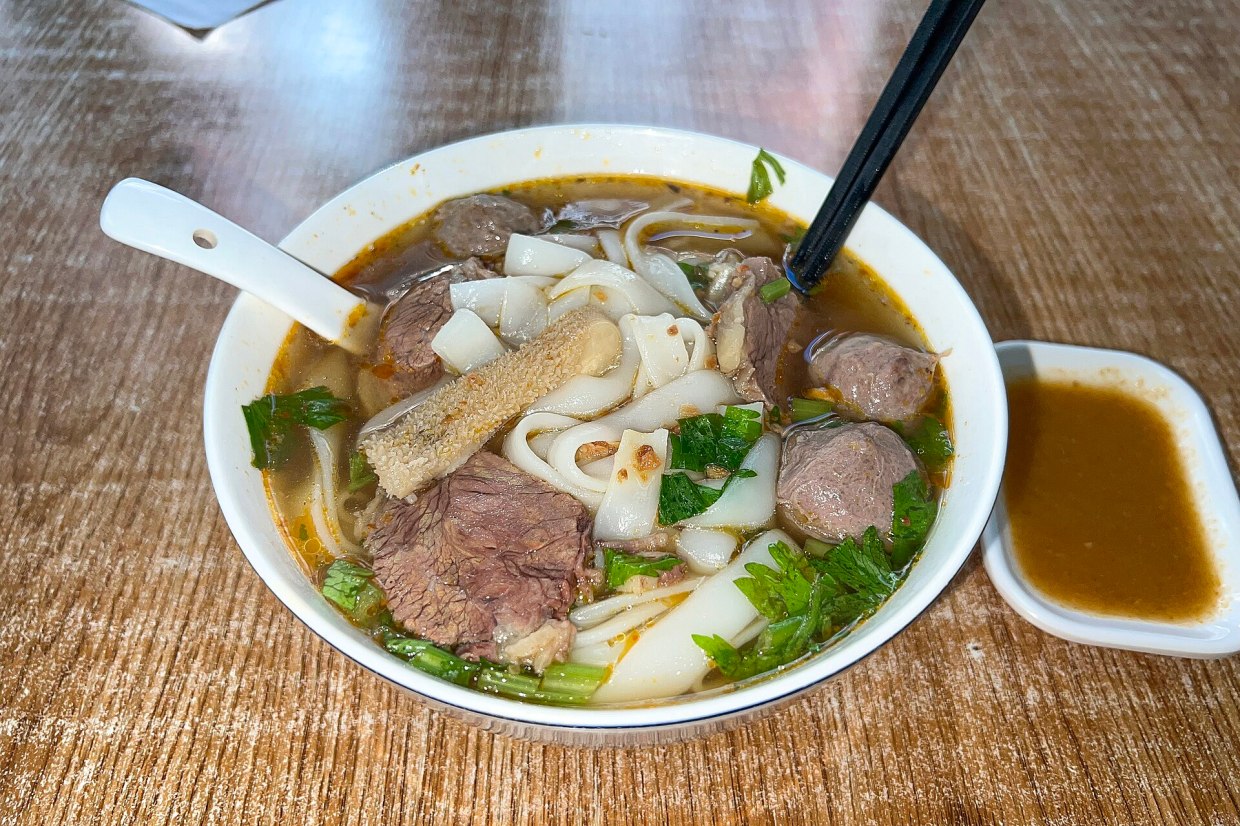
Rice paste steamed into a sheet and cut into ribbons; served in soup, fried, or tossed dry, and the commonest bowl in the lanes of Shantou.
Pronunciation guǒ tiáo|Food and tea|One entry in the Chaoshan glossary
What it means
Rice paste spread thin, steamed, cooled and cut into ribbons. The same line of work as the Cantonese ho fun, cut narrower and thinner here, so that the taste of rice comes forward.
Three ways to eat them: in soup, fried, or tossed dry. Soup is judged on the broth, frying on the breath of the wok, the dry toss on the sauce. Old rice is preferred — new rice is too sticky and the ribbons will not hold. The tray is oiled, the paste spread thin, the lot steamed, and the sheet cooled whole before cutting.
When you eat it
Morning, noon and night, and the night bowl is the busiest. Beef balls are the commonest partner: clear broth, meatballs, noodles, and a spoonful of satay or chilli sauce on top.
Words easily confused
Guo tiao are ribbons, guo zhi is in pieces; these are blanched to order, that one is simmered in master stock. Both start from rice paste, and neither the shape nor the eating is the same.
Read next: Chaoshan snacks: the bowl in the lane.
Same group: guo, the rice cake, guo zhi, beef balls.
Home › Glossary › Food and tea › Rice noodles
Text on this site is CC BY-SA 4.0; copyright in images is reserved and commercial use requires a separate licence.
Last revised: 3 November 2026