The Jilue Huang ancestral shrine
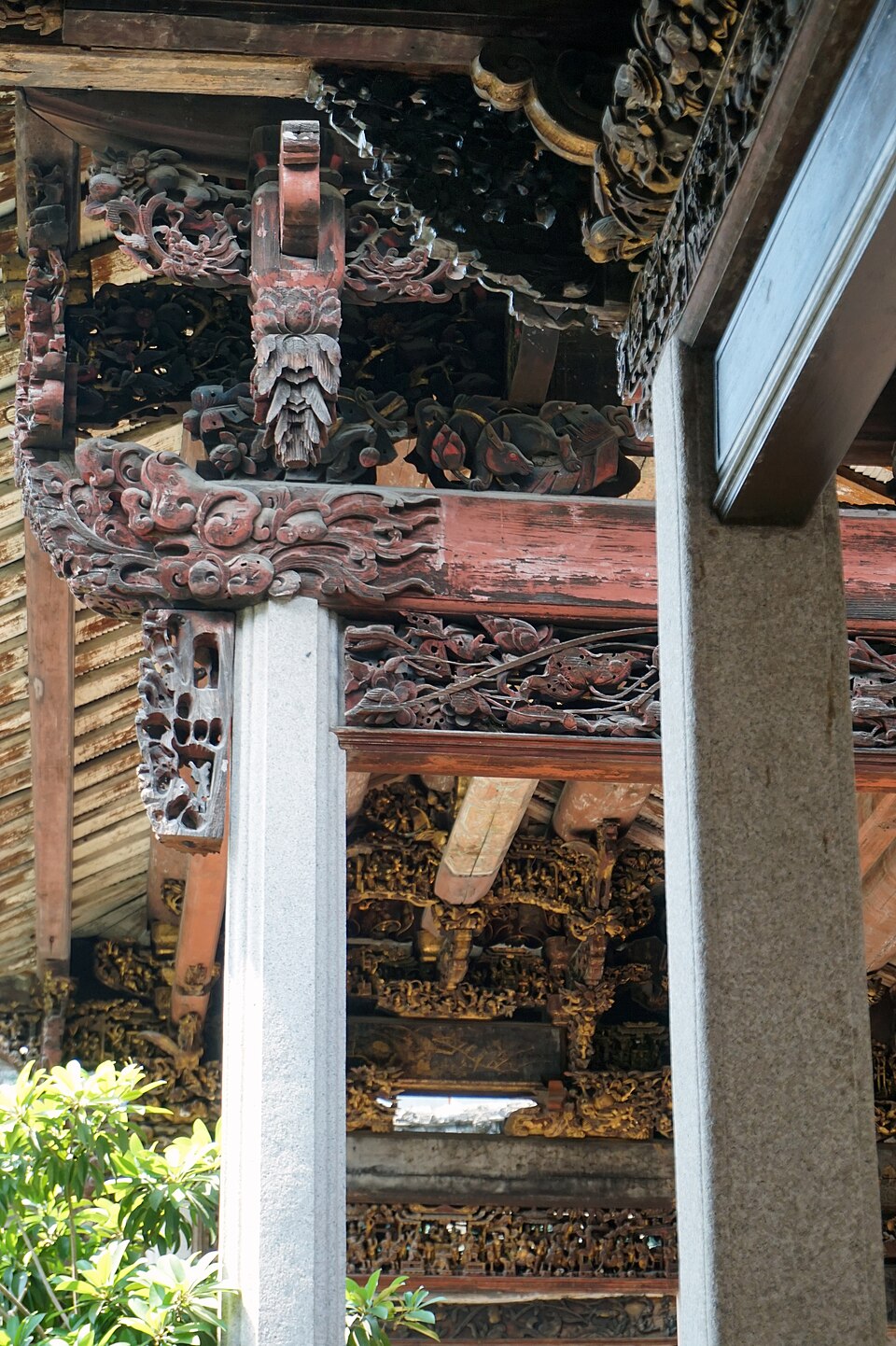
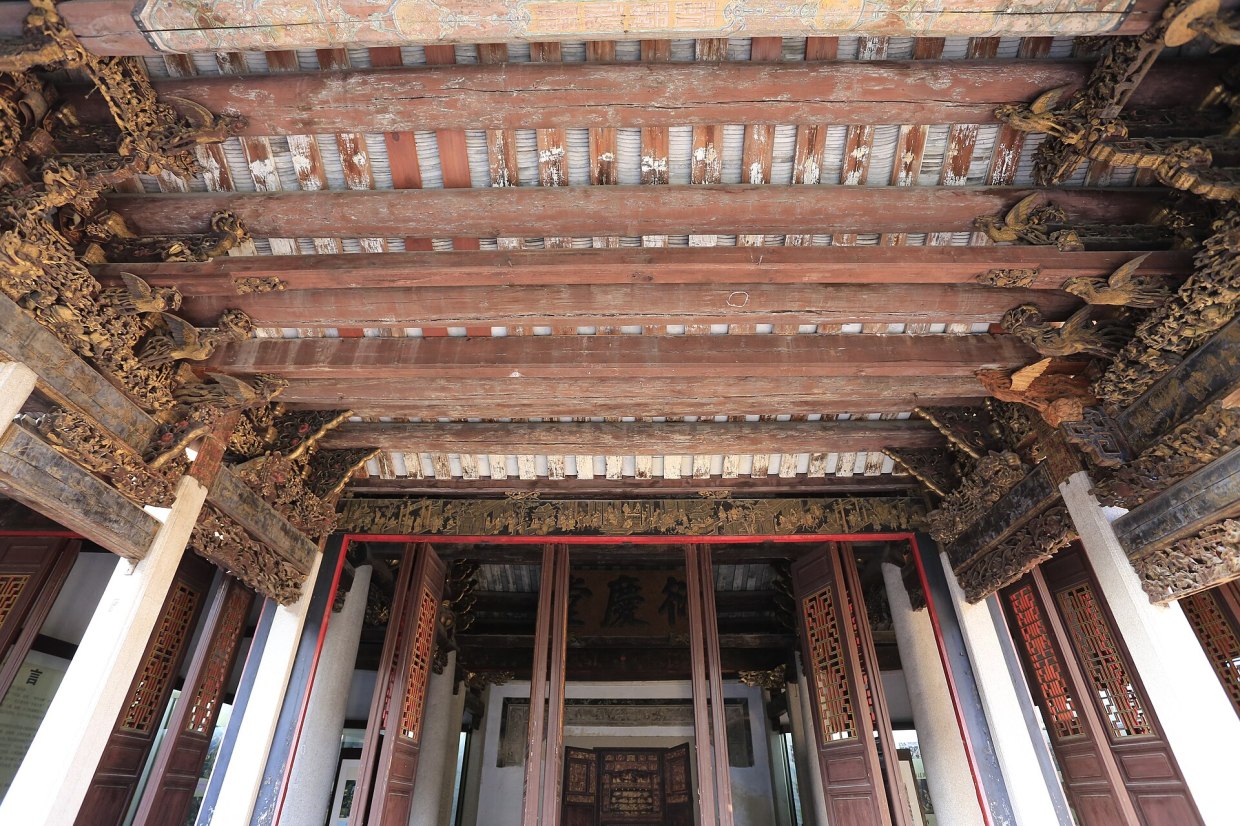
A private ancestral hall of the late Qing, known for a single storey of gilt woodcarving on its beams. The building is small; what you read is the density and the cut of the chisel.
In one line One hall’s beams carry the whole reputation of the shrine.
Look for The gilt carving on the beam frame · the mugua bearing blocks · the door lintel and the space under the beams
Why it matters
A private shrine whose reputation rests entirely on one storey of gilt woodcarving across the beams of its hall. The building is not large; the density is high, and what you are reading is the cutting and the layering, not the scale. Carving runs from choosing the timber to laying the gold, and the subjects come mostly from opera and from auspicious sayings. Several layers stacked on one beam is the Chaozhou way.
History
Built in 1895, the twenty-first year of Guangxu, as a family shrine, in Tie Lane off Yi’an Road in the city of Chaozhou. In 1993 it was listed as an outstanding modern building of national standard, and in June 2001 it entered the fifth batch of national key cultural relics.
The owner was of the Huang family; Jilue was his courtesy name. The local gazetteers say nothing about his life.
Craft
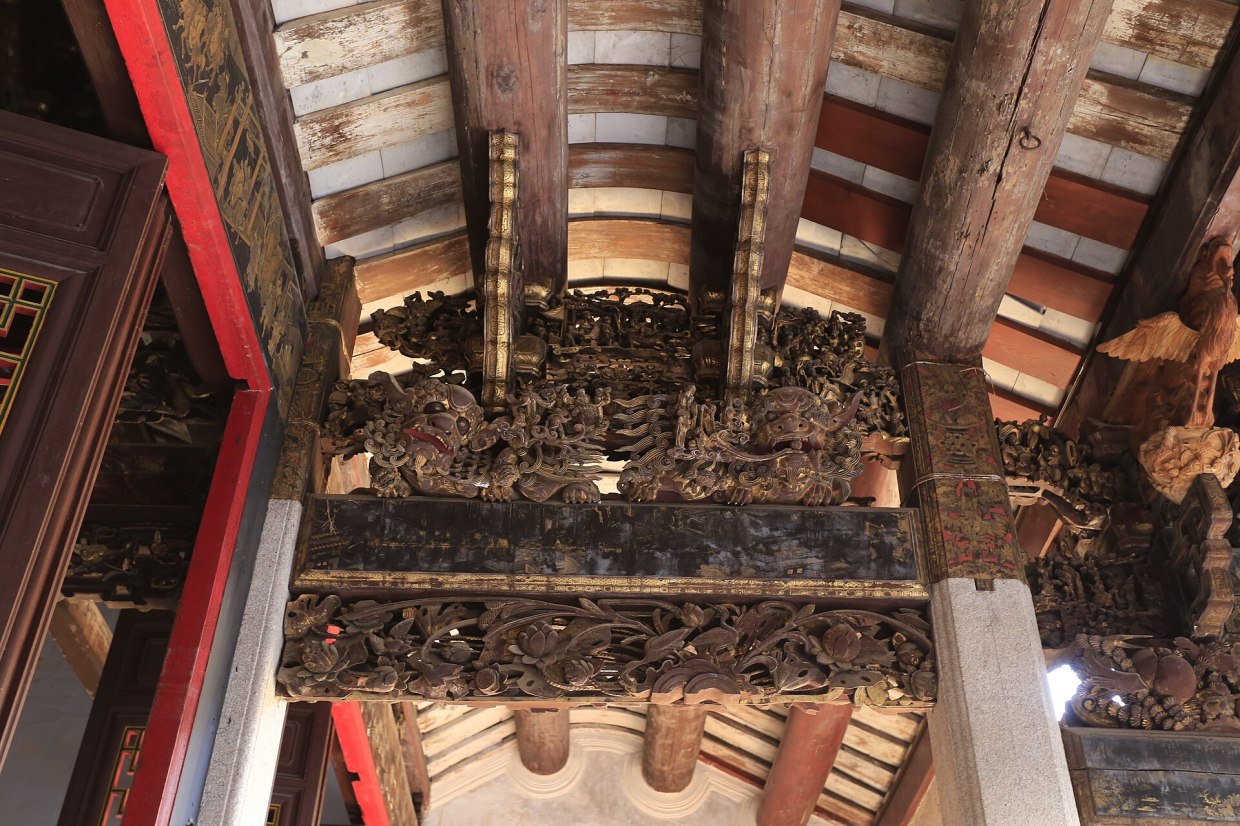
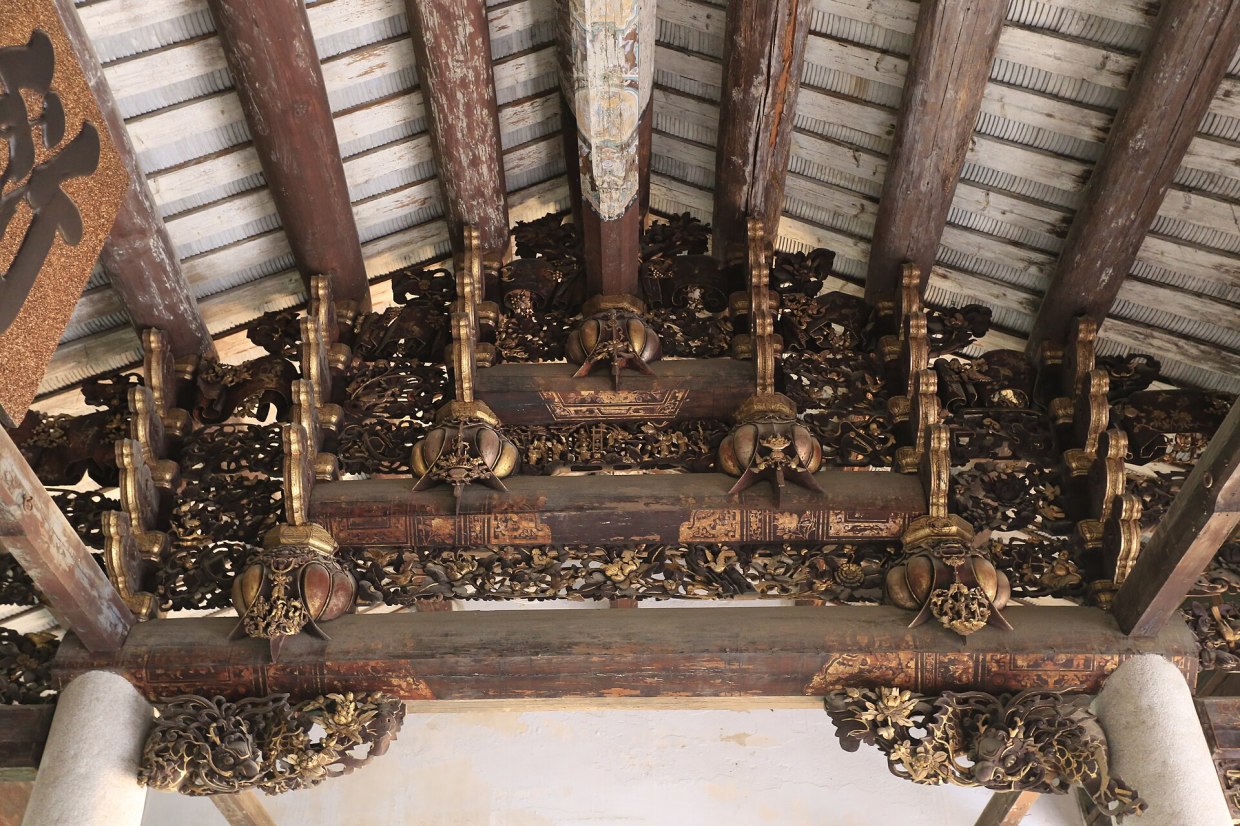
- The frame: hard-mountain gable, grey tile roof, rammed-earth walls with plaster, and a beam frame lifted on mugua blocks. The mugua is the bearing piece on top of a beam; here it has been carved into the leading actor.
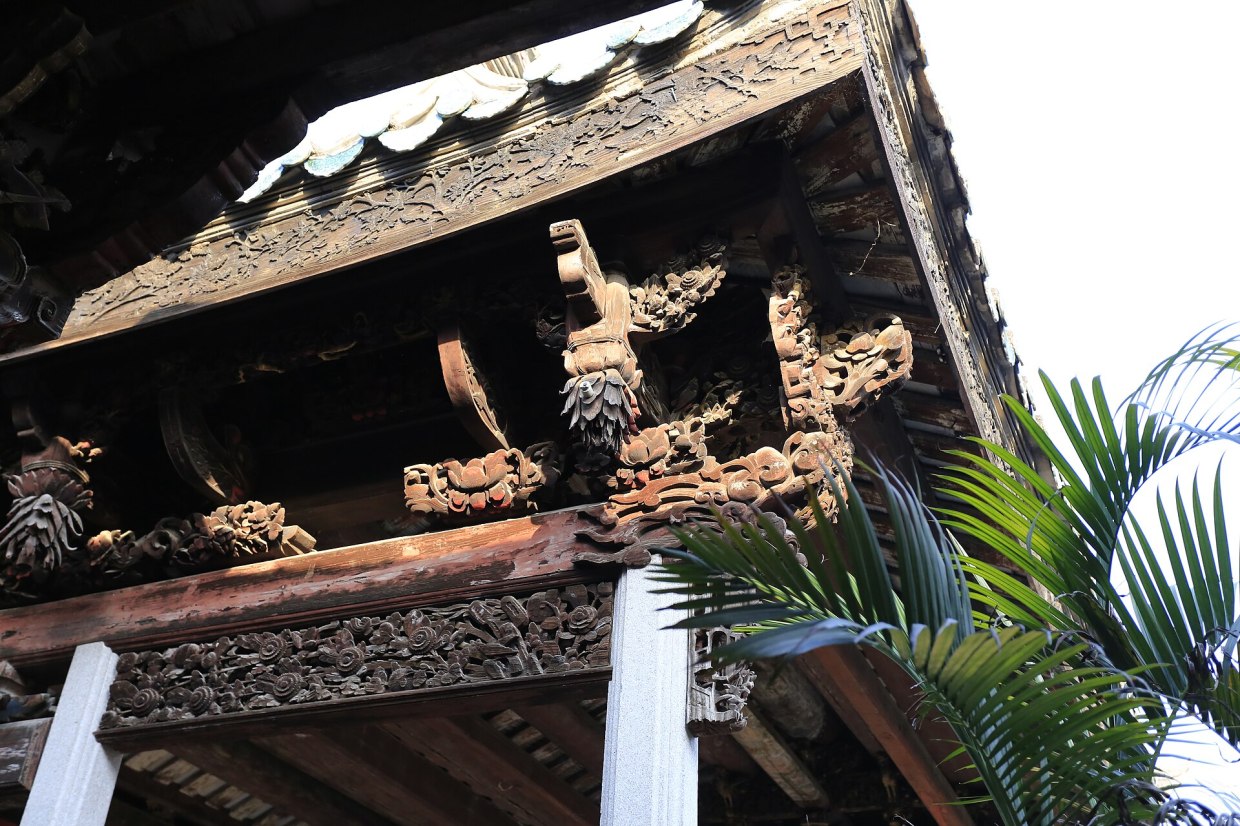
- Gilt carving: every member threaded between beam, purlin and column is carved — figures, auspicious beasts, flowers and birds, pierced in layers and then gilded. The multi-layer pierced carving of Chaozhou is on show here in concentration.
- Stonework: the facade and the column plinths are cut in stone. Seen beside the wood, the two ways of using an edge separate out.
What it is known for
It is called the finest single piece of Chaozhou woodcarving, and also “the museum of Chaozhou woodcarving” — not for its size, but because within one shrine it gathers nearly the whole range of subjects and techniques.
What to look at
- Stand back first for the layering, then go close to the cut: how deep the piercing goes, how thick the gold is laid.
- The mugua blocks: each carries a different subject. Go through them one by one.
- The door lintel and the space under the beams: the light is poor. Bring a torch, or use a phone.
Visiting
The interior is dim, and the carving has to be looked at from close. Piece by piece, two hours is not enough; for the plan alone, forty minutes will do.
Tickets and hours Ticket: not published | Hours: open by day, hours as the management office arranges, posted at the gate | No booking needed.
Related entries
Chaozhou woodcarving, Chaozhou embroidery, The intangible heritage list.
The carving in detail: subjects and cuts
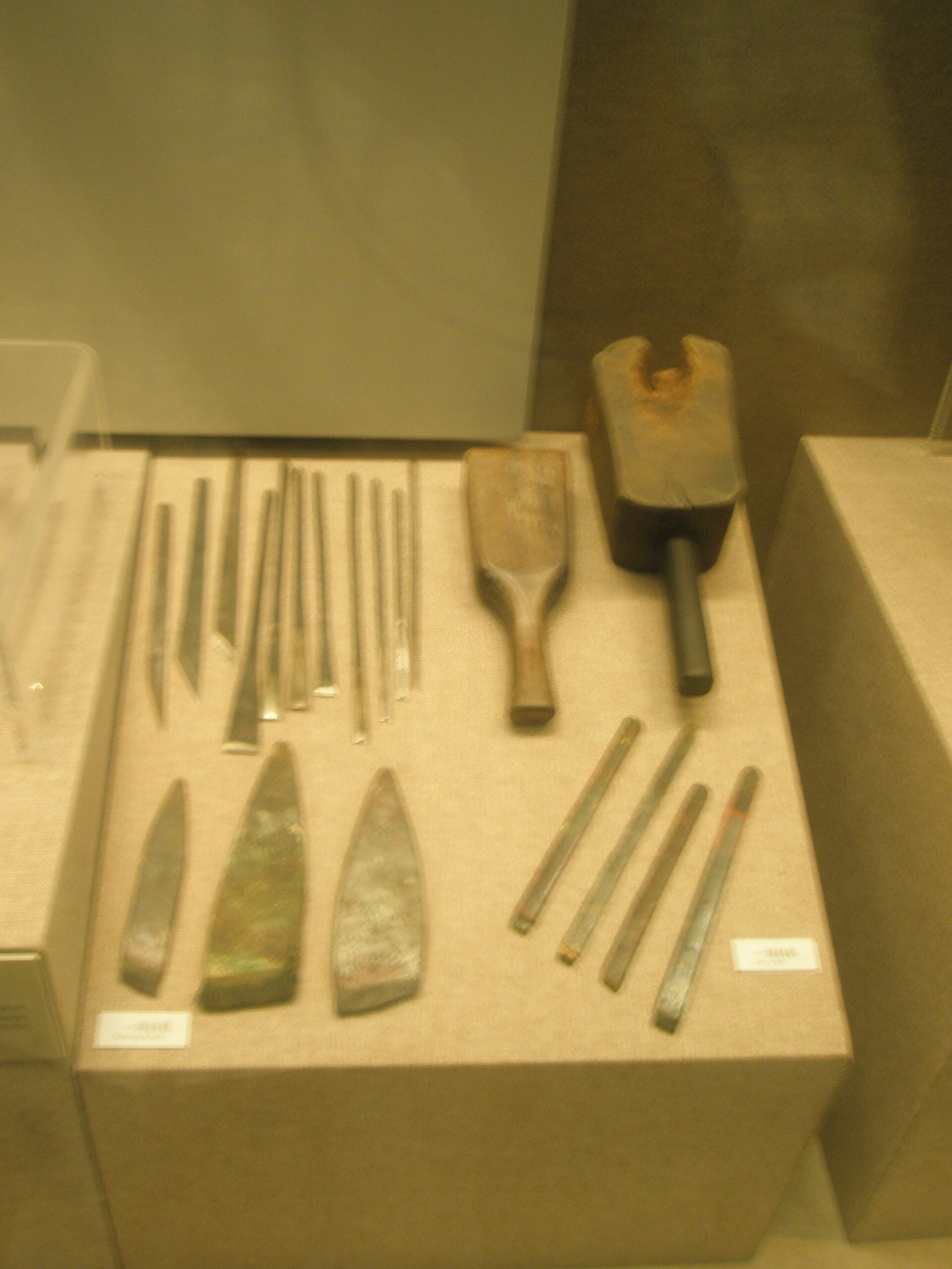
Chaozhou carving is usually sorted into five kinds: sunken, relief, round, pierced, and pierced-and-sawn. This shrine uses the ones that show the most skill — the members on the beam frame are mostly multi-layer pierced work, cut right through, layer behind layer, so that light coming from behind is what gives the pattern its body.
The subjects fall into three groups:
- Opera scenes: figures in groups, with a story and a setting. This is where Chaozhou carving shows most.
- Flowers, birds and auspicious beasts: lion, deer, crane, bat — puns carried by the name.
- Antiquities: vase, tripod, scroll. The scholar’s line.
There is an order to looking. Step back three paces for the layering, then come close to the cut — the depth of the piercing, the thickness of the gold, the direction a figure’s face turns. The mugua blocks are what visitors most often miss: a bearing piece on the beam, and no two carry the same subject.
Why “one of a kind”
It is called the finest single piece of Chaozhou woodcarving, and “the museum of Chaozhou woodcarving”. Not because of its size — the shrine is small — but because within one shrine the subjects and techniques of the craft are very nearly complete. Late Qing shrines are common; ones that reach this density of workmanship are not.
In 1993 it was listed as an outstanding modern building of national standard, and in 2001 it entered the fifth batch of national key sites. The owner was a Huang, Jilue his courtesy name, and the gazetteers record nothing of his life — a shrine handed down by craft alone, where who the owner was matters least.
From timber to gold leaf
The work runs in four steps:
- Choosing the wood: mostly camphor — fine grain, camphor oil in it, resistant to insects; fir for the secondary members.
- Blocking out: rough shapes cut first, to fix the outline and the layers. In pierced work the route of the chisel has to be planned in advance, leaving material layer by layer; what is cut away cannot be put back.
- Finishing: faces, folds, leaves, scales cut fine. This stage decides the piece — a sharp edge and a steady hand.
- Lacquer and gold: a ground of filled and rubbed plaster, then lacquer, then gold leaf, then a clear coat. The gold in “gilt” is laid on, not brushed on.
It is worth matching the four steps against the beams: the layers of the block-out, the eyes and brows of the finishing, and the places where light still catches in the dark for the gilding.
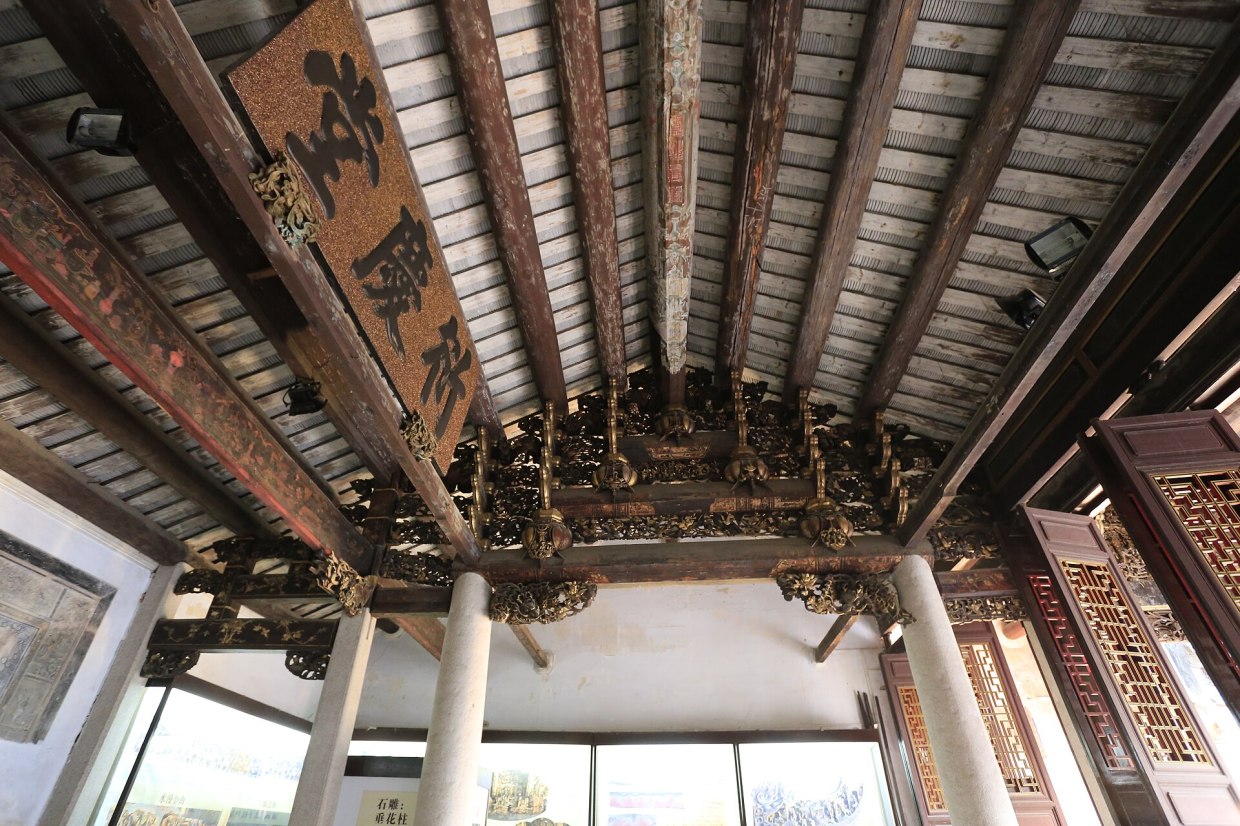
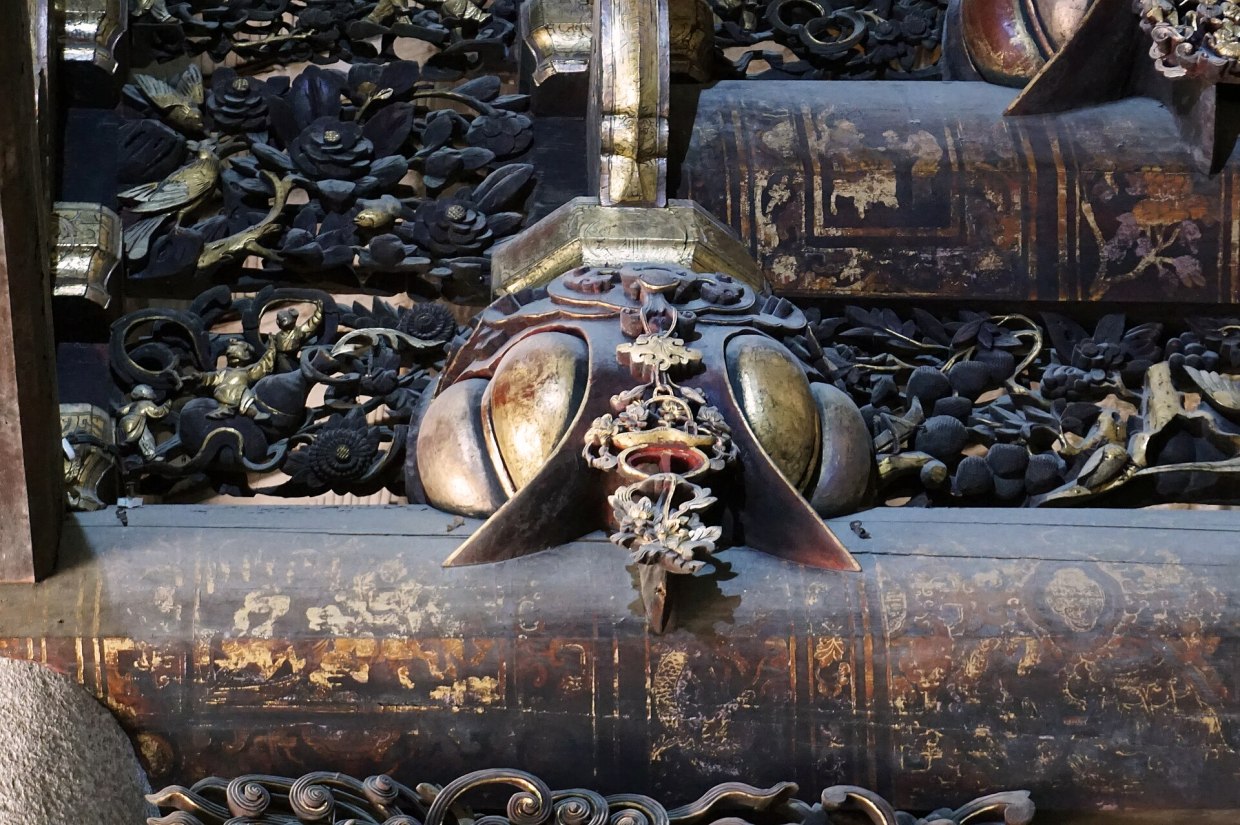
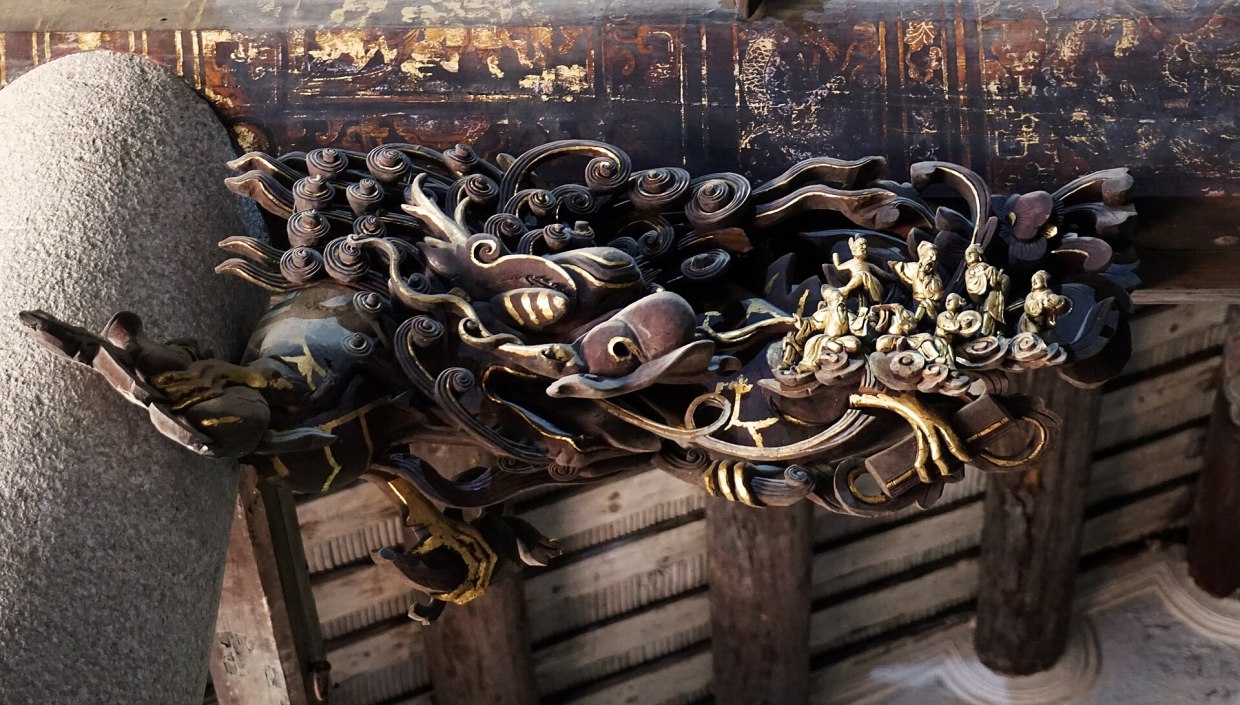
Plates
The pictures below do one thing only: enlarge the detail until the method is legible.
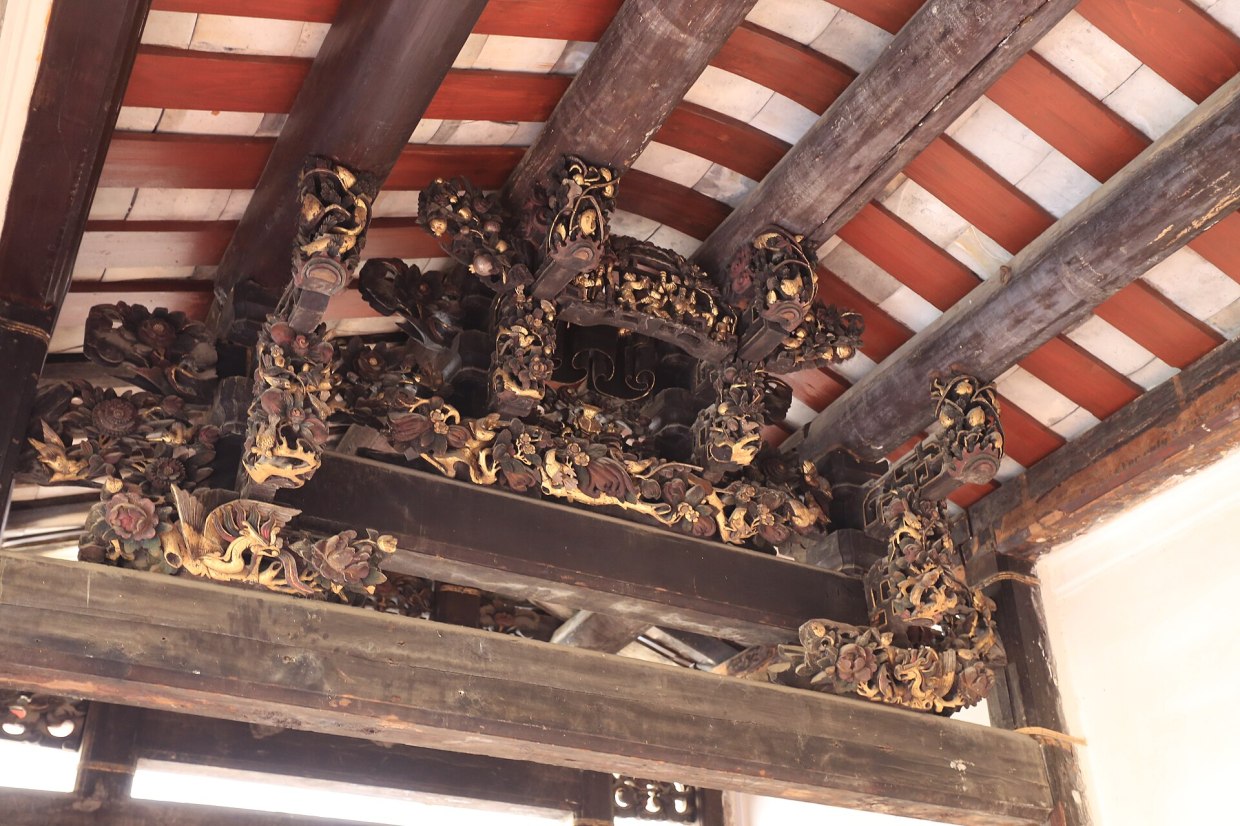
On the same trip
- The Xu mansion of the imperial son-in-law — also in the old city, and both are family buildings.
- Kaiyuan Temple — ten minutes on foot.
- Paifang Street — out of the door and you are on the axis.
The order is yours to work out from the map and the hours; this only says what lies on the way.
In the routes: it is written into all five itineraries, from one day to five.
Note on sources
- The date, the frame and the “one of a kind” judgement: the Chaozhou Municipal Government and the China News Service, “How Chaozhou became a model in protecting and using its relics”; Southern Net, “The nine national key sites of Chaozhou”.
- The phrase “museum of Chaozhou woodcarving”: China News Service, same piece.
Home › Travel › Chaozhou › The Jilue Huang ancestral shrine
Last revised: 5 November 2026