Kaiyuan Temple, Chaozhou
A temple known for its age and its buildings: within one enclosure the Tang, Song, Yuan and Ming each left something, and what you read is the layering.
In one line The reference point for temple building in this region; the pieces that make it famous are scattered through the halls and have to be found one at a time.
Look for Tang pillars, Song bell, Yuan burner, Ming pagoda · porcelain-shard inlay and swallowtail ridges · the Thai hall and the Buddhist college
What to see in it
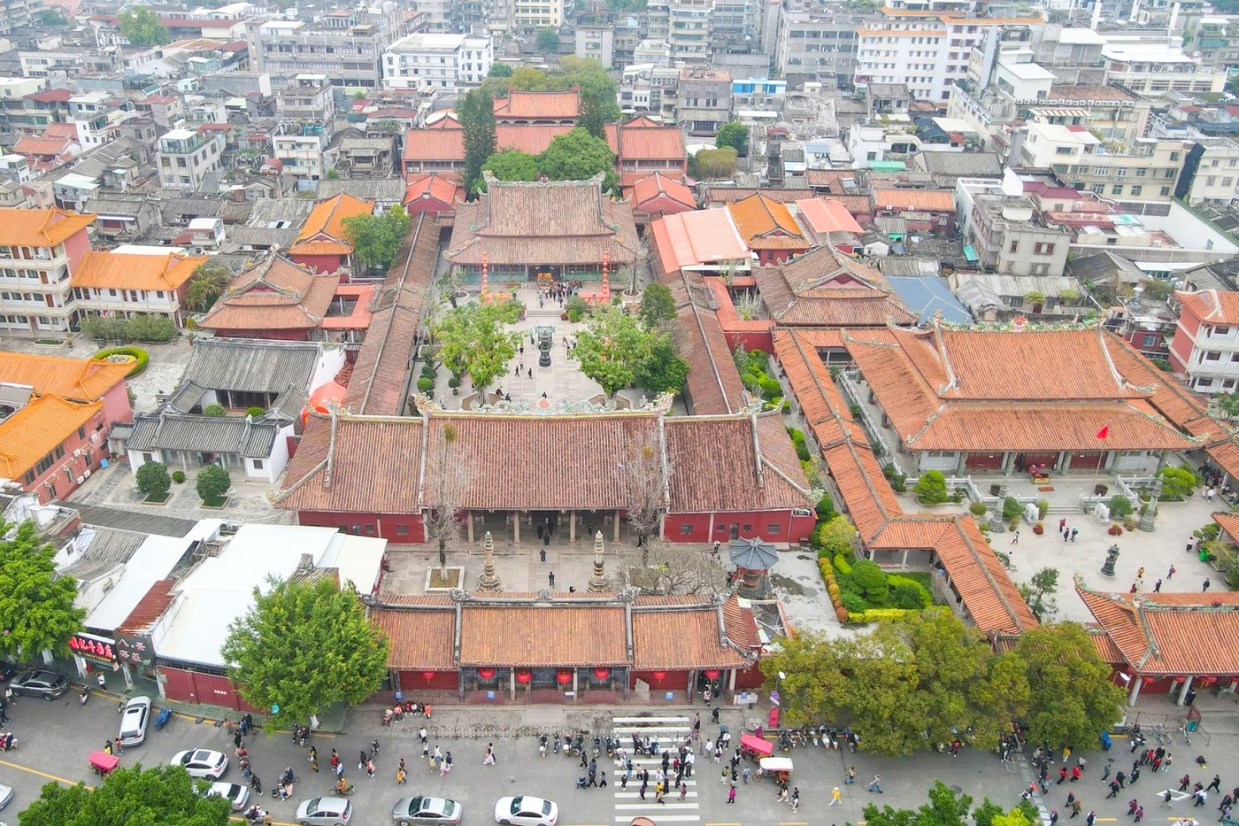
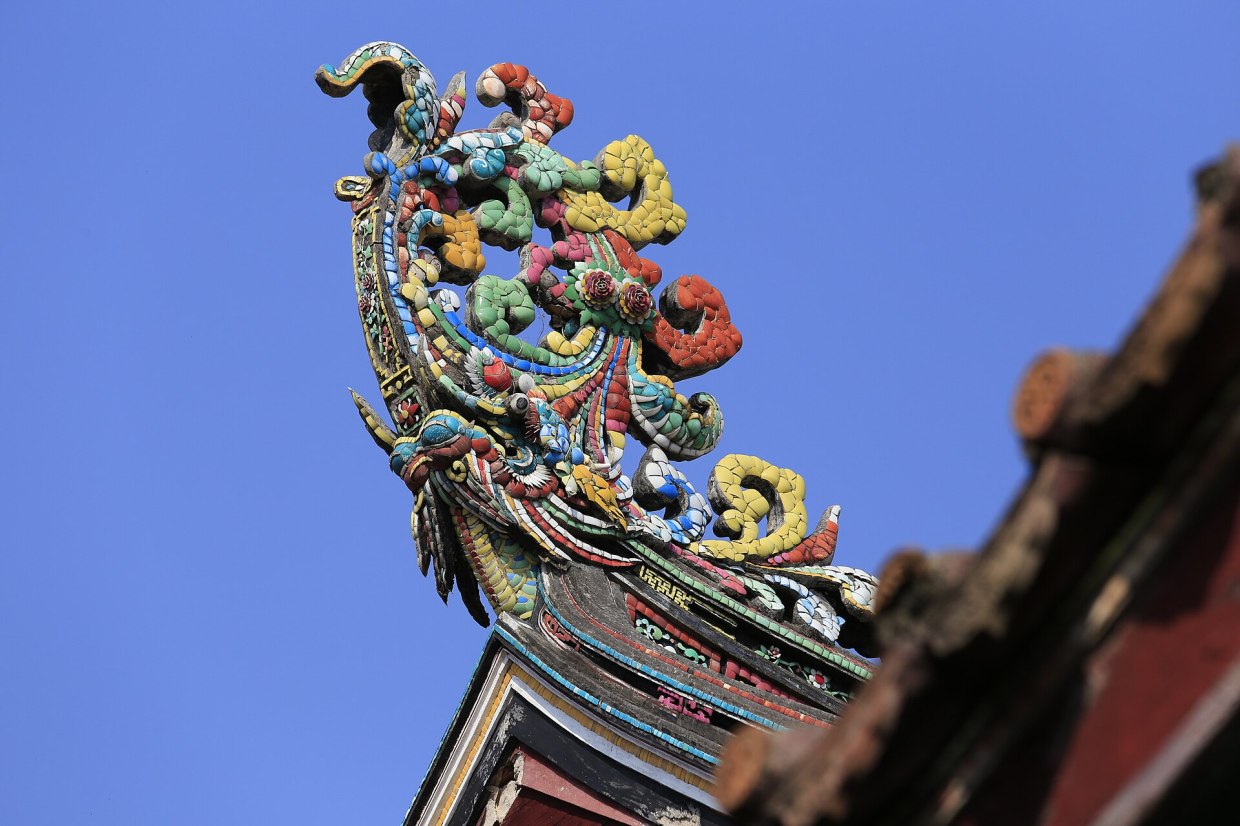
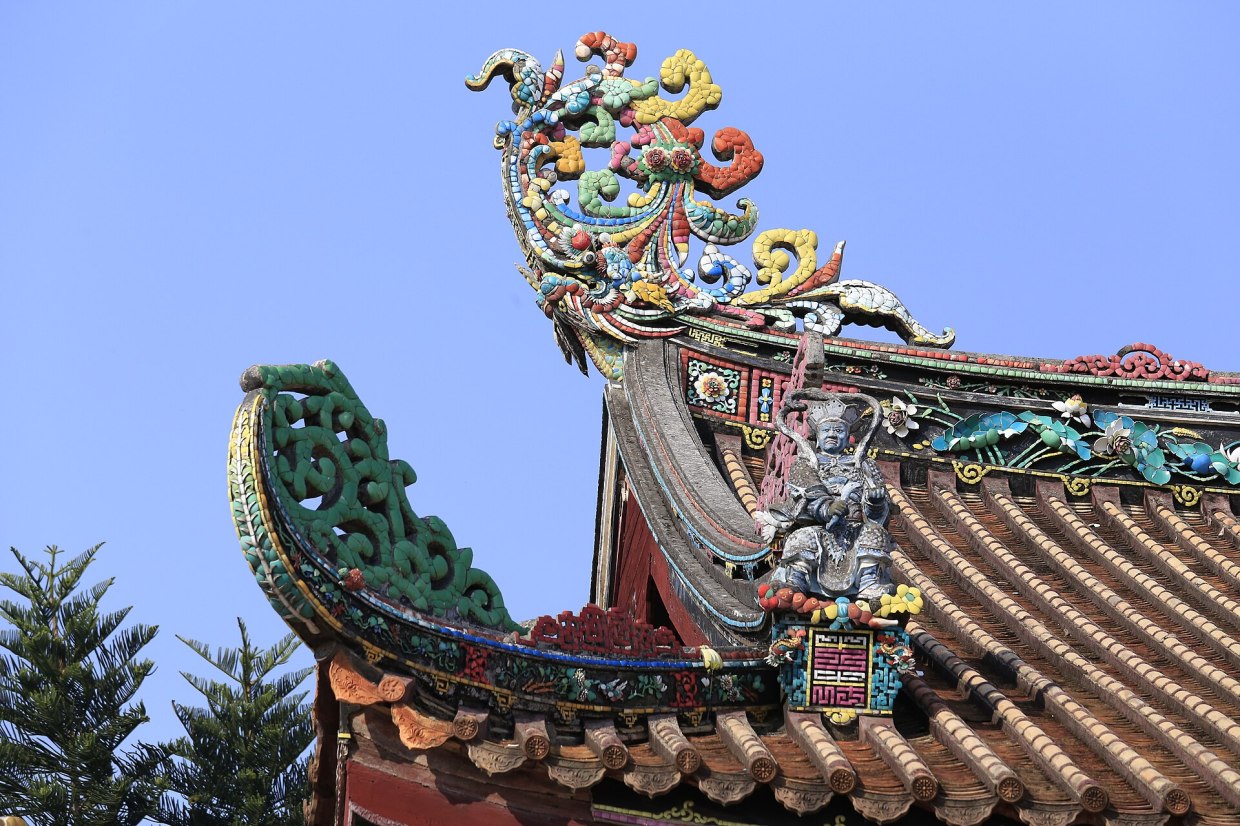
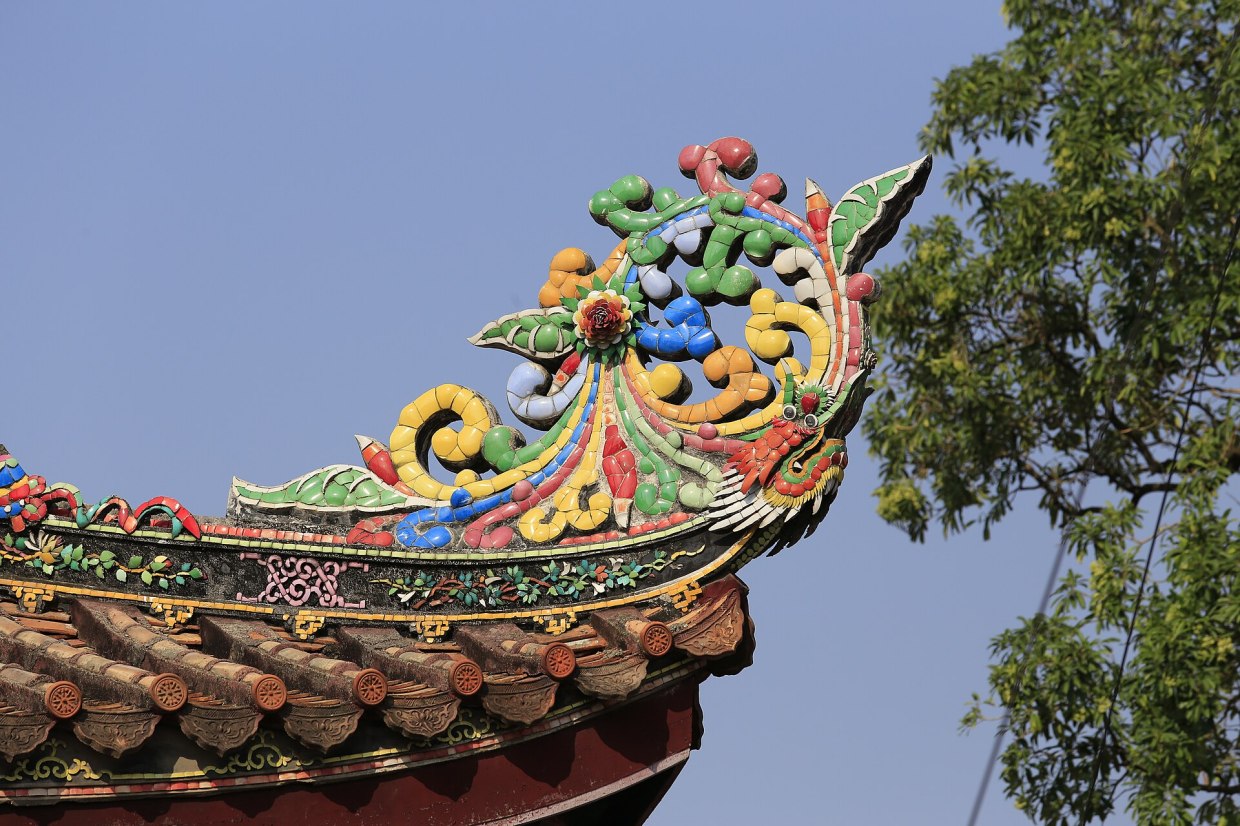
It belongs to the batch of 738, when an edict went out that every prefecture and county should build one temple and take the reign name as its name. The name comes from the era, not from the place; the site was previously Li Peak Temple, and after the change of name it has stayed here. Within one enclosure the Tang, Song, Yuan and Ming each left a piece, so what you read is accumulation rather than a single build. The porcelain-shard inlay and swallowtail ridges on the roofs are a later layer added by Chaozhou craftsmen.
History
Founded in 738, the twenty-sixth year of the Kaiyuan era under Emperor Xuanzong of Tang, when the edict went out that each prefecture and county build a temple under the reign name. The temple before it on the site was Li Peak Temple.
In the Yuan it was renamed Kaiyuan Wanshou Chan Temple, in the Ming Kaiyuan Zhenguo Chan Temple with the additional board Wanshou Palace; locally it has always been Kaiyuan Temple. It was listed in June 2001 in the fifth batch of Major Historical and Cultural Sites Protected at the National Level.
Of Chaozhou it is said, “blessed ground for a million households, a jungle of the three thousand worlds”, and this is the place meant. Exchange with Japan and Southeast Asia left objects behind as well: the Thai Buddhist Hall inside the grounds is a product of Sino-Thai exchange.
Craft
The temple keeps a Tang plan while the individual buildings hold the practice of Song, Yuan, Ming and Qing. It is worth looking at it as a question of which dynasty changed what: the Tang layout, the Song bell, the Yuan burner, the Ming pagoda, each in its own place.
What to look at
- The four courts: walk from the Vajra Hall to the far end and see whether the Tang plan is still legible under the later building.
- The old pieces: Tang sutra pillars, Song bronze bell, Yuan incense burner, Ming thousand-Buddha pagoda, scattered through the courts; the list is in the next section but one.
- The roofs: go out to the street and look back — the swallowtail ridges and the inlay only read whole from there; from the front of a hall you see half.
Visiting
Incense is heavy and the halls are crowded at morning and evening services and on festival days. Do not photograph the images inside the halls; for the buildings, read the notice at each door first.
Tickets and hours Ticket: free entry, incense voluntary | Hours: open by day; the halls are awkward to visit during morning and evening services and festivals | No booking; groups should say hello to the office first.
Related entries
Chaozhou woodcarving, Folk belief and legends, The heritage list.
The plan
It once covered a hundred mu; twenty-odd remain. On the axis, in order: the screen wall, Vajra Hall, Hall of the Heavenly Kings, Mahavira Hall, Sutra Library, Jade Buddha Hall. The east road holds the guest hall, Ksitigarbha Pavilion, refectory, Cloud and Water Hall and the ancestral hall; the west road the abbot’s room, Guanyin Pavilion, Sixth Patriarch Hall, Sangharama Hall and the Hall of the Devas. Four courts and two side roads is the ordinary plan of a large temple; what is rare here is that the Tang ground plan survives.
The Mahavira Hall is five bays wide and four deep, with a double-eaved hip-and-gable roof. The timber is joined dry, and the dragon-head brackets step outward layer on layer, up to eleven deep, to carry the roof — no nails, only mortise and the progressive projection of the bracket sets. This is Tang and Song practice surviving in Lingnan.
What the temple keeps
- Four Tang stone sutra pillars: made when the temple was founded; 5 metres in eight sections and 7 metres in twenty-five, carved with guardians, lotus calyxes and two dragons seizing a pearl, and inscribed with the Cundi and Ushnisha Vijaya dharanis.
- Seventy-eight balustrade panels before the hall: carved with the eight episodes of the Buddha’s life, rare birds and beasts, lotus and auspicious grasses; the great central panel reads “The sun of Buddha increases in glory, the wheel of dharma turns without cease; the imperial wind blows forever, the way of the emperor long prospers”, each character the size of a bushel.
- Song bronze bell: cast in 1114 by the Chaozhou Diamond Sutra Society, over three thousand jin, 1.7 metres high, its surface smooth without sand holes.
- Yuan stone incense burner: of 1325, 1.4 metres high and 950 jin, built up in six stages, the lowest standing on eight beast heads as feet; the inscription is still legible.
- Ming gilt-lacquer thousand-Buddha pagoda: made in the Wanli era, 6 metres high, hexagonal and seven-storeyed, a Buddha in each arched niche and eighteen arhats and twenty-four devas carved before the doors — one of four such pagodas in Guangdong.
- Qing Tripitaka: the Yongzheng edition bestowed by Qianlong, 7240 fascicles in 724 cases, of a printing of only one hundred sets.
Modern: the college and the Thai hall
In 1933 the Lingdong Buddhist College opened inside the temple and published Lamp in the Sea of People; it was the first Buddhist school in Lingnan. In 1982 overseas Chinese funded a full repair; in 2005 the Great Compassion Hall was completed, holding 86 white-marble manifestations of Guanyin, the largest hall of its kind in the country. The Thai Buddhist Hall stands separately east of the Han River bridge, built in 1992 with funds from the Bangkok Chinese leader Xie Huiru after the Marble Temple in Bangkok — the first Thai-style Buddhist hall on the mainland. Two faces, Chinese and Theravada, inside one temple: that is evidence of the tie between Chaozhou and the South Seas.
Roofs: porcelain inlay and swallowtail ridges
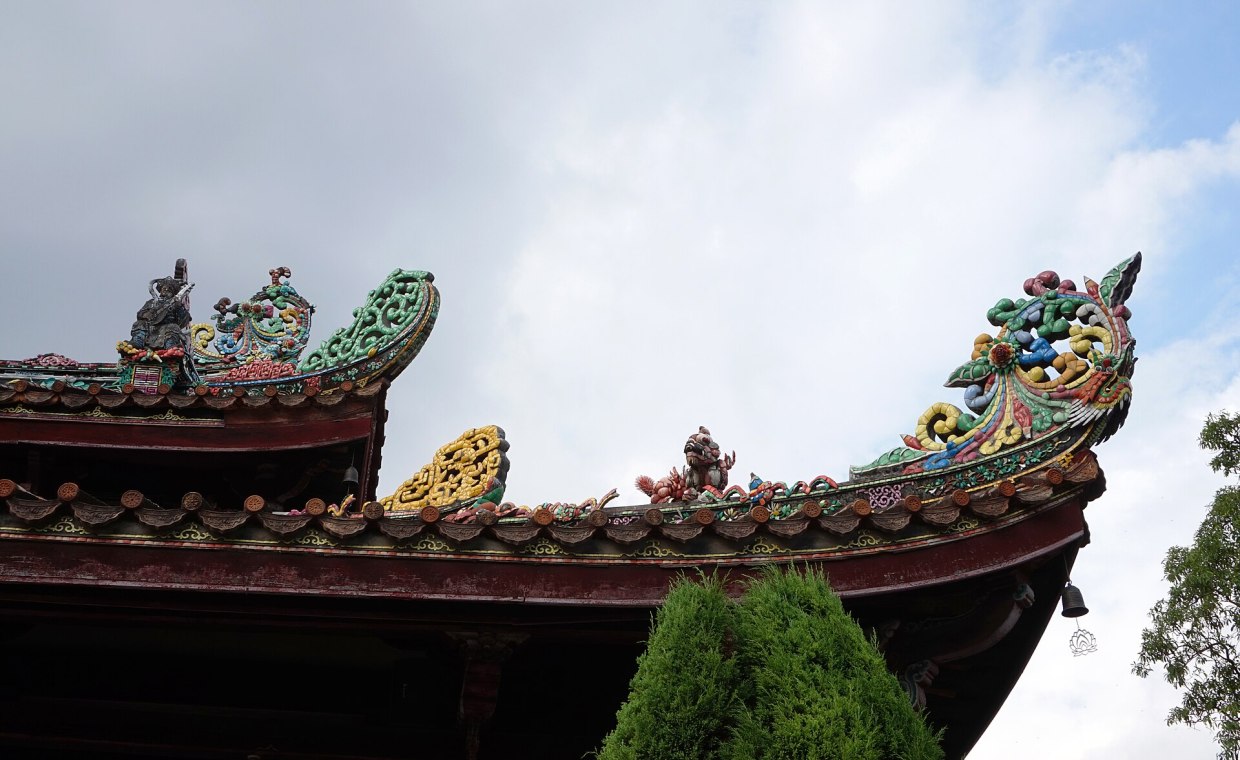
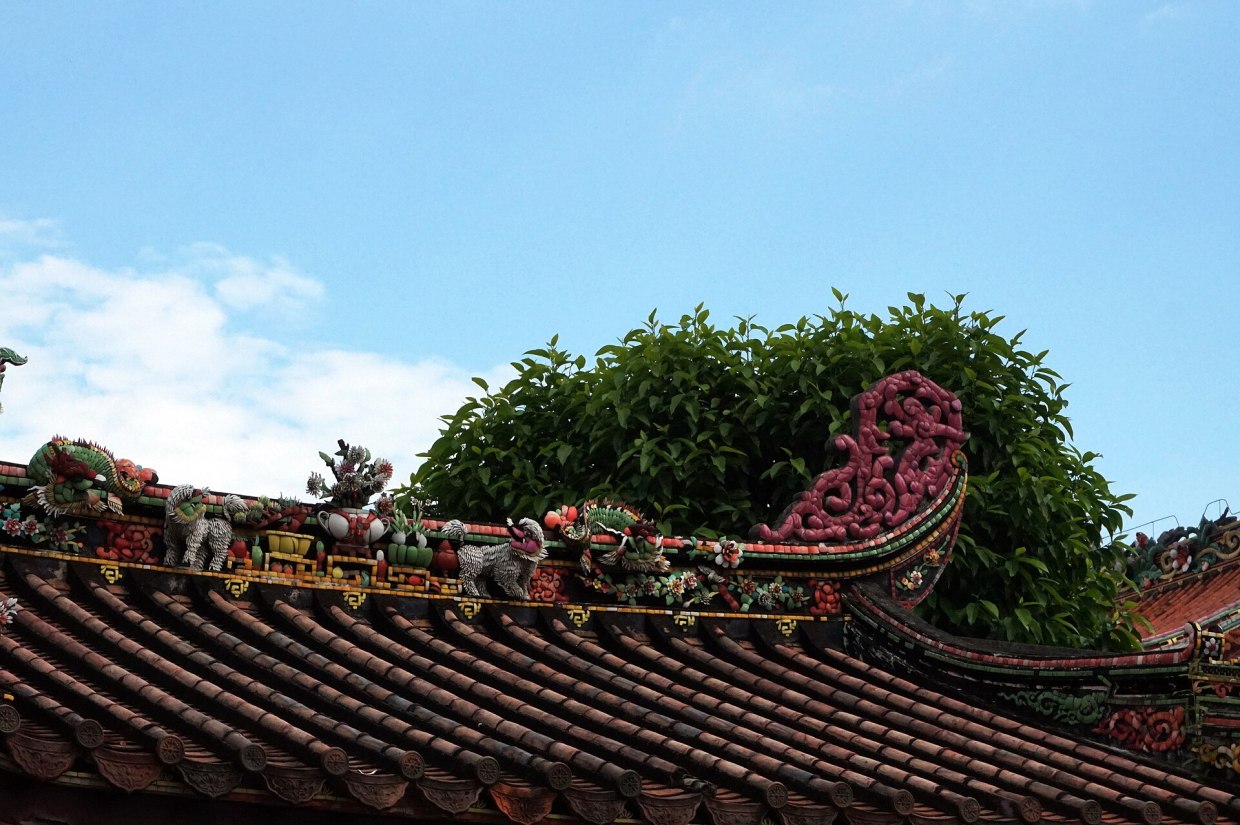
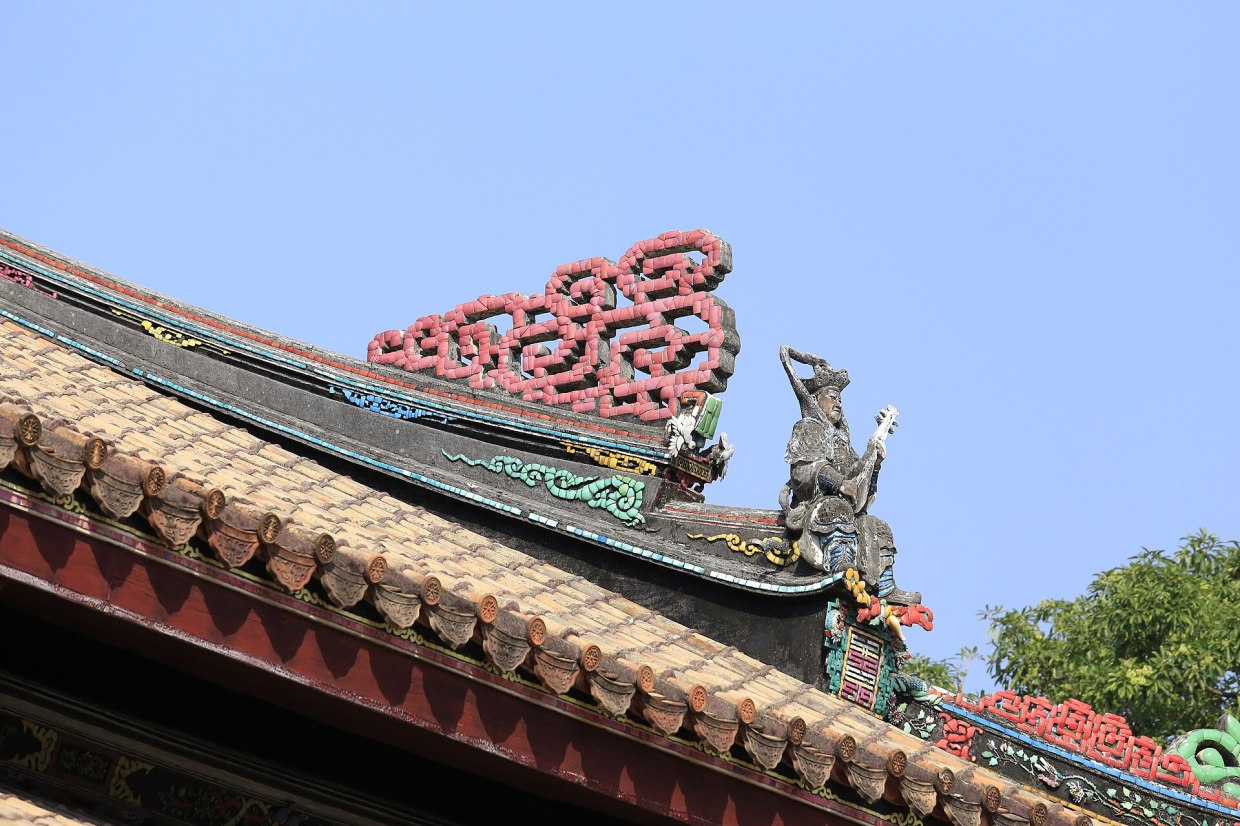
The roofs of Kaiyuan are another craft altogether. Both ends of the main ridge turn up like a swallow’s tail, and the ridge is covered in porcelain inlay — dragons and phoenixes, flowers and birds, figures — all cut and set from shards.
It is the opposite of woodcarving. Woodcarving sits under the beams, seen in dim light, and prizes depth and the cut of the chisel; inlay sits on the ridge, seen from the street with the head tilted back, and prizes silhouette and colour. So the forms are large and the colours hard, and detail is secondary. The process is described under “Porcelain inlay on the ridge” on the Congxi Shrine page.
Details in pictures
On the same trip
- Paifang Street — out of the gate and you are on Taiping Road.
- Jilue Huang Shrine — in the same old city, within walking distance.
- Xu Fuma Mansion — also in the old city, over by Zhongshan Road.
The order is yours to work out from the map and the hours; this only says what lies on the way.
In the routes: six itineraries place it in the plan, the half-day, one-day, two-day, three-day, four-day and five-day.
Note on sources
- The history and the four-court plan come from the Chaozhou municipal government and China Qiaowang, “How Chaozhou became a model in protecting and using its heritage”; and from Nanfang Net, “Nine national protected sites in Chaozhou”.
- The list of objects — Tang pillars, Song bell, Yuan burner, Ming pagoda, Qing Tripitaka — comes from the Chaozhou municipal government portal and from NetEase, “Nine national treasures of Chaozhou”.
Home › Travel › Chaozhou › Kaiyuan Temple
Last revised: 4 November 2026