Paifang Street
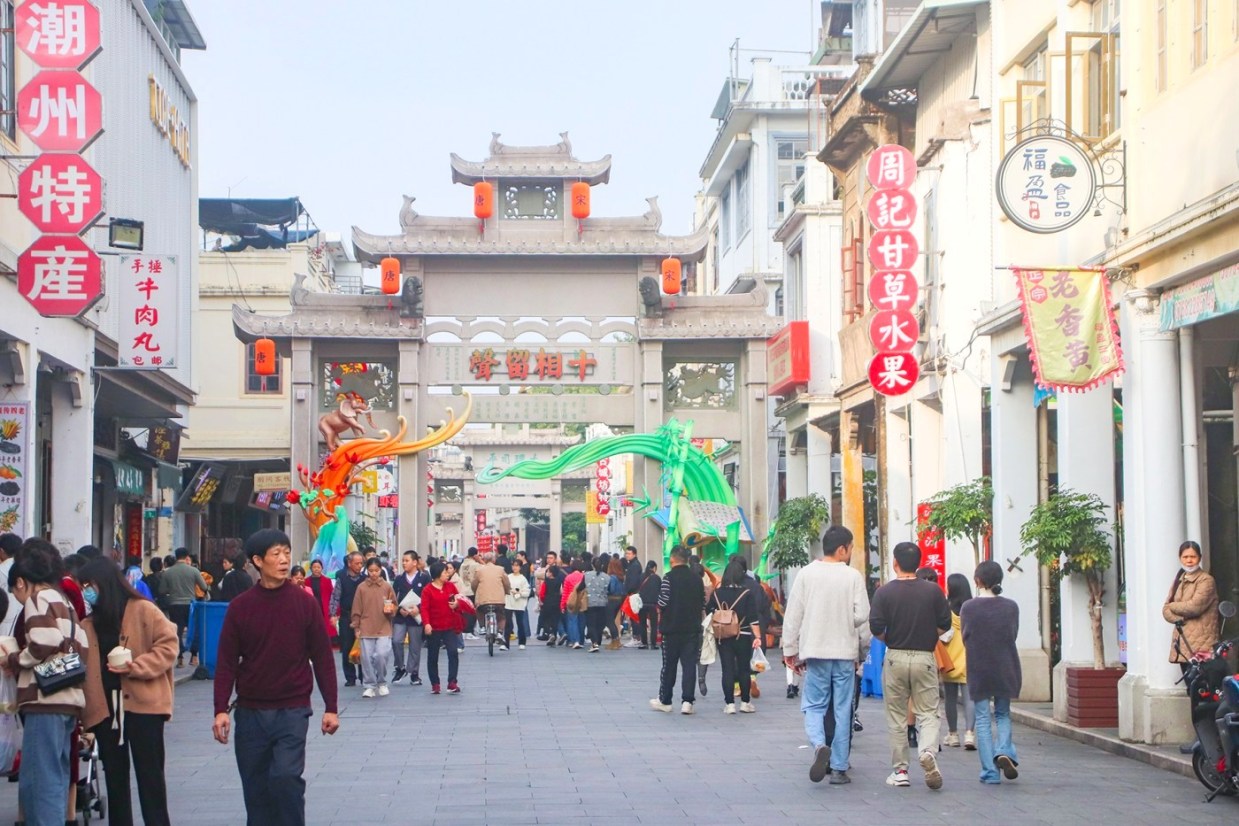
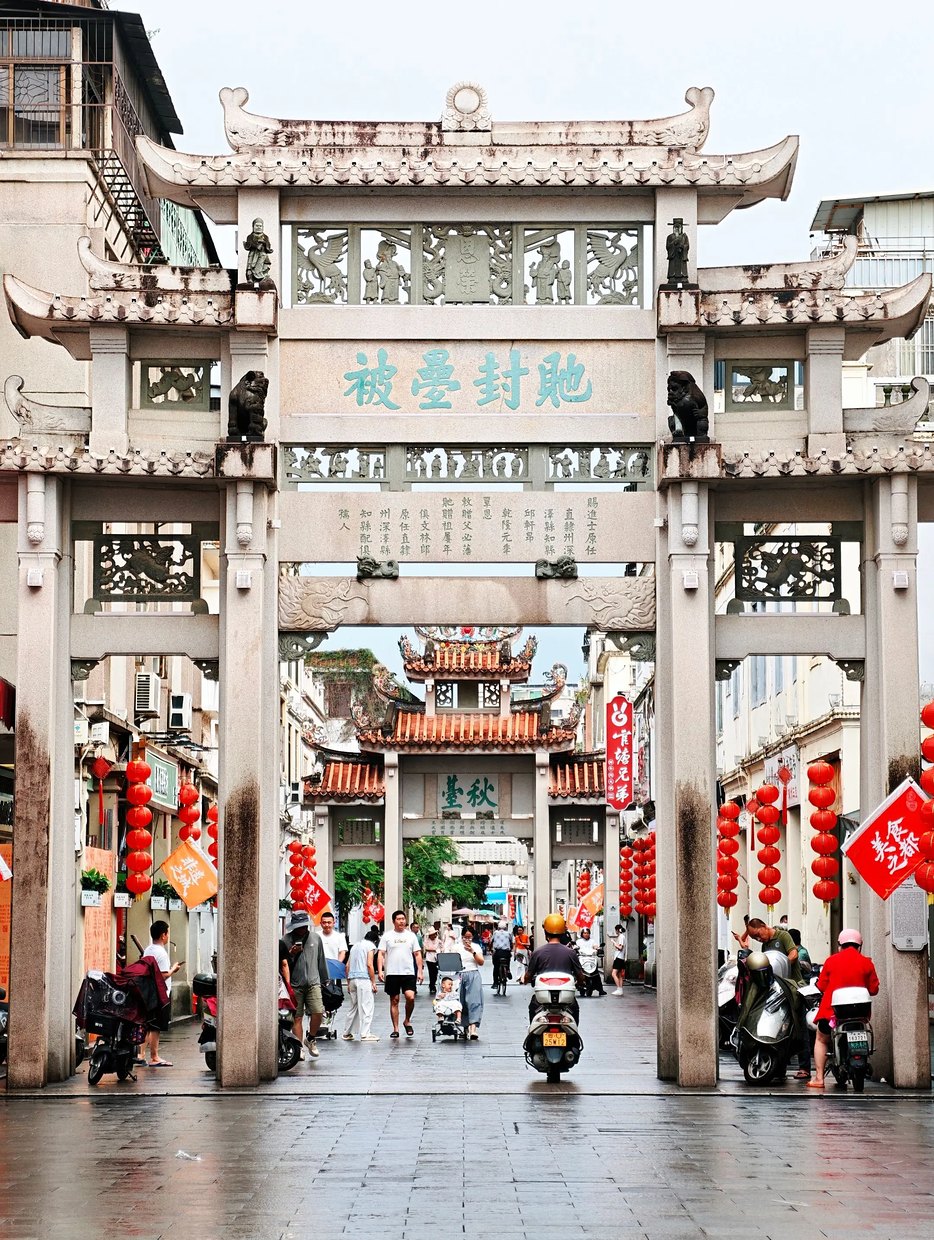
Stone memorial arches line Taiping Road, with Nanyang-style arcade houses behind them. One street lays the honours of the examination hall and the business of the treaty port on the same paving.
In one line Two systems side by side on one stretch of road: the stone arches of the examination honours, and the arcades of the port.
Look for The rank shown in each arch’s form · the arched colonnades · the fifty-odd old lanes running off the street
What to see in it
A paifang was an institution, not an ornament. There were categories — examination success, official service, loyalty and righteousness, chastity and filial piety — and setting one up meant application, inspection and approval before the locality raised the money. Taiping Road is the north-south axis of the prefectural city and carries the densest run of them, so the talent ledger of a whole county is laid out along one street. In the late Qing and early Republic the arcade house arrived from Southeast Asia and the road was rebuilt as an arcade shopping street: the order of honour and the order of trade on the same paving, which is rare elsewhere.
History
Taiping Road is the north-south axis of the prefectural city. Chaozhou produced examination graduates without a break from the Tang and Song on, and arches were put up to mark degrees, office and loyalty, at their densest in the Ming and Qing. Within the prefecture there were more than five hundred; Haiyang County alone had about a hundred and sixty; the axis road carried the thickest run.
In the late Qing and early Republic the Nanyang arcade was introduced into Guangdong and Taiping Road was gradually rebuilt as an arcade shopping street. Chinese stone arches and arcades standing together is what the street looks like today.
Paifang Street runs 1948 metres, of which Taiping Road is 1742 and East Gate Street 206. More than twenty restored stone arches stand today.
People
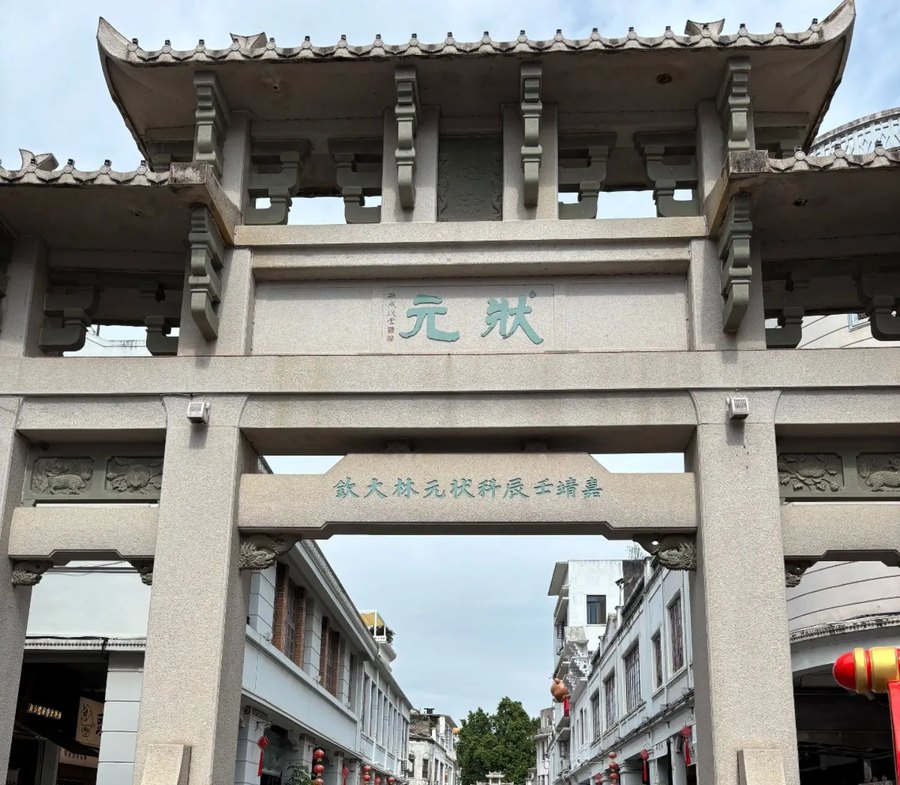
The people named on the arches are all documented. Xu Hongyou, who came from Longhu ancient village, has the “Censor’s Staff” arch; Cheng Zixue and six other worthies share the “Imperial Censor” arch; the Number One Scholar arch belongs to Lin Daqin. Of the thirty-nine arches to local worthies on the old prefectural city street, five concern the single village of Longhu — one street showing the talent ledger of a county.
What to look at
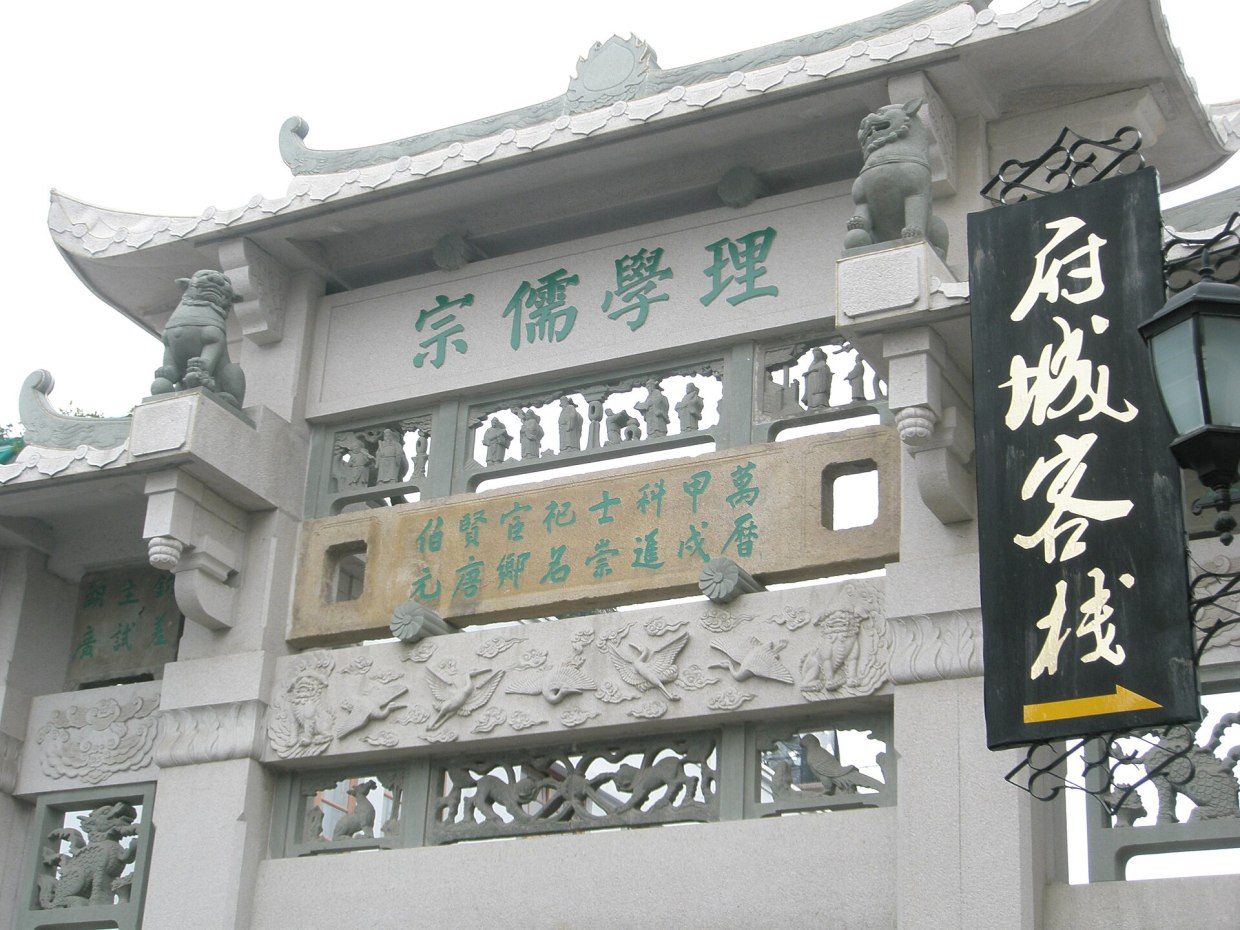
- The form of an arch: three bays on four columns, or four columns and three bays — read the columns, boards, plaques and carving for the difference in rank.
- The arcades: a continuous run of arched colonnades, shop and dwelling in one, which is another logic entirely.
- The lane mouths: the street opens into more than fifty old lanes, and any of them takes you into ordinary houses.
Visiting
It is a pedestrian street, busiest from afternoon into the night. The arches are best in the morning, with less backlight; for the arcade fronts, stand across the street and back off.
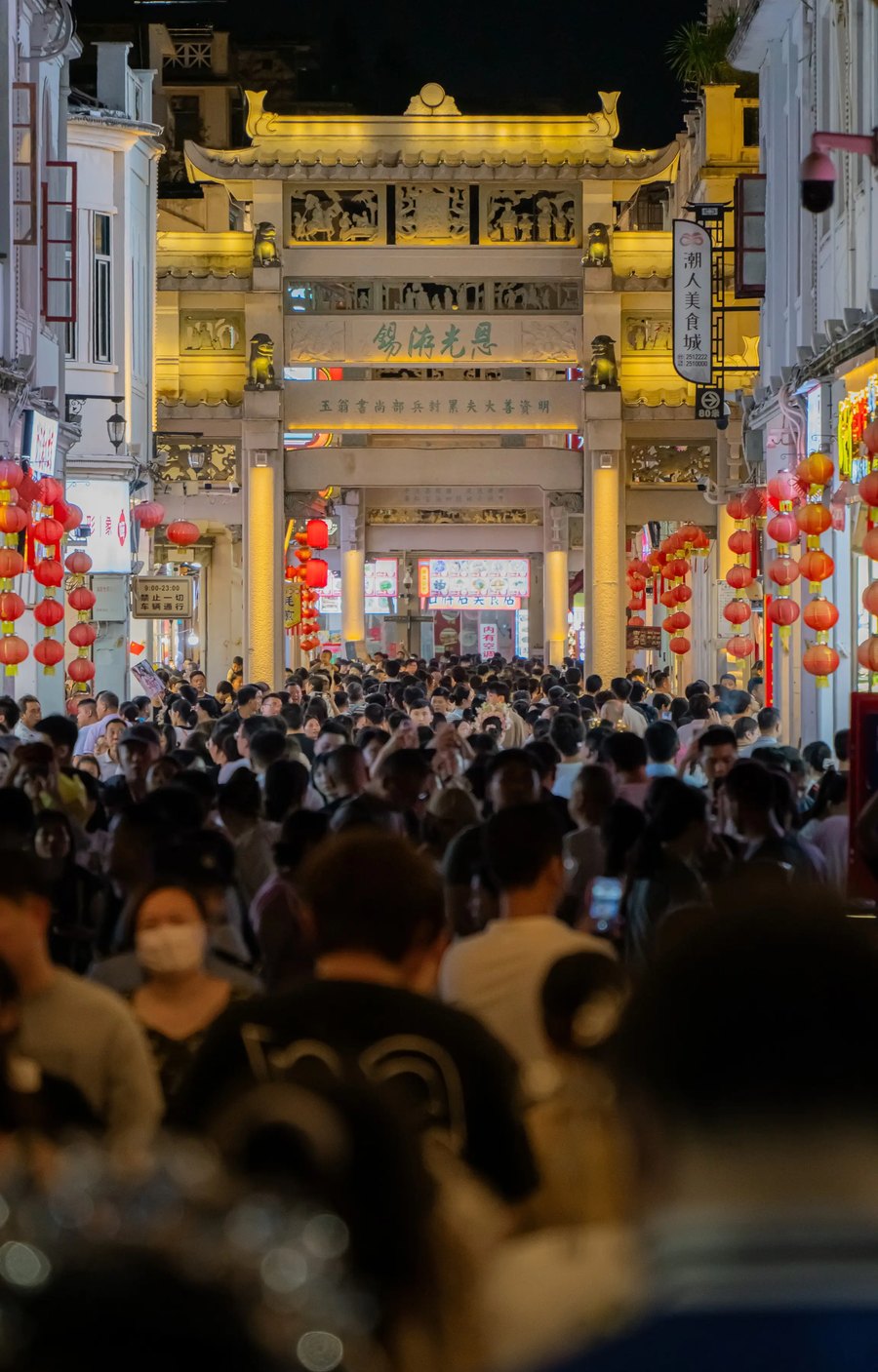
Tickets and hours Ticket: no gate on the street, walkable all day | Shops keep their own hours, and most are still shut before ten in the morning | No booking needed.
Related entries
Lin Daqin, Weng Wanda, Figures and events, Administrative history.
An institution, not an ornament
Ming and Qing paifang came in classes: examination (number one scholar, metropolitan graduate, provincial graduate), official service (rank and reputation in office), loyalty and righteousness, chastity and filial piety, and longevity (a hundred years). Setting one up meant application, inspection and approval first, then local subscription to build it — so an arch is a public curriculum vitae and an entry in the local ledger of honour.
The prefecture once had more than five hundred; Haiyang County about a hundred and sixty; of the thirty-nine arches to local worthies on the prefectural city street, five concern Longhu alone. A single village holding five arches on the axis of the prefectural city says what weight it carried in local society.
Arcades and arches: two orders on one street
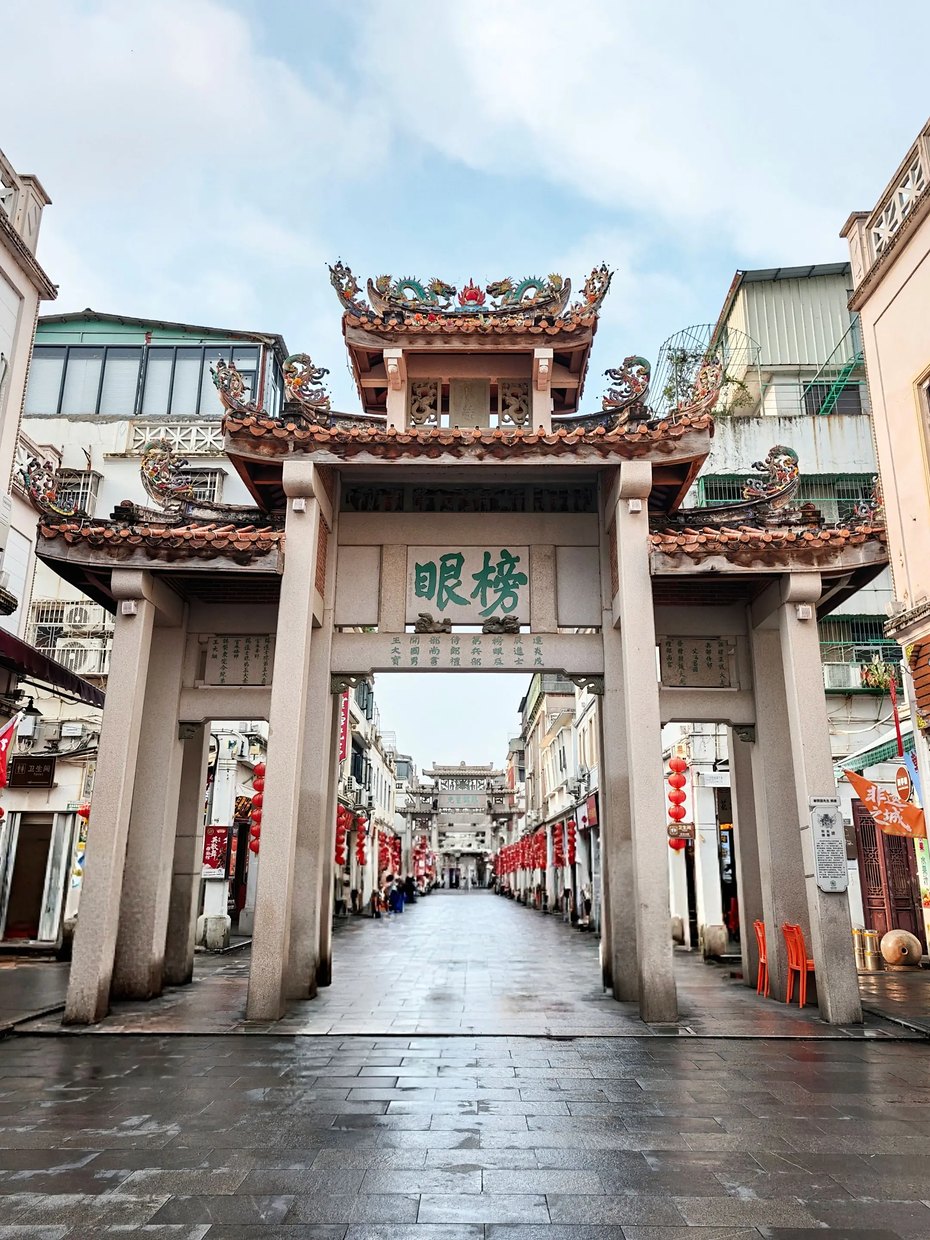
In the late Qing and early Republic the Nanyang arcade was brought in and Taiping Road rebuilt as an arcade shopping street. So on this street today, Chinese stone arches and Nanyang arcades stand together: the arches are the order of honour, spaced at intervals along the road; the arcades are the order of trade, running continuously as a covered walk.
It is worth looking at them separately: raise your eyes for the arches, level them for the colonnades, and the two say different things.
On the same trip
- Guangji Bridge — the east end of the street is the Guangji gate and the bridge.
- Kaiyuan Temple — turn off west into Kaiyuan Road.
- Jilue Huang Shrine — Tie Lane off Yi’an Road, not far from the street.
The order is yours to work out from the map and the hours; this only says what lies on the way.
In the routes: six itineraries place it in the plan, the half-day, one-day, two-day, three-day, four-day and five-day.
Note on sources
- The length, the number of arches and the coming of the arcades come from National Geographic Chinese, “Tasting the old city: Chaozhou”; and from Sohu, “Can Chaoshan tourism hold up under the flood of Grandma traffic?”
- The relation between the worthies’ arches and Longhu comes from Nanfang Net, “Chaozhou code no. 10: why Longhu ancient village is called little Chaozhou”.
Home › Travel › Chaozhou › Paifang Street
Last revised: 4 November 2026