Niu rou wan, beef balls
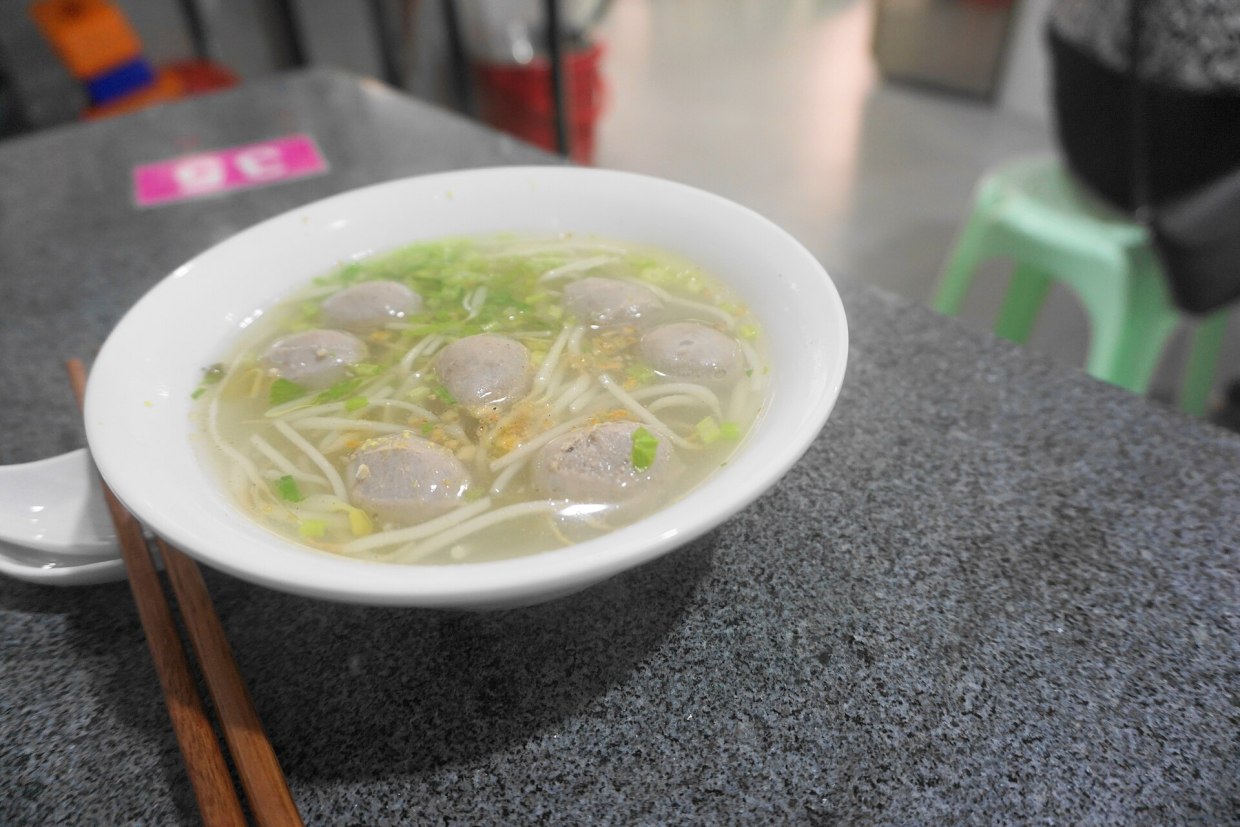
Beef pounded to a paste and squeezed into balls, springy enough to bounce; they go into hotpot and into a bowl of rice noodles.
Pronunciation niú ròu wán|Food and tea|One entry in the Chaoshan glossary
What it means
Beef is pounded to a paste, salted with a little starch, stirred until it binds, then squeezed into balls and set in warm water. The pounding is the whole craft: too little and the balls crumble, too much and they turn dry and tight.
The finished ball is springy and crisp, and cut across it shows fine pores. One batch of paste makes both beef balls and tendon balls, the second with tendon worked in and more chew to it. The pounding is done on a thick block, sinew picked out as one goes; salt goes in and the paste is stirred until it binds; the balls are squeezed through the thumb and forefinger and scraped off with a spoon.
When you eat them
In hotpot, in a bowl of rice noodles, in clear soup. Made that day they are at their best; a night in the cold and the spring is gone.
Words easily confused
These are beef; fish balls are fish, and the ones from Dahao are famous for the same bounce. The two are not to be called by one name.
Read next: Chaoshan cooking and snacks, written apart.
Same group: rice noodles, mi, the porridge, oyster omelette.
Home › Glossary › Food and tea › Beef balls
Text on this site is CC BY-SA 4.0; copyright in images is reserved and commercial use requires a separate licence.
Last revised: 3 November 2026