Longhu ancient village
Founded in the Southern Song, walled in the Ming. A straight street a kilometre and a half long strings together three streets and six lanes, packed with ancestral halls and study rooms — the old “little Chaozhou”.
In one line The wall came first, the street after; one straight street serves every lane in the village.
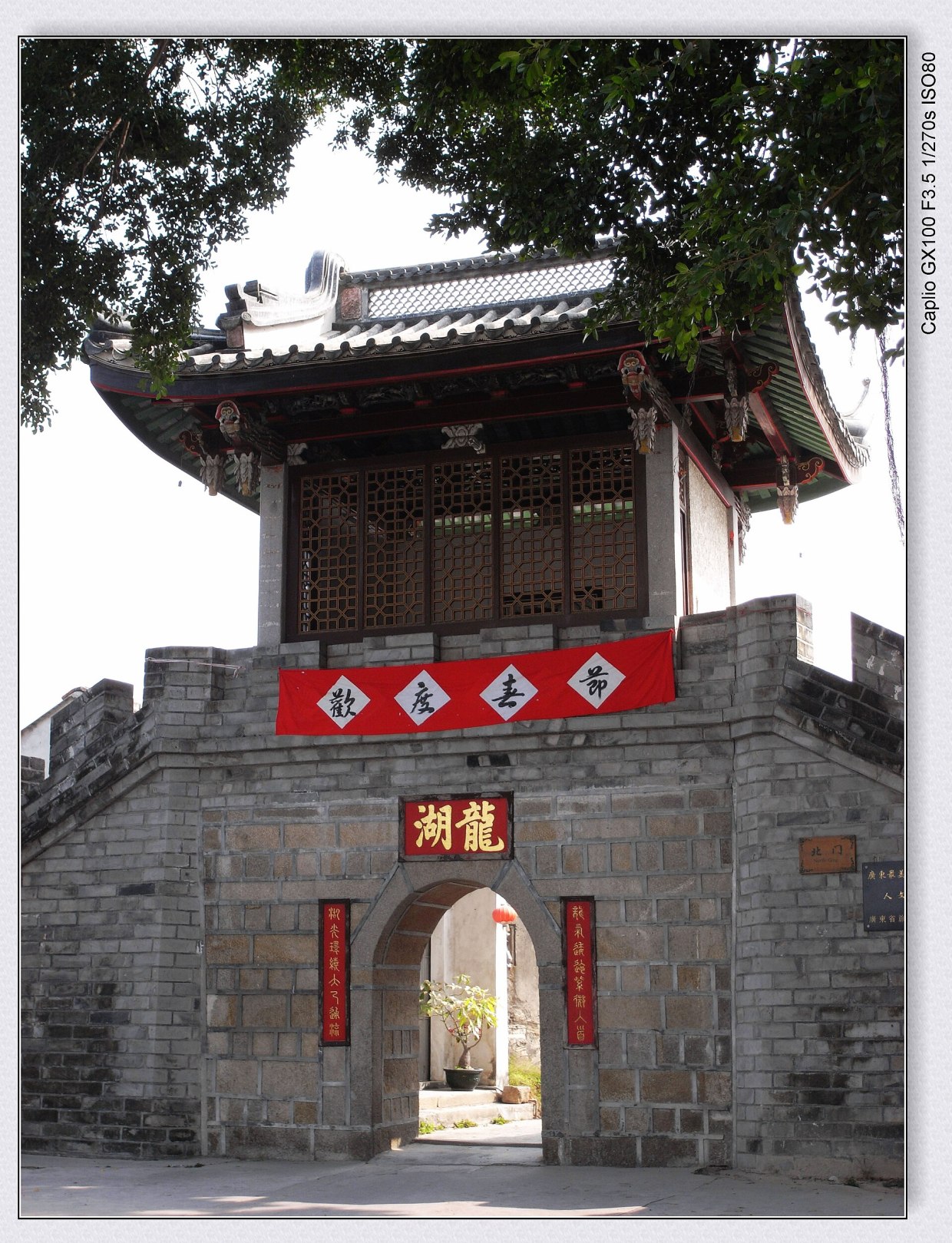
Look for The north gate and the wall · the Jinshi, Tanhua and Fangbo mansions · the Grandmother Shrine and the shrine to Mr Wang Tongchu
What to see in it
The wall came first and the street after. The village was walled in 1405, the third year of Yongle, with seven gates fixed, and then three streets and six lanes were cut on the nine-square and eight-trigram plan. A straight street a kilometre and a half long serves every lane, thick with ancestral halls and study rooms — the old “little Chaozhou”. It is a village, but laid out on the plan of a city, and that is the difference between a fortified village and an ordinary one.
History
According to the Haiyang County Gazetteer the village was founded in 1132, the second year of Shaoxing in the Southern Song. It was walled in 1405, the third year of Yongle, giving seven gates — south, north, west, upper east, lower east, Ke Lane gate and Xia Cuo Lane gate — and, on the nine-square and eight-trigram plan, New Street, Upper East Gate Street and Lower East Gate Street with the five-shrine lane, Longqing Lane, Fuxing Lane, Lion Lane, Zhongping Lane and Earth God Lane: the three streets and six lanes.
In 1557, the thirty-sixth year of Jiajing, Japanese pirates reached the district. Liu Zixing, a local worthy in mourning at home, led the villagers to raise money, strengthen the wall and build gatehouses. The stone tablet recording Liu of Tanghu defending the village against the pirates still stands at the north gate.
After the Xianfeng era of the Qing, with Shantou opened as a port and the coastline moving south, the sea traffic of West Harbour fell away and Longhu went from a trading port to an inland town.
People
According to the Chaozhou Prefectural Gazetteer and the Haiyang County Gazetteer, more than sixty metropolitan and provincial graduates from the village can be documented. The better known: Yao Hongzhong, third in the palace examination under the Southern Song; Liu Zixing, metropolitan graduate of 1541 and a commander against the pirates; Cheng Zixue, a chief minister of the court and one of the seven worthies of early Chaozhou; Xia Jianzhong, Xia Hong and Xia Maoxue, three degrees in one family; and the upright official Xiao Tingyu. Of the thirty-nine arches to local worthies on the old prefectural city street, five concern Longhu.
Plan and craft
- The dragon’s-back street: the north and south gates are joined by one flagged straight street about a kilometre and a half long, shaped like a dragon’s spine; the street for trade, the lanes for houses.
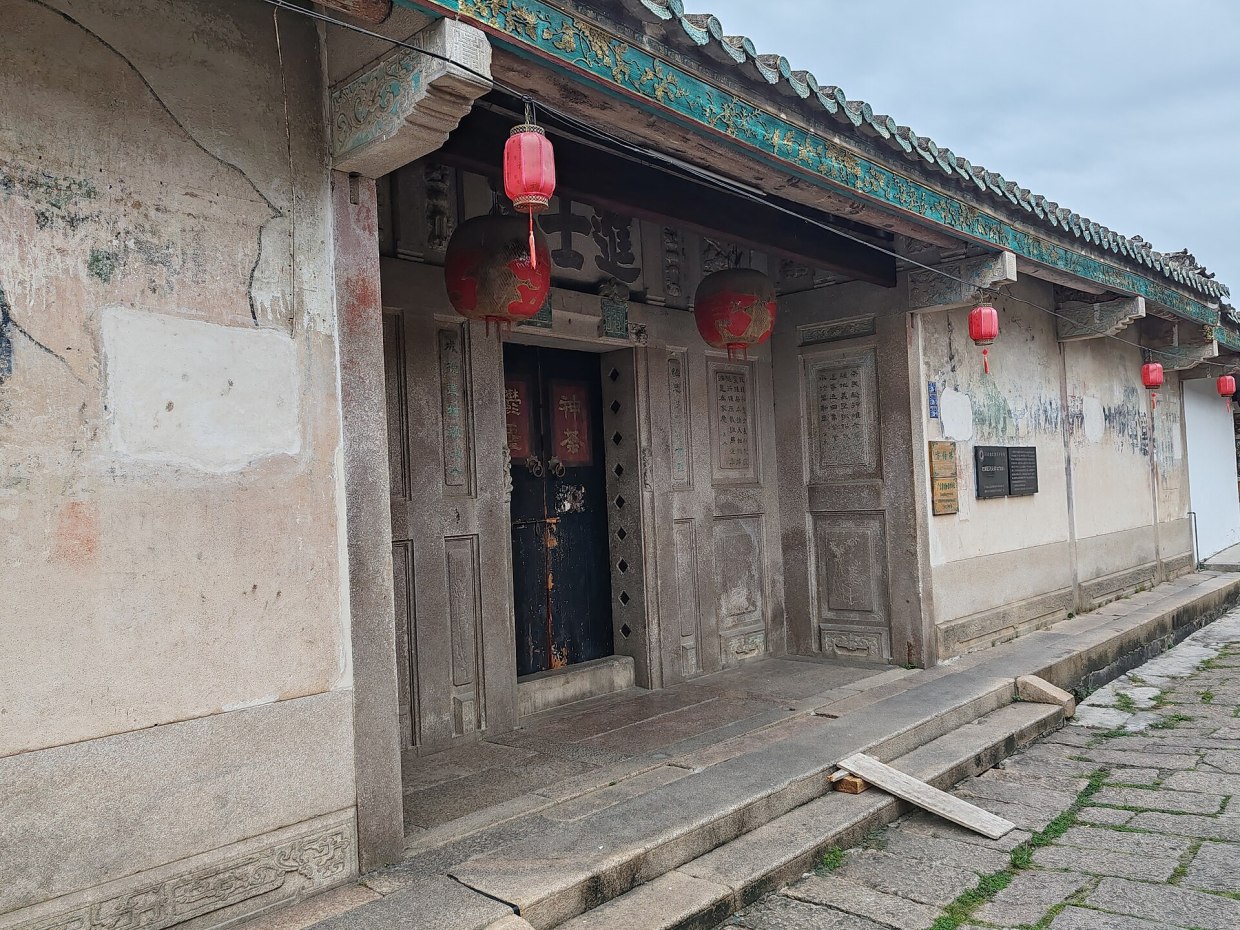
- Ancestral halls: fifty-six inside the wall, with nearly thirty academies and study rooms. The Grandmother Shrine was built by the Qing merchant Huang Zuoyu for his birth mother — a shrine to a woman was rare in the old order.
- Layers of building: the spare Song, the plain Ming, the rich Qing, and returned-overseas houses that mix Chinese and Western — a date line you can walk inside one village.
What to look at
- The north gate and the wall: start with the scale of the enclosure.
- The Jinshi, Tanhua and Fangbo mansions: the board over the door is the curriculum vitae.
- The Grandmother Shrine and the shrine to Mr Wang Tongchu: the first for a woman, the second for a Hakka schoolmaster; both are uncommon.
Visiting
It is in Chao’an, about thirteen kilometres from the old city and in the same direction, so it can be worked into half a day. People still live inside the wall; ask before entering a courtyard.
Tickets and hours Ticket: bought for entry | Hours: open by day; people live here, so after dark is awkward | Check the notice on the day.
Related entries
Houses and settlements, Administrative history, Lin Daqin.
Trading port and clan
Longhu was a trading port first. With the prefectural city behind it to the north and the Han River along its east, it was a land-and-water node on the middle and lower Han. At its height, “not one of two hundred villages could do without Tanghu market”, and a hundred or two hundred boats lay at the river bank each night. The street for trade, the lanes for houses, a central straight street of a kilometre and a half — the same logic as Taiping Road in the prefectural city.
But what kept a trading port going was the clan. Fifty-six ancestral halls and nearly thirty study rooms inside the wall, one hall to a surname, and the hall the place where matters were decided. In 1557, when the pirates came, Liu Zixing led the village to raise money, strengthen the wall and build gatehouses, and the tablet recording it still stands at the north gate: in an emergency the clan was the defence organisation.
Academies and the examinations
There are nearly thirty academies and study rooms inside the wall. Longhu Academy by the south gate was founded in the Ming, and its board was written by Liang Guozhi, number one scholar of 1748. According to the prefectural and county gazetteers, more than sixty metropolitan and provincial graduates from the village can be documented: Yao Hongzhong, third in the palace examination under the Southern Song; Liu Zixing, metropolitan graduate of 1541; Cheng Zixue, chief minister of the court; and three generations of the Xia family with three degrees between them — all came out of here.
The prefectural city street once had thirty-nine arches to local worthies, five of them connected with Longhu. A single village holding five arches on the axis of the prefectural city is the measure of its weight.
Layers of building
The spare Song, the plain Ming, the rich Qing, and the mixed Chinese-Western houses of the returned overseas — inside one village you can line up a date sequence. The Grandmother Shrine was built by the Qing merchant Huang Zuoyu for his birth mother, a shrine to a woman being rare in the old order; the shrine to Mr Wang Tongchu was raised by the sons of seven households for a Hakka schoolmaster they supported and buried, a shrine made out of a teacher-and-pupil relation, which is also uncommon.
On the same trip
- Congxi Shrine — also in Chao’an, and can be joined into half a day.
- The old houses of Chaozhou — the village read against the city.
- Paifang Street — back in the city and you are there.
The order is yours to work out from the map and the hours; this only says what lies on the way.
Note on sources
- The year of founding, the walling and the three streets and six lanes come from the CPPCC newspaper, “A thousand-year village: the mysterious nine-square village of Chaozhou”.
- The Jiajing pirate raids and the stone tablet come from Nanfang Net, “Chaozhou code no. 10”.
- The numbers of graduates, halls and study rooms come from the same two pieces; their figures differ slightly, and the figure of more than sixty is used here.
Home › Travel › Chaozhou › Longhu ancient village
Last revised: 4 November 2026