The Han Wengong Shrine
The oldest surviving shrine to Han Yu in China. It stands on the east bank of the Han River; the site was fixed in the Southern Song and has not moved in more than eight hundred years.
In one line The site has not shifted in eight hundred years; what you come for is the lie of the land and the forty steles.
Look for Forty steles from successive dynasties · the shrine’s oak · the view of the Han River and the old city from the Shilang Pavilion
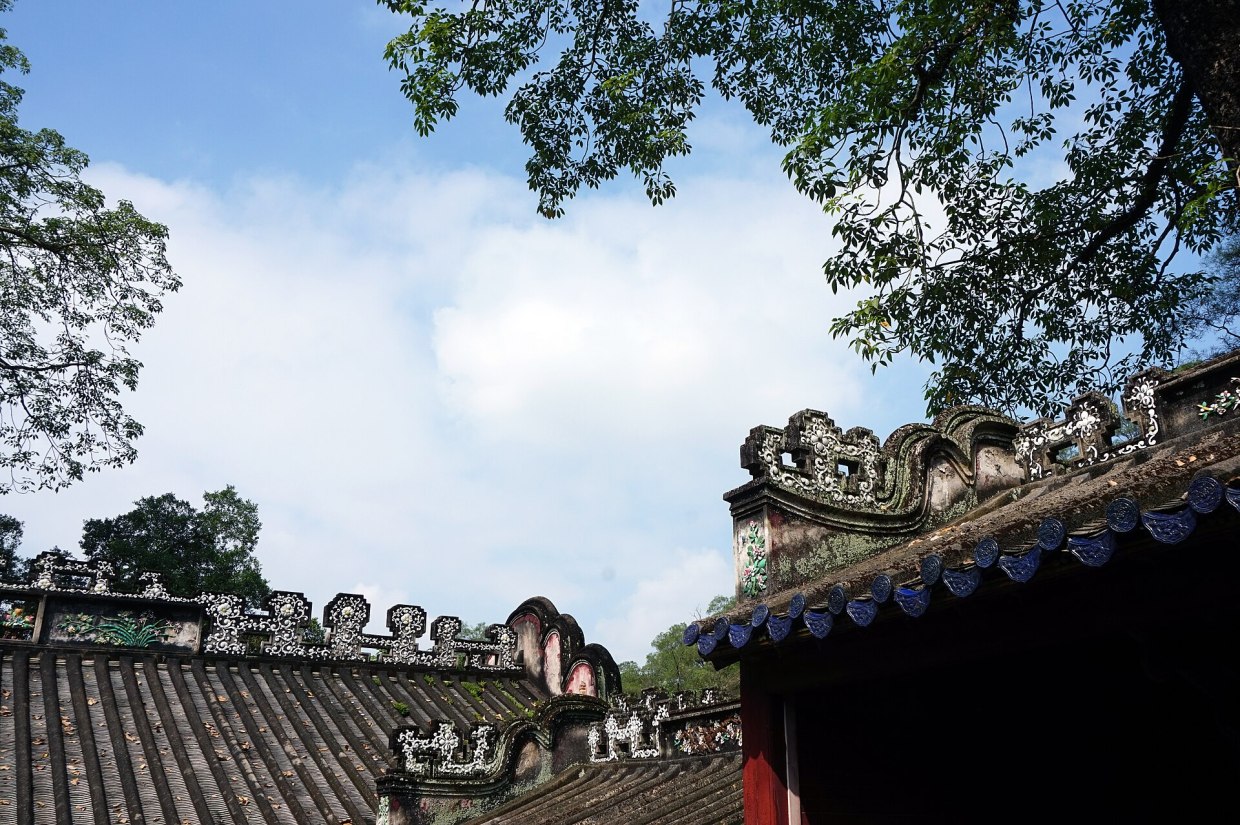
What to see in it
The oldest surviving shrine to Han Yu in China, its site fixed in the Southern Song and unchanged for eight hundred years. Han Yu spent eight months in Chaozhou, and what he did there is cut into the steles; forty of them line the walls, the most famous being Su Shi’s “Stele for the Temple of Han Wengong, Earl of Changli, in Chaozhou”. What you are looking at is how later generations turned an eight-month posting into a permanent memorial.
History
In 999, the second year of Xianping under the Song, the Chaozhou assistant prefect Chen Yaozuo set up a “Shrine to Han of the Ministry of Personnel” in the east wing of the Confucian temple at the foot of Gold Mountain north of the city. Standing behind the prefect’s hall it was awkward for people to reach, so in 1090 the prefect Wang Di moved it south of the city and renamed it the Temple of Han Wengong, Earl of Changli, asking Su Shi for the stele text.
In 1189, the sixteenth year of Chunxi under the Southern Song, the prefect Ding Yunyuan held that since Han Yu used to climb Han Mountain and the oak he planted by hand was still there, the shrine belonged on this spot, and moved it to the present site. It has not moved since. The Yuan and Ming repaired it no fewer than twenty times; the main shrine was restored in 1984; and in May 2006 it was listed in the sixth batch of Major Historical and Cultural Sites Protected at the National Level.
People
- Han Yu: exiled to be prefect of Chaozhou in 819, the fourteenth year of Yuanhe, for his memorial against receiving the Buddha’s relic; eight months in all. He asked after the people’s hardships, drove out the crocodiles, built embankments, freed those held in bondage and opened schools. Chaozhou renamed Brushrack Mountain Han Mountain and Crocodile Creek the Han River.
- Chen Yaozuo: who built the first shrine, then assistant prefect of Chaozhou.
- Wang Di: who moved it south of the city in 1090 and obtained Su Shi’s stele.
- Ding Yunyuan: who moved it to this site in 1189. While prefect he added four piers to the west section of Guangji Bridge, which is why the Yunyuan Pavilion stands beside the shrine.
- Zhao De, styled Tianshui: one of the eight worthies of Chaozhou in the Tang and Song. Han Yu recommended him as acting assistant magistrate of Haiyang and head of the prefectural school, and wrote “Farewell to Master Zhao” on leaving. The Tianshui Garden in the grounds commemorates him.
Plan and craft
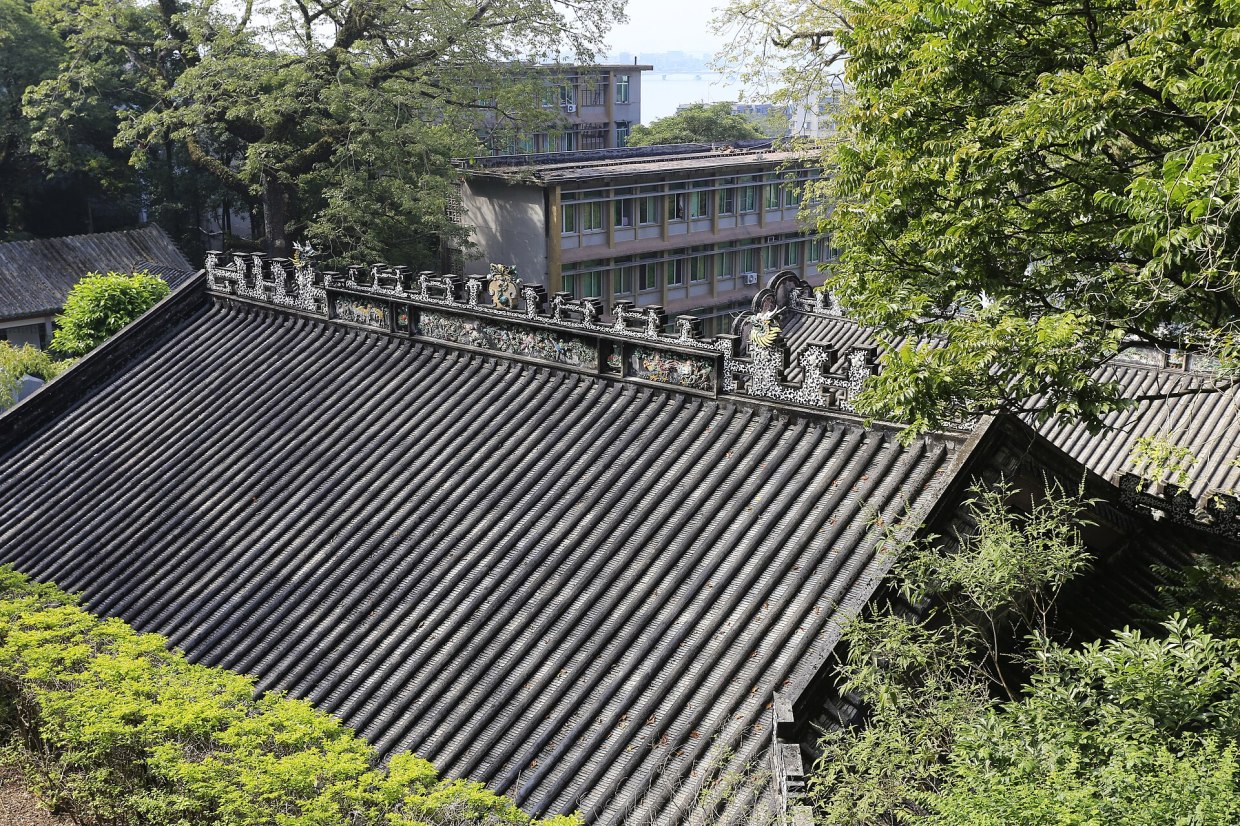
The shrine leans on the hill and faces the water, 18.7 metres wide and 31.8 metres deep, in two courts with the rear 2.5 metres above the front. The main building is three bays wide with a flush gable roof and a frame combining post-and-beam with through-joint construction. Forty steles from successive dynasties line the walls, the earliest Su Shi’s. Before the shrine stands a stone arch inscribed Han Wengong Shrine, and behind it a stele corridor a hundred metres long called “Steles of the South”, 89 metres in length, set with forty-one stones by modern calligraphers. In 1988 the Shilang Pavilion was built on the site of the old Shilang Arbour, two eaves deep, an exhibition hall below and the Han Yu memorial room above.
What to look at
- The steles: forty of them, worth reading both for the calligraphy and for the record of repairs.
- The oak: said to have been planted by Han Yu himself; “the oak of the Han shrine” is one of the eight sights of Chaozhou. Villagers used to read the abundance of its blossom as a forecast of examination success, and the prefectural gazetteer records it.
- The terrace before the Shilang Pavilion: with the stone figure of Han Yu, looking out at the Han River and the old city — the place to read the lie of the land.
Visiting
The shrine is on the east bank, across the river from the old city, and closest from the east end of Guangji Bridge. It is built on a slope with many steps; wear shoes you can climb in.
Tickets and hours Ticket: free | Hours: open by day; times and closing days as posted at the gate | Group tours need to be arranged in advance.
Related entries
Figures and events, Folk belief and legends, Historical sources.
Han Yu’s eight months
In the first month of 819, the fourteenth year of Yuanhe, Han Yu angered Emperor Xianzong with his memorial on the Buddha’s bone and was exiled to be prefect of Chaozhou; in the tenth month of the same year he was moved to Yuanzhou. Eight months in all. What can be done in eight months? The gazetteers and the display in the shrine record four things:
- Driving out the crocodiles: he wrote “An Address to the Crocodiles” and threw it into the Evil Creek. Read now it is a ritual; at the time it was mobilisation — treating a man-eating crocodile problem as a public matter.
- Opening schools: he recommended Zhao De as acting assistant magistrate of Haiyang and head of the prefectural school, and Chaozhou’s literary turn dates from this. Su Shi’s line, “the people of Chaozhou serve him, and at every meal they make offering”, grows from this root.
- Freeing the enslaved: it was the custom here to hold people against debt, and Han Yu found a way to buy them back.
- Asking after hardships and building embankments: the scale of the works is not recorded in detail.
Chaozhou renamed Brushrack Mountain Han Mountain and Crocodile Creek the Han River: that is commemoration at the level of place names. The shrine is commemoration at the level of building. Together they are a city’s memory of one man.
The stele and the oak
Forty steles from successive dynasties line the walls, the earliest Su Shi’s “Stele for the Temple of Han Wengong, Earl of Changli, in Chaozhou”. In 1090 the prefect Wang Di moved the shrine south of the city and asked Su Shi to write it; when the shrine later moved to Han Mountain the stele came with it, and it now stands against the south wall of the main hall. The text says Han Yu “raised literature from the decline of eight dynasties, and saved the world’s drowning with the way” — twelve characters that became the settled verdict.
An oak once stood before the shrine, said to have been planted by Han Yu. Villagers read the abundance or scarcity of its blossom as the rise and fall of examination success, and “the oak of the Han shrine” became one of the eight sights of Chaozhou; the Chaozhou Prefectural Gazetteer records that “in the ninth year of Qianlong the oak in the hall blossomed, and examination success was great”. A tree read as a history of the examinations is a Chaozhou kind of romance.
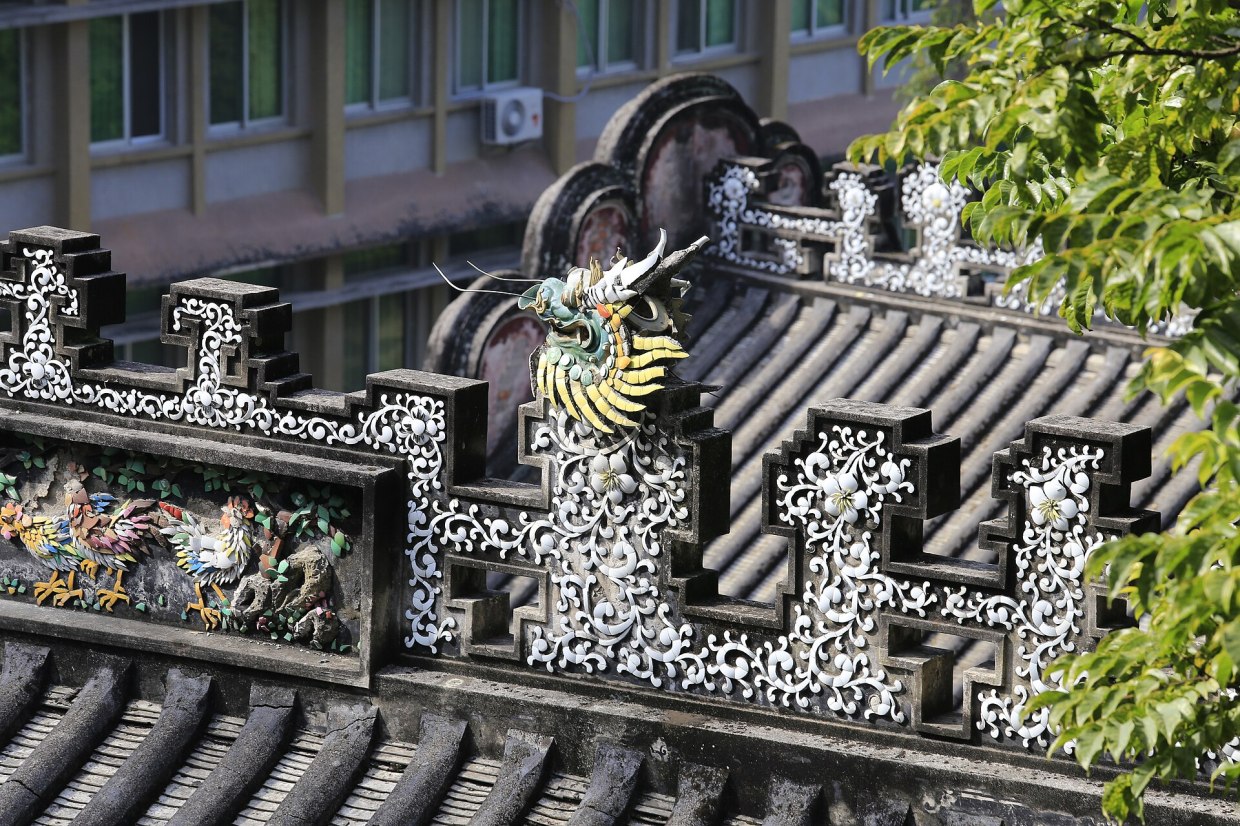
Details in pictures
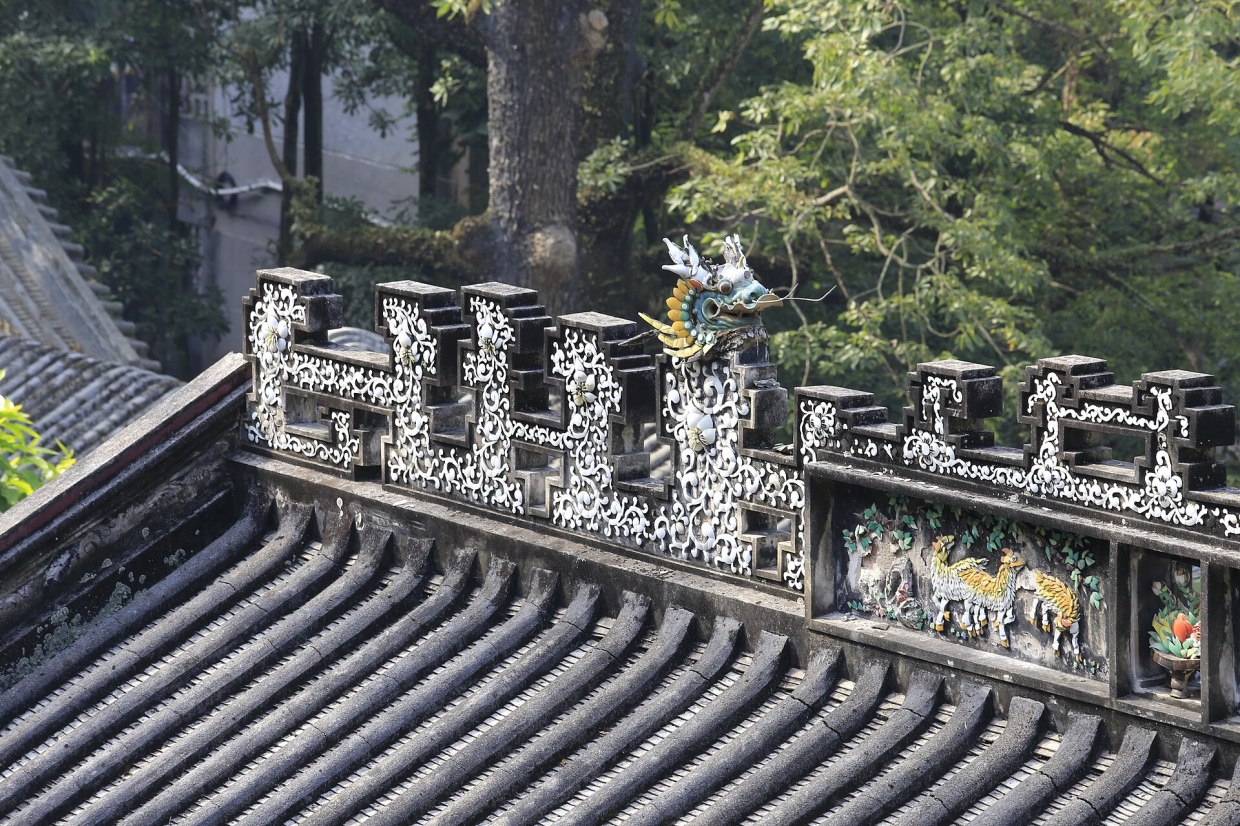
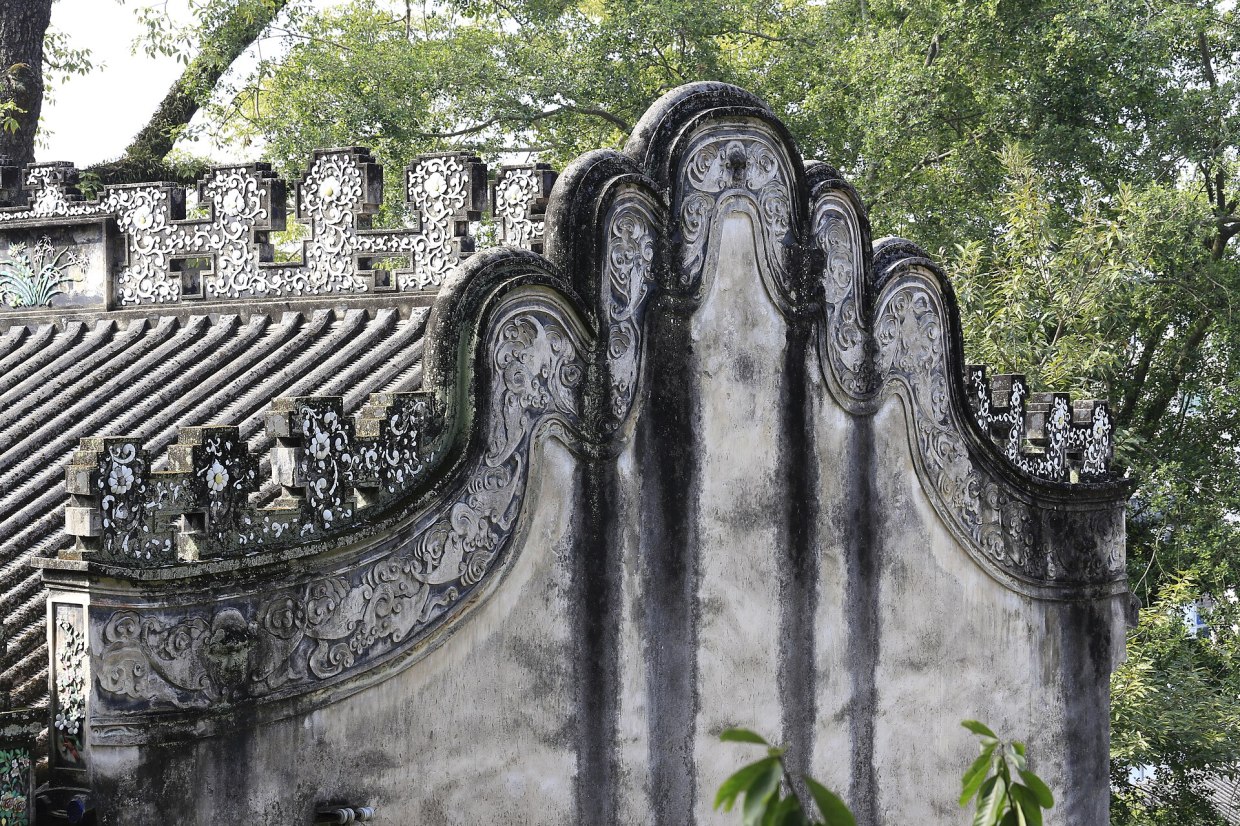
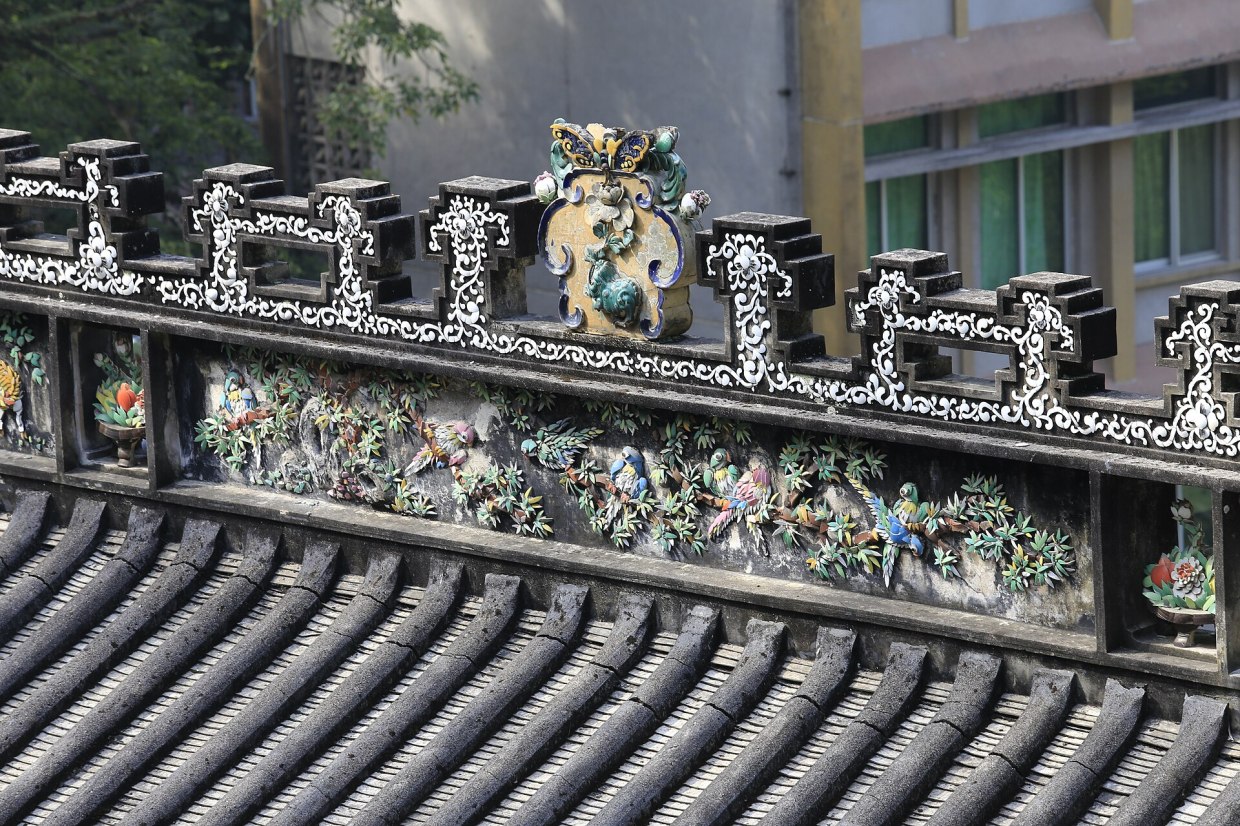
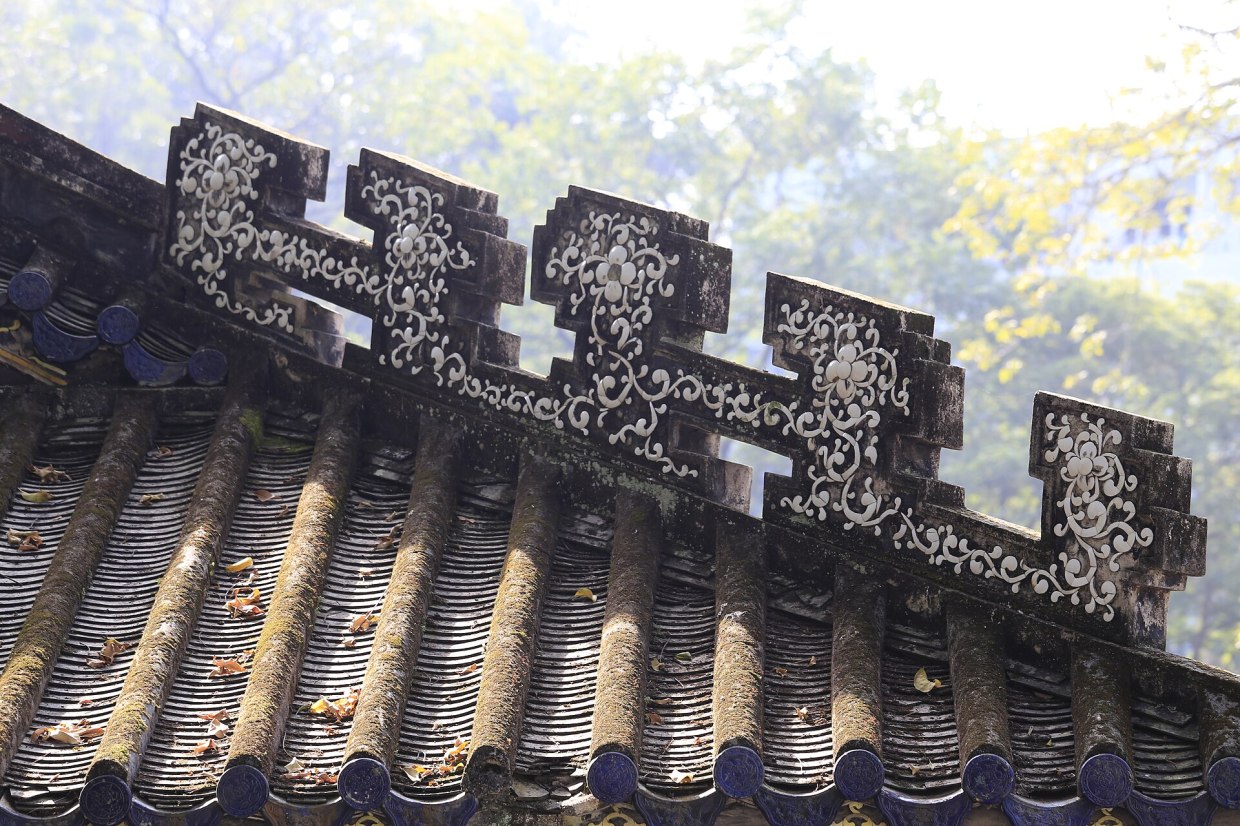
These photographs do one thing only: enlarge the detail until the making can be seen.
On the same trip
- The Brushrack Mountain kiln site — also on the east bank, on the same slope.
- Guangji Bridge — cross the bridge and you are here; the same trip.
- Paifang Street — over the bridge and into the city.
The order is yours to work out from the map and the hours; this only says what lies on the way.
In the routes: only the one-day itinerary places it in the plan.
Note on sources
- The three moves, the dimensions, the steles and the Shilang Pavilion come from the Chaozhou municipal government, “Local gazetteer Chaozhou: the Han Wengong Shrine”, and from the government information disclosure page on the shrine.
- The notices on Ding Yunyuan and Zhao De come from the same government page.
- Su Shi’s stele and the oak come from the China Huaxia Cultural Heritage Foundation, “The Han Wengong Shrine”; and from Sogou Baike, quoting “In Praise of the Han Oak” and the Chaozhou Prefectural Gazetteer.
Home › Travel › Chaozhou › The Han Wengong Shrine
Last revised: 4 November 2026