Shi zhuo, the banquet
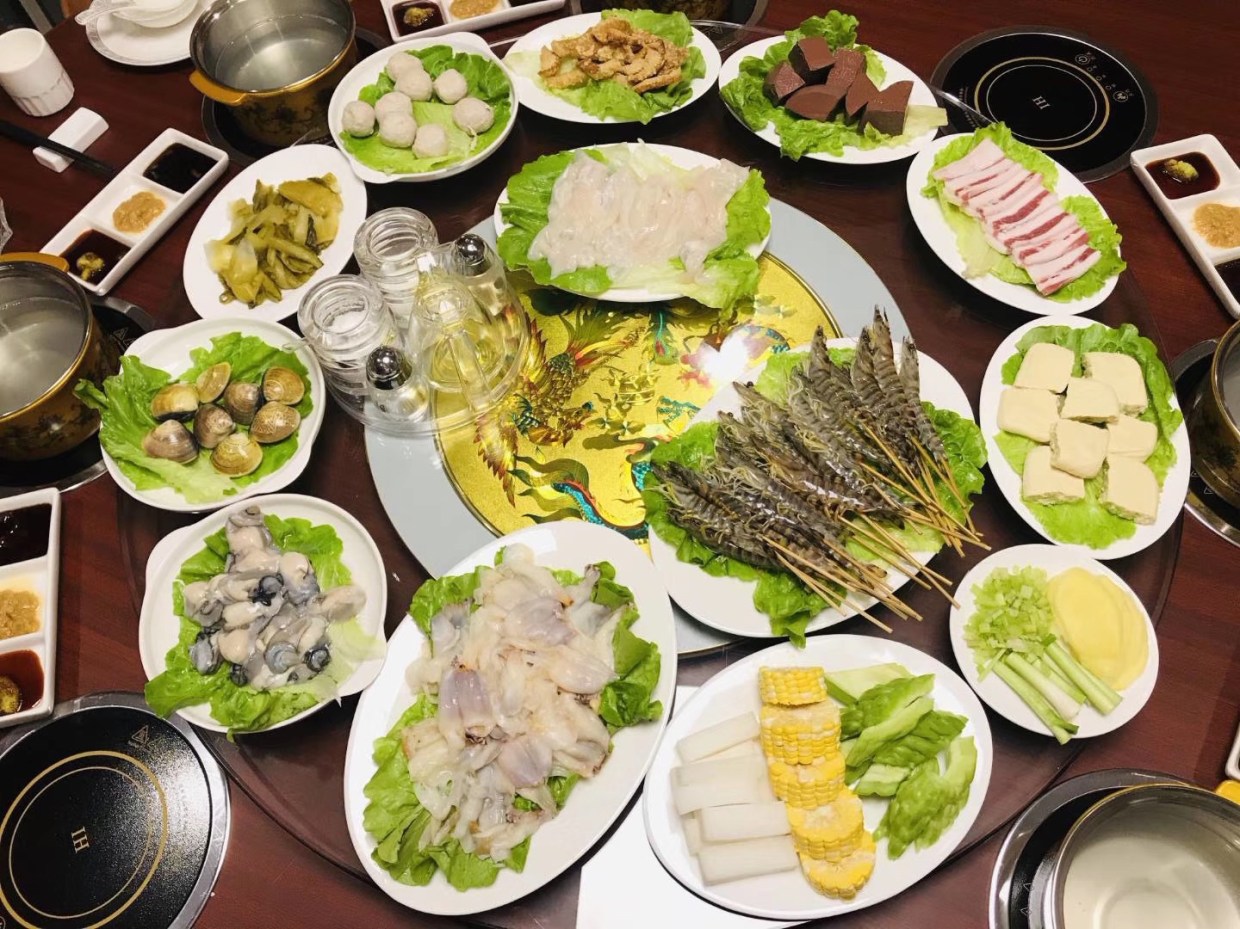
A Chaoshan banquet: square tables with two guests to a side and the seat of honour at the head, and a fixed order for sending up the dishes.
Pronunciation shí zhuō|Rites of life|One entry in the Chaoshan glossary
What it means
Shi zhuo is not “a meal” but a set of rites graded by occasion. Weddings, birthdays, funerals and god’s birthdays each have their own: seating, the order dishes go up, and how many dishes there are, all differ. Change the occasion and the whole set changes.
Who sits at the head is decided by generation and closeness, not by choice. The head of the table is the seat of honour and the rest follow down; within one table there are guests of honour and guests who accompany them.
Five kinds of occasion, five sets, and the difference is in the arranging rather than the food. A wedding has the most tables, the two families’ kin seated apart, the senior generation at the inner tables. A birthday feast bows to the celebrant first and eats after; the first dish is usually the long-life noodles, while the peach-shaped buns stand in the birthday hall and are not counted as a course. A funeral feast is plain, avoiding sweetness and red, with no urging to drink. For a god’s birthday and a procession the offering table comes first and the banquet after, and a chicken or kueh already offered may be taken down and served. Month-old feasts, house-warmings and thanks to teachers run to few tables with a fixed menu; what matters is that the occasion is marked at all.
The seating chart is meant to be read: whoever sits at the head, whether the eldest or the one who came furthest or counts closest, shows at a glance whose favour the host is repaying. Even numbers of dishes are the rule, for good things coming in pairs; the number itself follows the occasion and the purse. Get the order wrong and it is a loss of face.
When you see it
Weddings, funerals, birthdays, house-warmings, thanks to the gods. The rules differ plainly from county to county and shift with town and country and with the occasion — the first thing in writing about shi zhuo is to say which occasion, never “Chaoshan banquets are always thus”.
At the end the host sees the guests to the door and the leftovers are divided among the clansmen and neighbours to carry home; a host does not keep them.
Words easily confused
Shi zhuo is the eating end, zuo zhuo the cooking end, and bai gong the table set for the gods. The three often fall on the same day, with different parties and different rules.
Read next: Banquets and shi zhuo: five occasions kept apart.
See also: Birth rites: the month-old wine and the first birthday, Rites of life: the five thresholds side by side.
Same group: the cooking end, the square table, the serving seat, birthday rites.
Home › Glossary › Rites of life › The banquet
Text on this site is CC BY-SA 4.0; copyright in images is reserved and commercial use requires a separate licence.
Last revised: 4 November 2026