Zuo shou, the big birthday
From fifty on, the birthdays that fall on a ten are kept properly: the bowing and the banquet are the substance, and long noodles and peach buns are not to be left out.
Pronunciation zuò shòu|Rites of passage|One entry in the Chaoshan glossary
What it means
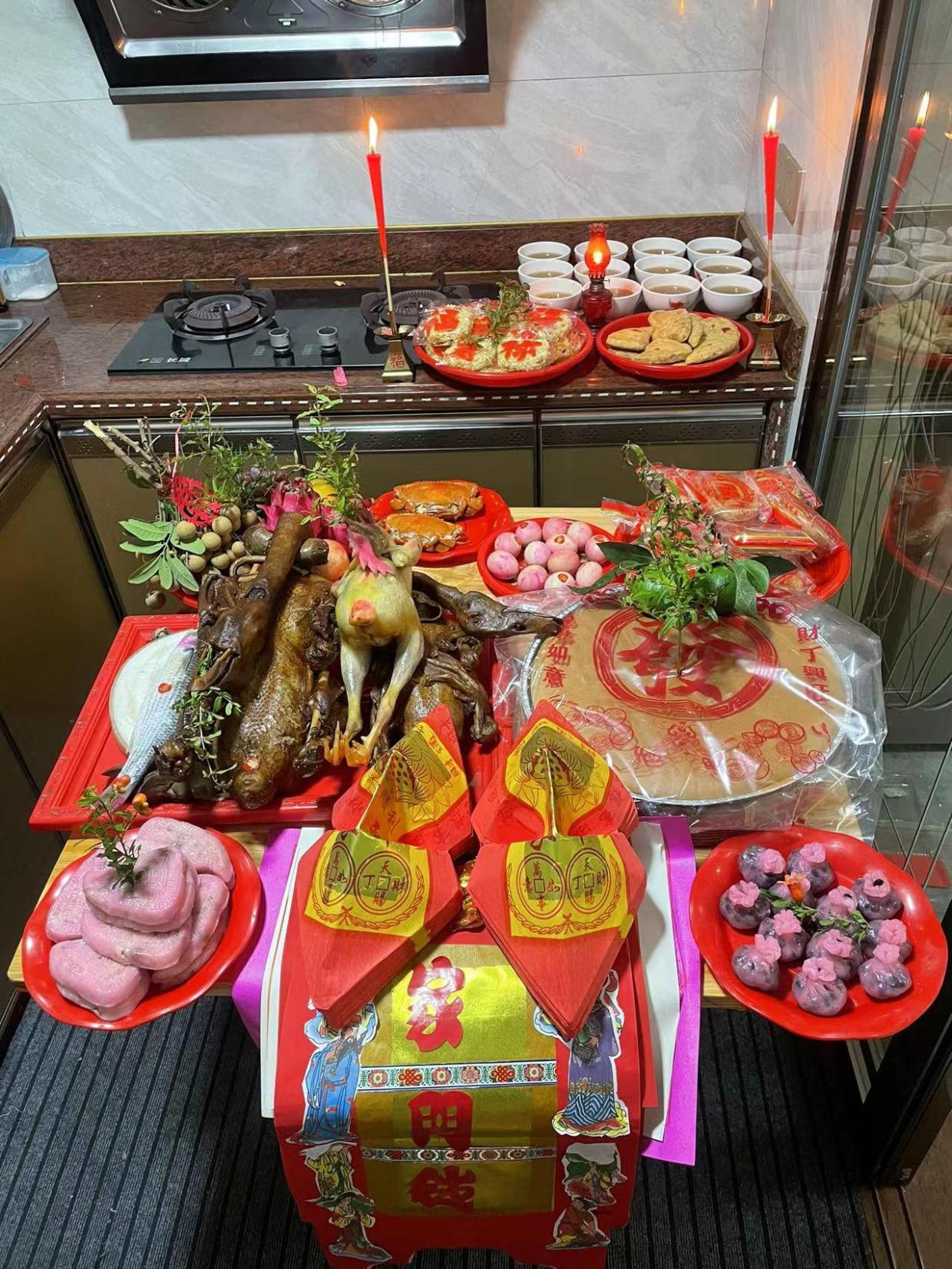
A big birthday kept for an elder, usually beginning after fifty, with the tens counted as the great ones. Two things are the core of it: the juniors bow in turn, which is bai shou, and then the tables are opened, which is the banquet. Long noodles and peach buns, made of wheat or of rice, are required.
The prefectural gazetteer does not record it, and the county gazetteers seldom give it a section under custom. Practice varies by household: town or country, means, and the size of the lineage make for very different scale.
When you see it
On a birthday that falls on a ten. The table carries a whole chicken, braised meats, red tortoise cakes, peach buns and pink eggs, with two red candles lit. The same table is both an offering to the ancestors and face for the one being honoured.
Words easily confused
Zuo shou is the round-ten affair, with guests and gifts; zuo sheng ri is a small birthday, one bowl of sweet noodles among the family and no more; lao ye sheng is a god’s birthday. All three carry the words for birth or for long life, and each points at something else.
Read next: Zuo shou and zuo sheng ri: two sizes of the same day.
See also: Rites of passage: five thresholds.
Same group: shang shou, zuo sheng ri, bai shou.
Home › Glossary › Rites of passage › Zuo shou
Text on this site is CC BY-SA 4.0; copyright in images is reserved and commercial use requires a separate licence.
Last revised: 3 November 2026