Mi, the rice porridge
The old word for porridge, kept here: plain porridge is bai mi, and what goes with it is where the skill shows.
Pronunciation mí|Food and tea|One entry in the Chaoshan glossary
What it means
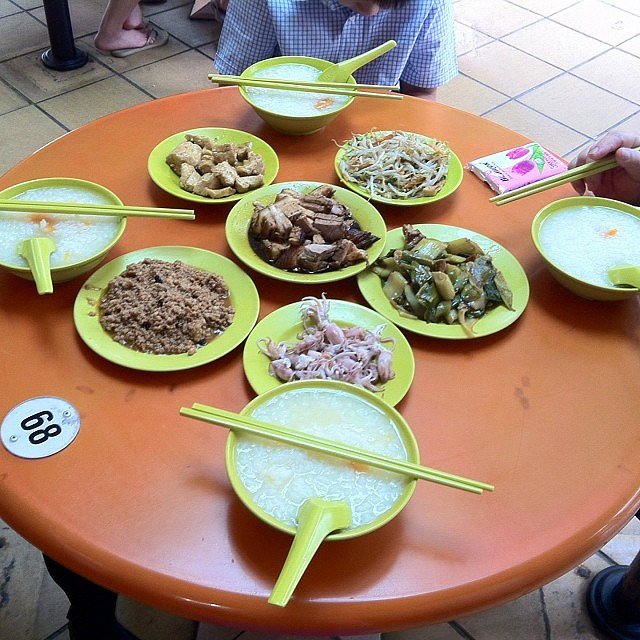
Mi is porridge, the old character still in use. Bai mi is rice and water cooked until the grains open but the liquid stays clear, not a paste; once the heat is right the rice smells of itself.
Here is where it parts from Cantonese congee: that one is cooked to smoothness, this one is kept clear. A bowl of it with a few saucers alongside is the most ordinary meal in Chaoshan. Long-grain rice, plenty of water, a hard flame at the start and then turned low, so the grains open without breaking and the liquid stays clear.
When you eat it
Most often at morning and at night. The night meal is called eating the night porridge, and the stall lays out ten or twenty saucers that go up as they are ordered.
Words easily confused
Mi is plain porridge; casserole porridge is the kind made to order with seafood. Both are porridge and they run on different lines: one aims at clarity, the other at richness.
Read next: Za xian: the saucers that go with porridge.
Same group: za xian, casserole porridge, the night stall.
Home › Glossary › Food and tea › Rice porridge
Text on this site is CC BY-SA 4.0; copyright in images is reserved and commercial use requires a separate licence.
Last revised: 3 November 2026