Gong po mu, the bed goddess
The goddess who watches over children, also called hua gong hua po or the goddess at the foot of the bed. She is the one bowed to at chu huayuan.
Pronunciation gōng pó mǔ|Belief and processions|One entry in the Chaoshan glossary
What it means
A bed goddess. Her incense burner is kept in a bedroom and not offered to in the hall, and a child from birth to the fifteenth nominal year is in her charge, which is why the offerings are usually a mother’s to make.
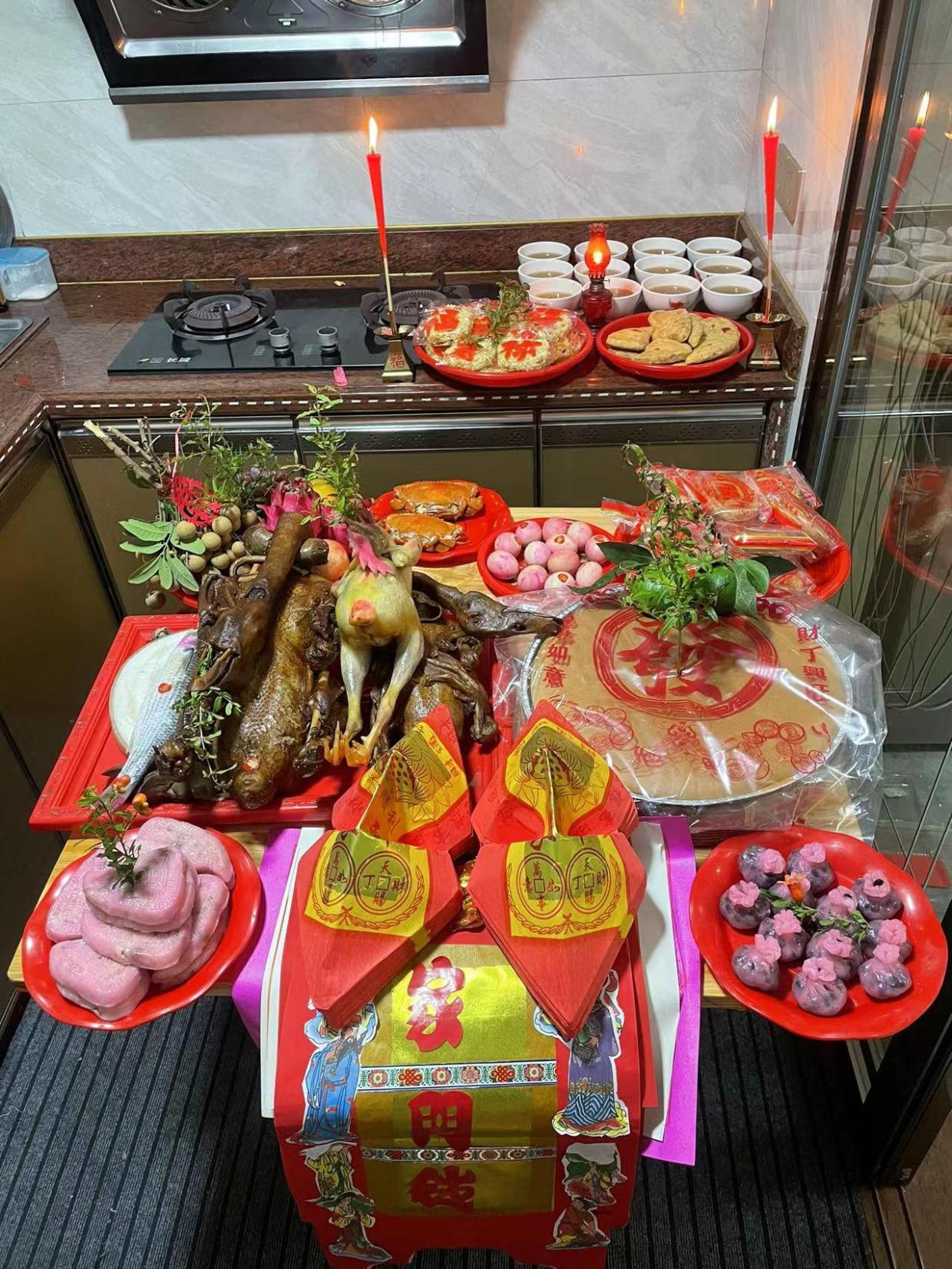
On the day of chu huayuan the mother lifts the burner down, sets out the three meats and five fruits, and takes the child to burn incense and bow, telling the goddess that the child has grown. After that the child is no longer a nua-ki who needs watching.
When you see her
On the day of chu huayuan. The seventh of the seventh month is her birthday and custom prefers that date, held to be free of prohibitions. Otherwise she is seldom seen, because the seat stands in a room and not in the hall.
Words easily confused
Gong po mu protects children. Gong po on its own means the elders of a household, and turning the two characters round gives something else again. Di zhu ye is a household god too, but his charge is the ground the house stands on, not the people in it.
Custom of the villages here; this page describes only, and neither endorses superstition nor prescribes behaviour.
Read next: Chu huayuan: coming of age at fifteen.
See also: Birth rites: the third day, the first month, the first year, Rites of passage: five thresholds.
Same group: chu huayuan, di zhu ye, lao ye, the twelfth day.
Home › Glossary › Belief and processions › Bed goddess
Text on this site is CC BY-SA 4.0; copyright in images is reserved and commercial use requires a separate licence.
Last revised: 3 November 2026