Shi er ri, the twelfth day
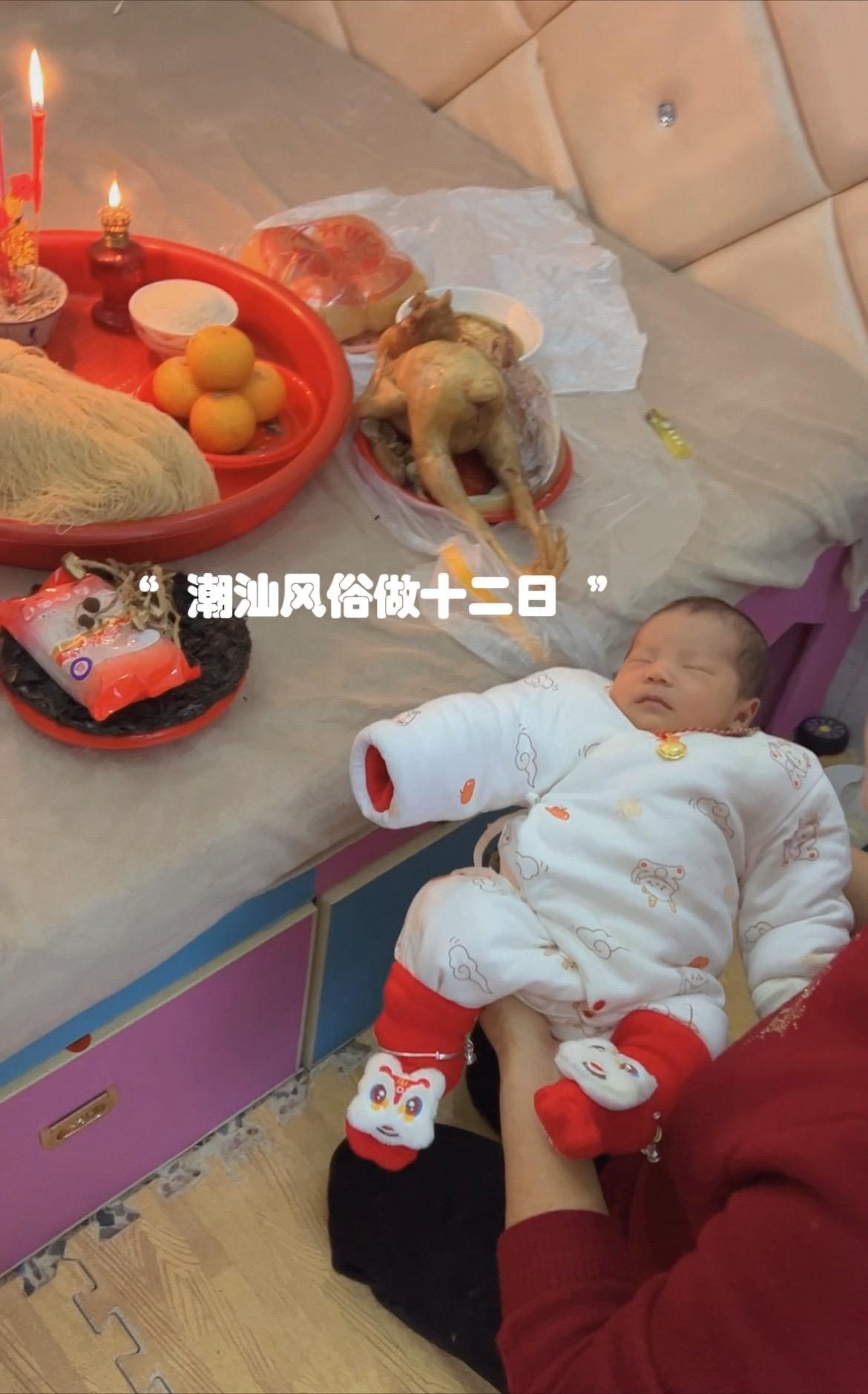
On the twelfth day the wife’s family sends chicken, eggs, pork, glutinous rice, brown sugar and black-bean wine — building the mother up, as the phrase has it.
Pronunciation shí èr rì|Rites of passage|One entry in the Chaoshan glossary
What it means
On the twelfth day the wife’s family brings chicken, eggs, pork, glutinous rice, brown sugar and black-bean wine, which is called building her up. If the child is a boy, sweet rice-ball soup is sent round to the neighbours; if a girl, soup with rice noodles. The neighbours take it and send eggs back.
This is the day the incense burner of the bed goddess is set up: a coarse bowl filled with sand, incense stuck in it, and the bowl is her seat. In some places the bowl goes under the bed, which is why she is also called the goddess at the foot of the bed. From then the child is in her charge, and stays so until chu huayuan at fifteen.
When you see it
On the twelfth day after birth. From birth to this day the house does not go out, which is qi la; once the twelfth day is safely past it is over. Among the Hakka around Jiexi and Puning, glutinous rice is steamed and ginger wine boiled on this day, and the neighbours are asked in to drink to the birth.
Words easily confused
The twelfth day and the full month are two things: the burner is set up and the soup sent round on the twelfth, the head is shaved and guests feasted at the full month. The bed goddess’s seat dates from this day, not from chu huayuan.
Read next: Birth rites: the third day, the full month, the first birthday.
See also: Rites of passage: five thresholds.
Same group: qi la, the confinement, the full month, the third day.
Home › Glossary › Rites of passage › Twelfth day
Text on this site is CC BY-SA 4.0; copyright in images is reserved and commercial use requires a separate licence.
Last revised: 3 November 2026