Fa guo, the leavened cake
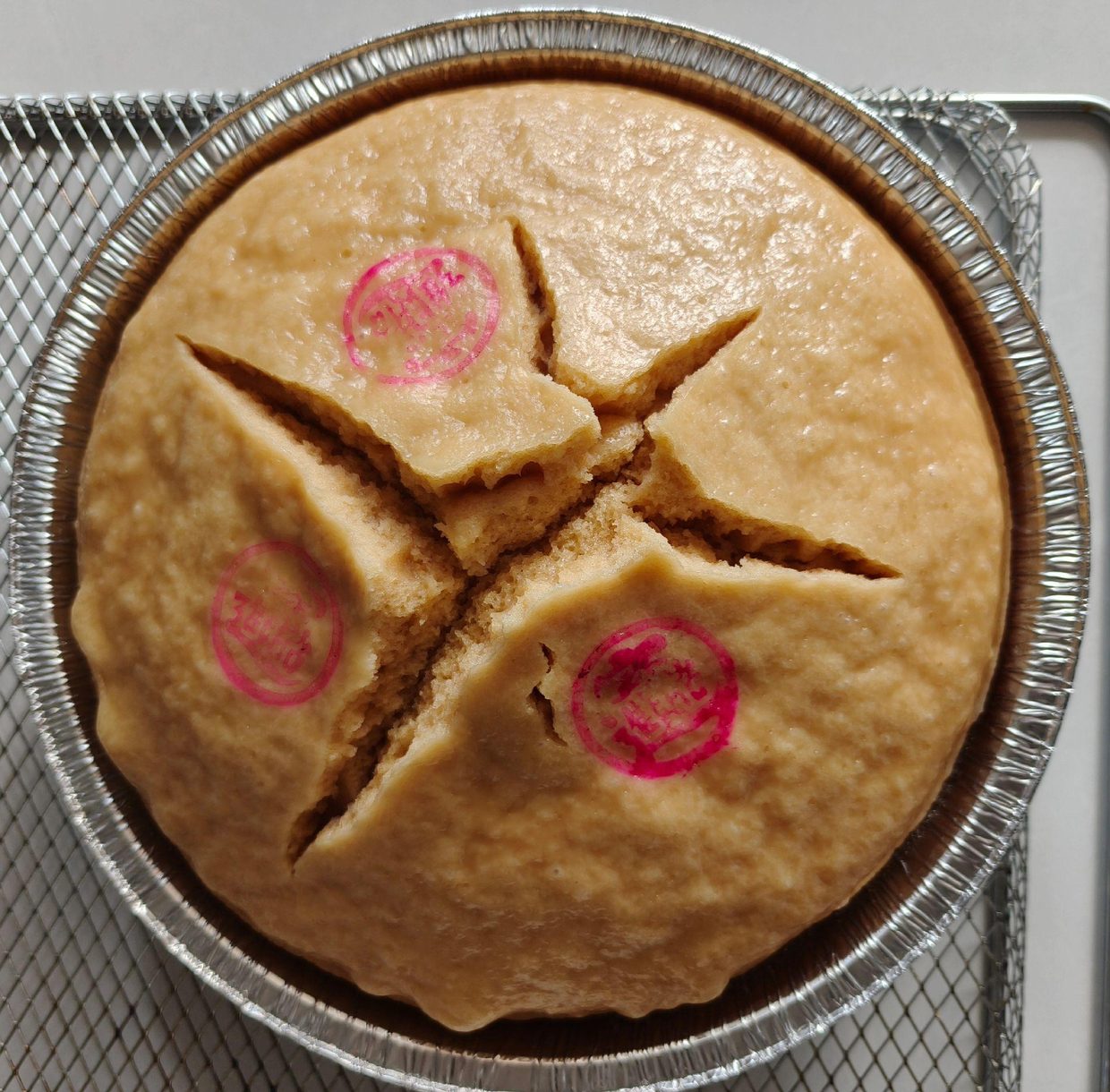
Rice paste left to rise and steamed until the top splits open, taking the sense of prospering; set out for the ancestors and at the new year.
Pronunciation fā guǒ|Food and tea|One entry in the Chaoshan glossary
What it means
Rice paste with a starter, poured into cups and steamed until the top splits into petals; the wider the split the better, and it is called laughing. The split is the proof that the rising went through, and it is also where the omen lies.
Also called the starter cake. It comes white or red, the red for celebrations and for the ancestors. A wine cup serves as the mould, one cake to a cup. Once the steamer is closed the lid is not lifted: let the steam out and the cake will not rise, and every household keeps to that.
When it is eaten
At the new year, at ancestral sacrifices, on moving into a house, on opening a shop. What is wanted is the prospering, the omen rather than the eating.
Words easily confused
This cake rises on yeast; the sweet cake rests on sugar and long steaming. Both appear at the new year, and neither the method nor the omen is the same.
Read next: Chaoshan rice cakes: a kind for every festival.
Same group: guo, the rice cake, the sweet cake, the peach cake.
Home › Glossary › Food and tea › Leavened cake
Text on this site is CC BY-SA 4.0; copyright in images is reserved and commercial use requires a separate licence.
Last revised: 3 November 2026