Bao tian ding, the news of a son
The day the child is born the father takes word to his wife’s family: for a boy, a red card, pomegranate flowers, fairy grass and sweet cakes; for a girl, a word of mouth.
Pronunciation bào tiān dīng|Rites of life|One entry in the Chaoshan glossary
What it means
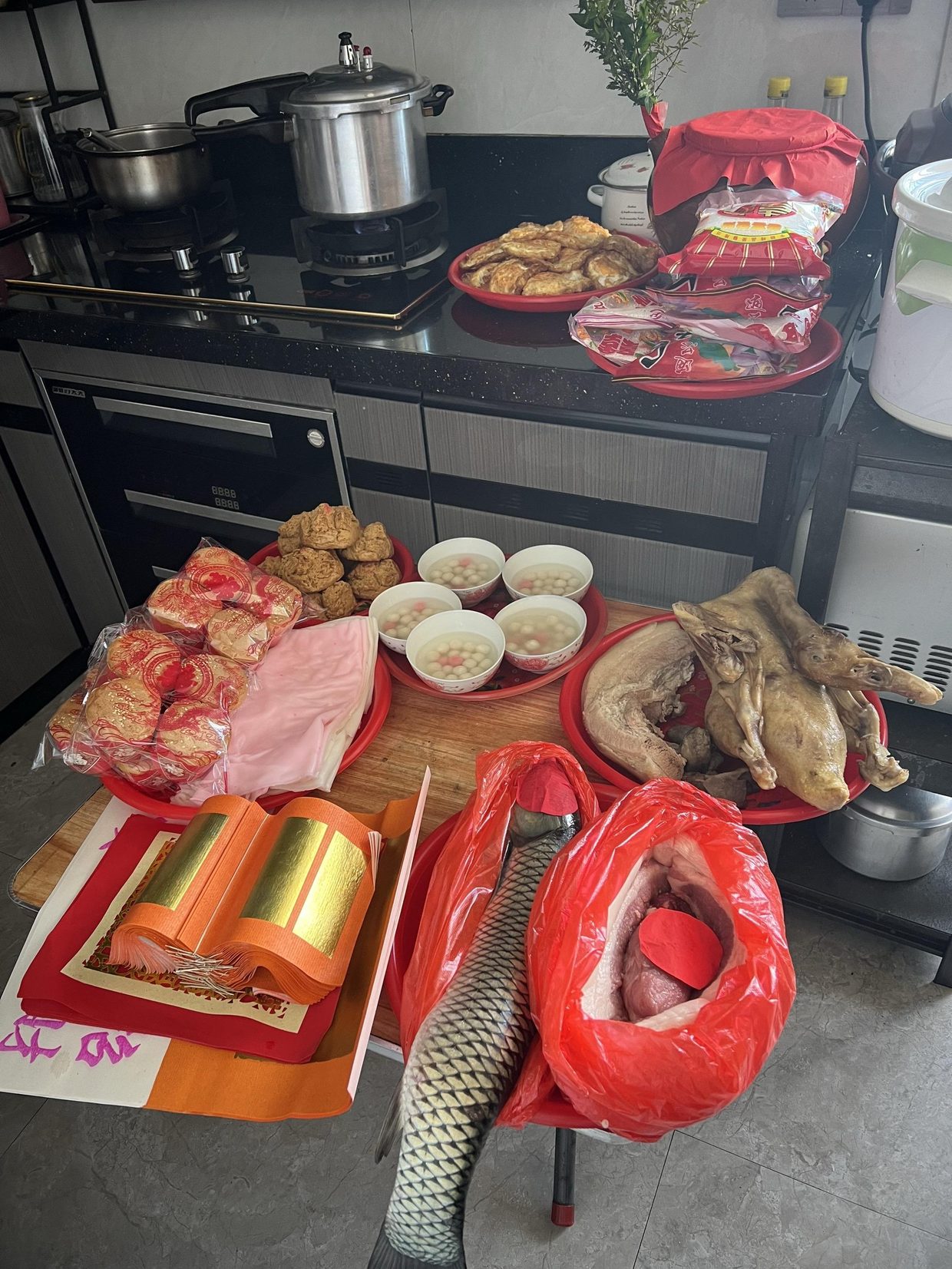
The moment the baby is delivered, the father’s first errand is to his wife’s family. For a boy he writes a red card with the date and hour of birth, adds red flowers — pomegranate blossom — and fairy grass, and delivers them with sweet cakes prepared in advance so that the family may eat something sweet. That errand is bao tian ding. For a girl it is usually simpler, given by word of mouth and called bao tian kou; the old joke for a household that would not announce a daughter was that they had reported a blank.
When the card arrives the wife’s family prepares pork, eggs, glutinous rice and brown sugar as a return gift, with red paper flowers on top, called filling the daughter’s belly. That household then sends back sweet cakes and shares them with the neighbours. Relatives and friends who hear the news send eggs dyed red, which is called hanging eggs.
When you see it
Only in a household that has had a birth. The news goes on the day itself; the return gifts mostly after the twelfth day, when the confinement ends, though some come on the third or seventh day, which is the looking-in.
Words easily confused
Bao tian ding is the errand of telling; tian ding means the house has gained a son. Bao tian kou is the spoken notice for a daughter. Hanging eggs are the red eggs sent back by relatives, not part of the errand itself.
Read next: Birth rites: the glad news, the month and the first birthday.
See also: Rites of life: the five thresholds side by side, the bed goddess: watching a child to chu huayuan.
Same group: the third day, the twelve days indoors, the twelfth day.
Home › Glossary › Rites of life › The news of a son
Text on this site is CC BY-SA 4.0; copyright in images is reserved and commercial use requires a separate licence.
Last revised: 4 November 2026