Snacks and stalls
Snacks are not on the banquet table. They are in lanes, markets and at road junctions, where one stove, one pot and a few low stools are the whole outfit. Chaoshan snacks differ more between counties than dishes do, because a stall follows the crowd and the season, not the rules of a banquet.
1. What it is
What separates a snack from a dish is not the cost of the ingredients but the occasion. A dish has to come together as a table; a snack is sold loose and eaten on the spot. The same thing is a dish on a banquet and a snack at a junction — o luah is made in both places, in different sizes and by a different method.
The stall is where snacks normally happen; it is not second best. Markets, ferry crossings, the ground in front of a temple: stalls gather and disperse with the calendar. That decides how a snack has to be written about. Talk about one with the place taken out and a name is all that is left.
2. Five with a published listing
The items in this class that have documents behind them all sit in the seventh batch of the Guangdong provincial list of representative intangible cultural heritage items. Number, name and applicant recorded as they stand:
- Aged cai pu making (Chenghai aged cai pu) | Ⅷ-101 | applicant: Chenghai District, Shantou
- Hand-beaten beef ball making, Chaoshan | Ⅷ-102 | applicant: Guangdong Food Industry Association
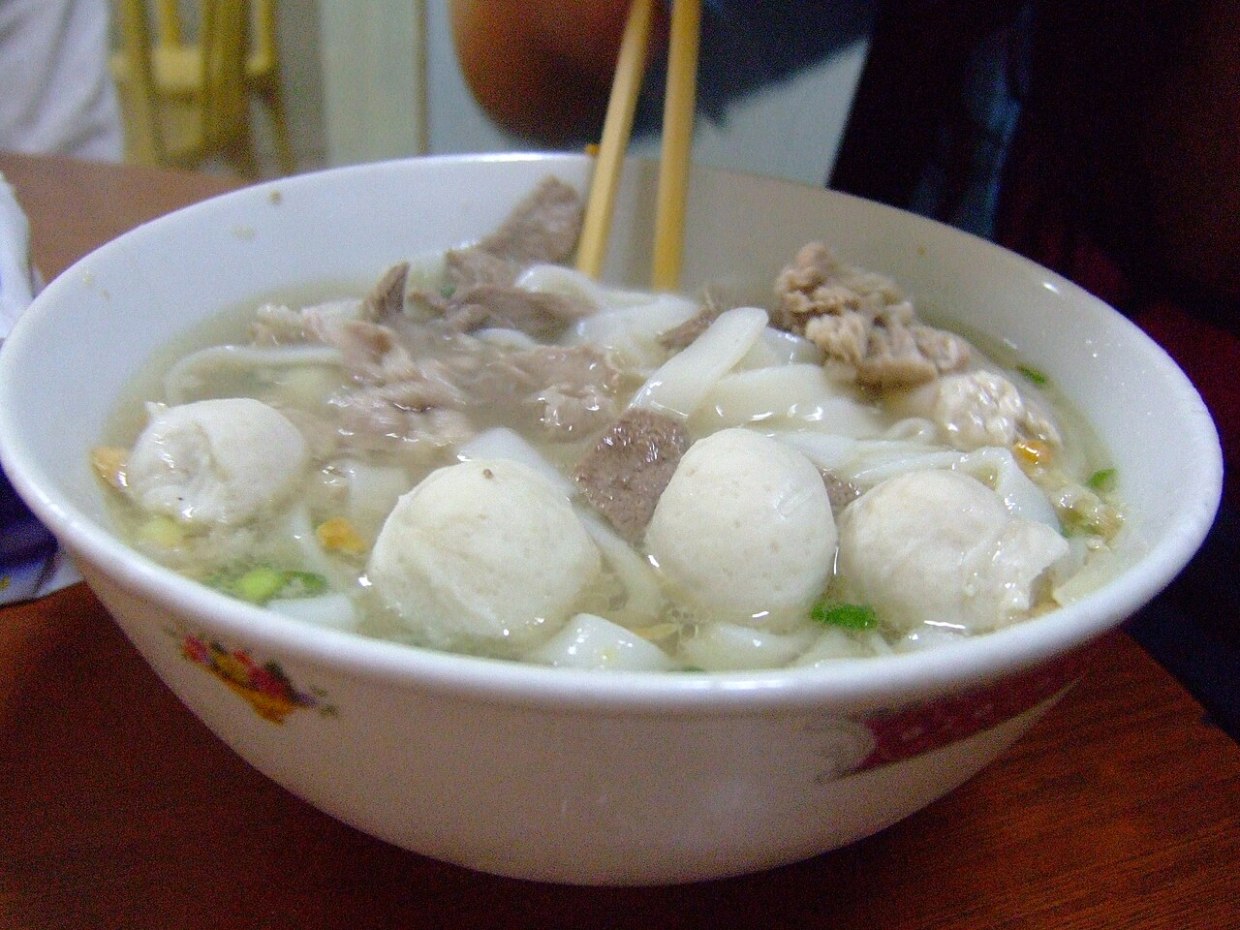
- Fish ball making | Ⅷ-103 | applicant: Haojiang District, Shantou
- Fish rice making (Dahao fish rice) | Ⅷ-104 | applicant: Haojiang District, Shantou
- Braised goose making (Shantou braised goose) | Ⅷ-107 | applicant: the city of Shantou
The five fall into three kinds of work. Beef balls and fish balls are pounded and squeezed, and the strength of the hand is the whole test: fresh meat stripped of sinew, beaten to a paste with an iron rod, then squeezed into balls; beat it too briefly and it will not bounce. Fish rice is fish boiled in salt water and eaten cold, and the word “rice” in the name marks its standing as a meal, not any grain in it. Braised goose and aged cai pu depend on time — a stock of braising liquid grows richer the longer it is kept, and cai pu has to be stored until it blackens before it counts as aged.
3. Three with no listing to cite
O luah, kueh tiao and braised dishes other than goose have no matching item on the provincial list. Names only; origin and process left blank, because there is no published document to check against, and writing them out would be writing from memory.
The common account: o luah mixes raw oysters into a sweet-potato starch batter and fries it in lard, with egg poured in before the pan comes off the heat; kueh tiao is rice batter steamed into thin sheets and cut into strips, eaten in soup, stir-fried, or tossed dry; braised dishes beyond goose take in duck, pig’s trotter and dried tofu, all out of the same pot of stock. These differ from county to county, and have not been checked county by county.
4. One line drawn
No “must eat” lists, no shops recommended, no prices. In judging a snack, the time from pan to mouth carries a lot of the weight: o luah goes soft once it cools, kueh tiao loses its point if it is not served scalding, beef balls left overnight lose their spring. Recommending a shop is recommending a moment that will pass; written down it is already out of date, and it trades on someone’s business besides.
Related
For the salted side dishes, see Za xian; for kueh, Chaoshan kueh; for the banquet table, Chaoshan cuisine; for the rules of a feast, Table rites; for the section, Food.
Note on sources
The Guangdong provincial government, notice approving and publishing the seventh batch of the provincial list of representative intangible cultural heritage items (Yue Fu Han [2018] No. 116, 12 May 2018), annex 1, items 26–29 and 32; item numbers and applicant districts recorded as they stand. Consulted on 20 October 2026.
Home › Food › Snacks and stalls
Text on this site is CC BY-SA 4.0; copyright in images is reserved and commercial use requires a separate licence.
Last revised: 4 November 2026