Banquet rites
In Chaoshan, inviting people to eat is called 食桌, “eating at the table”. The table is the meal, and it is also the rules: who sits where, what comes first, how many dishes — all of it is fixed.
1. The square table and the seats of honour
The meal is served on a square table, two to a side, eight to the table; in the villages this is simply called the eight-immortals table. The table stands in the hall, and the side facing the main door is the head of the table, backed by the ancestral shrine or the altar. The two at the head are the most honoured; the rest run down in order, and the last place falls at the foot, by the door.
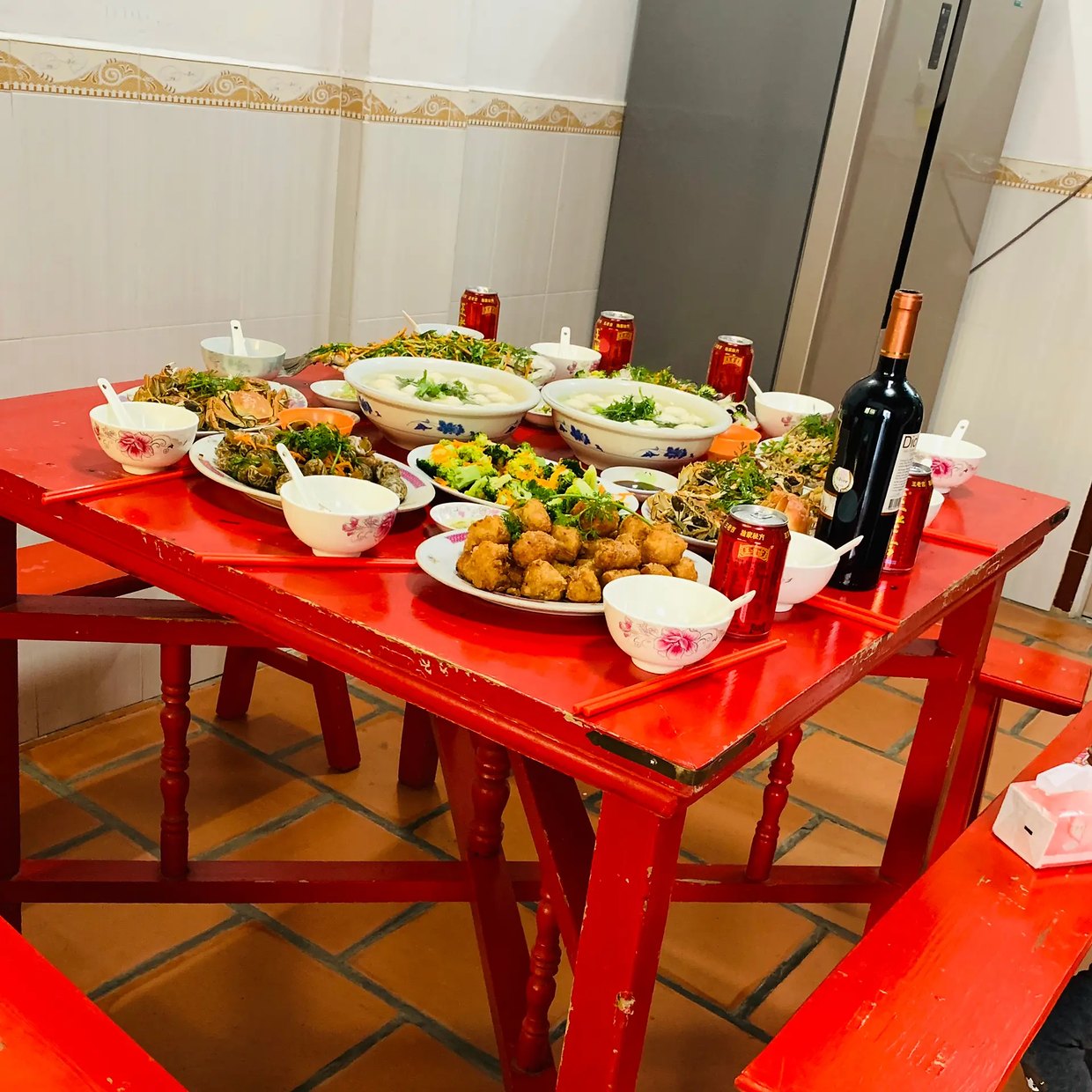
The place at the foot, by the door, has its own name: the dish-handing seat. It usually goes to a member of the household or a junior. Whoever carries the dishes in from outside passes the first plate here, and the people seated pass it on to the table; refilling wine, offering cigarettes and greeting guests mostly fall to this seat too. A guest does not sit there: put an elder in it and every dish has to be handed around the table, and nobody is comfortable by the end of the meal.
Who takes the head is settled by generation and closeness. Nobody sits before the most senior elder has sat; relatives who have come a long way, or who have not been seen for years, are often invited to the head as well. The table also divides into host guest and accompanying guests: the guest of honour at the head, the others along the two sides, whose task is to press food, pour wine and keep the talk going.
Tables are ranked among themselves too: a table in the hall outranks one in the courtyard or at the door, and those of higher generation and closer kinship sit at the inner tables. With several dozen tables, the host arranges who sits where in advance; a wrong arrangement is a worse breach than a wrong dish.
Restaurants in the city now mostly set round tables, ten or so to a table. The head is less distinct than on a square table; the main seat faces the door of the room instead, and the dish-handing side falls nearest the entrance. The table has changed; the principle of senior first has not.
2. Serving: four stages
A banquet runs in four stages: cold dishes to open, stir-fries next, the large dishes at the middle, sweet soup to close. Four stages are not four dishes; how many fall in each depends on the occasion and the means, but the order does not reverse.
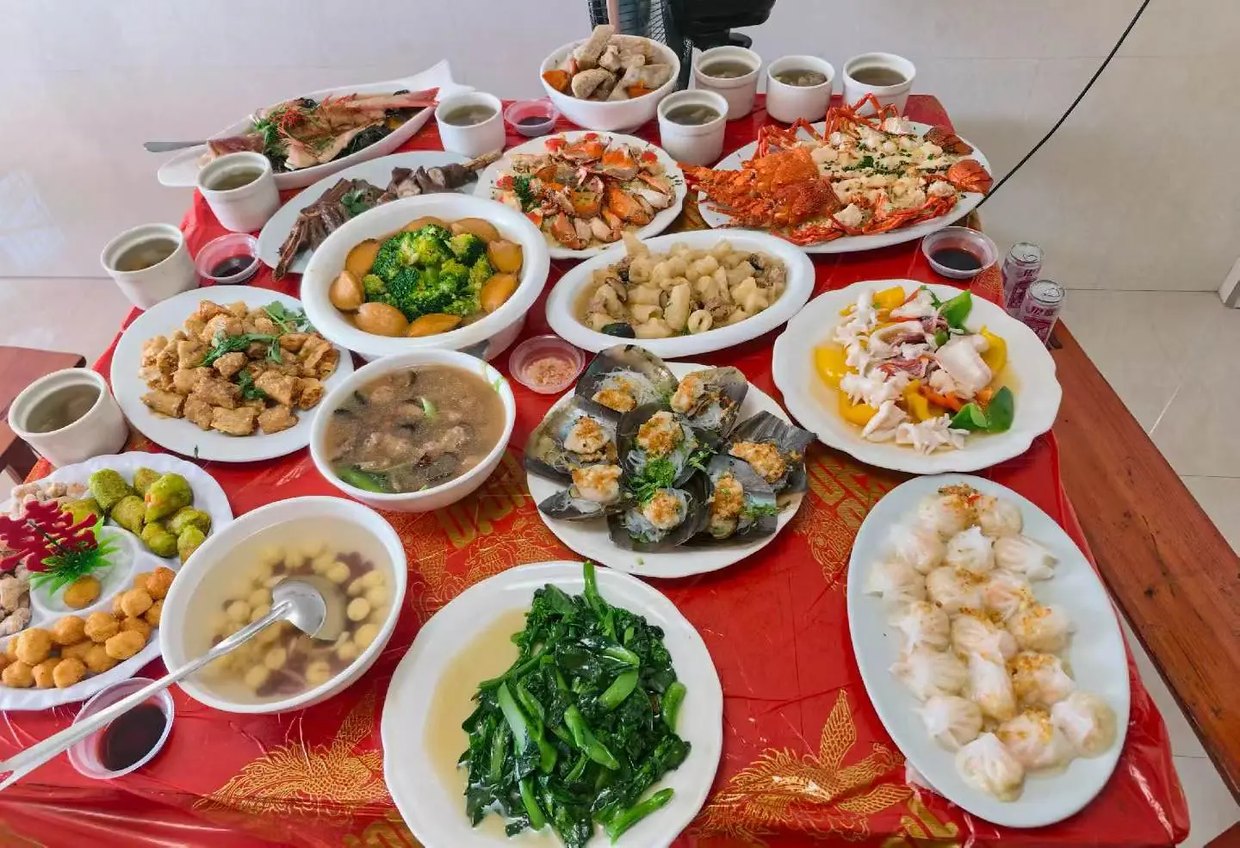
The first plates are usually cold: braised goose, poached chicken, cured meats, cut into pieces and laid out. They are meant to be on the table before people sit down, so that nobody waits in front of an empty table. Where the kitchen is slow, the host has to talk the gap away.
Large dishes come whole, a whole chicken, a whole fish, sea cucumber; in wealthy houses of the past, shark fin. A large dish has to be recognisable for what it is: cut up and reassembled prettily, it stops counting as one. The fish sits differently from county to county — some put it among the large dishes, some hold it back until just before the sweet soup, for the sake of “surplus every year”, something left over.
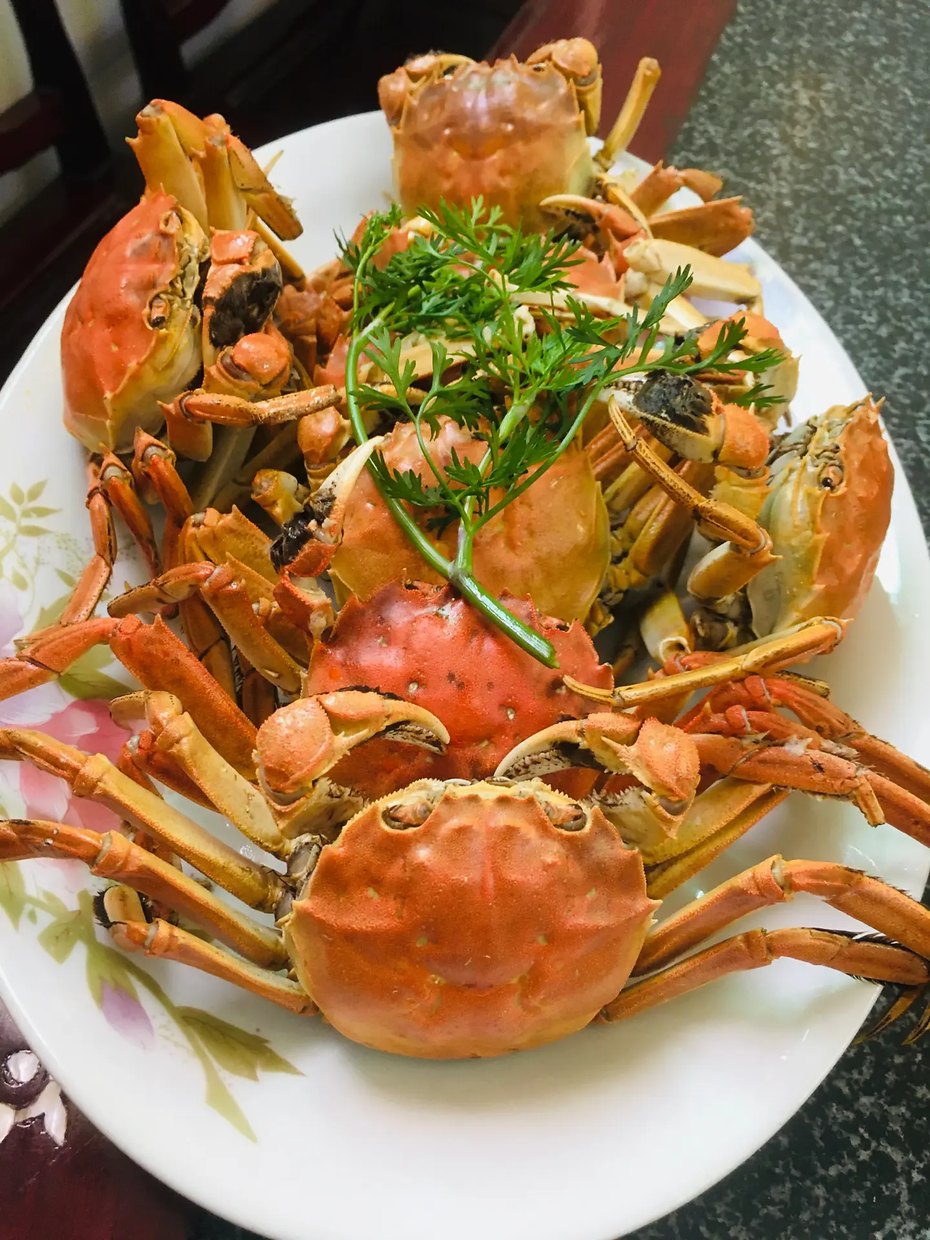
Sweet soup closes the meal: it is the tail of the banquet. Once it is served, the table is being told it will break up; some households add a round of tea after it, and when that tea is finished the guests rise. No sweetness at a funeral — that rule is the hardest of the lot, and sweetness on the table is a breach of manners.
Beyond the four stages there is a general rule: cold before hot, savoury before sweet, clear before rich. Get the order wrong and the guests will not say so to your face, but the host knows. The village village cook works from a list; which dish follows which was settled long before.
The village cook carries another set of sayings, handed on as shop talk. “Fierce fire, thick lard, fragrant fish sauce” is about heat, lard and the lift of fish sauce. “Vegetables cooked as meat — the vegetable comes to the table, the meat stays in the pot” describes simmering vegetables with meat for the flavour and picking the meat out before serving. “Opera is carried by gods, tigers and ghosts; a banquet is carried by the starch slurry” — thickening is where a banquet is won or lost, as plot is what carries a play. These are common sayings of the trade, and counties differ in the telling.
The movements at the table are fixed as well: nobody lifts chopsticks before the elder at the head; the host says 食, “eat”, and the guest answers 食; wine is filled to the brim, tea only to seven parts — a full cup of wine honours a man, a full cup of tea insults him.
3. The number of dishes
Dishes run in even numbers, for “good things come in pairs”. A wedding table does not take an odd number, and neither does a funeral table — simplicity at a funeral is a matter of courses and dishes, not of turning the count odd.
The number of courses follows the occasion and the means: a wedding is the richest, a birthday next, a funeral the plainest. Within one county, town and village differ: the town mostly books a restaurant and takes a set menu; the village hires a village cook, and courses and tables are fixed together, with the shopping done by the table.
Tables and dishes are settled together because the shopping is reckoned by table. For several dozen tables the ingredients have to be in the house the day before, and the fire is lit before dawn. Under-count the tables and late guests can only be given a place and a dish added on the spot; over-count and the leftovers go home with relatives and neighbours, since a host does not keep them.
4. Five kinds of occasion
A wedding is the grandest, with the most tables; the bride’s relatives and the groom’s sit apart, and the senior ones at the inner tables. This is not the same as the “sisters’ table” of the wedding itself, which the bride eats with her own sisters before she leaves home, with no outsiders present.
A birthday banquet opens with the greeting and then the meal. The kotow is made in the birthday hall before anyone sits; the first dish is usually birthday noodles, while the peach-shaped buns stay on the altar in the hall and do not count as a course.
A funeral banquet is plain, with no sweetness and no red, its own seating and its own air, and no urging anyone to drink.
For a deity’s birthday or a procession, the offering table comes first and the banquet after. Offerings and dishes overlap: a chicken or a kueh that has been set before the god can be taken down and served. The meal in this case is given only after the god has been honoured.
A full-month, a house-moving or a thank-you to a teacher is small: few tables, a fixed set of dishes, and the point is that the occasion is marked at all, not how many tables.
5. Words easily confused
食桌 is the eating end, what the guests do; 做桌 is the cooking end, what the cooks do; 摆供 is the table set for the gods. All three often fall on the same day, with different parties and different rules. The eight-immortals table names a table, the dish-handing seat names a place; neither is a dish.
The word nearest 食桌 is 做桌 — one is eating, one is arranging, two ends of the same banquet. Write up only one end and half the banquet is missing.
Common questions
- Which place is the head of the table?
- The side toward the hall, backed by the ancestral shrine or altar and facing the main door. Two sit at the head, the most honoured; the rest run down in order, and the last place is at the foot by the door. Who takes the head is settled by generation and closeness.
- Why does a guest not sit at the dish-handing seat?
- It is at the foot, by the door. Whoever carries dishes in from outside passes the first plate here, and those seated pass it on. Put a guest in it and every dish has to travel round the table, and pouring wine and greeting people become awkward as well.
- How many sit at one table?
- Eight. Two to a side of a square table, which is why the villages call it the eight-immortals table. The town now mostly sets round tables of ten or so; the seating order is unchanged, but the head is less distinct.
- Why even numbers of dishes?
- For “good things come in pairs”. A wedding table does not take an odd number, and neither does a funeral table: simplicity at a funeral is a matter of courses and dishes, not of turning the count odd.
- Why is the sweet soup served last?
- It is the tail of the banquet. Serving it tells the guests the table is about to break up; some households add a round of tea after it. No sweetness at a funeral — sweetness on the table is a breach of manners.
- Why has the fish no fixed place?
- Counties differ: some put it among the large dishes, some hold it until just before the sweet soup, for the sake of surplus. Within one county, village and town often arrange it differently too.
Related
Where the banquet sits within the rites of a life is set out under rites of passage; the cooking end, its shopping and menu, under banquets and feasts; the ceremonies around a wedding under Chaoshan marriage rites; kueh under Chaoshan kueh; the place of tea at the table under Gongfucha; seasonal food under the ritual year.
Note on sources
Seating, the order of serving and the number of dishes are taken from common practice across Chaoshan villages; counties and villages differ, and the points of difference are marked as they come up.
Home › Banquets and feasts › Banquet rites
Last revised: 4 November 2026