Huangqi Mountain
The hill north of the city, 293 metres. A Qing pagoda stands on top, and the old list of eight views takes its name from the light here.
In one line A hill at the edge of town: an hour to the top, for the pagoda and the river.
Look for The old pagoda · the line of the Rong river read from the ridge · the small temples half way up
What to see文化看點
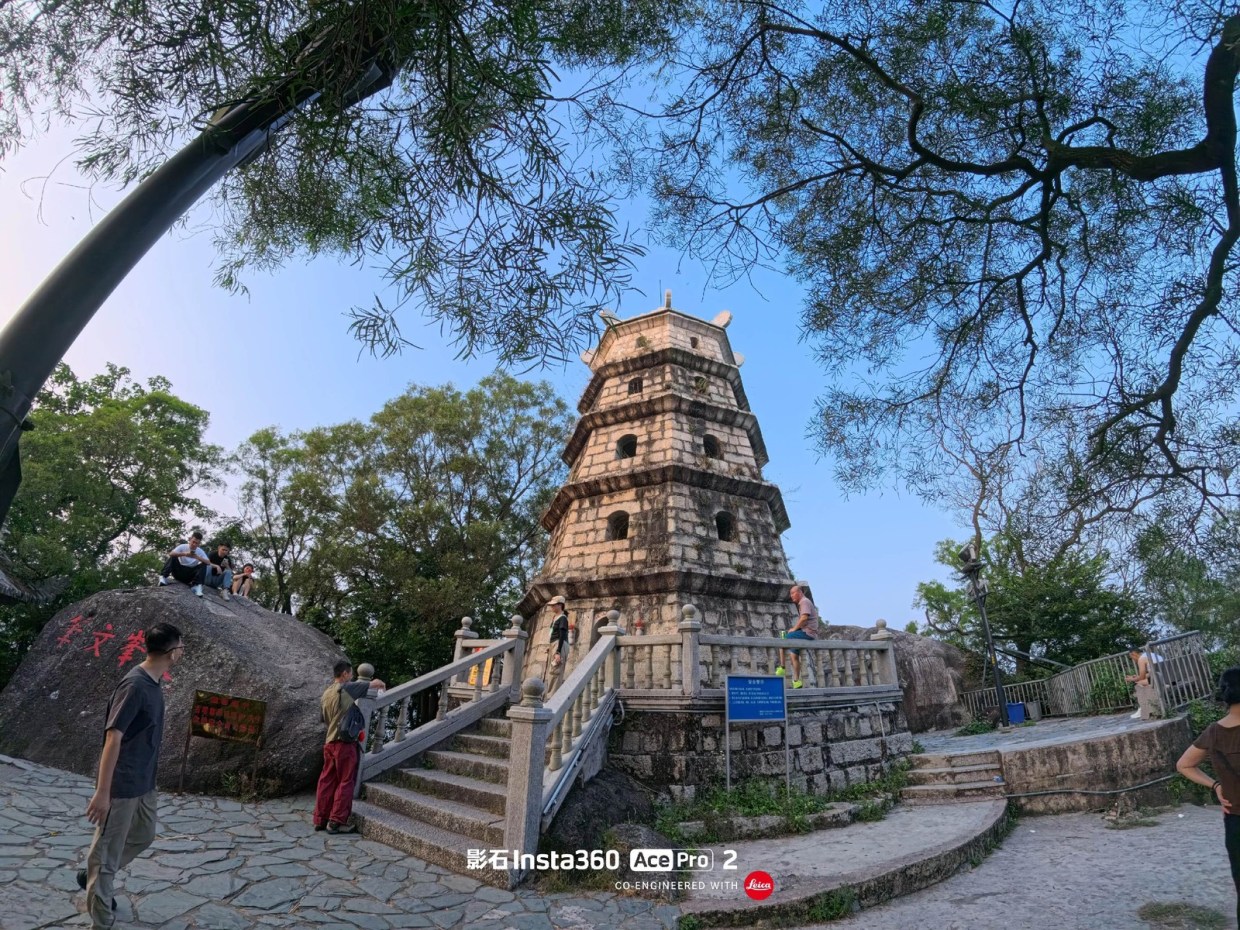
The hill north of Jieyang, 293 metres, an hour to the top. A Qing pagoda stands at the summit and the old list of eight views takes its name from the evening light on this slope. Two things to look at: the pagoda, and the Rong river and the town seen from above. It is the hill behind the prefectural city.
What it is是什麼
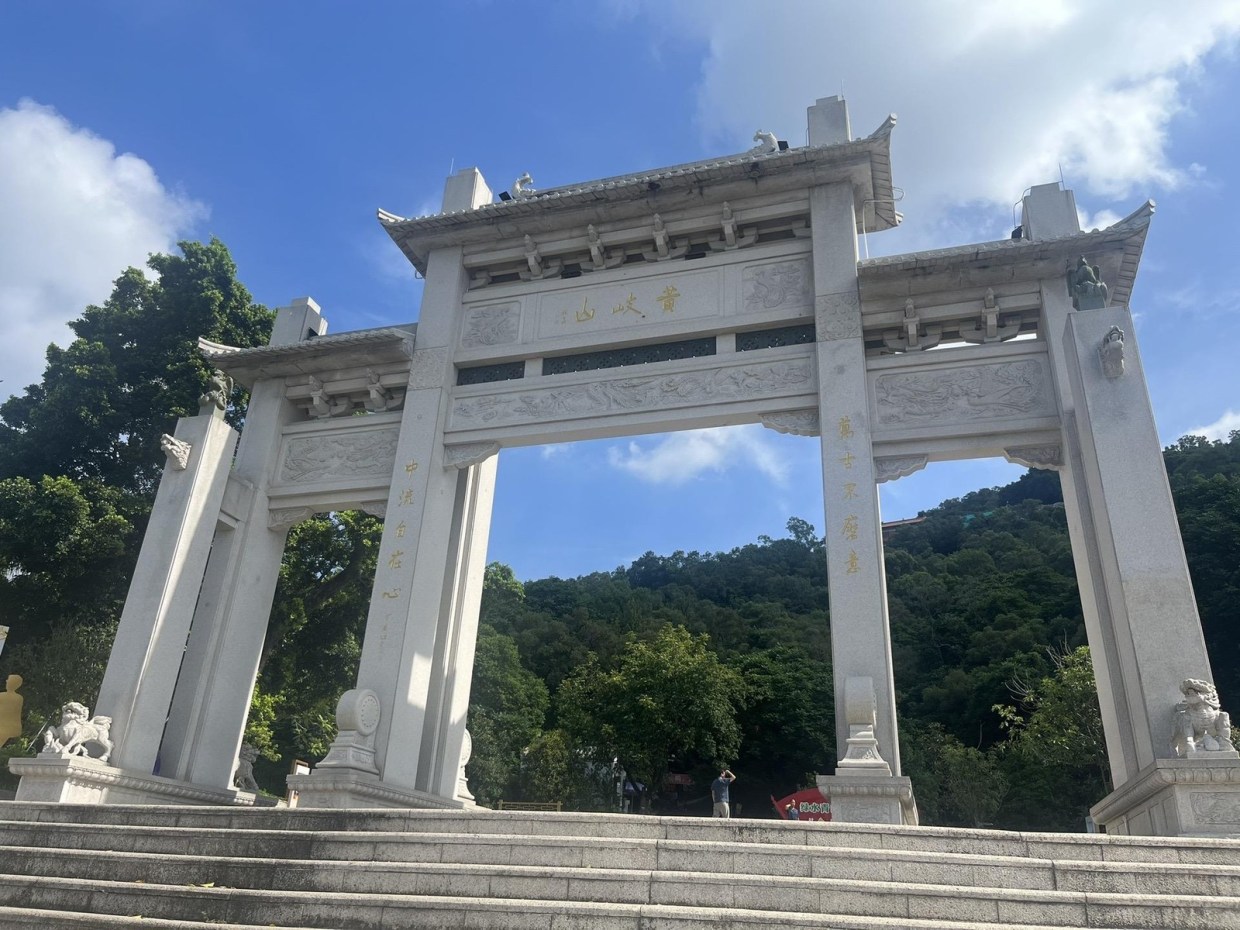
Huangqi Mountain lies north-east of Rongcheng. The soil is yellow and the paths fork, which is where the name is usually said to come from — the old gazetteer has it as ‘yellow soil and many forking paths’. Another account gives the original name as Huangzi, from yellow and purple in the hillside, changed later to echo the ‘phoenix calling on Mount Qi’ of the classics. Archaeology puts people living on this hill in the Neolithic.
Not high, but the view is good: from the top the Rong river can be followed through the town. On the hill are the Qing pagoda and older traces — the tomb of Yuerong, a pavilion half way up, the Lüyun nunnery, Zhugang rock, Woyun cave — and the whole is now a forest park.
What to look at看什麼
- The old pagoda: the mark of the summit, and the point the old view was taken from.
- The river from the ridge: the course of the Rong through the town reads clearest from up here.
- The temples: a few half way up, none of them large, worth a look on the way past.
Visiting參觀提示
An hour up. Wear something you can walk in and carry water. If you want the evening light, go up towards dusk — slant sun on yellow earth and canopy is what the old view was. Mosquitoes in summer.
Tickets and opening Free. Open all hours; the path up is narrow, so come down before dark. No booking.
The evening light夕翠
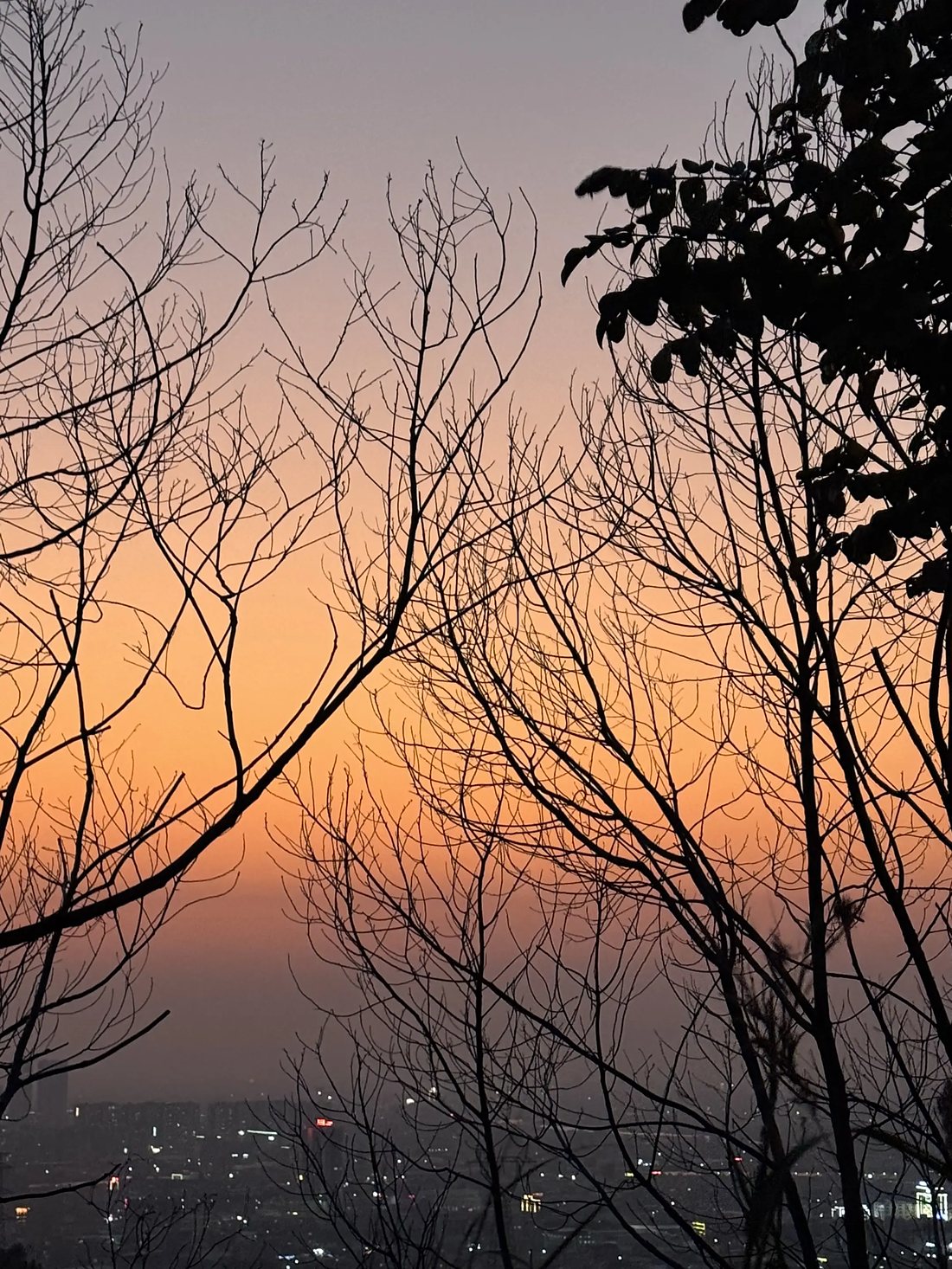
‘Evening green on Huangqi’ is one of the old eight views that is still where it was. Four o’clock is the comfortable time to be on top: the sun off to the west, the light slanting and laid on the town and the river below; on this side yellow earth and silvergrass, and against the light all of it goes to silhouette. When the sun drops behind the rooflines, it is time to come down.
Old traces on the mountain山中舊跡
The Lüyun temple half way up was built by Feng Yuanbiao, magistrate of Jieyang under Tianqi, for his concubine Huang Yuerong. She was from Yangzhou, came with him at fourteen, helped him with cases, was killed at eighteen and is buried on this hill; temple and tomb stand together, and the tomb was listed by the city in 1996. An old sophora in front of the temple is said to have been planted in the Song, and now takes several people with linked arms to span it.
Inscriptions are scattered over the rocks; the best known reads ‘seaboard Zou-Lu’ — a coast that keeps the manners of Zou and Lu. The old gazetteer gives the hill nine nunneries and eighteen rocks; not many can still be reached. Chongguang rock is on the west side; Woyun cave and the Qianlei stone are half way up, all on the scale of a look on the way past.
Details細部圖錄
On the same trip同城順路
- Jieyang Tower — not far from the foot of the hill, half a day together.
- The Confucian temple — back in town.
- The Jieyang itinerary — back to the city page.
Sources來源
- The name, the height and the old traces: Nanfang Plus, the eight views of Jieyang, and the city government’s notes on the sights.
- Neolithic settlement on the hill: the archaeological note in the same piece.
- ‘Evening green on Huangqi’ as one of the old eight views.
- The photographs are the originals of Douyin users; account and date are in each caption and the rights are theirs. They are used here for introduction only; republication, printing or commercial use needs their consent.
Home › Travel › Jieyang › Huangqi Mountain
Last revised: 5 November 2026
 粤公网安备44522102000407号