Shi gu, feeding the dead
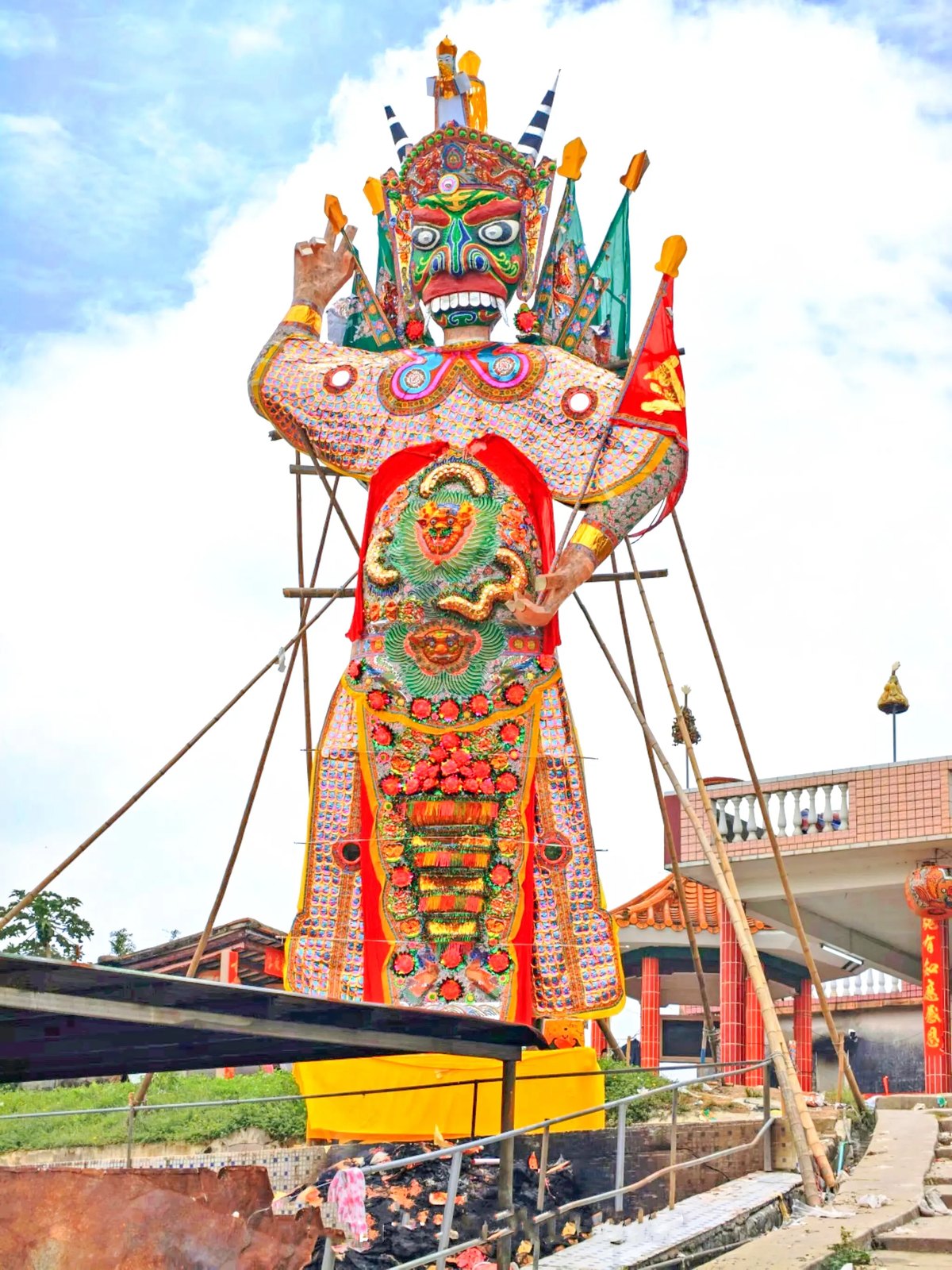
In the seventh month each village puts up a platform, lays out offerings and burns paper clothes for the unattached dead, and hires an opera troupe for the night.
Pronunciation shī gū|Belief and processions|One entry in the Chaoshan glossary
What it means
The “orphaned” are the dead with no one to sacrifice to them. The offerings are not laid out to be eaten by the givers but to be given away, which is why the rite is called shi, “to give”; paper clothes and paper money are burned separately, and what is below the platform is burned with it at the end.
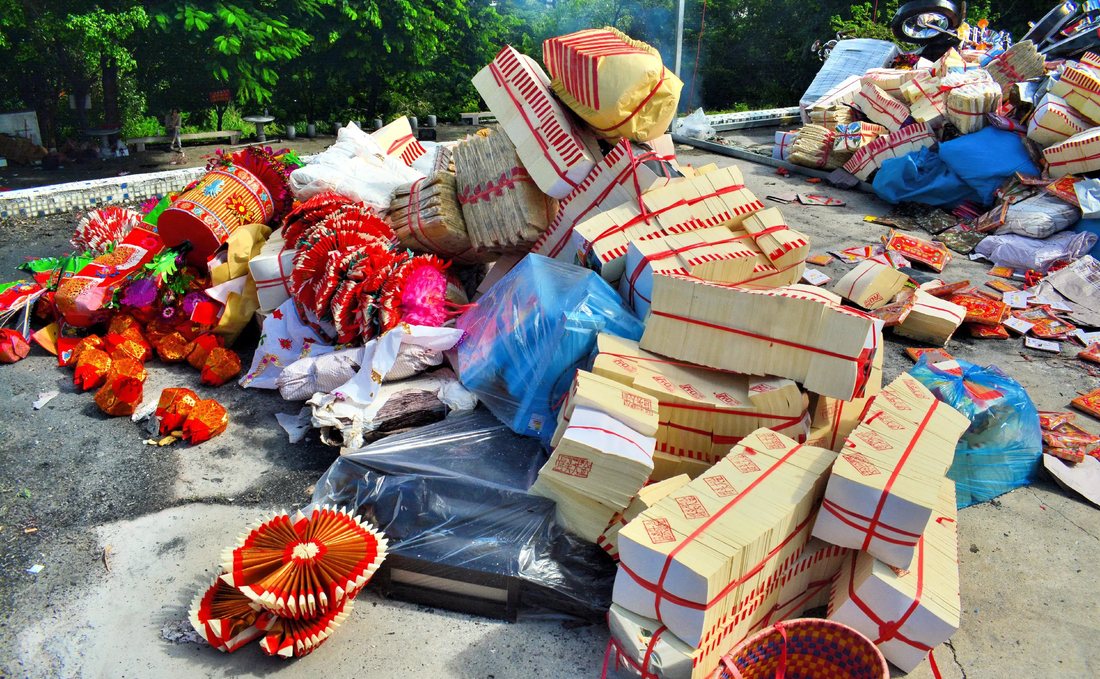
That is where it parts from household sacrifice: the family sacrifice honours one’s own ancestors, while the feeding looks after those whom nobody sacrifices to, and is pooled by village rather than by household.
When you see it
In the seventh month, villages taking turns by district. Offerings are laid out and paper clothes burned by day, and an opera troupe is hired for the night with the ground below the stage packed — this bustle is not the same as the one that honours the gods, and the audience knows the difference.

Words easily confused
Feeding the dead and the Yulan assembly are two faces of one service: one names the action, the other the occasion. “Universal deliverance” says the same thing in broader words.
Custom around Zhongyuan in Chaoshan, part of village mutual aid and sacrifice; this page describes only, and neither endorses superstition nor prescribes behaviour.
Read next: Feeding the dead and the Yulan assembly: how the seventh month is kept.
Same group: Yulan assembly, the eight festivals of the year, Chaozhou opera, orphan platform, scrambling for the offerings.
Home › Glossary › Belief and processions › Feeding the dead
Text on this site is CC BY-SA 4.0; copyright in images is reserved and commercial use requires a separate licence.
Last revised: 3 November 2026