Gu peng, the orphan platform
The painted stage built for the feeding of the dead: Ksitigarbha enthroned on it, a paper king of the orphaned set up before it to hold the altar.
Pronunciation gū péng|Belief and processions|One entry in the Chaoshan glossary
What it means
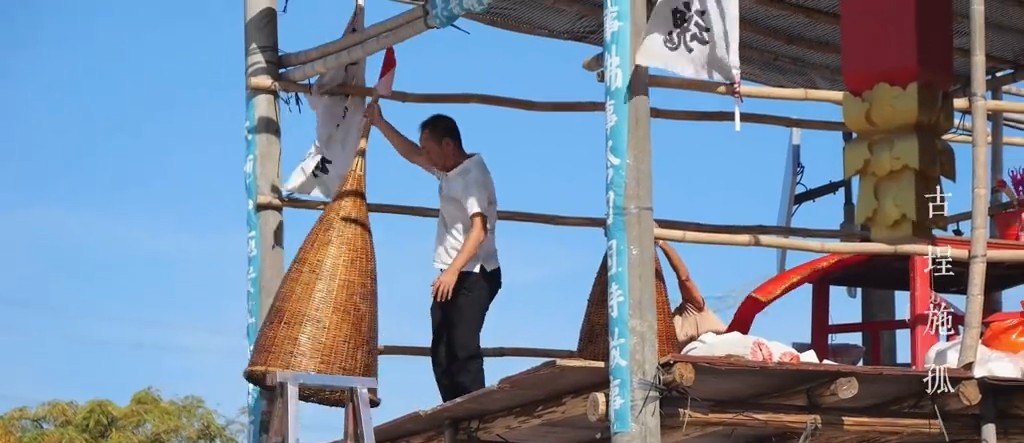
The formal platform is built for the occasion, propped on bamboo and timber, and is called the orphan platform, or the painted orphan stage. Ksitigarbha is enthroned on it, a paper king of the orphaned stands before it, a separate seat for the unattached is set at the side, and paper banners hang all round.
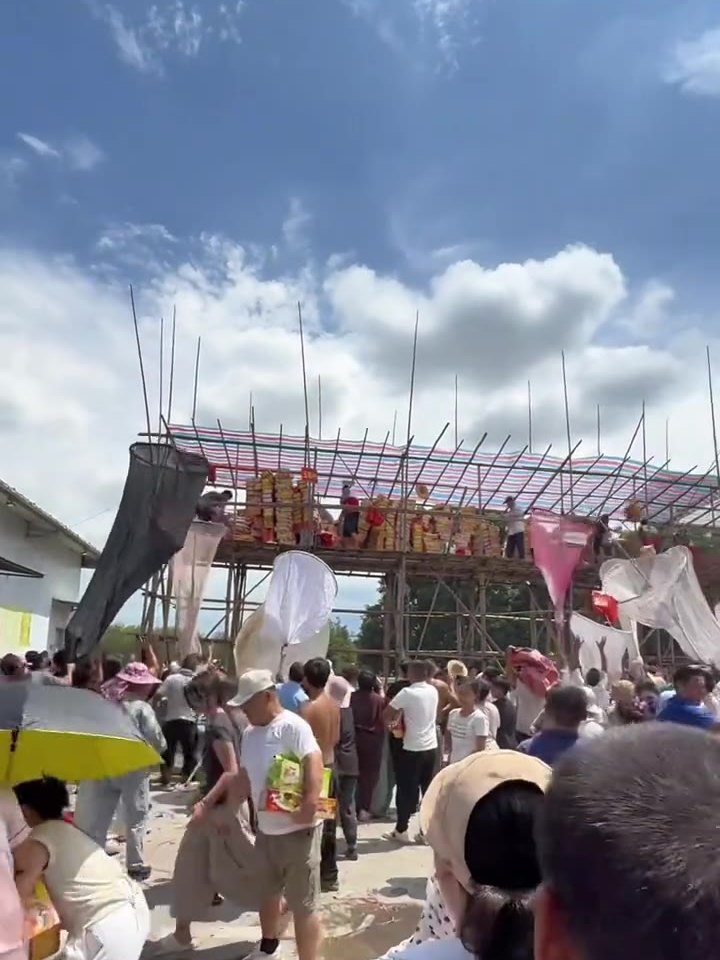
Rice, noodles, melons and greens, tubers and paper clothing are piled on the platform and below it, and a paper boat of Guanyin loaded with silver paper often rides alongside. Tablets for adult men and women and for children are set on it too, and the offerings brought for particular ancestors are labelled with names so that each is taken by name.
When you see it
On the main day of feeding in the seventh month, in each village. When a household’s offerings will not fit, tables are set below the platform, borrowed by the organisers or brought by the families; in villages that hold no collective feeding, the offerings go at the door or the mouth of the lane.
Words easily confused
The orphan platform is the ground of the feeding; it is not the altar set before the coffin in a household’s merit-making. One is out in the open, built by the village; the other is in the mourning hall, set up by the household.
Custom around Zhongyuan in Chaoshan, part of village mutual aid and sacrifice; this page describes only, and neither endorses superstition nor prescribes behaviour.
Read next: Feeding the dead and the Yulan assembly: how the seventh month is kept.
See also: The ritual year: the festivals of the year.
Same group: feeding the dead, king of the orphaned, flame-mouth rite.
Home › Glossary › Belief and processions › Orphan platform
Text on this site is CC BY-SA 4.0; copyright in images is reserved and commercial use requires a separate licence.
Last revised: 3 November 2026