Po zi guo, the pu-tree cake
The new leaves of the pu tree pounded to a juice, mixed with rice paste and steamed; eaten around Qingming.
Pronunciation pò zǐ guǒ|Food and tea|One entry in the Chaoshan glossary
What it means
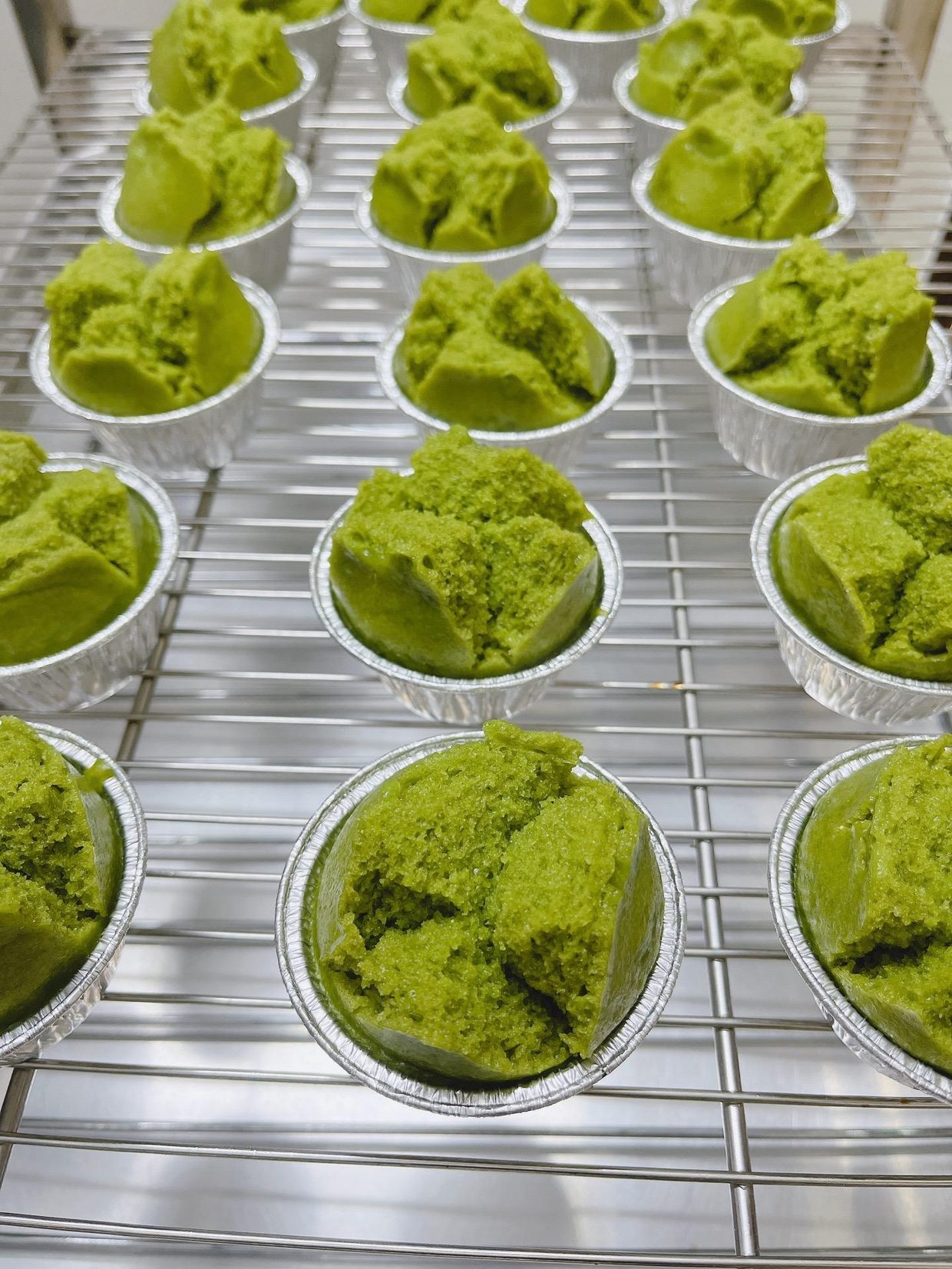
The pu tree puts out new leaves in spring; they are picked, pounded to a juice and stirred into rice paste, then poured into cups and steamed. The cake comes out a clear green with the top split open by itself, like a flower.
It belongs with the mouse-ear cake in the line of cakes that take a plant into the dough, and differs in colour and in smell: this one is green with a leafy freshness, the other nearly black and sweeter. The paste has to be judged for thickness — too thin and it will not set, too thick and it will not split. Cups are filled seven-tenths and no more, to leave room to rise, and the steam must be kept steady.
When it is eaten
Around Qingming, in the same weeks as the mouse-ear cake. Once the leaves are old it cannot be made, so it too is a food that waits for its season.
Words easily confused
This one takes pu leaves, the other takes mouse-ear herb; both are kept at Qingming, and neither should be taken for the other because both are dark.
Read next: Chaoshan rice cakes: a kind for every festival.
Same group: guo, the rice cake, the mouse-ear cake, the sweet cake.
Home › Glossary › Food and tea › Pu-tree cake
Text on this site is CC BY-SA 4.0; copyright in images is reserved and commercial use requires a separate licence.
Last revised: 3 November 2026