Sha guo zhou, casserole porridge
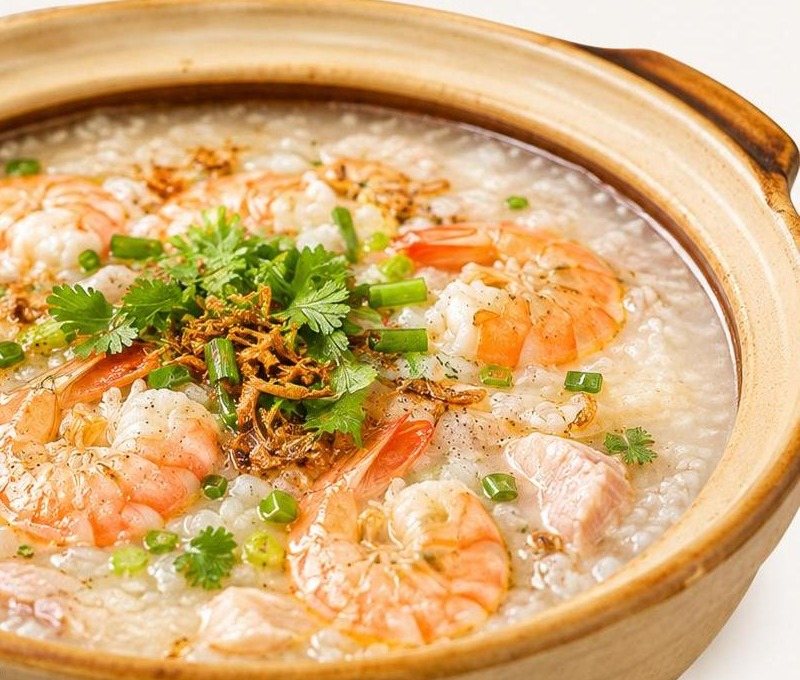
Raw rice and seafood simmered in a clay pot until the grains open, still standing rather than collapsed.
Pronunciation shā guō zhōu|Food and tea|One entry in the Chaoshan glossary
What it means
Raw rice goes into the pot with crab, shrimp, eel or frog, killed to order; a hard boil first, then a low simmer until the grains open and the liquid is still clear. A clay pot gathers heat slowly and gives it up slowly, which is why the rice cooks through without falling apart.
Here it parts from plain porridge: that one aims at clarity, this one at richness, the seafood taste carried into the rice.
When you eat it
At night, from after dinner into the small hours. A pot takes twenty minutes or so, and the waiting is part of the meal.
Words easily confused
This is the kind made to order with additions; mi is the everyday plain porridge. The pot names the vessel, not the dish: cook the same things in an iron wok and it is still called casserole porridge.
Read next: Chaoshan cooking and snacks, written apart.
Same group: mi, the porridge, raw pickled seafood, the night counter.
Home › Glossary › Food and tea › Casserole porridge
Text on this site is CC BY-SA 4.0; copyright in images is reserved and commercial use requires a separate licence.
Last revised: 3 November 2026