Gu wang, the king of the orphaned
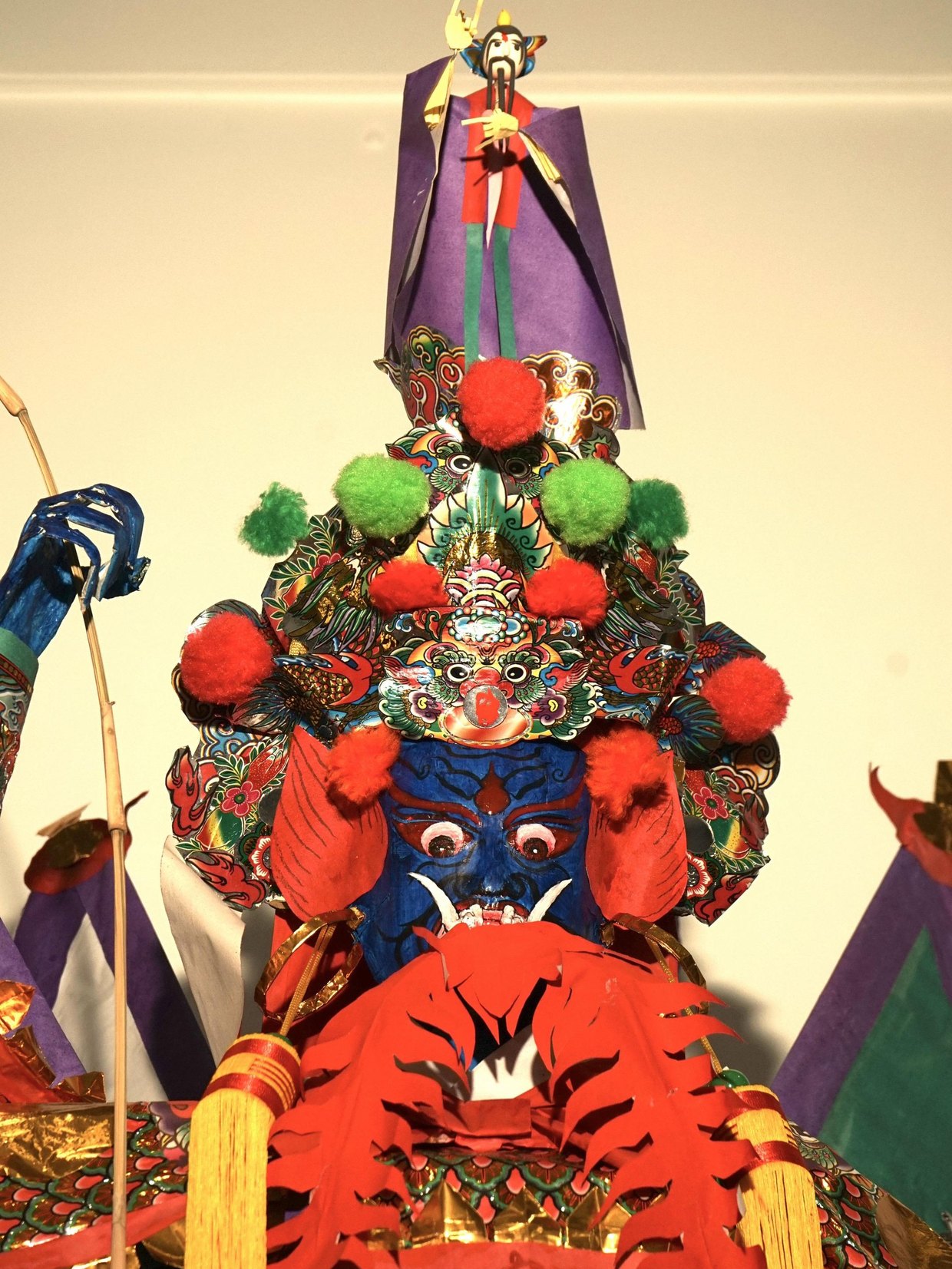
The paper ghost king set before the orphan platform, blue-faced and fanged, there to overawe the hungry dead who would fight over the offerings.
Pronunciation gū wáng|Belief and processions|One entry in the Chaoshan glossary
What it means
A ghost king made of paper, blue-faced and fanged, taller than a man, standing before the orphan platform. Its frame is bamboo, its skin paper painted over, and it is burned with the rest of the paper offerings.
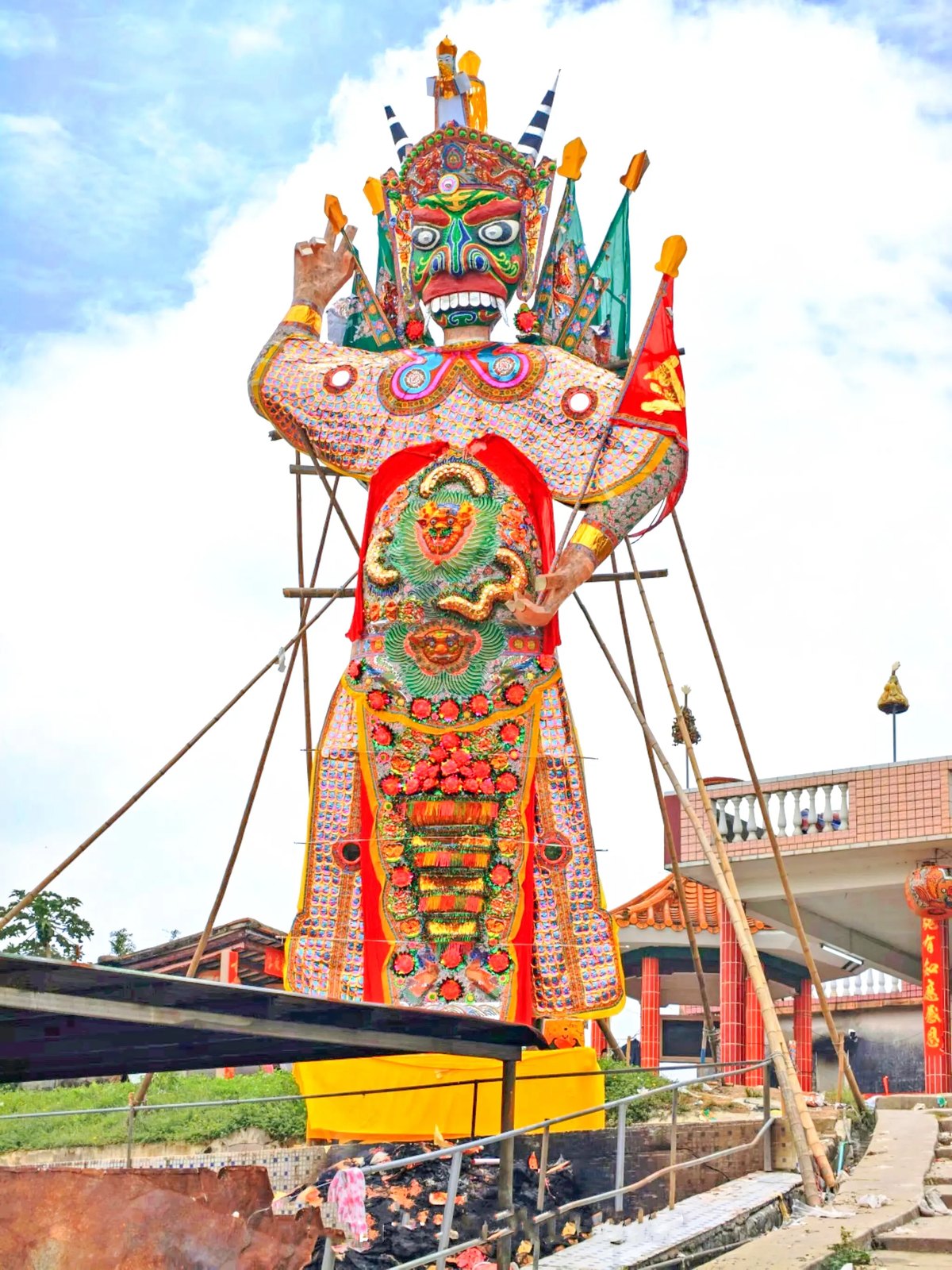
The story goes that when the feeding is held, hungry ghosts gather from the four directions and fight over the food in disorder, and even Guanyin cannot stop them, so she takes the form of a ghost king to overawe them and order returns — which is why one is made for every feeding, to hold the altar.
When you see it
It goes up on the main day as soon as the platform is built, and is burned with the paper offerings when the service ends. The name differs from place to place here: some say gu wang, some dashi ye, and some write it as the Fierce-Faced Great Being.
Words easily confused
The king of the orphaned is a paper figure holding an altar, not an image kept in a hall, and it exists only for the few days of the feeding. It belongs to the same class as the Dashi ye paper figure that leads the soul in a household’s merit-making, but the use differs: there it leads the soul, here it keeps order.
Custom around Zhongyuan in Chaoshan, part of village mutual aid and sacrifice; this page describes only, and neither endorses superstition nor prescribes behaviour.
Read next: Feeding the dead and the Yulan assembly: how the seventh month is kept.
See also: The ritual year: the festivals of the year.
Same group: feeding the dead, orphan platform.
Home › Glossary › Belief and processions › King of the orphaned
Text on this site is CC BY-SA 4.0; copyright in images is reserved and commercial use requires a separate licence.
Last revised: 3 November 2026