Tuo shen, dragging the god
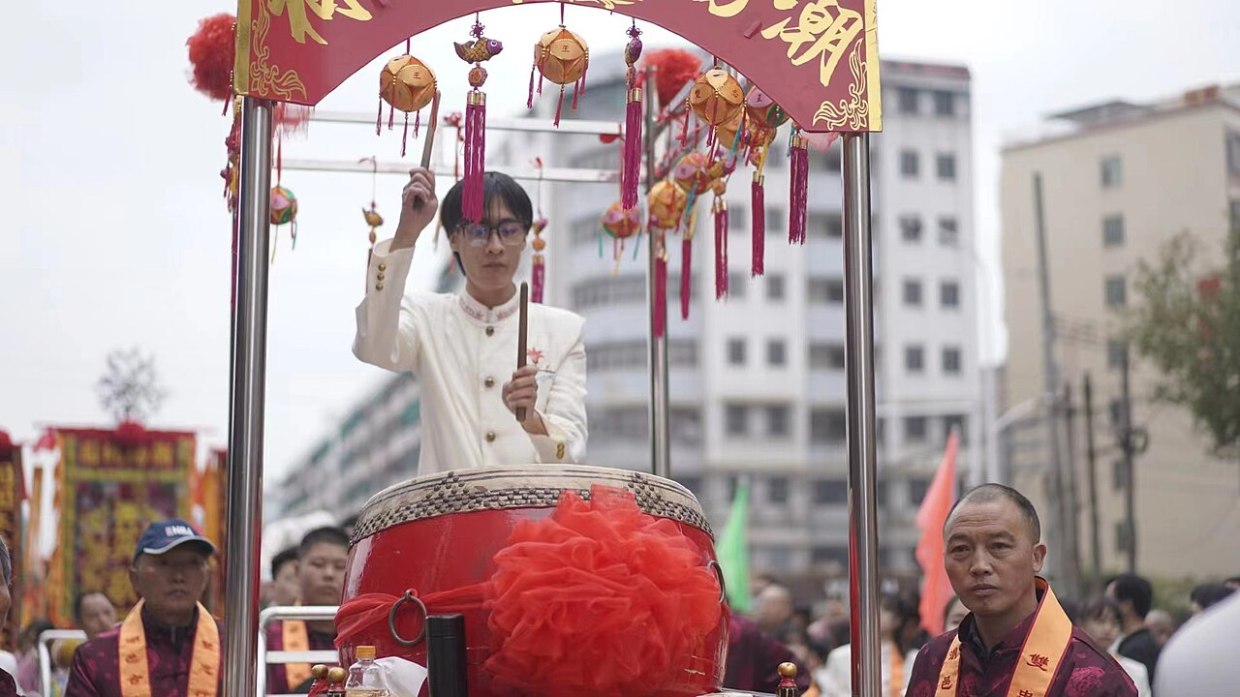
The old practice at Yanzao, Chenghai, on the twenty-first and twenty-second of the first month: pulling the image down off its palanquin. The local saying runs, “the Yanzao gods want a dragging”.
Pronunciation tuō shén|Belief and processions|One entry in the Chaoshan glossary
What it means
The image is lashed to the palanquin with grass rope; the god’s guards strip to shorts, bare-chested, their bodies greased with bean oil against being gripped, and the draggers rush in, seizing waist and legs, to haul man and god down off the palanquin together. Locally it is also called “yi lao ye”, where yi in the dialect means to maul and work over.
Yanzao is a district taking in Shangshe, Zhongshe, Gangtou and Shangcuo, with the main ground at Shangshe. The practice is on the provincial intangible heritage list.
When you see it
The civil procession goes round on the afternoon of the twenty-first; the martial one is late on the night of the twenty-first and on the afternoon of the twenty-second. The first is solemn, the second the climax of the whole affair. Inside the line is the ground; outside it nothing is counted — look carefully at where you are standing.
Words easily confused
Dragging the god is the way it is done at Yanzao alone; ying lao ye is the ordinary carrying of images round the parish. Dragging sits inside the frame of the procession, with the grabbing side of it pushed as far as it will go.
Custom in Chaoshan villages; this page describes only, and neither endorses superstition nor prescribes behaviour.
Read next: Ying lao ye: the dates, the route, and where to stand.
Same group: ying lao ye, the long banners, the great pig contest.
Home › Glossary › Belief and processions › Dragging the god
Text on this site is CC BY-SA 4.0; copyright in images is reserved and commercial use requires a separate licence.
Last revised: 3 November 2026