Sai da zhu, competing with great pigs
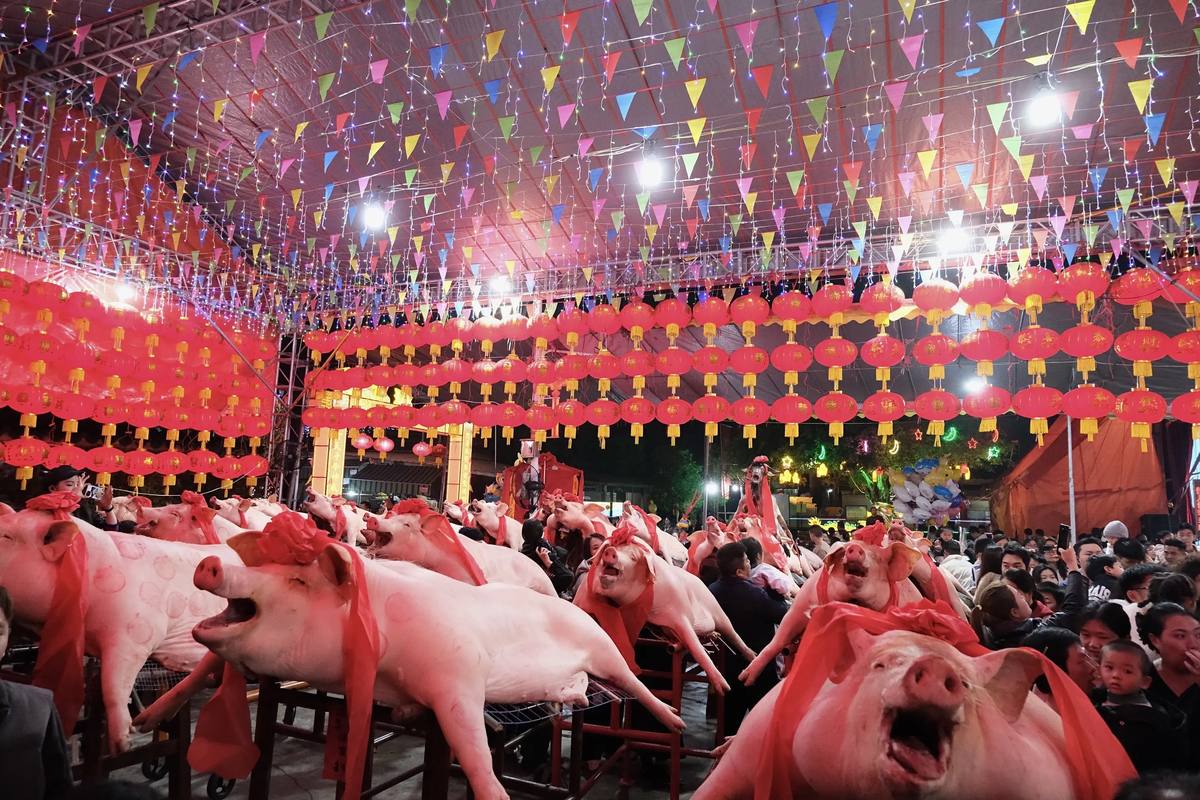
A new-year contest in which whole pigs are compared for size and fat: at Guanshan it opens on the morning of the seventeenth, at Yuepu on the eighth.
Pronunciation sài dà zhū|Belief and processions|One entry in the Chaoshan glossary
What it means
The pigs are slaughtered, given a red flower, a large mandarin in the mouth and a red stamp on the back, then mounted on wooden frames over a metre high and set in a row in the yard before the ancestral hall. What is compared is weight, and also the showing.
The hosting rotates by surname. Guanshan is a large village of many surnames: two surnames a year, a full cycle in twelve years, and the surname whose turn it is carries the organising and the cost.
When you see it
Guanshan in Chenghai: pigs slaughtered on the night of the sixteenth and carried into the hall overnight, set out in the yard on the morning of the seventeenth, taken down on the eighteenth, with a procession through the parish on the nineteenth. The custom is on the municipal list of intangible heritage.
Words easily confused
The pig contest is about pigs, a procession is about carrying the gods, and the offerings are the tables each household sets. All three crowd into the same first month, on neighbouring days, with nothing else in common.
Custom of the villages here; this page describes only, and neither endorses superstition nor prescribes behaviour.
Read next: Guanshan: the date, the rotation and the ground.
Same group: carrying the gods, the banner poles, the banquet.
Home › Glossary › Belief and processions › Competing with great pigs
Text on this site is CC BY-SA 4.0; copyright in images is reserved and commercial use requires a separate licence.
Last revised: 4 November 2026