Ying lao ye, the procession
Carrying the god images out of the hall and round the parish: the circuit, the halt, the return. One day to a village, and each village sets its own.
Pronunciation yíng lǎo yé|Belief and processions|One entry in the Chaoshan glossary
What it means
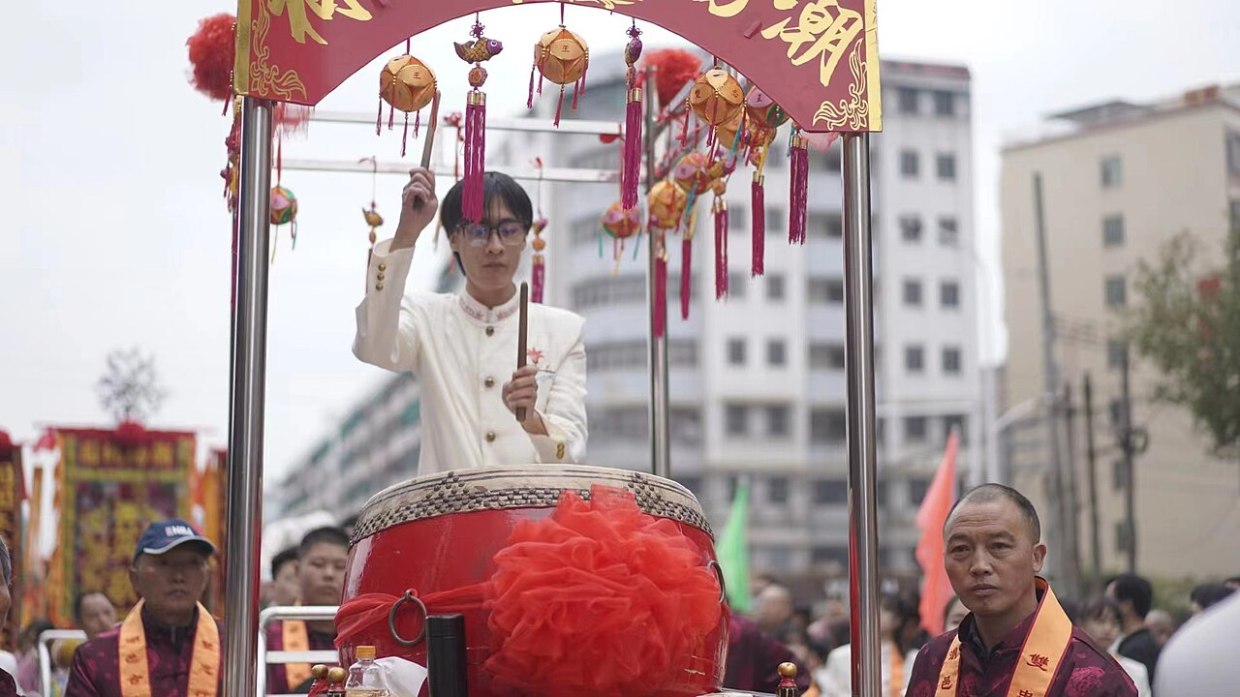
In the dialect “ying” means to go round, to turn; ying lao ye is carrying the gods once round the territory they hold. A procession usually has a palanquin, an honour guard, gongs and drums and long banners; in Chaoyang and Puning an yingge dance troupe goes with it.
The route is not drawn at random: the circuit is usually the boundary of the village or the lineage, and which lane is skipped and which doorstep the images pause at all have their reasons.
When you see it
Mostly from the first of the first month to the end of the second, one day to a village, and that day is its “village day”. The date is set by the village and carried down generation to generation; changing it starts an argument. Incense tables are set out along the way to welcome the images, and onlookers stand outside the line.
Words easily confused
Ying lao ye is carrying them out, bai lao ye is going to worship, lao ye sheng is the god’s birthday. “Youshen” is the general written word; people here mostly say ying lao ye. The two mean the same thing, one literary and one spoken.
Custom in Chaoshan villages; this page describes only, and neither endorses superstition nor prescribes behaviour.
Read next: Ying lao ye: the dates, the route, and where to stand.
Same group: lao ye, bai lao ye, the long banners.
Home › Glossary › Belief and processions › Ying lao ye
Text on this site is CC BY-SA 4.0; copyright in images is reserved and commercial use requires a separate licence.
Last revised: 3 November 2026