Ti jiao men, kicking the chair door
When the bridal chair stops at the groom’s door, he kicks the bottom edge of its door, then takes the ruyi pin and makes as if to press it on the bride’s forehead.
Pronunciation tī jiào mén|Rites of passage|One entry in the Chaoshan glossary
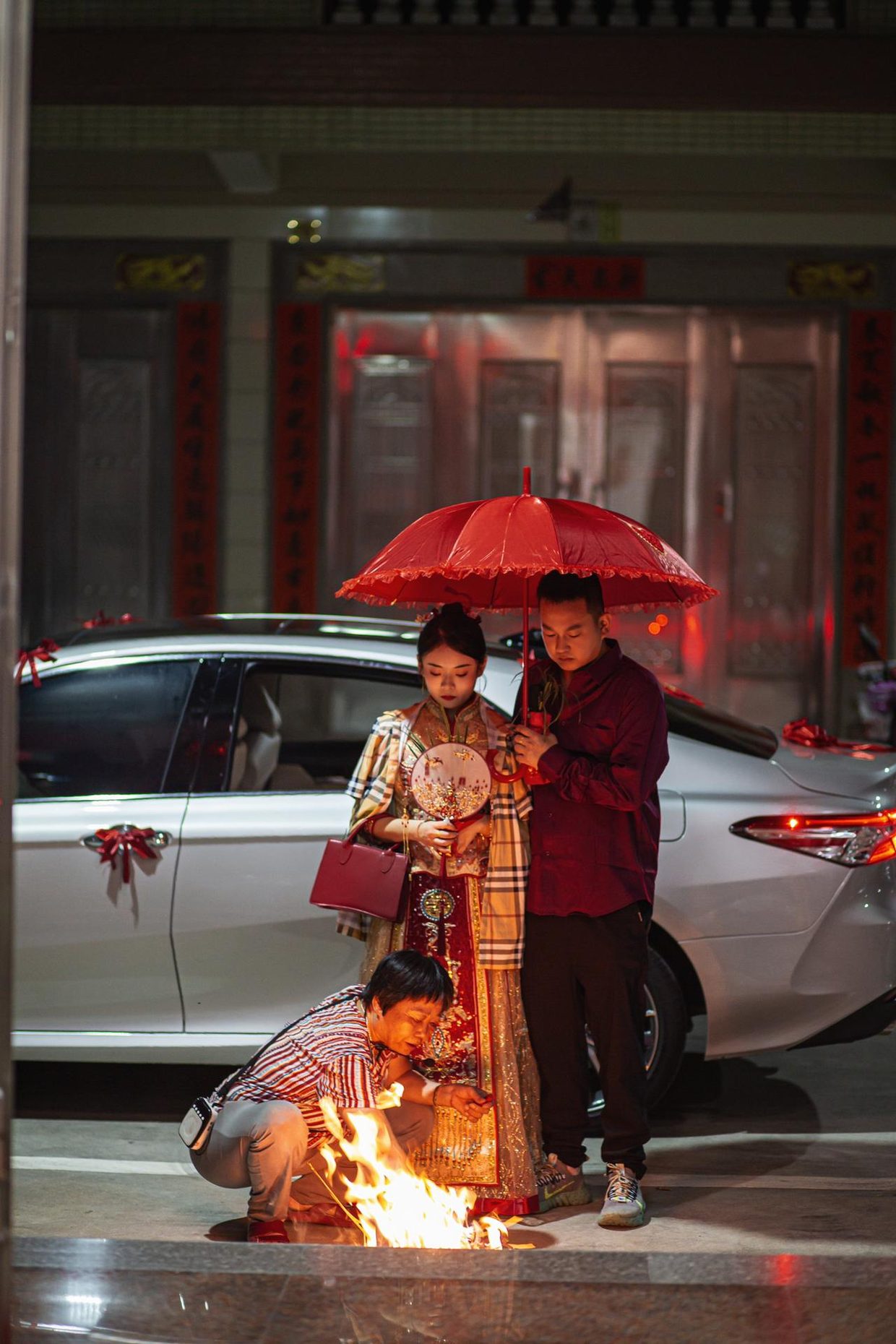
What it means
The chair stops at the door and is not set down at once. The groom walks up and kicks the lower edge of the chair door, three times in most accounts and once in some; what is kicked is the chair, and the foot does not touch the person.
Then he draws the ruyi pin from the bride’s hair and makes as if to press it into her forehead, which is pressing the ruyi. The two go together with nothing between them, and only then is the bride led out.
When you see it
In the short stretch at the door, after the firecrackers. This is the knock that asks for the door, asking the bride to answer and come out; some say it is also so that no one’s temper is left to overbear the household.
Words easily confused
This and stepping through the fire are outside and inside respectively: the kick is the groom’s act, outside the chair; the step is the bride’s own, at the threshold. Pressing the ruyi is not the bowing either — it is a gesture made before she goes in.
Read next: Marriage here: from the six rites to seeing the bride again at the Lantern Festival.
See also: Rites of passage: five thresholds.
Same group: greening the chair, the sweet dumplings, viewing the dowry.
Home › Glossary › Rites of passage › Kicking the chair door
Text on this site is CC BY-SA 4.0; copyright in images is reserved and commercial use requires a separate licence.
Last revised: 3 November 2026