Kan jia zhuang, viewing the dowry
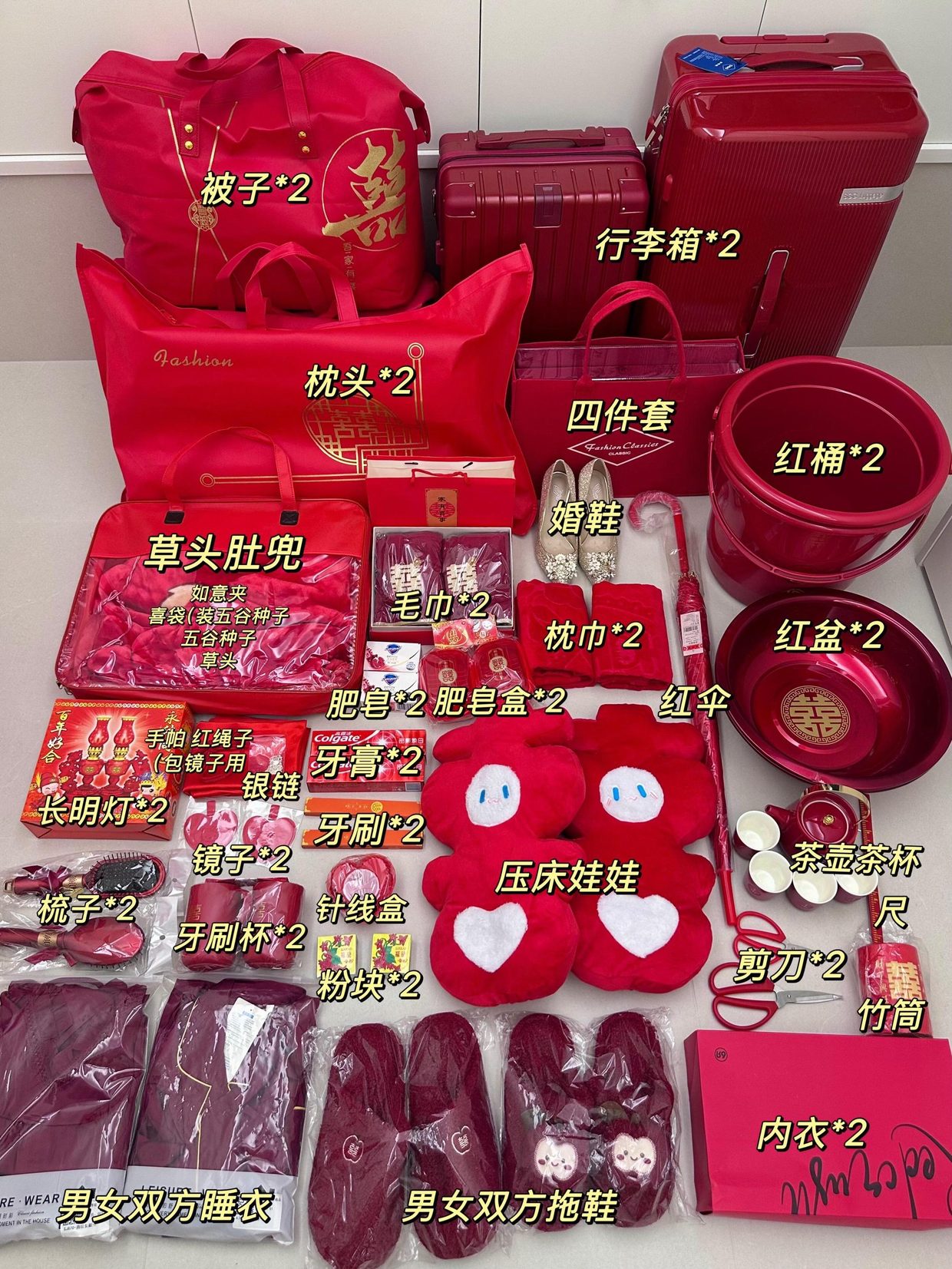
The dowry arrives with the bride and is laid out in the hall for the relatives and neighbours to look over before it is taken into the bridal room.
Pronunciation kàn jià zhuāng|Rites of passage|One entry in the Chaoshan glossary
What it means
The dowry does not go straight into the room. It is laid out in the hall: chests and cases towards the back, quilts folded, wooden basins, buckets and the washstand ranged to the front. The pieces that carry a meaning get a table of their own — the shoes worn into the chair, the bowls for the parents-in-law, seeds in five colours, the mandarin-duck bib — set so that the meaning is plain at a glance.
Those who come to look are the women of the relatives and of the clan; they go from piece to piece and ask what each one means, and someone of the household stands by to answer.
When you see it
After the bowing to the ancestors, before the tables are opened. Only once it has been seen is it taken in, and the taking in is done by the mother-in-law or by a woman held to be fortunate.
Words easily confused
This looks at things, seeing the bride again looks at a person, and the times differ: one before the feast on the wedding day, the other at the first Lantern Festival after. Nor is it the same as the betrothal gifts, which travel from the groom’s house to the bride’s — the dowry goes the other way, and the directions are opposite.
Read next: Marriage here: from the six rites to seeing the bride again at the Lantern Festival.
See also: Rites of passage: five thresholds.
Same group: kicking the chair door, the sweet dumplings.
Home › Glossary › Rites of passage › Viewing the dowry
Text on this site is CC BY-SA 4.0; copyright in images is reserved and commercial use requires a separate licence.
Last revised: 3 November 2026