Qian ci, porcelain mosaic
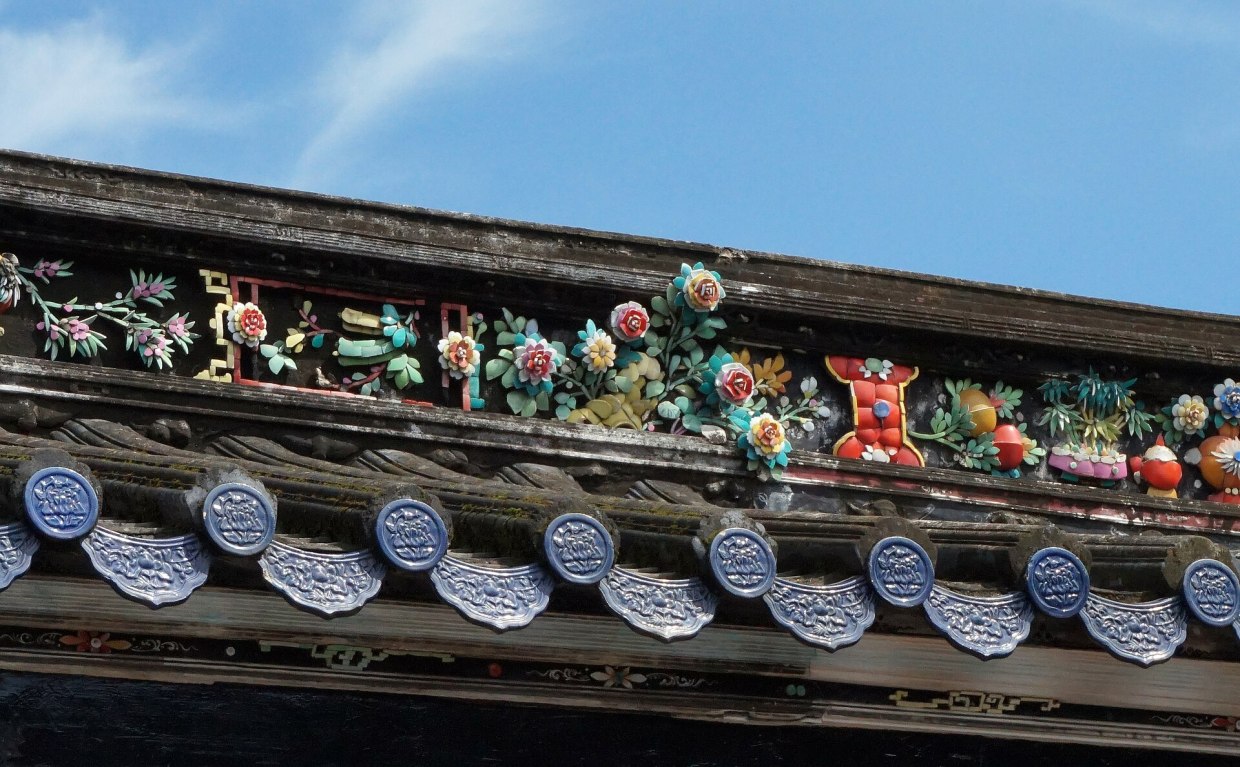
Coloured porcelain broken and set into ridges and gable walls; the material is fired glaze, and it does not fade in decades.
Pronunciation qiàn cí|Houses and settlement|One entry in the Chaoshan glossary
What it means
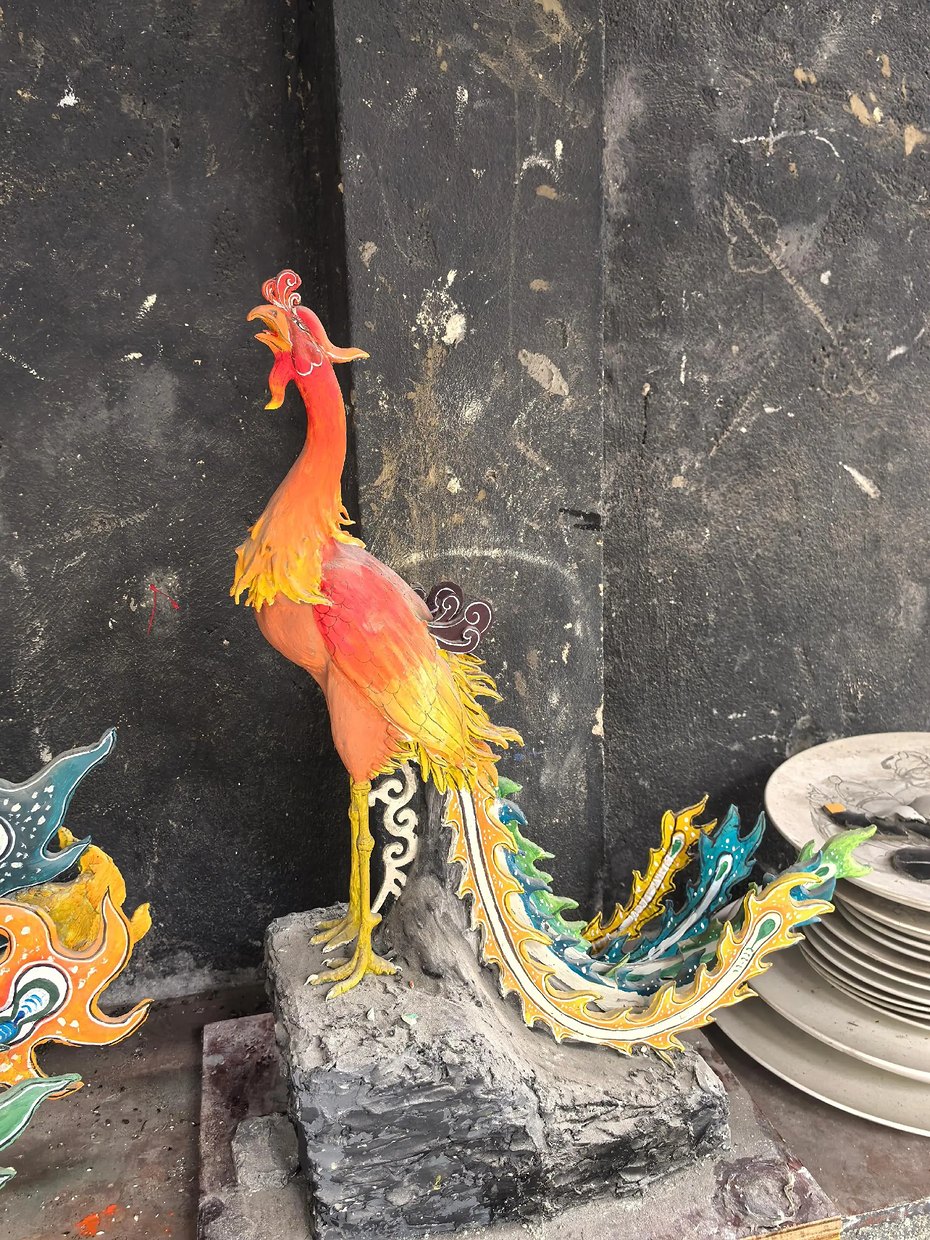
Cutting and setting coloured porcelain to decorate a building. First the shape is built up in lime plaster — shell lime mixed with paper fibre, laid on in layers to make the body of a figure or the spine of a dragon — and once dry that is the core. Get the core wrong and no care in the setting will straighten it.
The shards are sorted by shape and by glaze, and laid on one overlapping the next. The colour is all in the glaze and nothing is painted on afterwards, which is why sun and rain leave it unchanged for decades.
When you see it
In the Wanli years of the Ming, with Chaozhou ceramics flourishing and carving busy, shards were first cut into simple flowers and set on buildings; through the Qing the practice spread to halls and houses; by the late Qing kilns were firing bowls in colours made for cutting, and the division of labour was complete. In 2011 porcelain mosaic was entered on the third national list of intangible heritage.
Words easily confused
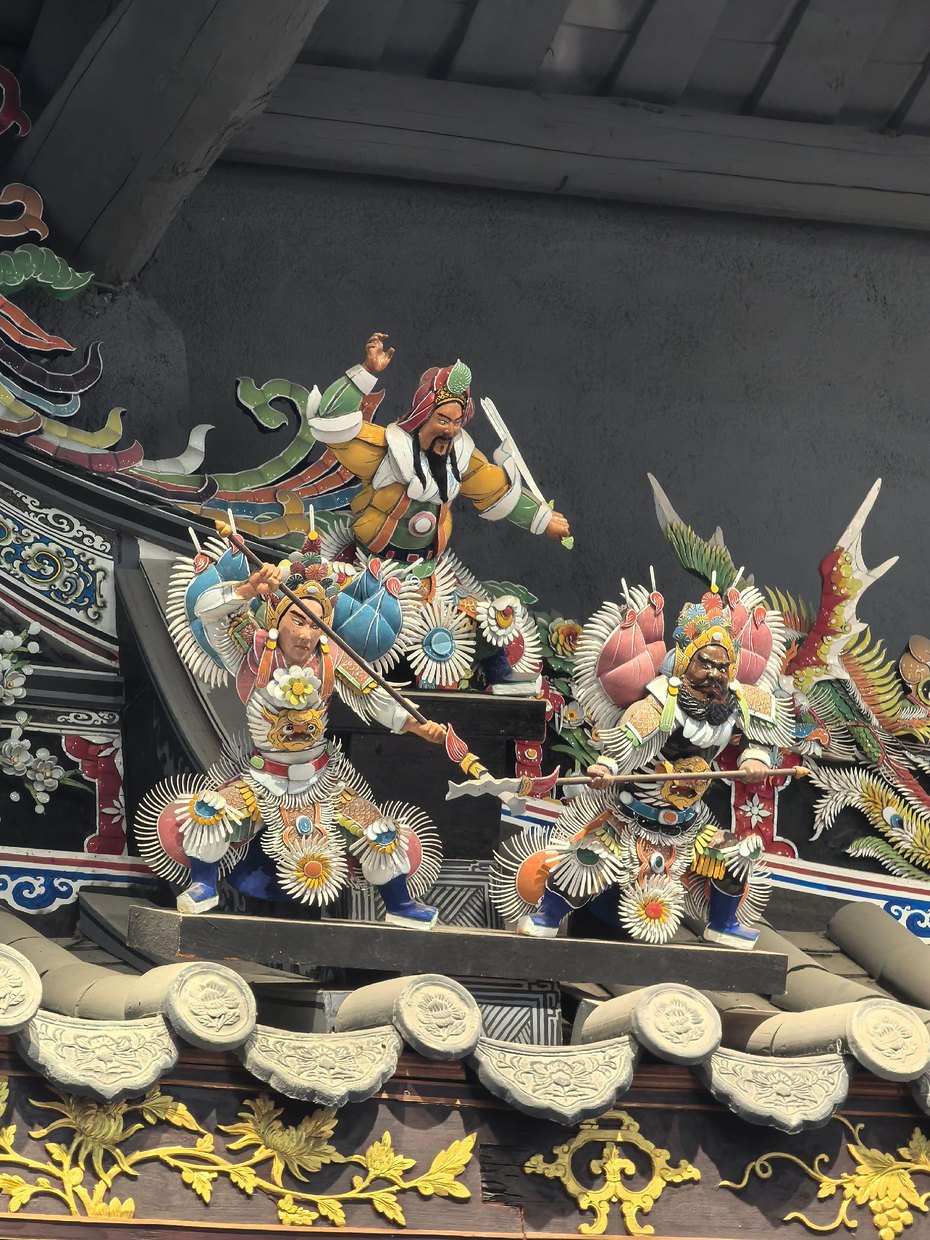
Porcelain mosaic and lime sculpture are two stages of one job: the plaster makes the core, the porcelain makes the surface. The local saying has it that there is an opera on the roof, meaning the play assembled from shards along the ridge.
Read next: Chaozhou porcelain mosaic: from core to surface.
Same group: Chaozhou embroidery, gilt woodcarving, ancestral hall.
Home › Glossary › Houses and settlement › Porcelain mosaic
Text on this site is CC BY-SA 4.0; copyright in images is reserved and commercial use requires a separate licence.
Last revised: 3 November 2026