Jin qi mu diao, gilt woodcarving
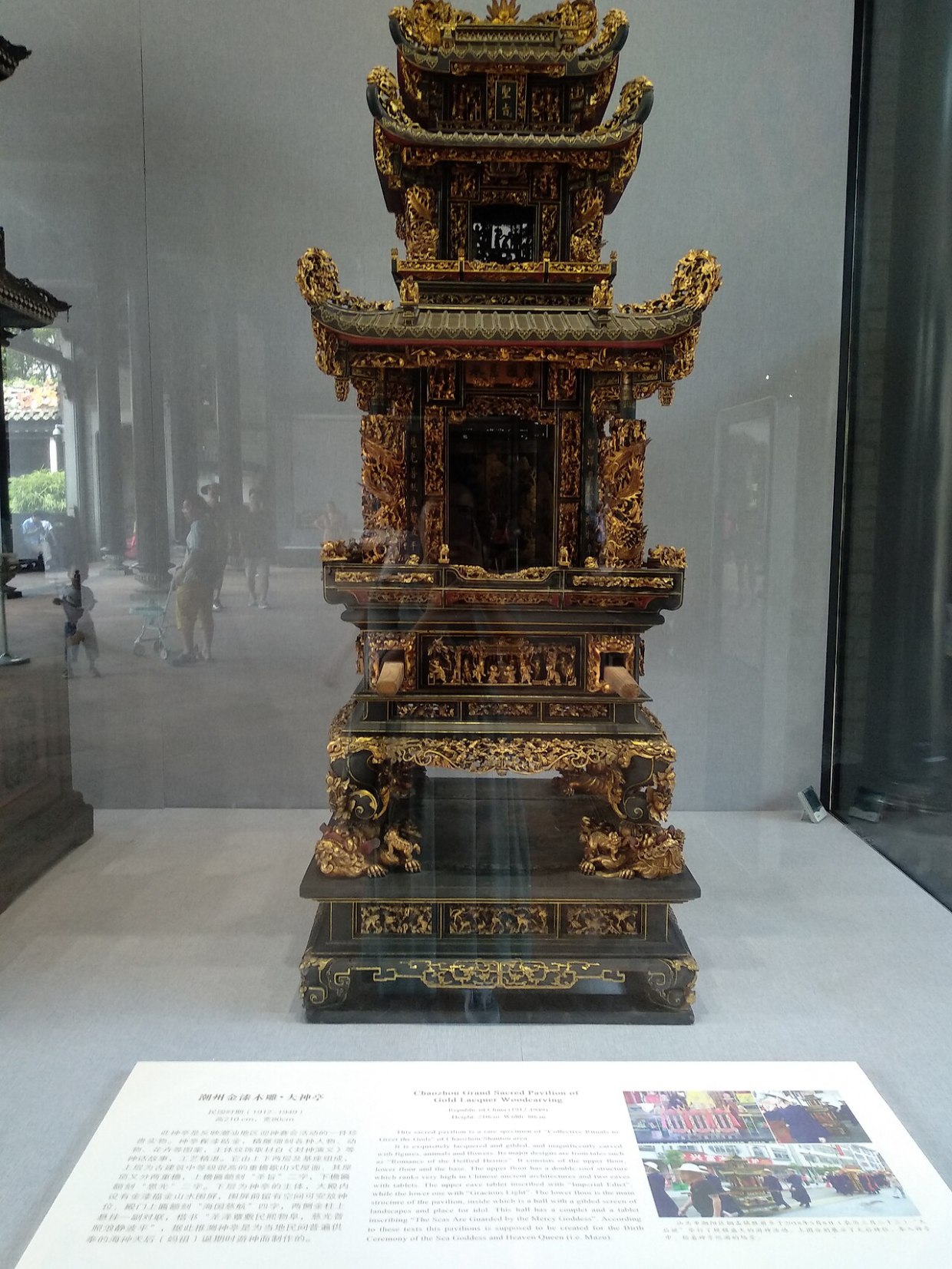
Carved, then lacquered and gilded: gold over the whole surface, used on hall beams, the panels of a god’s palanquin and the lids of offering boxes.
Pronunciation jīn qī mù diāo|Craft and performance|One entry in the Chaoshan glossary
What it means
Chaozhou woodcarving is also called gilt woodcarving. The carving comes first, then lacquer, then gold, and the finished piece is gold all over: the gold is not the material but the last stage of the work.
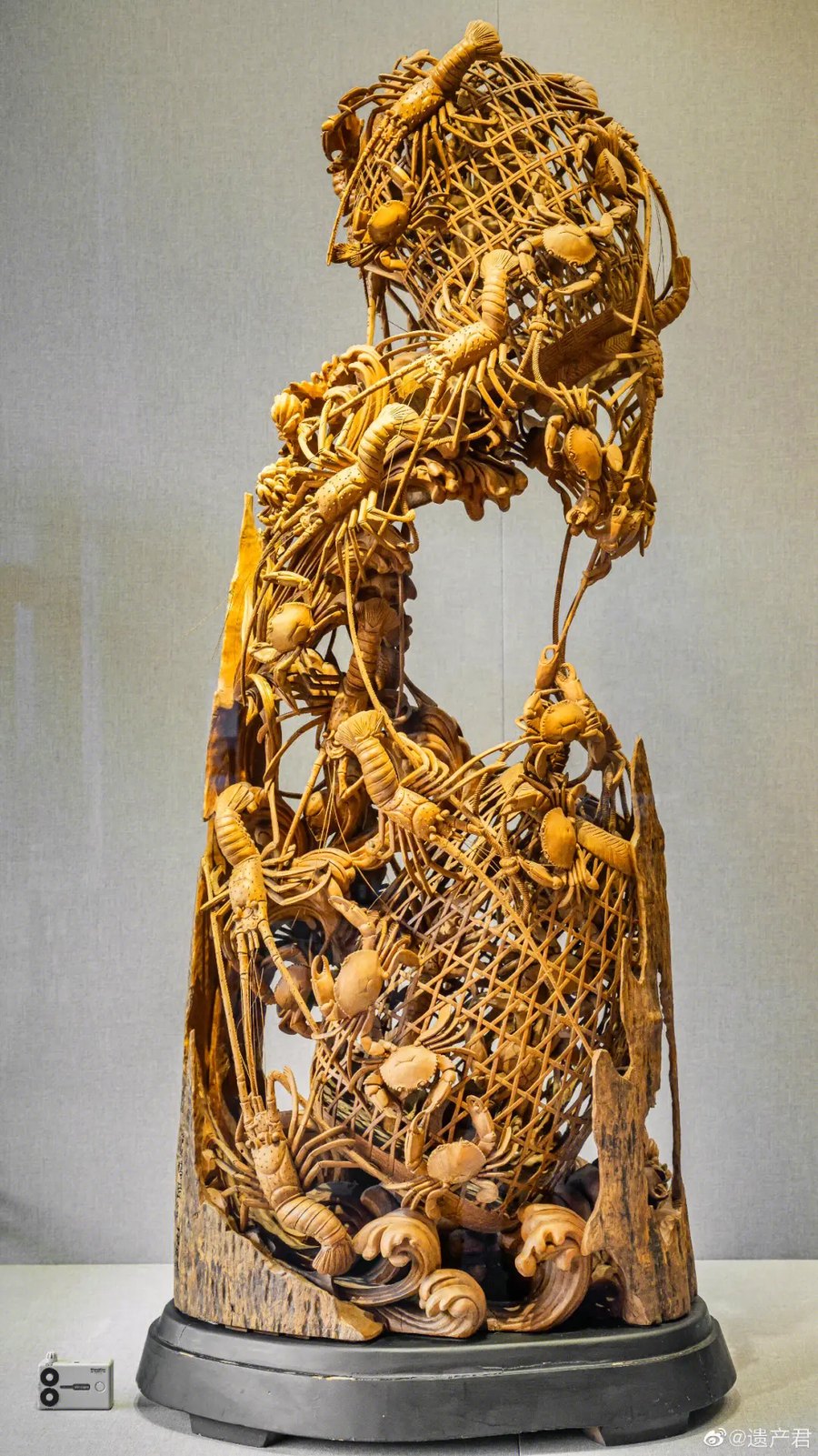
The cutting is best read through the tools: dozens of chisels, knives and hammers with edges of different widths, and the depth of a pierced carving is produced by changing tools rather than by pressing harder. The order is to block out the timber, then cut away the waste, then finish the surface.
Where it is used
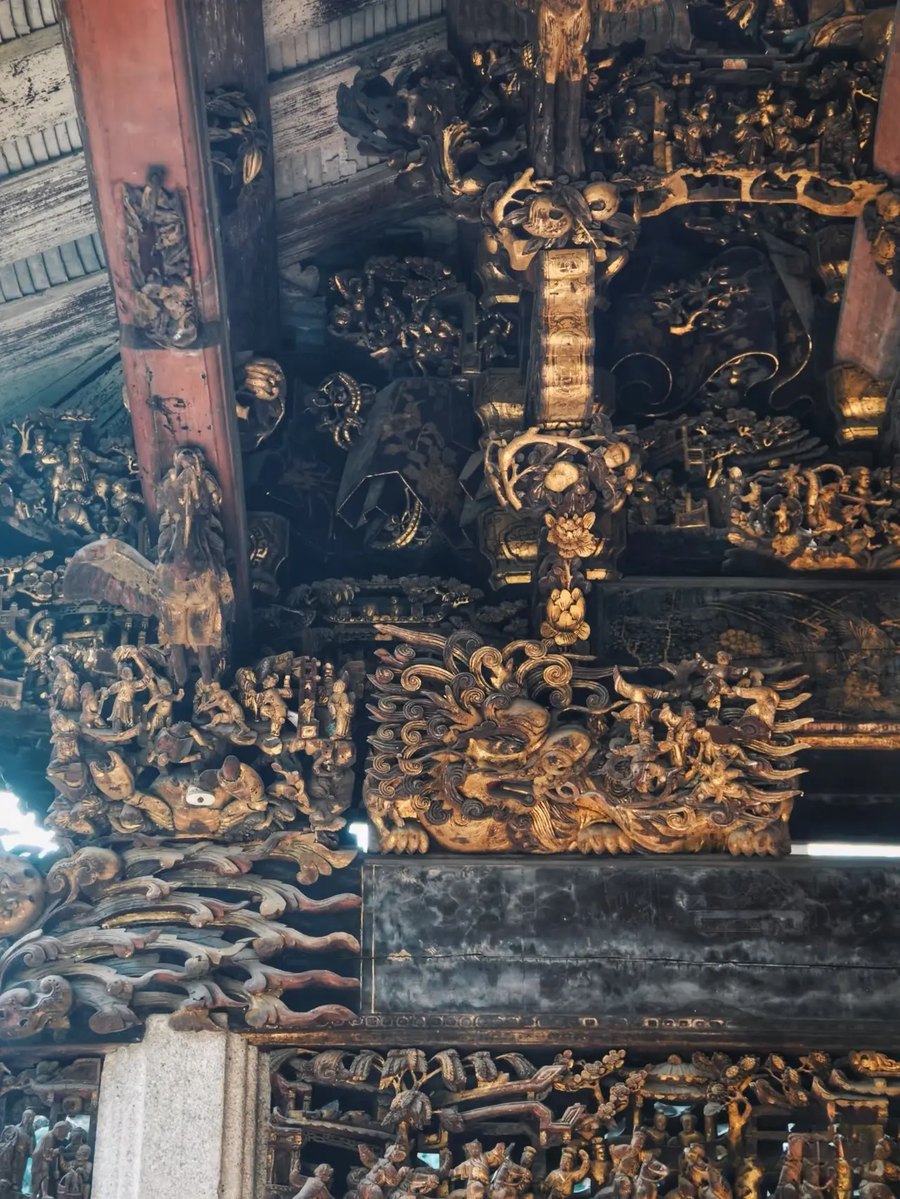
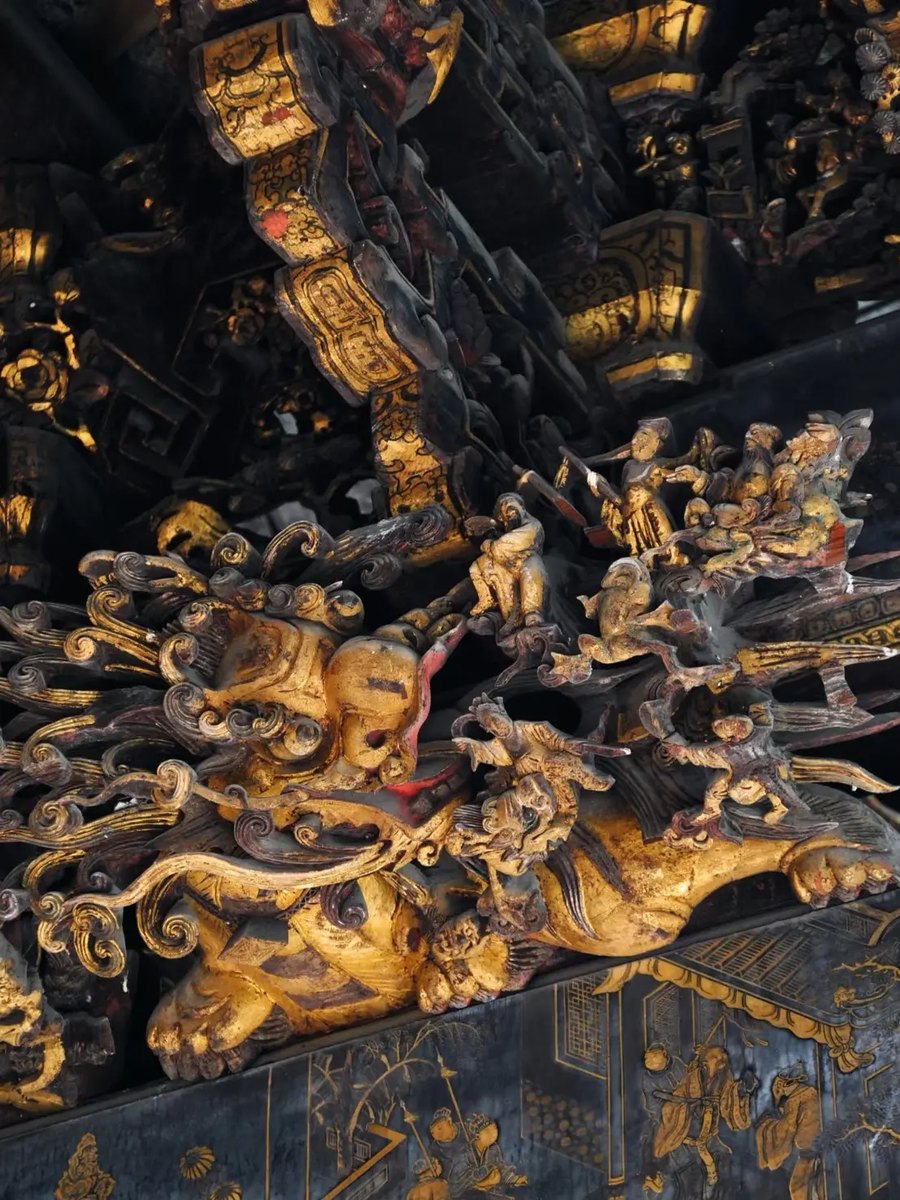
The beams of an ancestral hall, the panels of a god’s palanquin, the lid of an offering box, the back of a door plaque. Anywhere a blade can reach there is work, and most people only look at the front — the back is carved too.
Words easily confused
Gilt woodcarving is another name for Chaozhou woodcarving, two faces of one object: the carving is the work, the gold the finish. It is not the same line as porcelain mosaic — one is worked in wood, the other on a roof ridge.
Read next: Chaozhou woodcarving: piercing and gilding.
Same group: porcelain mosaic, Chao embroidery, ancestral hall.
Home › Glossary › Craft and performance › Gilt woodcarving
Text on this site is CC BY-SA 4.0; copyright in images is reserved and commercial use requires a separate licence.
Last revised: 3 November 2026