Lao ye sheng, the god’s birthday
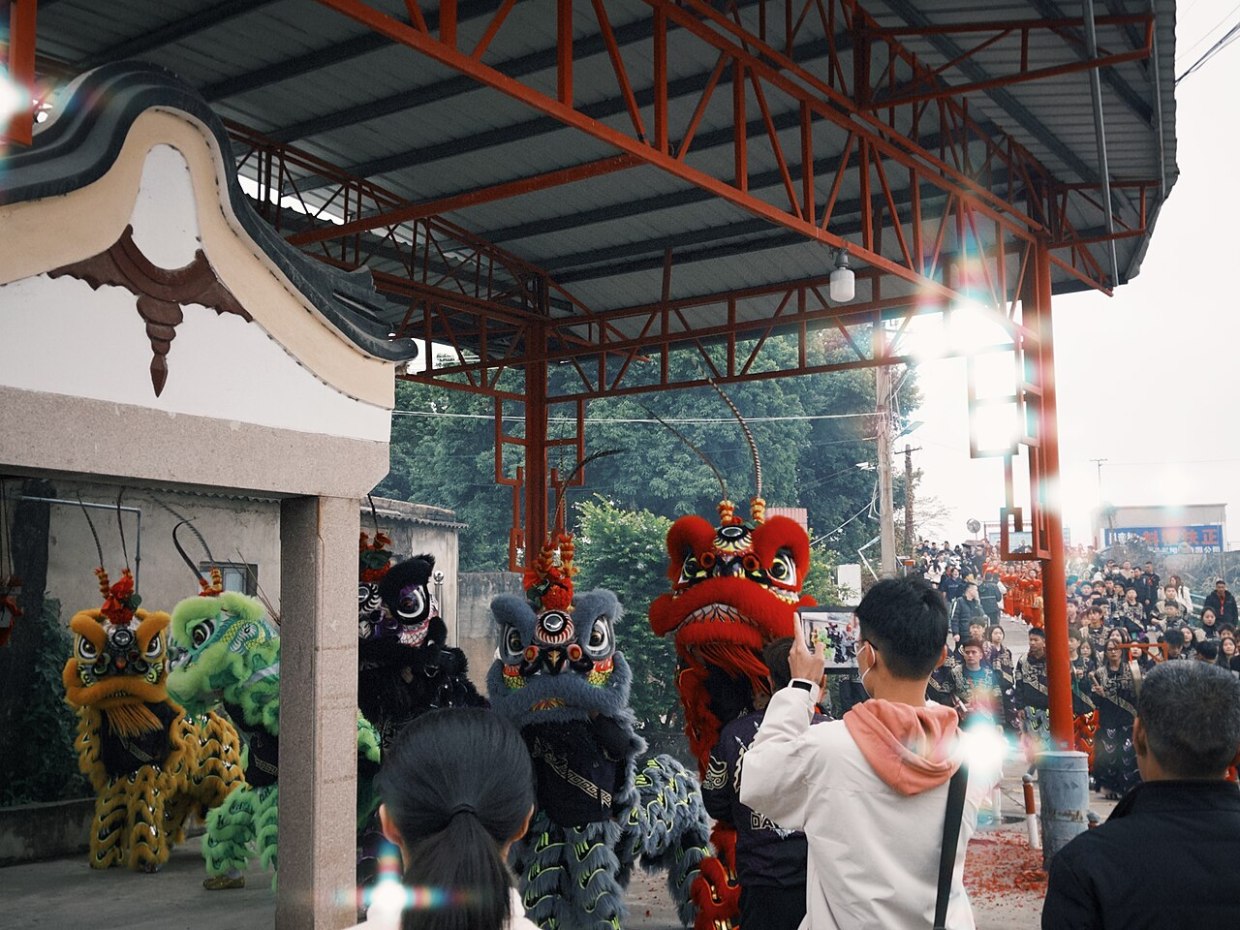
A deity’s birthday. Each village takes its date from the god enshrined in its hall, and that day is the loudest of its year.
Pronunciation lǎo yé shēng|Belief and processions|One entry in the Chaoshan glossary
What it means
“Sheng” is birthday. A hall may hold several deities, each with a birthday, and the birthday of the principal one becomes the village’s day. On the day there are offerings, opera and guests, and lineage members working away come home.
The birthday and the procession often sit close together but do not coincide: the birthday honours the god, the circuit marks the boundary. Some villages do both on one day, some split them over two.
When you see it
The dates are scattered through the year, thickest in the first month. Opera given in thanks is mostly at the birthdays and in that month; the stage goes up before the hall or on the open ground, and the audience goes home in the small hours.
Words easily confused
Lao ye sheng is a god’s birthday, zuo shengri is a person’s minor birthday, zuo shou is the round-numbered birthday kept from fifty onwards. All three carry the words for birth or long life, but they belong to different people and the tables are set on a different scale.
Custom in Chaoshan villages; this page describes only, and neither endorses superstition nor prescribes behaviour.
Read next: The procession calendar.
Same group: lao ye, ying lao ye, keeping a birthday.
Home › Glossary › Belief and processions › Lao ye sheng
Text on this site is CC BY-SA 4.0; copyright in images is reserved and commercial use requires a separate licence.
Last revised: 3 November 2026