Sheng yan: raw seafood steeped in sauce
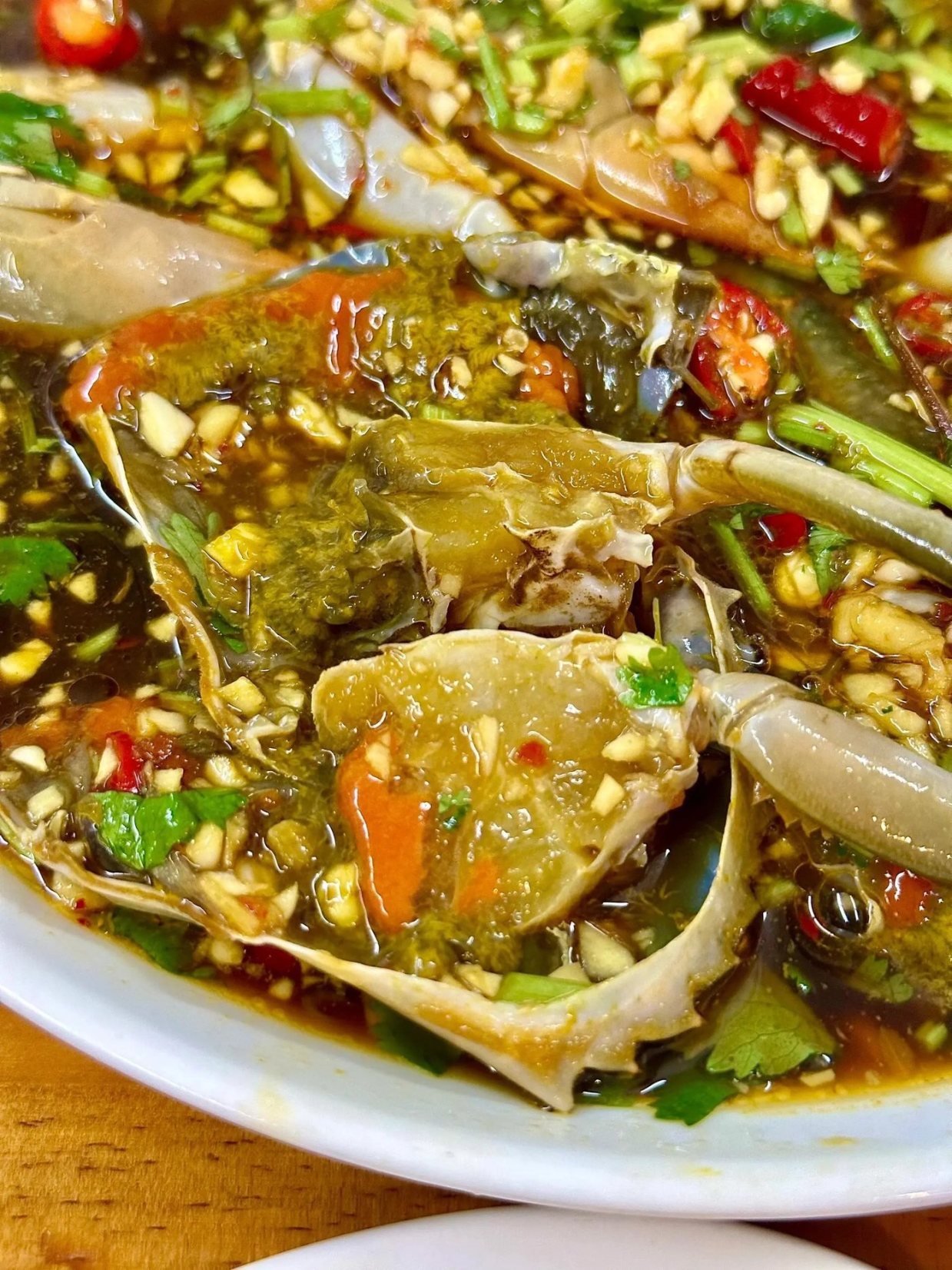
Raw prawns, crab and shellfish left to steep in a dressing of soy sauce, garlic, chilli and coriander, chilled for a few hours, then eaten. Chaoshan people call it “poison” — meaning you get hooked on it, not that it is toxic.
1. How it is made
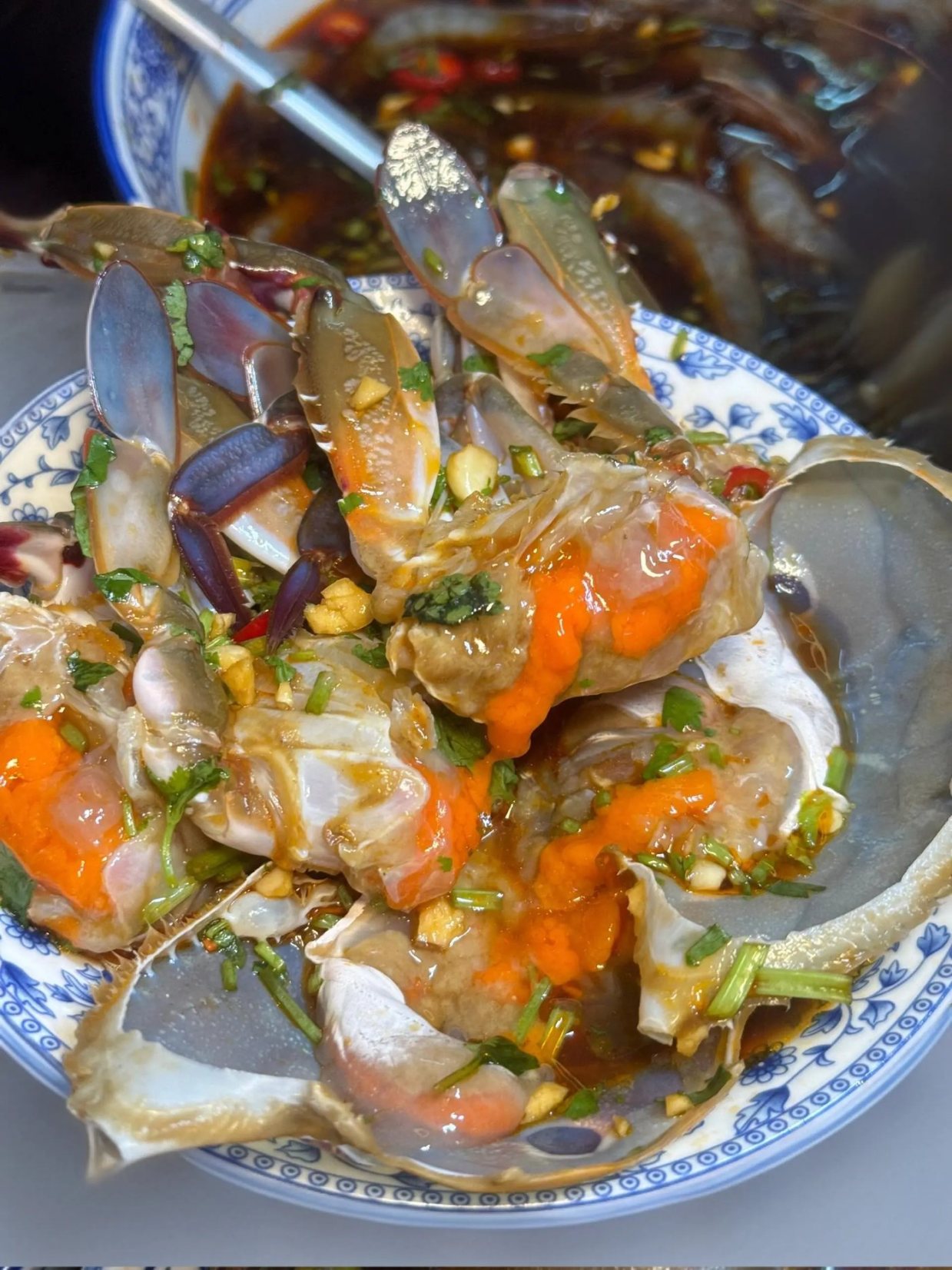
Three steps: wash, steep, chill. Prawns get their rostrum cut off and their backs slit to draw the intestine; crab is cut into joints, and the roe inside the shell is not rinsed away; shellfish are first left to spit out their sand. Whatever it is, it has to drain dry — carry raw water in with it and the dressing turns thin, and spoils easily besides.
The dressing is built on soy sauce, with minced garlic, chilli and coriander going in, a little vinegar, and in some shops a small measure of spirit. The proportions are each shop’s own: some run sweet, with sugar or preserved plum; some run sour, with the vinegar laid on. Shops in the city of Shantou, in Chaoyang and in Jieyang differ in saltiness too — one bowl of dressing, one flavour.
Made up, it goes into the fridge — chilled, not standing at room temperature. At Chaoshan summer heat a bowl left out starts to turn within two hours, and that has nothing to do with hygiene; it is the temperature itself.
2. Three grades: fully raw, half raw, fully cooked
The name sounds as if everything in it is raw, but by ingredient it runs in three grades.
Fully raw: prawn and crab. Washed and straight into the dressing, no further heat.
Half raw: blood cockles. Scalded in boiling water until the shells just open, then lifted out while the meat is still red and bloody, and steeped. Scalded a moment too long, the meat shrinks to a knot and there is no point left to it.
Fully cooked: small shellfish such as short-neck clams and thin-shell mussels. Boiled open first, then steeped. Strictly this is the cooked-steep line, the “dressed in sauce” family, but Chaoshan shops sell it under the sheng yan sign all the same.
3. How long to steep
Shellfish take next to no time, prawns a few hours, and a crab with roe a whole night. That is the rough division; each shop adjusts again to its own saltiness.
Too short and it does not take the flavour; too long and the flesh goes dead. A prawn left over-long has its water drawn out by the salt and eats mealy; a crab left over-long loses its roe into the dressing. Which is why different kinds are not put into one bowl — their times do not answer to each other.
4. What to use
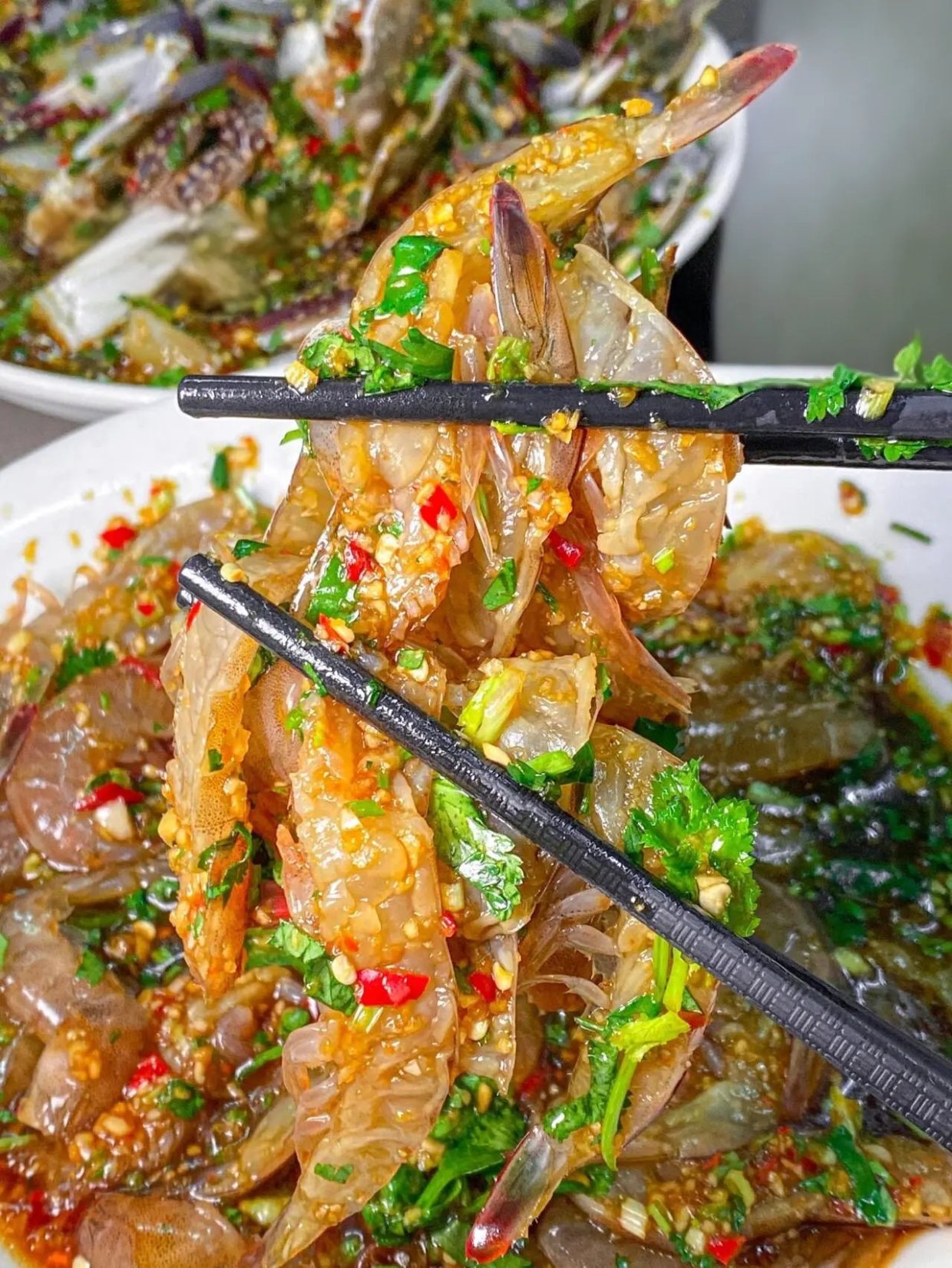
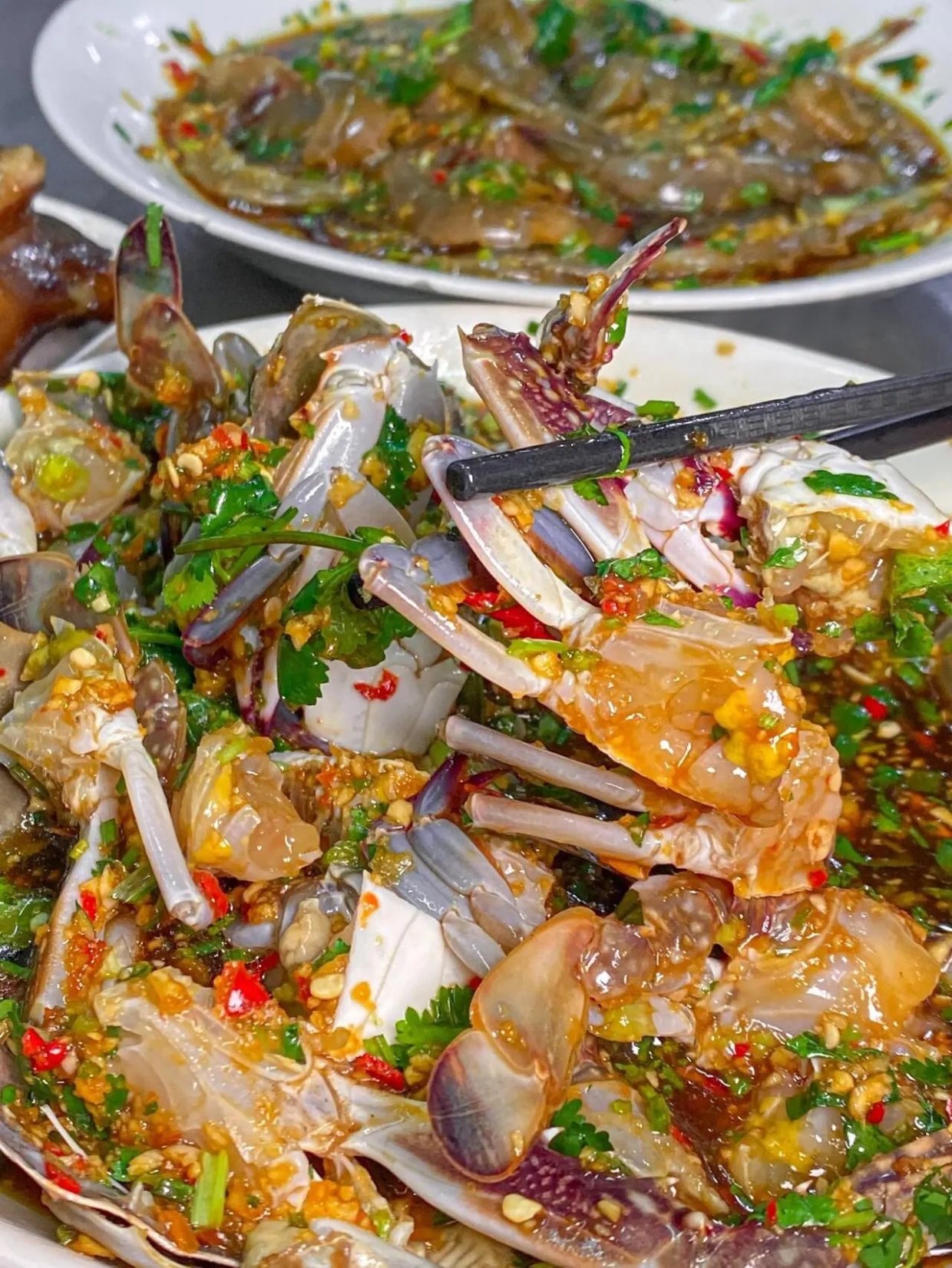
Crab means the three-spot crab, the roe crab, the flower crab; prawns mean sand prawns and mantis shrimp; shellfish mean blood cockles, raw oysters and short-neck clams. Two things to look at: that it is alive, and that it is in season. Seafood already dead goes into the dressing and the seasoning covers the off taste, and that is the place to be most careful.
5. What to watch
It is raw, and anyone with a weak stomach, anyone carrying a child, small children and the elderly are better keeping clear of it.
Four things show it has turned: the colour goes dull, it smells of fish, it is saltier than it should be, and the flesh slumps soft. Meet one of them and leave it alone.
Two sayings sound plausible and do not hold — that “the spirit kills the germs” and that “the vinegar kills the worms”. The little spirit and vinegar in the dressing fall far short of the quantity either would need.
Note on sources
The three-grade division, the make-up of the dressing and the steeping times come from local food writing and from what shops do; each differs.
The rules for raw aquatic products follow the national standard GB 10136—2015; the point that spirit and vinegar do not sterilise comes from a local newspaper quoting a teacher at Sun Yat-sen University.
The photographs come from Douyin @Ing.
Last revised: 4 November 2026