Chaoshan beef hotpot
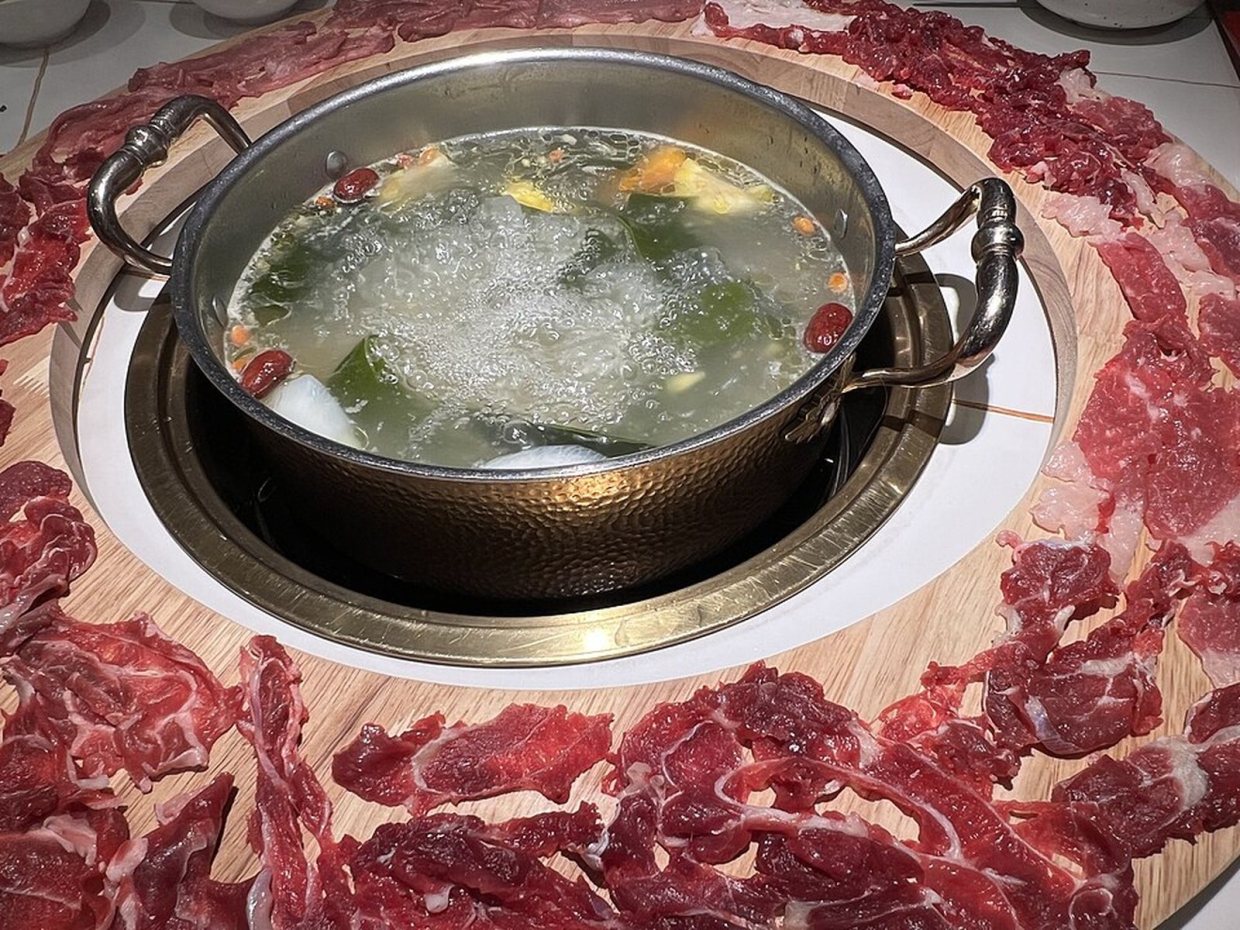
One beast is broken down into a dozen and more cuts in Chaoshan, and every cut has a name of its own. Clear broth, freshly killed beef, eaten the same day — that is the ground the whole way of eating stands on.
1. Why it is cut so fine
The pot holds water or beef-bone stock, a few pieces of radish and a few slices of southern ginger, and no sauce at all. The broth does not mask flavour, so the tongue is set straight against the meat, and the same beast has to be eaten cut apart: the tender meat soft, the spoon meat slip-smooth, the hanging dragon with a rim of fat, the chest tissue crisp only after a long spell in the pot. Put them all in at once and the cutting apart was for nothing.
The knife has its part in this too. Sliced thin against the grain, a slice around two millimetres, spread out and it lets the light through. Cut thick and it will not cook through; cut thin and it falls apart at the first dip. The meat has to be fresh enough to stand on end without slipping before it can be cut to that thickness.
And there is a precondition: killed that day, eaten that day. Out of Chaoshan this is hard to manage, and it is not a question of knife work — the meat has been frozen. Water in the cells freezes and splits them, the juices go on thawing, and no amount of cutting brings back that texture.
2. The cuts, mapped
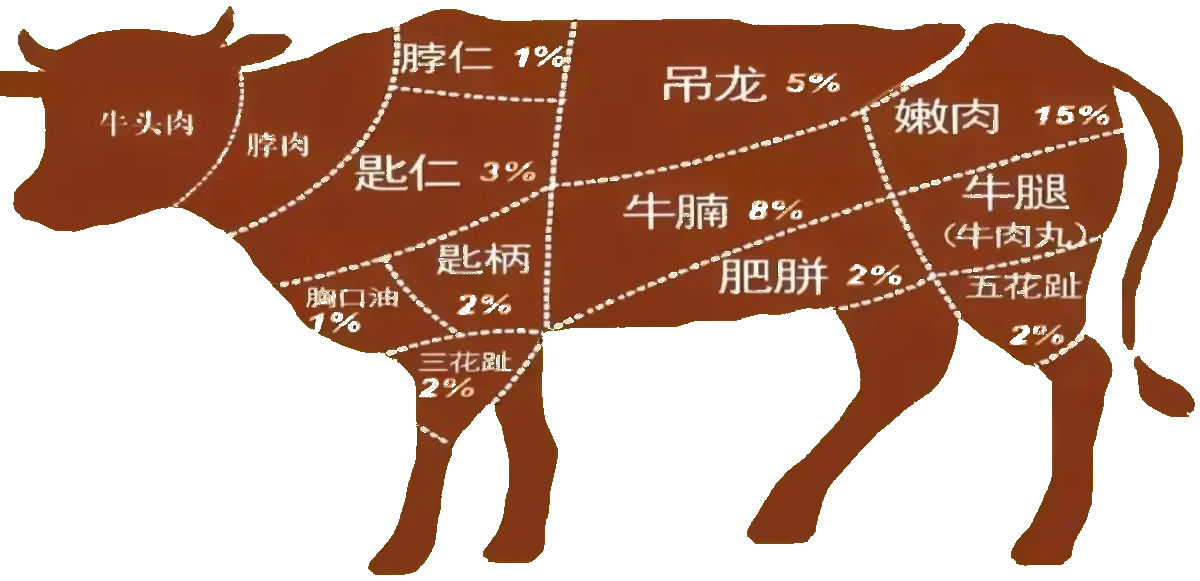
The same beast is not divided the same way in every shop: hanging dragon and its companion are two things in some, one in others; chest tissue is written chest oil in some; the three-flower and five-flower toes are called the three-flower and five-flower shank elsewhere. Get the names straight first, then talk about texture.
3. The twelve cuts
Front to back. Each is raw meat as it comes, so the grain and the fat can be seen.
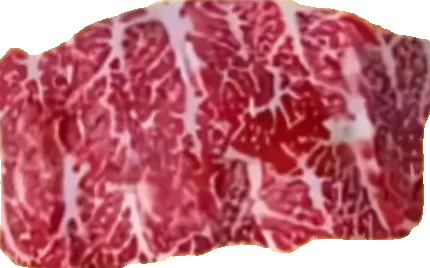
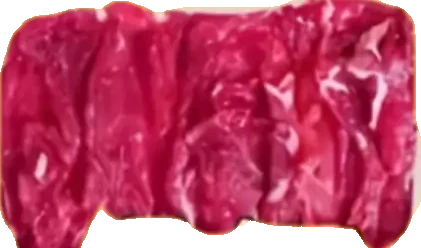
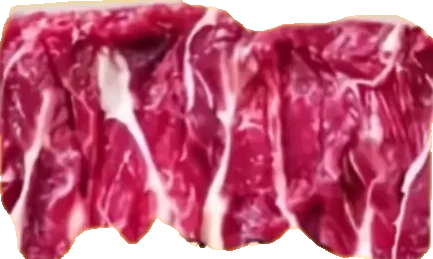
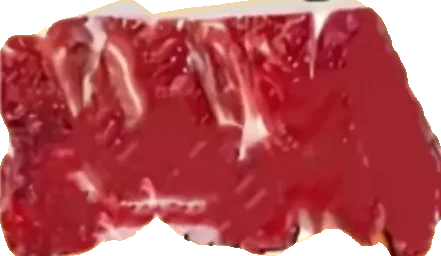
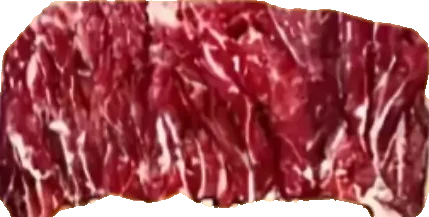
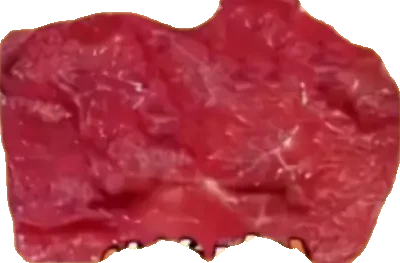
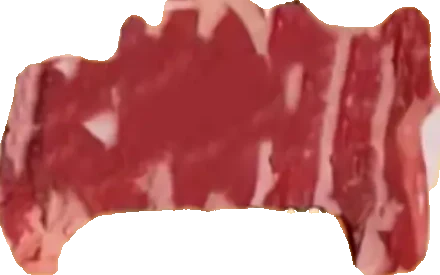
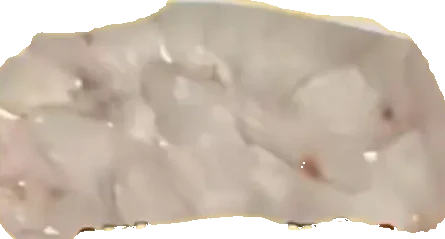
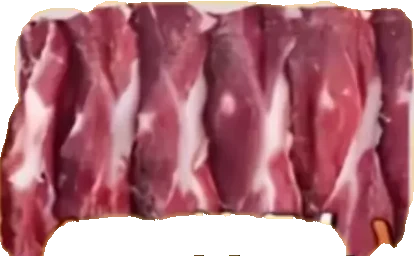
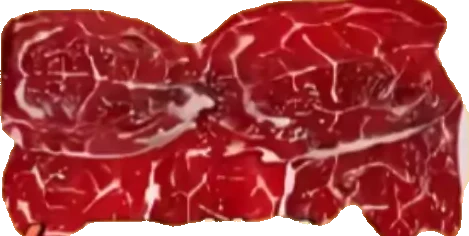
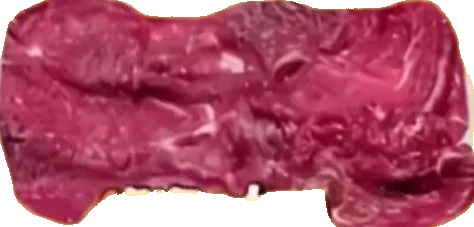
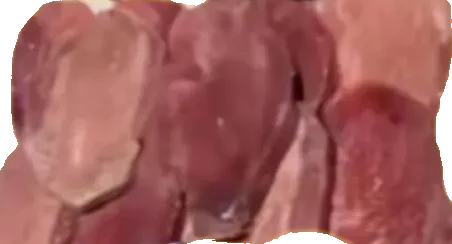
Photographs: Douyin @Chaoshan阿秋牛肉火锅店. Copyright remains with the photographer.
A few that get confused, taken one at a time.
Bo ren sits where neck and back meet, that raised piece of live meat; cut open, the fat breaks into snowflakes, which is why it is also called snowflake. There is not much of it on one beast, and go late and it is gone. Tender, and crisp at the same time — the cut Chaoshan rates highest.
Diao long and its companion are one above the other. Hanging dragon is the long strip along the spine, more lean than fat; the companion lies beneath it, oilier, with a rim of fat on the slice. The two look alike, and only the way the sinew runs along the side tells them apart.
Chi ren and chi bing are both on the shoulder blade. The spoon meat is on top, fine, with thin fat threaded through; the spoon handle below it, with a coarse band of sinew running across, eats springier. Some shops call the spoon meat “spoon skin” and the spoon handle “spoon bone”, and one shop may write it one way and then the other.
Three-flower and five-flower toe are both leg tendon. The three-flower is on the front leg, the sinew in three strands; the five-flower on the hind leg, denser, and a beast has only two of them, which makes it the dearest and the scarcest. Cut, they show translucent veins of sinew — the two easiest of the tendons to know by sight.
Xiong kou lao is not meat but the layer of soft tissue over the chest, snow-white raw, looking like fat, and turning crisp the longer it cooks. Outsiders often throw it out for suet.
4. From lean to fat
Tender meat, three-flower toe, five-flower toe, spoon handle, spoon meat, bo ren, hanging dragon, fat plate, chest tissue. That order is broadly the same in every Chaoshan hotpot shop; a few move bo ren forward for fear the fat coming after will bury its clean sweetness.
Lean first, fat after, for a practical reason: clear broth cannot take fat. Put the chest tissue or the fat plate in first and a layer of oil floats on the surface, and everything after tastes of oil. The other way round, eat the lean while the broth is still clear, finish on the fat, and the broth thickens just as the meal ends.
5. How to dip
The broth has to be at a hard boil, the strainer never out of the hand, one slice at a time, lifted the moment the colour turns. Shops commonly use “three lifts, three drops”: shake the meat in the broth three times, a second or two each, so that it heats evenly and does not stew.
The times are posted differently everywhere, and the same cut can differ twofold between one shop and the next. Some shops simply write the seconds on the plate: hanging dragon a few seconds, chest tissue several minutes. The thickness of the day’s slice and the fire under the pot are more to the point than the number.
6. Beef balls
Beef balls are another line altogether, not the same thing as cut fresh. Take hind-leg meat and pound it to a paste with a square iron rod, add salt and a little starch, work it until it comes together, then squeeze out balls and set them in warm water. Pounded, not minced, so that the muscle fibres keep their length — that is where the spring comes from.
By the usual account it began with the Hakka and flourished in Shantou: pounded balls were made in Hakka country long before, and Shantou turned them into a signature. Most of what is sold now is machine-beaten; for hand-beaten, look for the chopping block in the shop.
7. Set against the Western cuts
The two cut differently, so the comparison can only be rough: bo ren is near the front of chuck and ribeye, chi ren near ribeye, hanging dragon near sirloin, tender meat near the round of the hind leg. In recent years many shops print both names on the plate so that visitors can match them up.
Rough it stays, though. The Western butcher cuts large pieces by muscle group; Chaoshan cuts thin slices by texture, and the same muscle can fall in different places under the two systems.
Note on sources
The names of the cuts and where they lie come from the plates in the hotpot shops and from local food writing; the shops write them differently.
The dipping times are posted differently in every shop, and the same cut can differ twofold.
The pounding of beef balls follows Chua Lam’s account; “began with the Hakka, flourished in Shantou” is the common local saying.
The photographs come from Douyin @Chaoshan阿秋牛肉火锅店.
Home › Food › Chaoshan beef hotpot
Last revised: 4 November 2026