Zheng Dajin
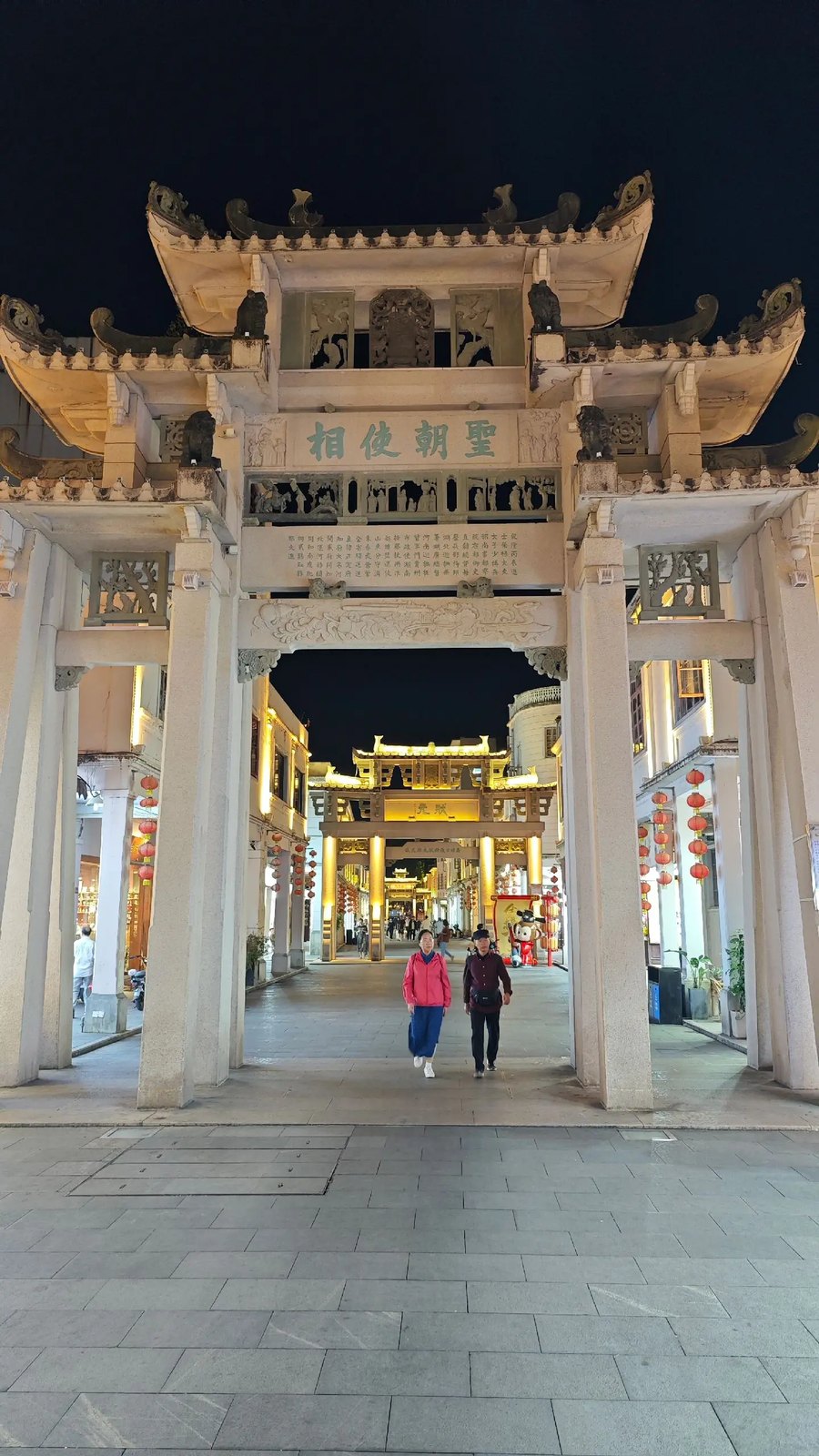
Zheng Dajin was Governor-General of Zhili under the Qianlong emperor, a Jieyang man. He did solid work on salt prices, grain levies and water, and after his death the emperor wrote his tomb inscription and granted him the posthumous name Qinke. The Shengchao Shixiang arch on Paifang Street in Chaozhou was put up for him.
Life生平
Zheng Dajin (1709–1782), courtesy name Yujie, styles Qianji and Tuigu, was from Shangang village in Meigang du, Jieyang — today Yujiao town, Jiedong district. He came of a family of letters and had a name locally as a prodigy. He passed the examination in 1736, the first year of the Qianlong reign, and rose from county magistrate to Governor-General of Zhili with the rank of Junior Tutor to the Heir Apparent.
What he did in office做過的事
Local gazetteers and the arch notes record that he reformed the pricing of salt and the methods of levying wax and grain, pressed for water works, gave relief in famine, attended to the condition of the people and dealt with organised crime. These are administrative results, and they have to be judged from memorials and gazetteers, not from story.
Death and honours哀榮
He died in office. Sacrifice and burial were granted, the tomb inscription was written by the emperor, a sacrificial text was bestowed by imperial order, and the posthumous name Qinke conferred. The Draft History of the Qing carries his biography.
The Shengchao Shixiang arch聖朝使相坊
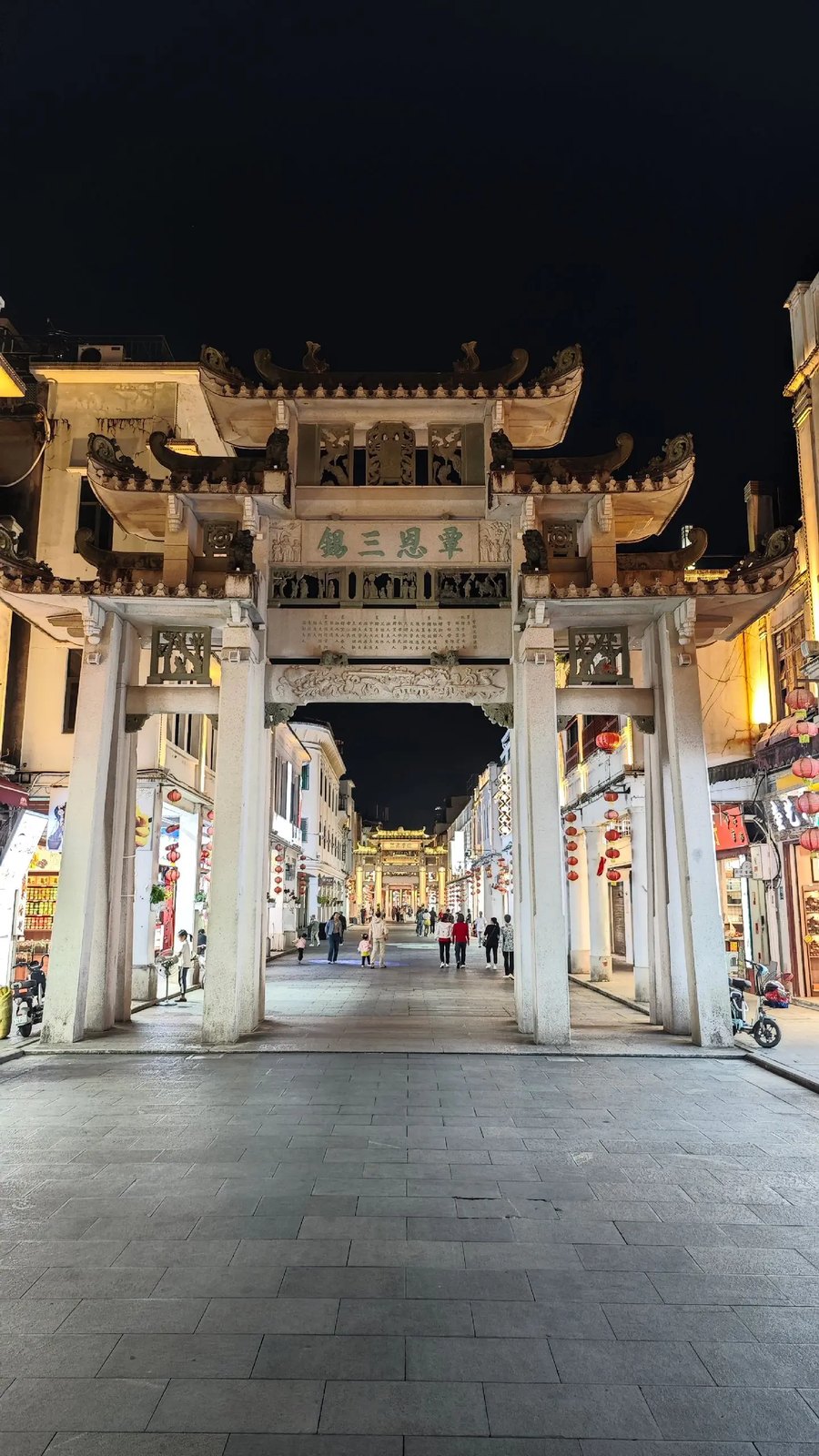
The arch stands on the north side of the mouth of Yingju lane on Paifang Street, Chaozhou. Its northern plaque reads ‘Three grants of imperial favour’, and it was erected for Zheng Dajin, metropolitan graduate, Junior Tutor to the Heir Apparent, Governor-General of Zhili. Shengchao, ‘the present dynasty’, is the honorific for one’s own time; shixiang is the Qing term for a governor-general who also holds a grand secretaryship; the three grants are the ranks conferred on his great-grandfather, grandfather and father. One arch, three plaques, his rank and the imperial favour all cut in stone.
The prodigy story is legend神童之說屬傳說
The prodigy label is widely repeated, but it comes almost entirely from later telling. What can be shown is the 1736 degree, the governor-generalship of Zhili and the posthumous name Qinke; those three are in the official record. Stories of a clever boy belong in a separate paragraph marked legend.
Residence and tomb府第與墓
The Zheng Dajin residence is in Shanmei village, Yujiao town, Jiedong, in two parts. The old house is the Ming ancestral home of the Zheng family and the place where he was born; the new one was built in the Qianlong period, three courtyards deep on the four-sided plan, with a three-bay main hall, a service lane east and west, ‘Residence of the Grand Master’ over the gate, and in the main hall a board reading ‘Auspicious vapour congeals on the Tianmu’, inscribed in 1770 by the Jieyang magistrate Xiao Yingzhi. Guardian lions stand before the gate with the flagpole bases that mark the rank of grand master for five generations, and portraits of Zheng and his wife by Qing painters are kept inside. It is a Guangdong provincial protected site and a patriotic education base for Jiedong district.
The tomb is at the foot of the hill behind Duonianpu village, Guangtai town, Puning, a large grave of a high Qing official. The face of the mound is inscribed with his full titles and with his wife of the first rank; before it stand pairs of stone horses, sheep, beasts, human figures, columns and a stone pavilion, set in two rows; further on are the stele carrying the sacrificial text bestowed by imperial order and the stele carrying the tomb text granted by the emperor, each borne on a stone turtle in a stone pavilion, the text in Chinese and Manchu.
The line he left behind is the best known thing about him: ‘the world has a Chicu ferry a thousand years old, but no Zheng Dajin a hundred years old.’ It comes of an old water dispute with the neighbouring village of Chicu. A man who had reached governor-general would not take his own village’s part, but told his neighbours to let the quarrel drop. The line has gone round Chaoshan for two hundred years and has done more work than any stele.
Sources來源
Notes on the arches of Paifang Street, Chaozhou, for the Shengchao Shixiang arch; Xuexi Qiangguo, ‘Guangdong: Chaozhou’s old paifang street’; local historical material.
Last revised: 5 November 2026
 粤公网安备44522102000407号