Home › Intangible heritage › Yingge dance › Puning Yingge
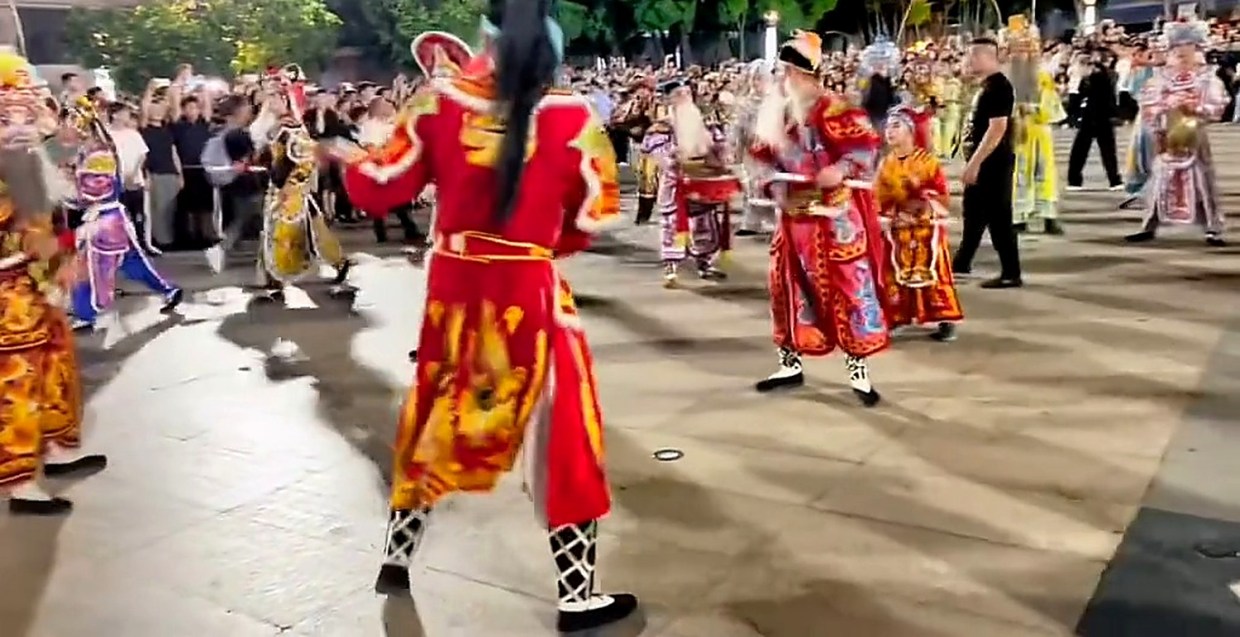
National ICH Ⅲ-8 · first batch, 2006
Puning Yingge
Puning in Jieyang: one route, one county. The line-up runs from 24 to 108, fast, medium and slow schools coexist, and the band carries a conch.
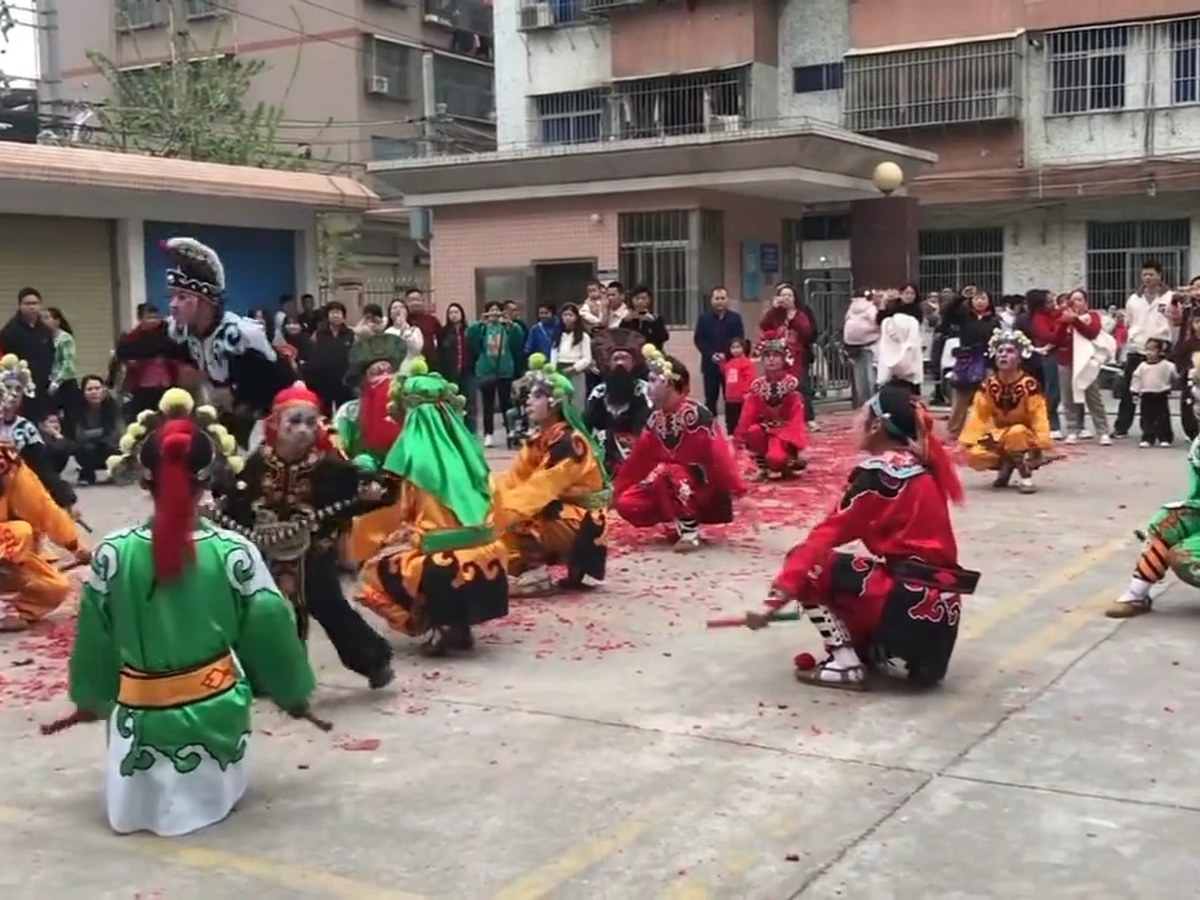
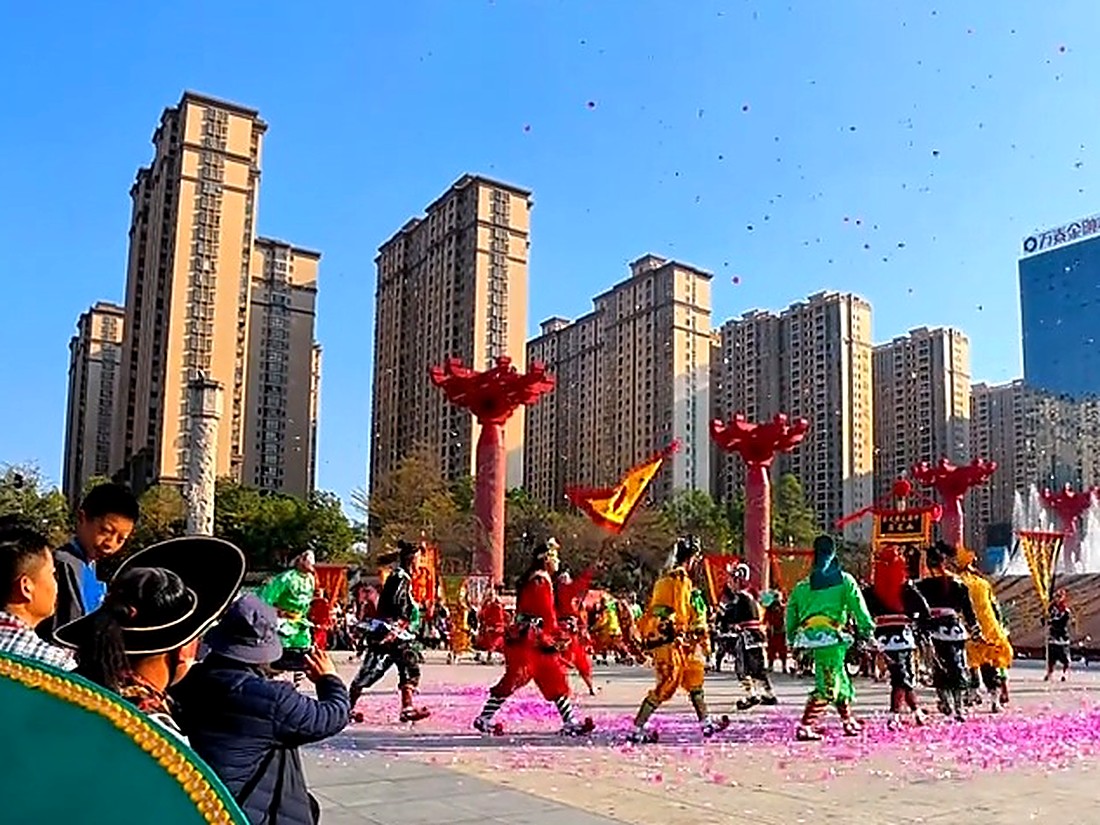 Opened out in the square, firecracker paper underfoot
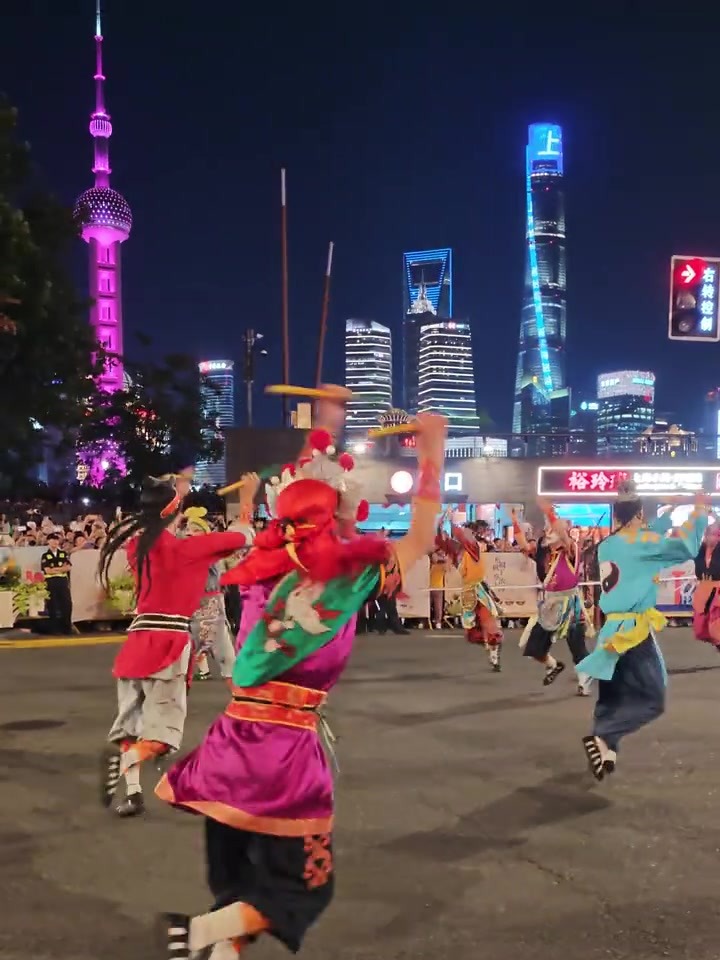
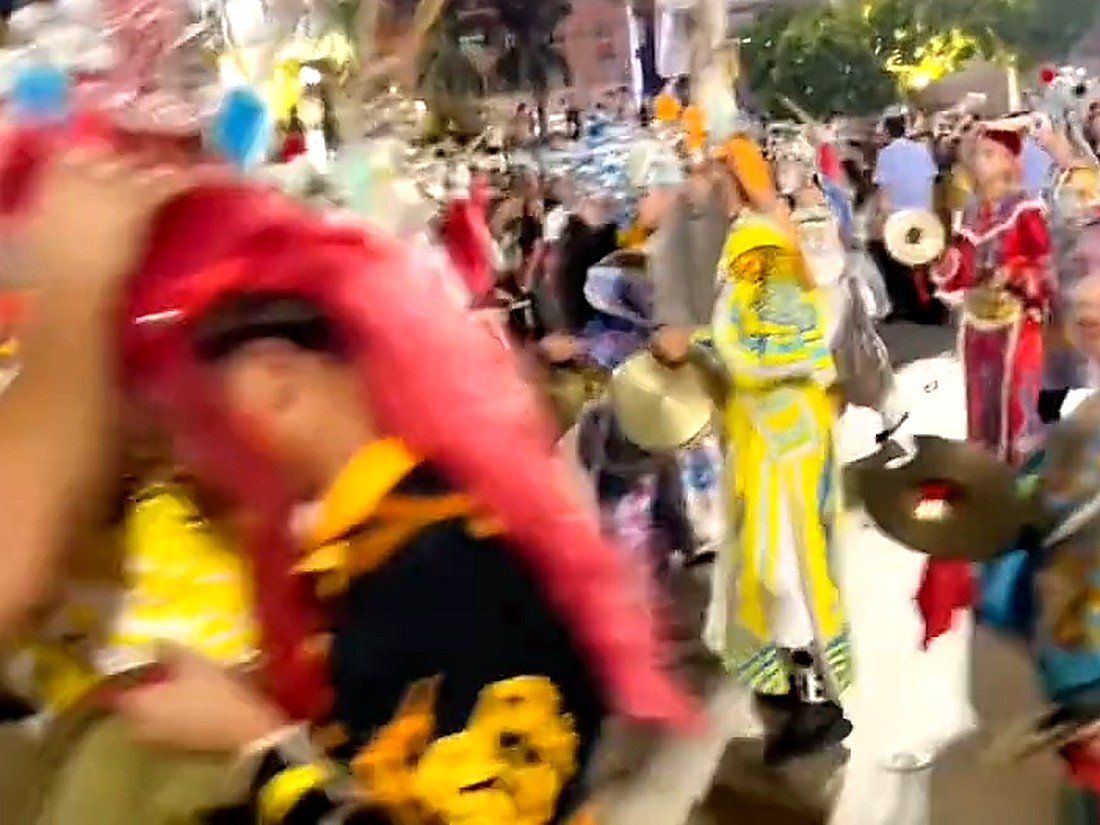 Opening at night in the square
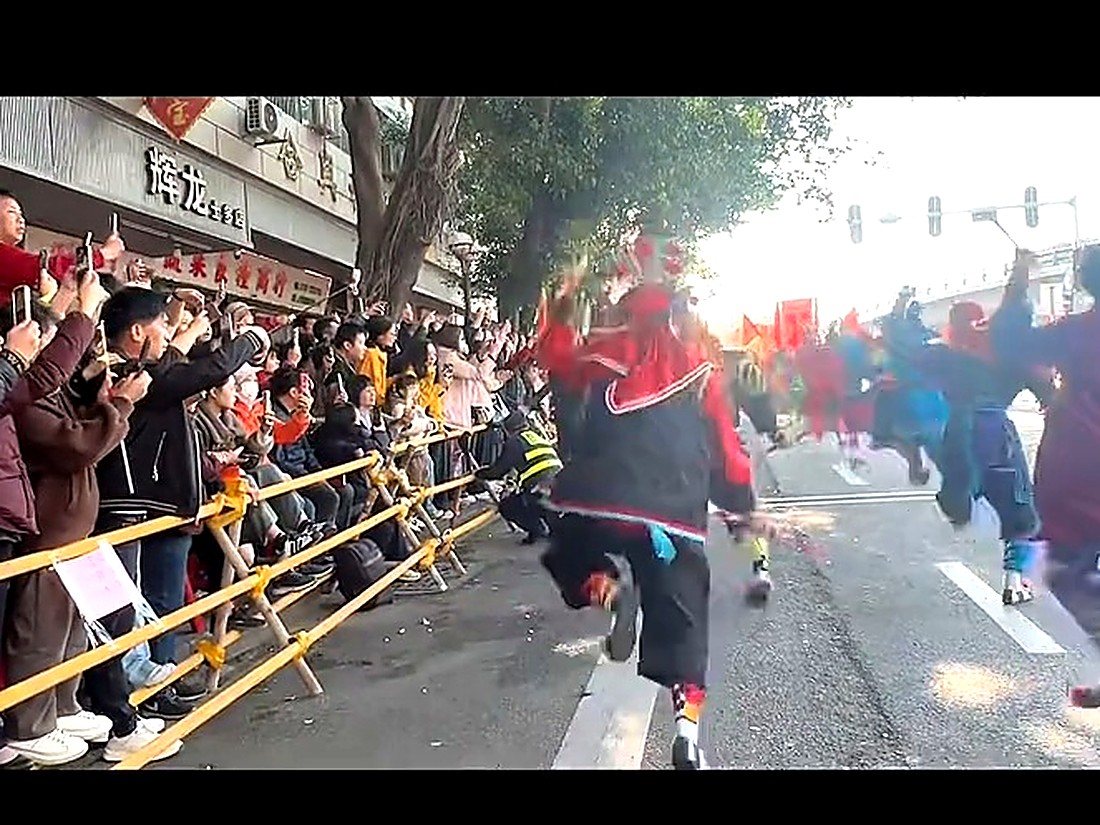 Pushing down the street, both sides lined
Puning writes Yingge down in numbers: how many to a team, how long and thick the stick, how the feet stand, how the figure moves.
Of the three routes, only this project page will set it out that way.
The numbers are ceilings, not what every team looks like.
Four tiers
24 and 36 are one tier, 72 another, and 108 is the ceiling. The three degrees of “at most” each carry their own weight and are copied, not adjusted. The 107 line-up comes from some teams’ own accounts and from reports; it is not a rule of the list.
Four figures, eight names
The names are only names: positions, group sizes and how often the figure changes are not in the source. And what bears the same name moves differently on a village lane and on a square.
Sticks, face, two grounds
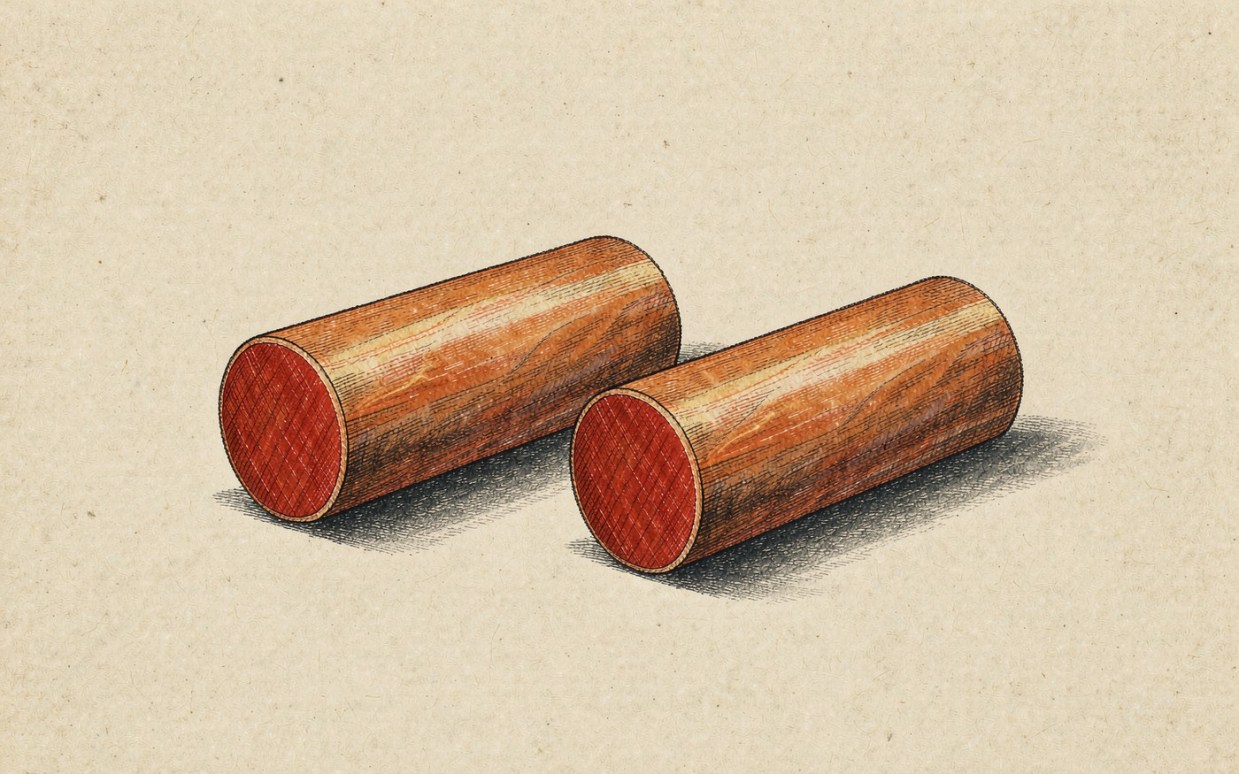
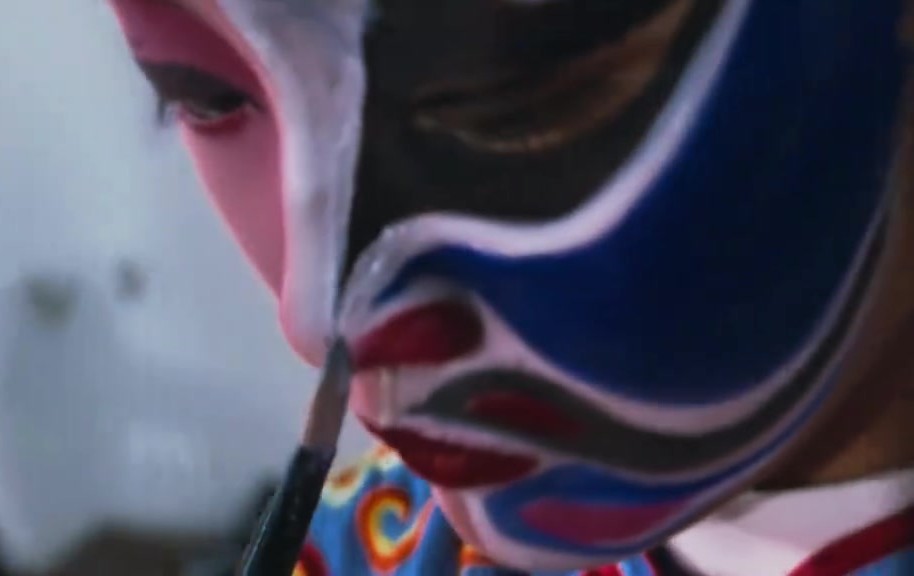
The conch marks this route: when the dance reaches its pitch the shouts and the conch rise together. The list pages of the other two routes carry no such sentence.
Three teams in the street
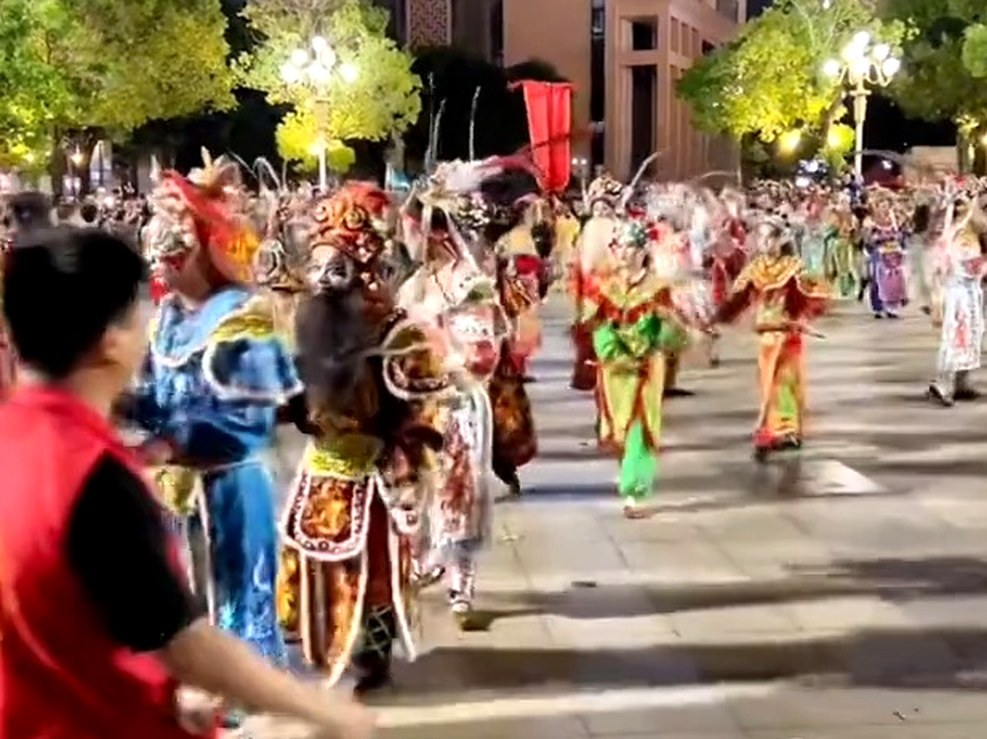
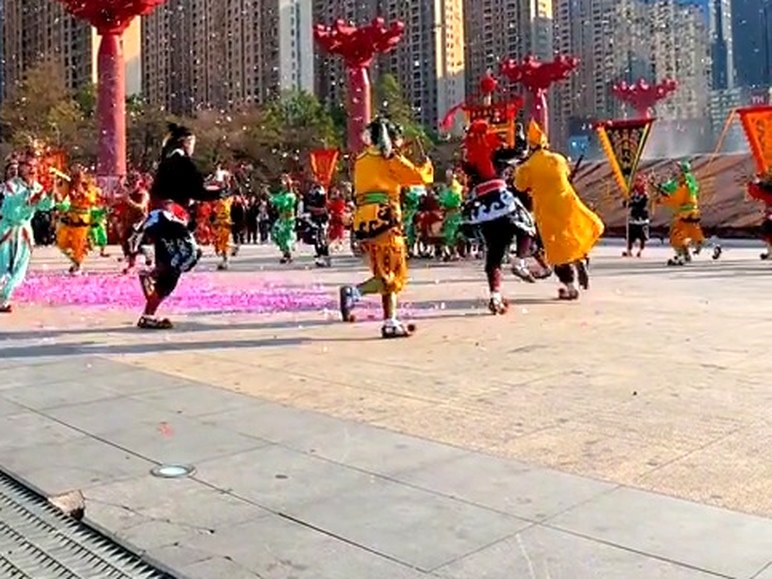
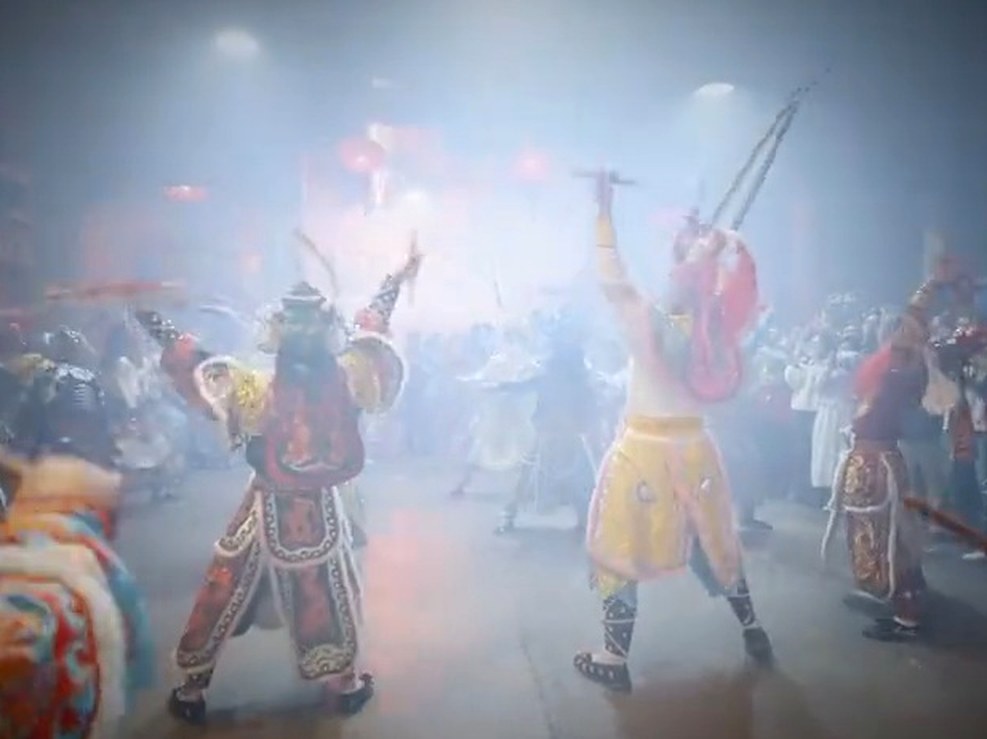
Three different grounds: one in the street, one on a square, one before an ancestral hall.
Twelve notes
Yingge (Puning Yingge), Ⅲ-8, first batch 2006, nominated by Jieyang.
Puning Cultural Centre. The list as revised on 2019-12-05.
1996: “home of Guangdong folk and ethnic art (Yingge dance)”.
2008: “home of Chinese folk art (Yingge dance)”. Three characters longer than Chaoyang’s 1996 title: it says Yingge dance, not just Yingge.
A pair of round short sticks each, 10 cm across and 20 cm long.
Feet in the riding crouch, knee lifted, springing sideways.
Besides gongs and drums the band has a conch, and at the dance’s pitch the shouts and the conch rise together. The other two list pages have no such sentence.
Washing the street, New Year calls, laying the year, back strike, passing the hip, cradling the stick and hooking the foot. Elsewhere “laying the fields”; both spellings stand.
Qiaozhu Xinliao performs in a ring under a red awning before the temple.
Qiaozhu Puzha performs at night on the square before the temple, and two columns advance.
Provincial foreign affairs office, July 2026 visit note: 103 teams.
City culture and tourism bureau, January 2024: the same figure, said to be nearly 30 more than in 2022. Neither is a live count.
Three representative teams
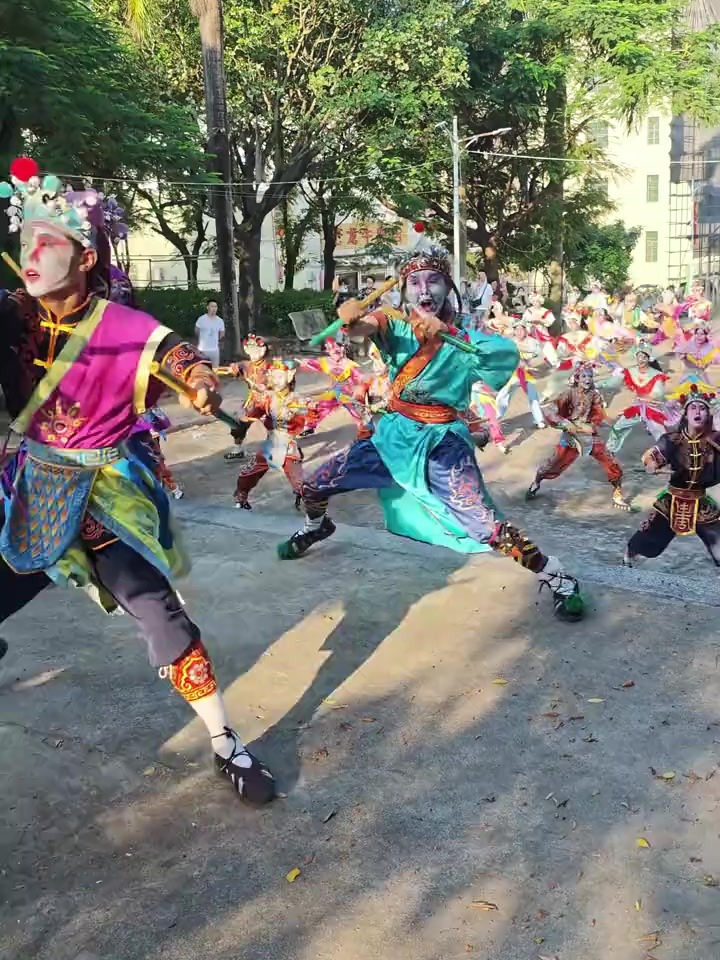
FumeiFumei in Xiajiashan: four practices a week, both the men’s and the women’s team turn out.
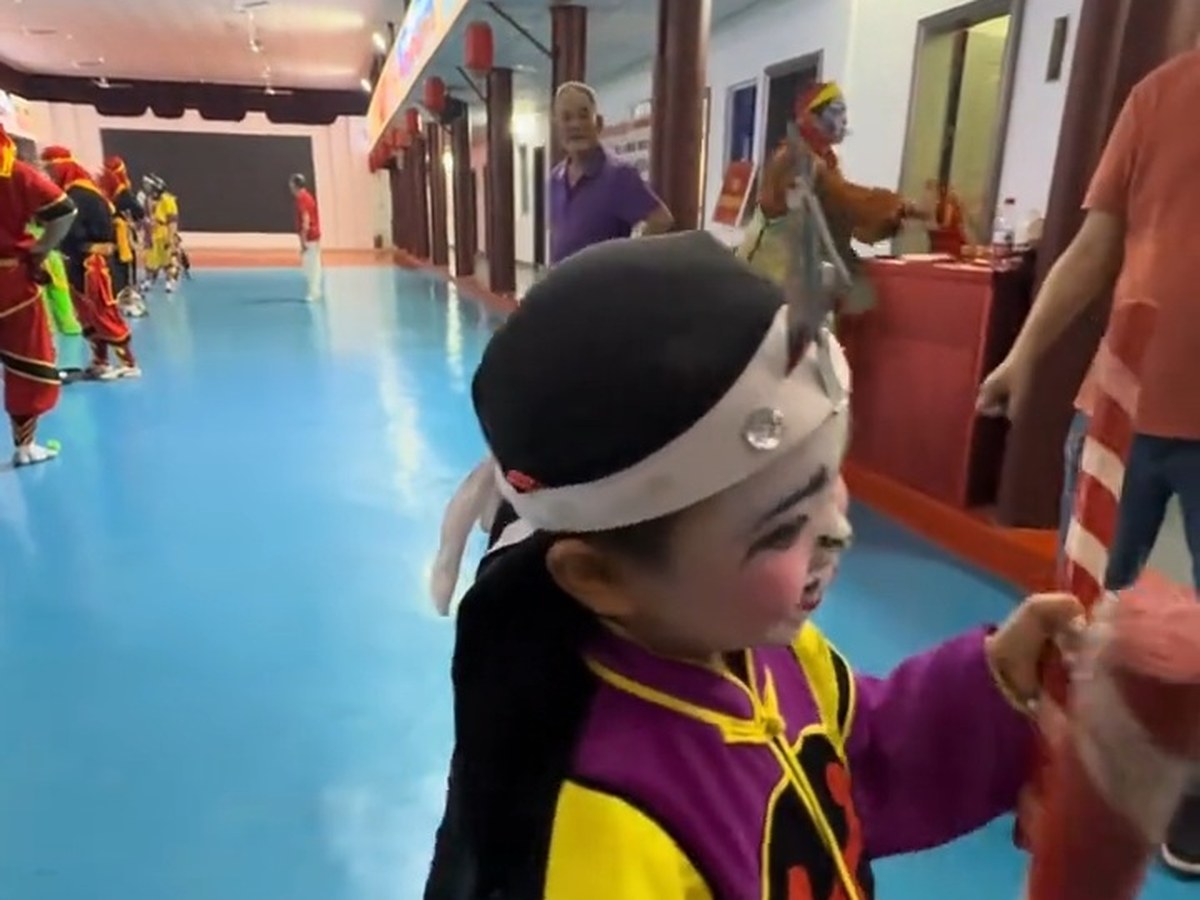
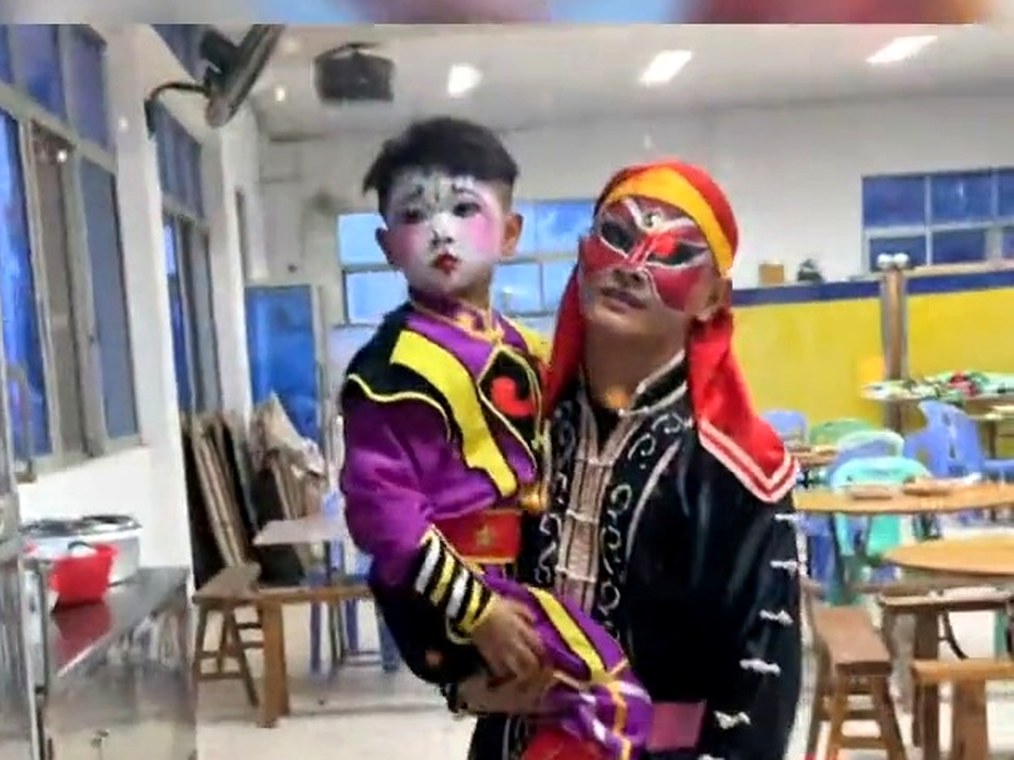
NanshanNanshan, west of Liusha, the representative of the fast route. The picture shows a junior member having his face painted.
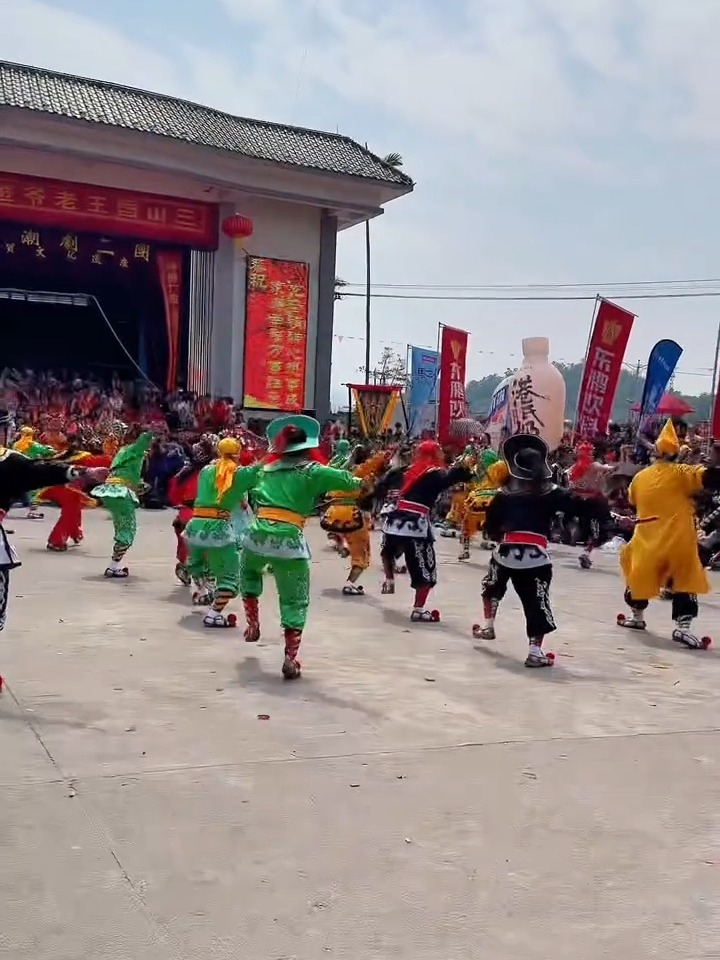
NiigouNiigou in Liaoyuan, the medium tempo. The floor before the ancestral hall is their ground.
The line-up and method of each are set out in Fumei, Nanshan, Niigou; for every team see Teams.
Three things not yet settled
How the three schools map onto the tempo categories. Whether the “three schools, fast, medium and slow” divide by team or by method, the introduction does not say.
“Laying the year” and “laying the fields”. Both spellings occur in one article and officially no one says whether they are the same routine.
The list of 103. There is a number; there are no names.
Look elsewhere
Sources
| Sources | Type |
|---|---|
| Yingge (Puning Yingge)China Intangible Cultural Heritage Network / Digital Museum of China ICHNo publication date on the item page; announced in the first batch, 2006 | National list entry |
| Publication of the revised protection units for national ICH representative itemsDepartment of Intangible Cultural Heritage, Ministry of Culture and Tourism2019-12-05 | Ministry release |
| “Home of Chinese folk art”Jieyang municipal government site, from Jieyang Dailyposted 2011-06-21 | Government website release |
| Visit noteForeign Affairs Office of the Guangdong Provincial People’s Government2026-07-24 | Government website release |
| Yingge images (Wikimedia Commons)Wikimedia Commons; photographers credited in captionsRetrieved 2026-10 | Openly licensed images |
Home › Intangible heritage › Yingge dance › Puning Yingge
Last revised: 25 October 2026