Tie zhi mu ou, the iron-rod puppet
A puppet worked by three iron rods, descended from shadow play, on a stage no bigger than a square banquet table.
Pronunciation tiě zhī mù ǒu|Crafts and performance|One entry in the Chaoshan glossary
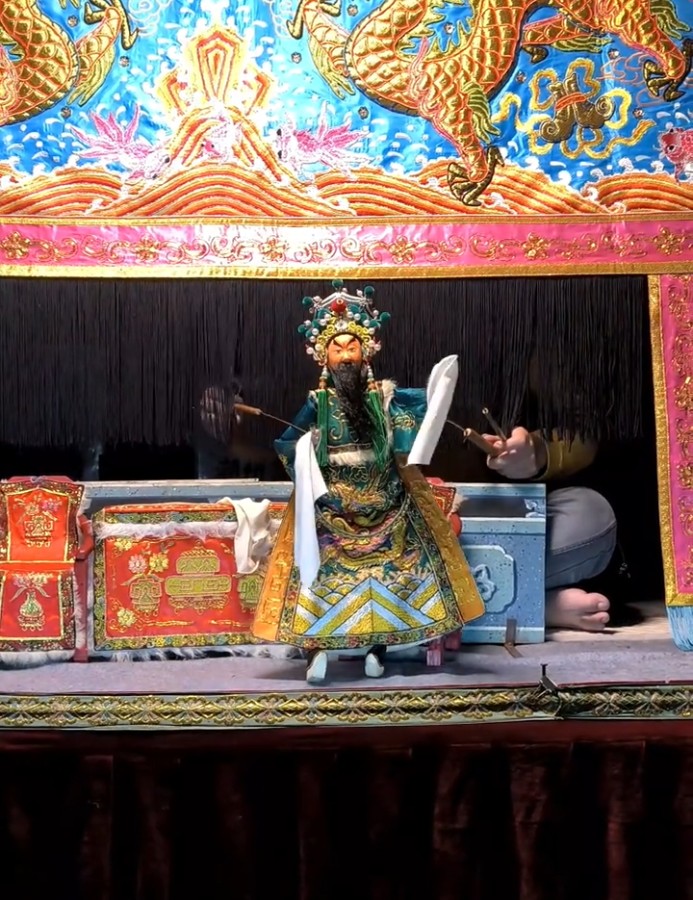
What it means
Three iron rods work it: one for the head and body, two for the hands. The performer sits cross-legged behind the screen while the puppet appears in the little window at the front.
It comes from shadow play — first a paper shadow, then a puppet, the shadow turned into a body along the way. That is why the opening is small, only as wide as a square banquet table, and what is watched is fine work at close range.
When you see it
At temple fairs, god’s birthdays and merit-making in the ancestral hall. In May 2006 it was entered on the first national list of intangible heritage as puppet theatre, Chaozhou iron-rod puppetry, item Ⅳ-92, with Chaozhou as the applying area.
Words easily confused
In rod puppetry the rods are outside the figure; in marionette play the strings are above it; in glove puppetry the hand is inside it — three ways of working, three kinds of stage.
Read next: Iron-rod puppets: three rods and one table.
Same group: Chaozhou opera, Chaozhou music, the song books.
Home › Glossary › Crafts and performance › The iron-rod puppet
Text on this site is CC BY-SA 4.0; copyright in images is reserved and commercial use requires a separate licence.
Last revised: 4 November 2026