Da wu ni su, Dawu clay figures
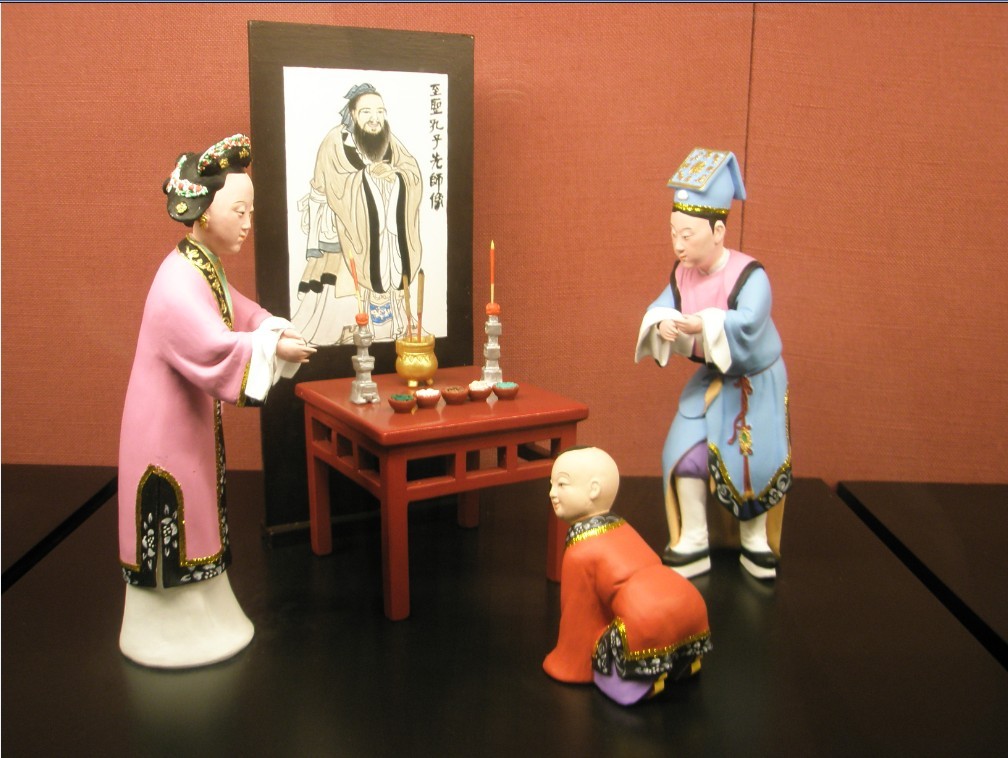
Made at Dawu village in Fuyang, Chao’an; the subjects come mostly from Chao opera, one figure group to one scene.
Pronunciation dà wú ní sù|Craft and performance|One entry in the Chaoshan glossary
What it means
Made at Dawu village in Fuyang, Chao’an, with a history put back to 1237. Subjects are mostly taken from Chao opera — whatever is playing on the stage is what gets modelled, and the figures come in groups with a story and a setting, which is what sets them apart from a clay toy sold singly.
Carving, modelling, pinching, appliqué, incising, pressing and painting were all mastered, and it is the combination of appliqué, press and paint that gives the work its own manner. In the local speech they are called clay dolls, tu an kia.
When you see it
The peak ran from the middle of the Qing to the early republic, with workshops through the whole village and more than a hundred makers, Wu Panqiang the best known. In 2008 it entered the second national list of intangible heritage under the name clay modelling, Dawu clay figures, number Ⅶ—47.
Words easily confused
Dawu clay figures are a place plus a craft, meaning the line made at this one village. Clay modelling is the general term; Tianjin and Huishan figures were both on the first list, and Dawu came in with the second as an extension.
Read next: Dawu clay figures: one group, one scene.
Same group: Chao opera, the flower lantern, papercutting.
Home › Glossary › Craft and performance › Dawu clay figures
Text on this site is CC BY-SA 4.0; copyright in images is reserved and commercial use requires a separate licence.
Last revised: 3 November 2026