Chou sha, drawn work
Threads are drawn out of the cloth and what remains is stitched into an open pattern; the opposite operation to the padding of Chao embroidery.
Pronunciation chōu shā|Craft and performance|One entry in the Chaoshan glossary
What it means
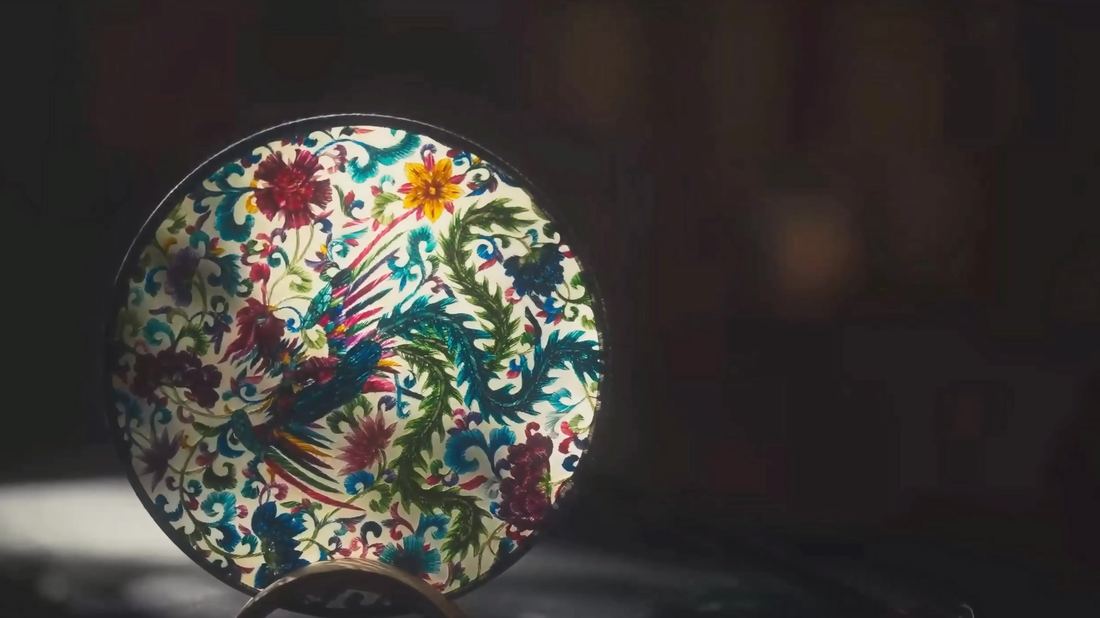
Following a pattern, warp or weft threads are drawn out of the cloth and the gaps left behind are joined with fresh stitching into a figure. The finished cloth is open, and light goes through it.
Most of it went into tablecloths, handkerchiefs and edging for export. Once the port opened and Shantou became an outlet, drawn work went abroad while Chao embroidery stayed at home, and the two ran as separate lines.
When you see it
In 1952 Chao’an county set up a drawn-work company with a Gu embroidery department inside it; in 1956 the individual workshops were formed into a drawn-work and embroidery cooperative; in 1962 it was renamed the Chaozhou state embroidery factory; in 1980 an embroidery research institute was founded to sort out the traditional stitches and patterns. Drawn work, Shantou and Chaozhou together, entered the fourth national list of intangible heritage in 2014.
Words easily confused
Drawn work takes threads out; Chao embroidery puts them on: one subtracts, the other adds. The two are commonly lumped as Chaoshan embroidery, and neither the technique nor the market is the same.
Read next: Chao embroidery and drawn work: two lines.
Same group: Chao embroidery, gold-thread embroidery, Zhanglin port.
Home › Glossary › Craft and performance › Drawn work
Text on this site is CC BY-SA 4.0; copyright in images is reserved and commercial use requires a separate licence.
Last revised: 3 November 2026