Bai yue niang, worshipping the moon
On mid-autumn night a table is set out for the moon, the women of the house leading, with mooncakes, taro and pomelo; the children build a tile tower and burn it.
Pronunciation bài yuè niáng|Food and tea|One entry in the Chaoshan glossary
What it means
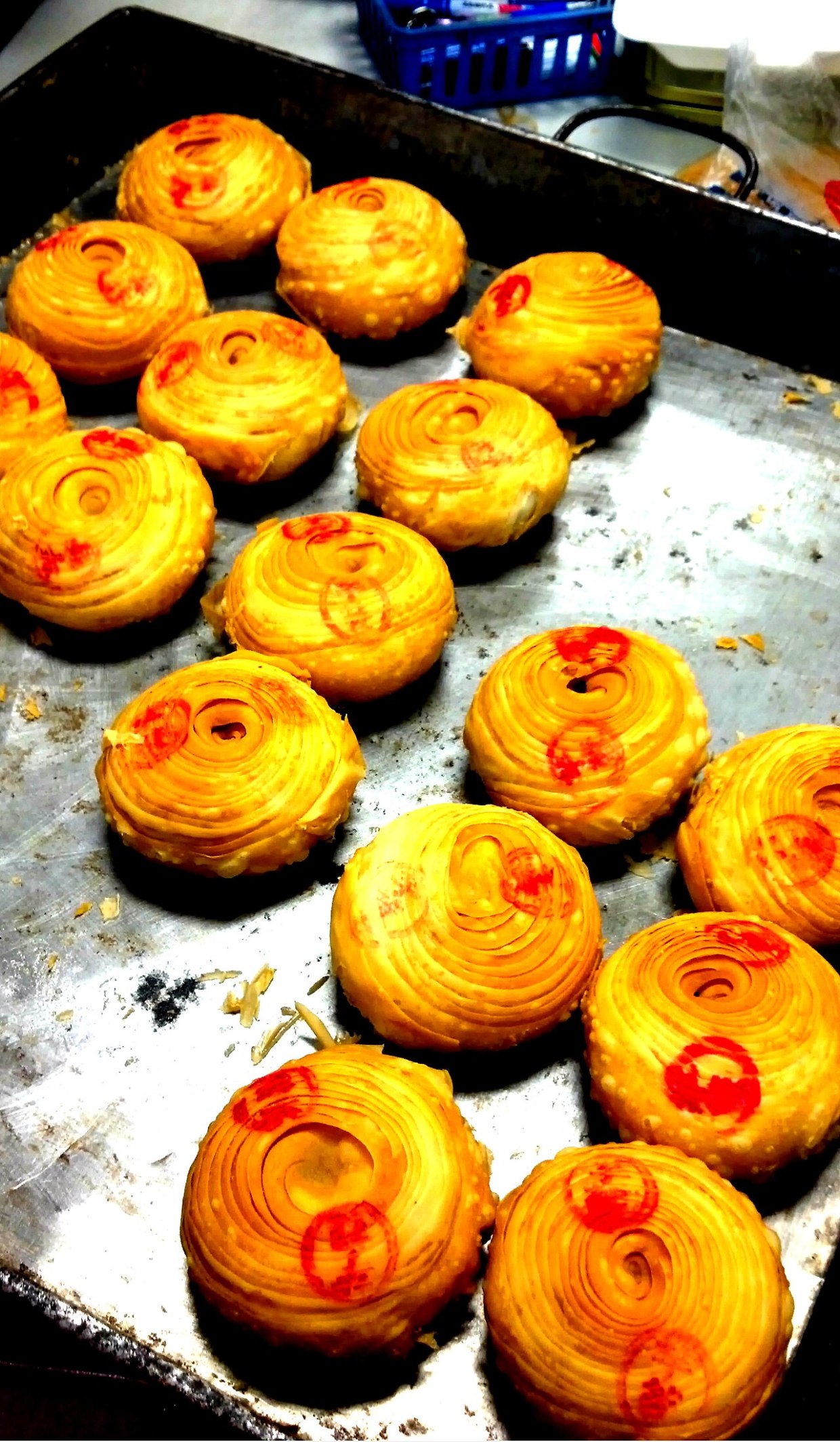
On the night of mid-autumn a table is set in the threshing yard or on the roof: mooncakes, taro, pomelo, pomegranate, oil mandarin. Incense is lit and the moon is worshipped, and the rite is led by the women of the house. The moon is called yue niang, the moon mother — a female address.
The gazetteer records two things for mid-autumn: admiring the moon and peeling taro, and children burning a tower. Peeling taro is called peeling the ghost’s skin; burning the tower means stacking tiles and setting them alight, which is the shao wa yao still done today.
When you see it
On the night of the fifteenth of the eighth month. The table stands for an hour or two, and the children burn their kiln at the side — both going on in the same yard at once.
Words easily confused
What is worshipped here is the moon, which is not the same worship as that given to the lao ye. The tile kiln is the children’s end of the evening and is run separately from the moon table.
Read next: Mid-autumn: the moon table, the taro and the tile kiln.
Same group: the Chaoshan mooncake, the tile kiln, the eight festivals.
Home › Glossary › Food and tea › Worshipping the moon
Text on this site is CC BY-SA 4.0; copyright in images is reserved and commercial use requires a separate licence.
Last revised: 3 November 2026